Once I was a clever boy learning the arts of Oxford... is a quotation from the verses written by Bishop Richard Fleming (c.1385-1431) for his tomb in Lincoln Cathedral. Fleming, the founder of Lincoln College in Oxford, is the subject of my research for a D. Phil., and, like me, a son of the West Riding. I have remarked in the past that I have a deeply meaningful on-going relationship with a dead fifteenth century bishop... it was Fleming who, in effect, enabled me to come to Oxford and to learn its arts, and for that I am immensely grateful.


Friday, 17 March 2017

Badges of the Order of St Patrick


Today is the feast of St Patrick, and on previous years I have posted about the Most Illustrious Order of St Patrick, founded by King George III in 1783 as the equivalent for Ireland of the Orders of the Garter and the Thistle.

There is a useful and comprehensive online account of the Order at Order of St. Patrick. 

As that explains until the Disestablishment of the Church of Ireland in 1869-70 the Archbishop of Armagh was Prelate of the Order and the Archbishop of Dublin Chancellor. The Knights had stalls with their banners in St Patrick's Cathedral in Dublin.

Image result for Order of St Patrick Prelates badge 

Badge of the Archbishop of Armagh as Prelate of the Order
Ulster Museum

Image: Pinterest 

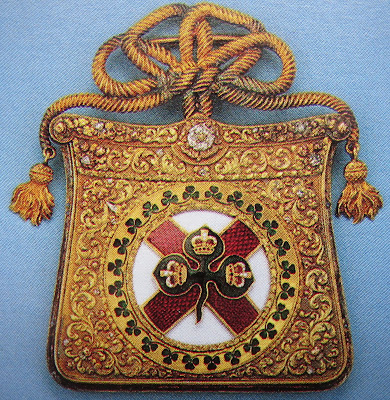
Image result for Order of St Patrick Prelates badge 

Badge of the Archbishop of Dublin as Chancellor of the Order
The small symbolic purse was worn suspended on a Patrick blue riband around the neck

Image: Lord Belmont in Northern Ireland 

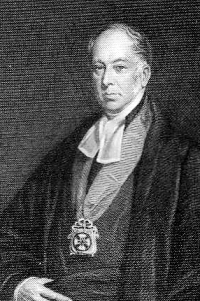
Image result for Archbishop Whately of Dublin

Archbishop Richard Whately wearing the Chancellor's Badge
An Oriel man he was Archbishop of Dublin 1831-63

Image: Wikipedia

There are online accounts of the Archbishop at Richard Whately and at Archbishop Richard Whately from Alfred Webb A Compendium of Irish Biography, 1878. The most detailed life online is by Richard Brent in the Oxford Dictionary of National Biography and it can be viewed here.

https://i.pinimg.com/236x/14/de/bf/14debf61f105099afc3cce9894e1f27a.jpg

Badge of the Usher of the Order

Image: Pinterest

My previous posts about the Order can be viewed at The Order of St Patrick (2011), Banners of the Knights of St Patrick (2012), The Order of St Patrick (2013), Insignia of the Order of St Patrick (2014), The Most Illustrious Order of St Patrick (2015), and Order of St Patrick (2016)

Just in case you feel like asking, yes, I am in favour of making new appointments to the Order and restoring it to its proper and historic place in the Honours system.


Thursday, 16 March 2017

The not so private life of King Edward IV


The BBC History Magazine website reproduces an article which, being by background an historian of the later middle ages, caught my eye. I have copied the article and then added some comments of my own.

The secret intimacies of Edward IV: multiple marriages and a same-sex affair?

King Edward IV is remembered by many for his role in the Wars of the Roses, the 30-year struggle between the Houses of Lancaster and York for the English throne, and for his relationship with Elizabeth Woodville.

Here, historian John Ashdown-Hill re-examines what is known about the private life of the monarch, from his possible bigamy to secret same-sex intimacies, and questions many ‘facts’ traditionally assigned to the first Yorkist king of England…

My research on the story of King Richard III began in the 1990s, and focused initially upon the allegation that he was a ‘usurper’. That was a story which was later initiated by Henry VII, who seized Richard’s throne, killed him, and then blackened his reputation. But the truth is that Richard was offered the throne by the three estates of the realm on the grounds that his elder brother, Edward IV, had committed bigamy, making Edward’s children by Elizabeth Widville illegitimate. (Her maiden surname is commonly spelt ‘Woodville’, but contemporary sources suggest that Widville or Wydville were more commonly employed in the 15th century. I therefore use ‘Widville’.)

The story of Edward IV’s bigamy intrigued me. As a result, my initial research focused upon the true story of Eleanor Talbot – the lady who was formally acknowledged in an Act of Parliament of 1484 as “married” to King Edward. Although some historians have questioned Eleanor’s existence, I established clearly her identity, with the support of solid evidence. A picture emerged that supported the proposition that she had a relationship with King Edward IV. For example, the king appears to have given her land. Also he sent presents to her former father-in-law, Lord Sudeley, while Eleanor was alive – though following her death he changed tack and destroyed Lord Sudeley. It was also clear that the legality of Edward IV’s subsequent marriage with Elizabeth Widville had always been questioned.

A new date of birth?
My research on the bigamy accusations led me to investigate all the other alleged stories about Edward IV and his private life. Once I’d started, it rapidly emerged that, while most biographies of the king have traditionally claimed that he was born on 28 April 1442, most of them cite no source for that assertion. This is a problem, because some historians have used this birth date to back a claim that Edward himself was illegitimate.

A political story, promoted by the French government and other opponents of Edward IV after he became king of England, hinted that his mother had a love affair with an archer. As a result, it was suggested that the archer, rather than Richard Duke of York, was Edward’s biological father. Some modern historians have sought to back that claim by asserting that the Duke of York was not with his wife at the time of Edward’s conception. But of course, that claim is based upon Edward IV’s alleged birth date.

When I sought out evidence for the date in question, I discovered that actually only one 15th-century source mentions 28 April 1442. Unfortunately, that source erroneously claims that the day in question was a Monday. What’s more, another source offers a different date for Edward’s birth. In short, I believe we can no longer claim to know for certain precisely when Edward was born.

Who was Edward’s real father?
The allegations of illegitimacy have, of course, thrown Edward’s relationship with his theoretical father, Richard Duke of York, into question. However, letters written by the Duke of York to King Charles VII of France – attempting (and failing) to set up a prestigious marriage for Edward with one of the daughters of the king of France – indicate that the duke considered Edward to be his son. That point is proved even more clearly by the wording that the duke used. In the surviving letters, he repeatedly refers to Edward as his son and heir. In his own writing, Edward naturally addressed the duke as his father. His letters suggest that a good relationship existed between them.

Same-sex relationships
When the Duke of York was killed in 1460, young Edward was still unmarried – and remained so when he became king of England. Shortly after his accession, however, Edward became involved with the beautiful Eleanor Talbot, and the most likely date for their secret marriage seems to have been Monday 8 June 1461, when the itinerary of Edward IV, as published in my latest book, reveals that Edward was in the vicinity of Eleanor’s Warwickshire manor houses.

Eleanor had produced no children by her first husband, Sir Thomas Boteler, and she doesn’t seem to have become pregnant as a result of her relationship with the king. Edward IV therefore found himself confronted by a fruitless relationship. But about 18 months after his secret marriage with Eleanor, Edward encountered one of her first cousins, who may well have shared Eleanor’s good looks, and who also, it seems, attracted the king. The cousin in question was Henry Beaufort, Duke of Somerset. A wealth of clear contemporary evidence suggests that Edward loved Henry and that the two men slept together.

This is by no means the only instance of an English king having a same-sex relationship. Earlier examples involved both Richard the Lionheart and King Edward II. Although Richard I’s same-sex relationship worried his father, Henry II, the intimacy took place in France, and aroused no hostile response in England. Edward II wasn’t so lucky. Likewise the relationship between Edward IV and the Duke of Somerset aroused opposition in some quarters. This led to an attack on the Duke of Somerset, which finally helped to break up his relationship with the king.


Another secret marriage?
Later accounts – beginning with the version of ‘history’ written by the Tudor grandee Sir Thomas More – suggest that, around this time, Edward IV took on a relationship with another young woman, Elizabeth Lucy. More even went as far as to claim that Edward IV was believed, in some quarters, to have secretly married Elizabeth Lucy. More offers a detailed story of how the young king’s mother supposedly knew of this relationship. He also asserts that Richard III’s subsequent claim to the throne was based upon the premise of Edward and Lucy’s marriage.

More goes on to say that the claim was false – making Richard III a usurper. While the offering of the English crown to Richard III was indeed based upon evidence that Edward IV had committed bigamy, the evidence clearly shows that the alleged first (and legal) wife of the young king was not called Elizabeth Lucy. She was, in fact, Lady Eleanor Talbot.

Sadly, there’s not a shred of contemporary evidence that a woman called Elizabeth Lucy ever existed – let alone that she had a relationship with Edward IV. The logical conclusion is that Thomas More’s allegations were simply part of the attempt made by Henry VII and his successors to ensure that the name of Eleanor Talbot was written out of history. Henry VII had initiated this process in 1485, when he repealed unquoted the 1484 act of parliament that had acknowledged Eleanor as “married” to King Edward. On that occasion, Henry VII stated specifically that his aim was “that all thinges said and remembered in the said Bill and Acte thereof maie be for ever out of remembraunce and allso forgot”.
However, surviving letters written in 1533 and 1534 by Eustace Chapuys, the ambassador of Emperor Charles V at the court of Henry VIII, show that Henry VII hadn’t succeeded in putting the story of Eleanor’s marriage to Edward IV “out of remembraunce” on the European mainland. Therefore ongoing work was required for the sake of England’s new reigning dynasty.

Thomas More also asserted that the king had a love affair with a “Mistress Shore”. But, as in the case of Elizabeth Lucy, not a single shred of contemporary evidence exists to show that Edward IV had anything to do with Mistress Shore. Unlike Elizabeth Lucy, however, Mistress Shore definitely did exist. Her maiden name was Elizabeth Lambert.

A marriage for her was arranged by her family, and her first husband was called William Shore. Unfortunately, that marriage proved difficult, and the young wife appealed to the church for its annulment. Eventually she married again. Before that, however, she had two love affairs: one with Lord Hastings, and the other with Edward IV’s step-son, the Marquis of Dorset. Curiously, a number of sources prove that her first husband, William Shore, was a supporter of Edward IV, and worked with him. However, no contemporary sources ever claim that Mistress Shore had a relationship with the king.

Heaps of illegitimate children?
The traditional story of Edward IV’s private life asserts not only that he had mistresses, but also that he produced heaps of illegitimate children. However, that too proves to be untrue. The king is recorded as only acknowledging one illegitimate child during his reign. It was a boy, but his name is unknown. Previous historians tended to assume that the boy in question was Arthur Wayte/Plantagenet, later Lord Lisle. However, the evidence clearly shows that Arthur was only finally acknowledged as a royal ‘bastard’ many years after the death of his alleged father. So he cannot have been the illegitimate child who was accorded formal recognition by Edward IV himself.
Curiously, however, one or two girls also seem to have been recognised as illegitimate daughters of Edward IV years later, during the reign of Henry VII. One possible explanation for this is that Richard III was offered the throne on the assumption that Edward’s children by Elizabeth Widville were illegitimate!


The power behind the throne
For all the question marks hanging over her marriage to the king, Elizabeth Widville seems to have exercised a great deal of influence over Edward IV. Despite later stories that he had many love affairs, from 1464 until his death in 1483, Edward seems to have been rather fond of his wife.
Elizabeth Widville was acknowledged as Edward’s legal wife during his reign, and her children were also officially recognised as the heirs to the throne. However, their status was always questioned in some quarters. Even members of the royal family – including the king’s own middle brother, George, Duke of Clarence – disputed their claims. One result was that George was imprisoned and executed – apparently on the orders of Elizabeth Widville herself. A contemporary report written by Italian diplomat Domenico Mancini certainly suggests that this was the case.

Elizabeth’s later conduct confirms that she took a strong role in politics. Following Edward IV’s death, with the aid of members of her own family, she attempted a coup to enable herself to act as regent for her young son. But in 15th-century England, regency powers were always assigned to the senior living prince of the blood royal – not to the mother. Thus when Edward IV died, according to English custom, power belonged in the hands of his surviving brother: Richard, Duke of Gloucester, who would, of course, go on to become King Richard III…

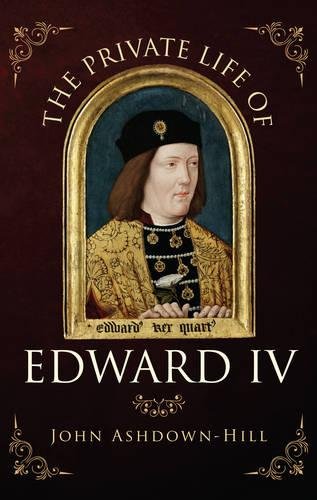
 Image: Amazon

John Ashdown-Hill is a historian and the author of The Private Life of Edward IV (Amberley Publishing, November 2016). To find out more, click here.
To find out more about the author, visit www.johnashdownhill.com.


The Clever Boy would wish to add the following coments:

I have only read the article not the book, but it certainly raises some interesting questions

The questions raised by Ashdown-Hill about King Edward's date of birth and possible illegitimacy are interesting. King Richard III's DNA suggests something was wrong in his descent from King Edward III as well - historians tend to suggest Richard of Conisburgh was not the son of Edmund Duke of York, as in the post from Matt's history Blog Was Richard of Conisburgh Illegitimate? and  “Much Ado About Nothing?” – Pondering Richard III's DNA  from Unofficial Royalty.

The concern with dates and places of birth in fifteenth century lists suggests a keen interest in astrology and that was one of the contributory causes of the downfall of George Duke of Clarence in 1477-78, as it had been with the Duchess of Gloucester in 1441.

The allegation of bigamy makes me wonder if this somehow was a a ghost haunting King Henry VIII and the issue of remarriage and begetting heirs. As it was he was, by Catholic rules, a bigamist and by virtually everyone's rules one or other of his two daughters who succeeded to the throne was illegitimate.

I would have thought that King Edward would have had enough common sense not to commit bigamy because of its likely impact on the succession. It is possible that a relationship with Lady Eleanor Talbot/Boteler was one of those whereby you could be deemed to be married by exchange of personal vows and physical consummation, and one that the eighteen year old Edward stumbled into thinking he was merely having an affair, and which came back to haunt his family. Both Lady Eleanor and his recognised wife the former Lady Grey show distinct similarities in their social and political positions. Did the young King have a penchant for attractive widows, only to find himself snared in different ways by both ladies, and so unable to contract the more prestigious marriage that might be expected for him?

The possibility of a King Edward having a same-sex relationship with Henry Duke of Somerset is very interesting, but I am not at all sure I am convinced. Both men were certainly heterosexual at other times, the King producing a large family with his Queen and, it appears, some  illegitimate children, whilst Somerset's illegitimate son Charles Somerset is the progenitor of the line of the Dukes of Beaufort. 

To share a bed with Somerset, and in that sense to literally sleep with him, may have been a political gesture - it showed that Somerset was taken into royal favour and trusted ( he had been the Lancastrian commander at Towton ) and was calculated to show the young King's independence of and indeed to irritate the Nevilles. In that it succeeded. Until relatively recently for two men to share a bed whilst travelling was no more than a practical matter, and need not imply any sexual relationship

If the two actually did have an affair - well that could explain why, given that Somerset could be held accountable for the death of Edward's father and  brother, that the King was so willing to forgive him and take into his favour, and that this was not just not just a political one in eye for Warwick. Edward had few scruples when eliminating others, including his brother Clarence, if they were seen as a threat, although lesser Lancastrian supporters might be received into favour - not least his future Queen Elizabeth. The King and Duke were part of the wider cousinage that linked the Crown and nobility. Such an affair is not impossible one must suppose, but more evidence or interpretation is required.

As to King Richard I being homosexual I do have to ask if that story true - there seems no clear report earlier than late 1940s with John Harvey's book The Plantagenets: he cites Richard doing penance for a whole range of sins, including that, but this may refer to one incident in the past rather than a consistent life-style choice ( to be horribly modern). The largely all-male world of military life led by Richard may have led to such encounters without denominating them as his sole preference. 

Ashdown-Hill's questioning of the historicity of Jane Shore is interesting as she is so well established in tradition, as in the story of her pleas ensuring the survival of King Henry VI's foundation of Eton. To some to suggest that Thomas More could ever be wrong will send out shock waves...

So I suppose the answer is to read the complete book and see what I think then...


Wednesday, 15 March 2017

Abdication of Emperor Nicholas II


Today is the centenary (NS) of the abdication of the Emperor Nicholas II in 1917.

Having initially abdicated in favour of his son Tsesarevich Alexei in the afternoon late on that day he issued a second abdication on behalf of his son but timed as of his first document. This was because it was feared the outgoing Emperor and his wife would be separated from their invalid son. So instead of being coming Regent the Grand Duke Michael was to succeed his brother as Emperor Michael II. The following day, being awakened to the news he was now Emperor, he met with representatives of the Provisional Government and neither accepting or declining the position, said he would wait for the Constituent Assembly to meet to decide the form of government of Russia. Before it met Kerensky declared the country to be a republic on September 1st, followed by the Bolshevik revolution in October.

The story of the Emperor Nicholas, his Empress Alexandra and the fate of their family is well known - there is an online biography with links at Nicholas II of Russia -  and it is a story full of tragedy and horror.

The tragedy is not just personal, of his family, and dynasty but also of Russia itself. It has elements of Classical tragedy - were the events of the Emperor's reign foreordained by an evil providence, or when and how could things have turned out differently. I do not believe in historical inevitability, and at many points in the last years of Romanov rule different outcomes were possible. 

One obvious question is how might the Duma and the political parties within it have evolved without the disaster of the First World War. Another is whether Russia could have become a constitutional monarchy like those of the rest of Europe - the precise balances of power within such systems being secondary to the basic principle. A further point is whether the Emperor Nicholas could have come to accept and work effectively with such a system and whether Russia could produce a political class to effectively operate and manage a parliamentary system. that, for example, remains a living issue today.

Image result for Nicholas II opening Duma image

  The State Opening of the first Duma in the Winter Palace in 1906

Image:Pinterest 

 http://romanovrussia.com/wp-content/uploads/LargeNIIphoto2.jpg

  The Emperor reading his speech at the State Opening

Image:romanovrussia

Other members of the Imperial Family appear to have been more responsive, and they appear as a wider family to have felt excluded from the centre as the Emperor and Empress, their daughters and frail son became rather isolated from the rest of the Romanovs. Something of that can be seen in the life of the designated successor Grand_Duke_Michael_Alexandrovich_of_Russia.

Much of this does turn on the personality and abilities of Emperor Nicholas II. He often appears limited and unimaginative, blinkered and out of his depth. He had many good personal qualities as a man, husband and father, and whether those qualities in different circumstances could have made him an effective Emperor under whatsoever constitutional dispensation remains a topic for reflection and to which there is no quick answer.

May 4, 1896 the Tsar Nicholas II left the Cathedral of the Assumption, after the Coronation  

Emperor Nicholas II leaves the Cathedral of the Assumption in the Kremlin following his Coronation May 4th 1896 

Image: Pinterest/historyofromanovs.tumblr.com


Animating the Antikythera mechanism


The Lead Education Officer at the Museum of the History of Science here in Oxford shared this piece about the Antikythera Mechanism which may well be of interest to readers:

The Antikythera Mechanism is the oldest mechanical work to survive, and is dated to between 205 and 100 BC. It is, however, incomplete.

The Museum of the History of Science has the oldest working geared mechanism to survive - a complex Persian astrolabe dating from 1222 AD.


Friday, 10 March 2017

Anglican squabbles


The BBC News website has had a couple of reports about the decision of Philip North, the Anglican suffragan Bishop of Burnley to withdraw his acceptance of the Bishopric of Sheffield. The more recent version can be seen via the link below:


Church of England at war after Bishop Philip North's U-turn
Why is there so much anger among Anglicans after Philip North chose not to be Bishop of Sheffield?


As the articles point out Bishop North, previous to his elevation to Burnley, had withdrawn under similar pressures from accepting the Bishopric of Whitby, the usually Anglo-Catholic suffragan of the diocese of York.

Several thoughts come to my mind about this sorry state of things in the Church of England, of which I was once a member.
Firstly there is the rigid feminist and liberal intolerance that is now entrenched amongst so many of those who have chaplaincies and deaneries - read the article - and those they support and encourage. There are no enforceable safeguards to protect the consciences and opinions of traditionalist Anglo-Catholics, Evangelicals or anyone else who objects to the foisting of women clergy upon what still claims to be part of a fractured but historic Church. That failure to give proper safeguards contributes to the creeping decay of the Anglican Church - and it really ought to offend the tender consciences of those very liberals who doubtless claim it everywhere else save in the organisation they belong to...

Secondly, Anglo-Catholics really should wake up and smell the incense ( or lack thereof ) and do the sensible thing and seek the Roman option either directly or through the Ordinariate. One Anglican friend told me recently that the present trend in Rome inhibits him from making the move. I heard what he said, but it really should not deter - things and people and office holders change...

Thirdly, I feel sorry for Bishop Philip North, whom I have met occasionally through Pusey House and when he was at Walsingham. I gather that his ministry as Bishop of Burnley has been widely appreciated by Evangelicals as much as Anglo-Catholics and that he has been very successful in working with church youth groups.

The last time I encountered him was before he became a bishop at a study day at Pusey House on the proposal to establish the Ordinariate back in, I suppose, 2010. He was then arguing that the established and recognised nature of the Church of England enabled him to reach people he would not be able to do were he to join the Ordinariate. He was, therefore, not attracted by that project. He may just have had a point - a point - but now the squawking elite in the Church of England are preventing him reaching the people of the Sheffield diocese. It is not an especially Anglo-Catholic minded one, but with some notable if isolated centres ( or so it used to be) and he surely has a right to be heard there.


Whalley Abbey martyrs of 1536-7


The blog Supremacy and Survival last year had these posts about Pilgrimage of Grace martyrs from Whalley Abbey in Lancashire, which I am re-posting today as this year, not last, is the anniversary of their deaths. What was March 1536 - up to the 25th - is, since 1752 in England -  now March 1537. The Pilgrimage of Grace had been in the autumn of 1536. 

The two posts are The Last Abbot of Whalley Abbey: John Paslew and William Haydock of Whalley Abbey

http://www.webbaviation.co.uk/gallery/d/52670-1/WhalleyAbbey_fb34256.jpg

The remains of Whalley Abbey
The River Calder is at the bottom of the picture and the foundations of the church in the centre

Image: webbaviation.co.uk

Whalley was a Cistercian house, originally founded at Stanlow on the Cheshire banks of the Mersey and moved due to that site being unsuitable to Whalley in 1296, being refounded by its patron Henry de Lacy Earl of Lincoln.

There is an illustrated online account of the history of the foundation and buildings at Whalley Abbeyand the much more detailed account from the VCH Lancashire vol ii  ed. William Farrer and J Brownbill (London, 1908) can be read at Houses of Cistercian monks: The abbey of Whalley


As the Lacy family were lords of Pontefract I have an additional interst in the history of Whalley, and from the names in the list of abbots it is clear that quite a few Yorkshiremen joined the community. If my memory serves me right a monk called John of Pontefract was killed by a fall from the buildings when the abbey was being built. 

One other surviving link with the abbey are the vestments rescued by the Towneley family and now on display at their ancestral home, Towneley Hall in Burnley. The museum's web page has a piece about them at Whalley Abbey Vestments

At Towneley Hall are a chasuble and dalmatic or tunicle (the third item of the set is in the Burrell Collection in Glasgow), which are the only High Mass set to survive from medieval England. Originally made about 1390-1420 or 1415-1435 (depending upon your expert) and remounted late in the fifteenth century, they were rescued from Whalley by the recusant Towneley family. The red fruits on the ground textile are probably pomegranetes.


The vestments from Whalley Abbey, preserved at Towneley Hall

Image: New Liturgical movement

http://college.holycross.edu/projects/catholiccollecting/images/VWhalleyChasuble.jpg
The front of the chasuble

Images:college holycross.edu

There is more about the vestments at What Might Have Been - The Whalley Abbey Vestments at Towneley and details of some of the embroidery panels


There can be little doubt but that Abbot Paslew and probably Dom William wore these vestments.

Today Whalley Abbey is the Diocesan Conference Centte for the Diocese of Blackburn and the quite considerable remains of the monastery and grounds are accessible to visitors, and the surrounding countryside very attractive. The anniversary of the martyrdoms of the abbot and one of his monks and the survival of the vestments areminder of the human and cultural cost of the events of the sixteenth century.


Saturday, 4 March 2017

Imperial gifts to British godchildren


The news agency Royal Central has the following story:


A set of silver gilt and cloisonné enamel which stirred interest in the antique world since it was recently consigned as going to auction, sold today for £20,000. This champlevé cutlery set told a story that links the future Tsarina of Russia's visit to the Yorkshire town of Harrogate in 1894, where she had gone to take a cure.


Princess Alix of Hesse and the Tsarevich Nicholas of Russia, an official photograph in Coburg at the time of their engagement, 1894.

Eduard Uhlenhuth [Public domain], via Wikimedia Commons

Princess Alix of Hesse was advised to take a 'cure' in Harrogate in 1894 for sciatica, a complaint from which she had been suffering for some time. One of Queen Victoria's favourite grandchildren, the Queen was present in Coburg in April 1894, for the wedding of Alix's beloved brother, the Hereditary Grand Duke of Hesse, Ernst Ludwig, to Princess Victoria Melita "Ducky" of Edinburgh, daughter of her second son, Prince Alfred, Grand Duke of Saxe-Coburg-Gotha and his wife, Grand Duchess Marie Alexandrovna of Russia. Among the many guests, at what was one of the great gatherings of European royalty in the last years of the 19th century, were Kaiser Wilhelm II of Germany and the Tsarevich Nicholas, the future Tsar Nicholas II of Russia.

The couple became engaged while at Coburg after which the Tsarevich Nicholas returned to Russia and Princess Alix left for England. It was agreed that she would begin to undertake Russian lessons while in Windsor and visit a spa town to use the sulphur baths so as to as to try and alleviate her sciatica. Quite why Harrogate was chosen is not entirely clear; however the Yorkshire town was famous for its healing waters, and its popularity for the visiting aristocracy had grown considerably during this period, also becoming highly fashionable with the British elite. Alix left for Harrogate in late May 1894, accompanied by the Russian lectrice, or 'reader' to her sister, Elisabeth, Grand Duchess Sergei of Russia and her lady-in-waiting, Baroness von Fabrice.

Alix spent her time at Harrogate quietly, using the baths, visiting the surrounding towns, during which she also took her Russian lessons. She stayed at Cathcart House, a 19th-century boarding house which allowed her a certain degree of privacy as she was staying incognito, under the alias of 'Baroness Starckenburg' - Starkenburg being one of her lesser titles as Princess of Hesse, referring to the historical area surrounding Darmstadt, the regional capital. Cathcart House still stands today and is split up into flats - a brown plaque was unveiled in 2007 by the Sanctuary Housing Association to commemorate the house's history and its links with Princess Alix. Despite travelling incognito, her identity was guessed by the townsfolk of Harrogate, and the interest in her, especially in the light of her recent engagement to the Tsarevich, made it difficult for her to go out unobserved.


The brown plaque on Cathcart House, Harrogate, unveiled in 2007*

 Betty Longbottom [CC BY-SA 2.0 (http://creativecommons.org/licenses/by-sa/2.0)%5D, via Wikimedia Commons

During Princess Alix's stay in Harrogate, her landlady Mrs Allen gave birth to twins, a boy and a girl, whose names were chosen by the honoured guest who was to become their godmother - Nicholas and Alix. Princess Alix attended their baptisms in the close-lying St Peter's Church. She bought little gifts in Harrogate for the christening of the babies, but the commitment as godmother was not forgotten, even after her marriage. The following year, she sent two little cutlery sets for the boy and girl for their first birthdays, and it was thought that the gifts for the girl Alix could no longer be traced. Until now.

The cutlery sets were made by Grachev, and each contained a knife, fork, spoon, napkin ring, salt cellar and spoon. The godmother of the two Allen children was now since November 1894, the Tsarina of Russia and the gifts that were sent to the children were fittingly imperial.

Alix took her role as godmother remarkably seriously, and her gifts did not cease as the children grew older. Presents from Russia continued to be sent, with special occasions being remembered, such as confirmations and 21st birthdays. The boy Nicholas's son, Michael Allen, gave the gold Faberge cufflinks that his father had received from the Tsarina in 1910 for his confirmation to the Royal Pump Room Museum in Harrogate, together with the gold pins that he had kept. The gifts continued, even into World War One.

On her return from Harrogate, Princess Alix went first to the house her sister Princess Victoria of Battenberg had rented at Walton-on-Thames, where she was joined by the Tsarevich Nicholas; shortly afterwards, they continued to Windsor Castle as the guests of Queen Victoria. It was an idyllic time for them both, probably the happiest of their lives. The Harrogate visit coincided with the period of her engagement, and both she and Nicholas would reflect on this happy time in their lives, for the rest of their lives.

*The Clever Boy would draw attention to the numerous errors in the plaque - which are to be regretted and should be changed.
He would also add that he recalls in the 1970s seeing on local television in Yorkshire the godson with various items that had been given to him including cufflinks in the form of the Imperial Eagle and a cross on a chain for the neck. He recalled the problem caused when the Princess insisted on adding her and her fiancé 's names to those of the twins after their birth had been registered; I think the Registrar agreed when it was pointed out that this was at the request of the Queen's granddaughter.

Also in the late 1970s I visited the Pateley Bridge Museum in Nidderdale, close to Harrogate. There alongside British coronation and jubilee mugs was a coloured enamel beaker with the monogram and crown of Emperor Nicholas II from his coronation in 1896. Slightly bemused by this I commented on it to a volunteer who told me such beakers did occasionally turn up in Nidderdale. This made the penny ( or kopeck ) drop - an enterprising local dealer must have imported a consignment of such mugs knowing of the local connection with the new Empress. A corner of Yorkshire that is forever Imperial Russia?

Image result for Nicholas II Coronation mug

Enamelled Mug from the celebrations of the Coronation of the Emperor Nicholas II and Empress Alexandra in 1896

Image: Pinterest


Wednesday, 1 March 2017

March


The Château de Lusignan, situated in Lusignan in the modern dèpartement of Vienne, was the seat of the Lusignan family, Poitevan Marcher Lords, who distinguished themselves in the First Crusade and held the crowns of two Crusader kingdoms, the Kingdom of Jerusalem and the Kingdom of Cyprus, and also claimed the title King of Armenia.

Lusignan was constructed, occupying a natural strongpoint: a narrow promontory that overlooked steep valleys on either side. It was already so impressive in the twelfth century that a legend developed to the effect that its founder had faery aid, in the guise of the water spirit Melusine, who built it and its church through her arts, as a gift for her husband Raymondin.

Lusignan at its height in the early fifteenth century, is illustrated in the Très Riches Heures of Jean, Duc de Berri, for whom it was a favorite residence until his death in 1416. It rises in the background of the miniature for the month of March, clearly shown in perspective, with its barbican tower at the left, the clock tower - with the exterior chute of the garderobe to its right - and the Tour Poitevine on the right, above which the gilded dragon flies, the protective spirit of Marc Lacombe.

After the Duc de Berri's death, Lusignan became briefly the property of the Dauphin John, who died in May 1417, and then passed to his brother, Charles, the future King Charles VII.

The village which developed into the town of Lusignan grew up beneath the castle gates, along the slope; it formed a further enceinte or surrounding fortification when it too was later enclosed by walls. Lusignan remained a strategically important place in Poitou, in the heart of France. About 1574, during the Wars of Religion, a plan was made of the castle's defences which is now in the Bibliothèque National. In the following century Lusignan was reinforced in the modern manner by Vauban for King Louis XIV. It was a natural structure to be used as a prison, and later housed a school.

The château was long used as a local quarry of pre-cut stone before it was razed by the Comte de Blossac in the nineteenth century, to make a pleasure ground for the town. Today the remains are largely portions of the foundations, some built into steep hillside, part of the keep, the base of the Tour Poitevine, cisterns and cellars, and remains of a subterranean passage that probably once led to the church.

With acknowledgements to the article on the château on Wikipedia

To those points I would add that the depiction of this and, over the succeeding months, other châteaux associated with the Duc de Berri and his family, indicate a delight in their possession, and convey the fact that these medieval castles, however defensible, were essentially homes in the country, replete with medieval domestic comforts and surrounded with agriculture and other peaceful pursuits.These are residences, more than they are fortifications. The same sense is conveyed, for example, by surviving images of English castles in the sixteenth and early seventeenth centuries.

The plough oxen in the foreground are a reminder that for centuries the ox was the beast of burden in Europe, and their use continued later than one might expect. I have, for example, seen a photograph of someone still ploughing with oxen in Wiltshire in about 1900.

As with the other scenes in the manuscript the landscape is perhaps unnaturally tidy, altough the ploughman in the foreground is wearing patched clothing, and the grey and green tones do convey something of the climate and mood of March as the farming year demands hard work from the husbandmen.

The wayside shrine at the cross roads in the middle distance is an indication of the type of monument which may well have been common, but of which we have few surviving examples - although more modern examples are still to be found in Catholic areas of Europe.