Once I was a clever boy learning the arts of Oxford... is a quotation from the verses written by Bishop Richard Fleming (c.1385-1431) for his tomb in Lincoln Cathedral. Fleming, the founder of Lincoln College in Oxford, is the subject of my research for a D. Phil., and, like me, a son of the West Riding. I have remarked in the past that I have a deeply meaningful on-going relationship with a dead fifteenth century bishop... it was Fleming who, in effect, enabled me to come to Oxford and to learn its arts, and for that I am immensely grateful.


Showing posts with label Archbishop of Armagh. Show all posts

Friday, 17 March 2017

Badges of the Order of St Patrick


Today is the feast of St Patrick, and on previous years I have posted about the Most Illustrious Order of St Patrick, founded by King George III in 1783 as the equivalent for Ireland of the Orders of the Garter and the Thistle.

There is a useful and comprehensive online account of the Order at Order of St. Patrick

As that explains until the Disestablishment of the Church of Ireland in 1869-70 the Archbishop of Armagh was Prelate of the Order and the Archbishop of Dublin Chancellor. The Knights had stalls with their banners in St Patrick's Cathedral in Dublin.

Image result for Order of St Patrick Prelates badge 

Badge of the Archbishop of Armagh as Prelate of the Order
Ulster Museum

Image: Pinterest 
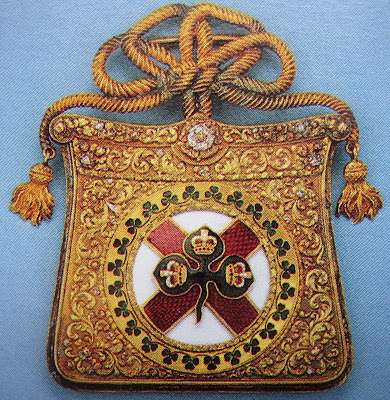
Image result for Order of St Patrick Prelates badge 

Badge of the Archbishop of Dublin as Chancellor of the Order
The small symbolic purse was worn suspended on a Patrick blue riband around the neck

Image: Lord Belmont in Northern Ireland 
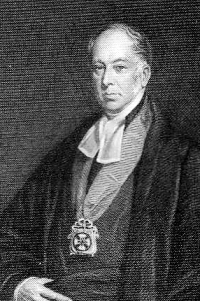
Image result for Archbishop Whately of Dublin

Archbishop Richard Whately wearing the Chancellor's Badge
An Oriel man he was Archbishop of Dublin 1831-63

Image: Wikipedia

There are online accounts of the Archbishop at Richard Whately and at Archbishop Richard Whately from Alfred Webb A Compendium of Irish Biography, 1878. The most detailed life online is by Richard Brent in the Oxford Dictionary of National Biography and it can be viewed here.

https://i.pinimg.com/236x/14/de/bf/14debf61f105099afc3cce9894e1f27a.jpg

Badge of the Usher of the Order

Image: Pinterest

My previous posts about the Order can be viewed at The Order of St Patrick (2011), Banners of the Knights of St Patrick (2012), The Order of St Patrick (2013), Insignia of the Order of St Patrick (2014), The Most Illustrious Order of St Patrick (2015), and Order of St Patrick (2016)

Just in case you feel like asking, yes, I am in favour of making new appointments to the Order and restoring it to its proper and historic place in the Honours system.


Wednesday, 27 June 2012

Archbishop Richard Fitzralph


I glean from posts by John Dillon and John Briggs on the Medieval Religion discussion group that today, 27 June, is, inter alia, the feast day, in the Church of Ireland, of Richard of Dundalk (d. 1360) - better known as Archbishop Richard Fitzralph of Armagh.

The life of him by Katherine Walsh from the Oxford DNB can be read here , and there is another online life here.

Born just before 1300 at Dundalk Richard Fitzralph) was educated in Oxford and in Paris and had a distinguished career as a theologian both at Oxford and in Papal Avignon. At the time of his provision to the see of Armagh in 1346 he was dean of Lichfield cathedral. Consecrated in 1347, Richard vigorously defended Armagh's primatial status against the claims of the see of Dublin, which received the support of the royal government based in that city, and as archbishop he instituted reform practices for the clergy of his province, gave socially pertinent sermons, continued his theological work, promoted the cult of St. Patrick, and became an opponant of the Franciscans and other mendicants, with whom he was still engaged in legal proceedings in Avignon at the time of his death there in 1360.

Richard's remains were returned to Ireland about a decade later and were laid to rest in Dundalk's church of St. Nicholas. A cult developed and petitions were made for his canonization. In England, Lollards who favoured some of Richard's theological positions also called him Saint. By the early sixteenth century Richard's cause had not made much headway in Rome - not least because he was deemed suspect as a precursor of later heretics such as Wyclif and Hus.

However in 1545, after the formal break with the Papacy, he was canonized by the then Archbishop of Armagh. George Dowdall, the Anglican Archbishop -there was already a split between rival Catholic and Anglican holders of the See  - summoned a Provincial Synod to Drogheda on 20 June 1545. There, after a procession to the High Cross and back, he canonised Richard. This is an interesting example of episcopal assertion of the claim to recognise sanctity in a time of religious upheaval and uncertainty.


http://www.fitzralph.com/wp-content/themes/fitzralph/images/FitzRalphImage.jpg

Archbishop Richard FitzRalph

Image: The FitzRalph Society