Once I was a clever boy learning the arts of Oxford... is a quotation from the verses written by Bishop Richard Fleming (c.1385-1431) for his tomb in Lincoln Cathedral. Fleming, the founder of Lincoln College in Oxford, is the subject of my research for a D. Phil., and, like me, a son of the West Riding. I have remarked in the past that I have a deeply meaningful on-going relationship with a dead fifteenth century bishop... it was Fleming who, in effect, enabled me to come to Oxford and to learn its arts, and for that I am immensely grateful.


Showing posts with label King Edward IV. Show all posts

Saturday, 29 March 2025

Book review : King Edward IV as a military commander


As today is the anniversary of the battle of Towton it seems a not inappropriate day upon which to share a review I wrote of a book about the victorious King Edward IV and his role as a military commander. Looking at the other reviews on Amazon of the book the reviews are either very positive or rather dismissive. For once I sought a via media…..

Edward IV and the Wars of the Roses

David Saniuste   Pen and Sword Military 2011

A useful study that stimulates thought

This is a useful book for the specialist and the non-specialist alike. It is valuable for its account of both warfare at the time and in its reconstructions of individual battles. These are excellent, informed, and considered descriptions, bearing in mind how limited are the original accounts. For these Santiuste draws extensively upon up to date interpretations. In all that I would agree with the positive views of most of the reviews, but would enter a few reservations about other things.


Like too many books on this period there seems to be an implicit bias that the Yorkists were ipso facto good because they were successful. Edward IV is not just the subject of the book but starts to become the hero. The same material could show that although he was successful he was in many ways reprehensible.


Edward could turn on the charm, he and the Yorkists were good at the fifteenth century version of PR, but, given the opportunity, he was often ruthless and indeed vicious in dealing with opponents. What we do not necessarily know is why he pardoned some, and what his thinking was in these cases. This is where evidence is, alas, lacking.


The idea behind the book is good - but we need more information to make the picture more complete. So not just Edward as being a successful leader because he won battles, but evidence appears to be lacking as to what made him so - not just being 6’3”, firing up his troops with morale boosting speeches and interpretations of the three suns at Mortimers Cross, and fighting in the heat of the fray. As to the battles he won - how much did luck and the weather feature as determinants at Towton and Barnet, let alone treachery at Northampton? Equally he was wrong footed on the military-political front several times in 1469-70. What we lack is more insight into to his training, formation or natural ability - its lack is not the author’s fault but it limits what he can really say.


Did Edward IV improve his military resources in terms of recruitment, organisation or weaponry? There is something on artillery, but was he significantly in advance of contemporaries such as Charles of Burgundy and Louis XI, though in this aspect he avoided the fate of James II of Scots. What was his impact, if at all, on warfare? Did he have time to think about strategy and tactics in the period up to 1471 when he was actually fighting battles? What, if anything, was his input into his brother’s 1482 campaign against the Scots? Questions like this are largely unanswered, and probably unanswerable.


Inevitably this tends at times to become another biography of the King rather than to fulfil its laudable aim of analysing his military competence and achievement. We see how Edward IV won battles but not necessarily why.


Posted 11.12.2022


Thursday, 21 November 2024

Some of the hair of King Edward IV


Yesterday I wa writing about an attempt to reconstruct the voice of King Richard III and today it is the turn of his eldest brother King Edward IV and locks of his hair.

The BBC News website reported the sale of a lock of the King’a hair which had been removed when his grave at St George’s Chapel Windsor was opened in 1789. The skeleton was that of a man who was six feet three and a half inches tall, and some of whose hair survived. The original report about the royal remains submitted to the Society of Antiquaries can be read at Vetusta Monumenta: Plates 3.7-3.9: Vault and Body of Edward IV in St. George’s Chapel

The hair given to the Society can be seen online at Lock of hair of Edward IV - Society of Antiquaries of London

There is a summary of the elaborate funeral ceremonies in April 1483 at Death of King Edward IV

Coincidentally another mourning item from 1789 and also containing a lock of King Edward’s hair is shown by a jewellery retailer on their website at Mourning Brooch Fashioned from the Hair of King Edward IV

In all three examples the hair appears reddish-brown, which would definitely tie in with surviving examples from his grandson King Henry VIII and his great granddaughter Queen Elizabeth I. 

I have copied the BBC News article as follows:

Royal hair-loom

An unusual piece of royal history, in the form of a medieval monarch’s lock of hair inside a piece of jewellery, has been sold in Newbury, Berkshire, by auctioneers Dreweatts for £9,450.

A brooch featuring King Edward IV’s hair fashioned into a bow and set within a glazed oval bezel of blue enamel. Old European cut diamonds surround the oval, and rose-cut diamonds adorn the crown and monogram ER, which stands for Edward Rex - King Edward in Latin.

The brooch, made circa 1789, features King Edward IV’s hair fashioned into a bow. Credit: Dreweatts

The strands of hair are from Edward IV (1442-1483), who was buried in St George’s Chapel at Windsor Castle. His tomb was accidentally disturbed in the 18th Century and some of his hair found inside was put into commemorative mourning jewellery - the fashion at the time. It was a ring with diamonds that was later turned into a brooch.


Edward IV was a central figure in the medieval power struggles between the Houses of York and Lancaster. The jewellery was made in March 1789, a few months before the French Revolution.


Thursday, 5 September 2024

Camping out on campaign with King Henry VIII


In March the British Library Medieval manuscripts blog had an interesting article about a Cottonian manuscript which depicts the layout for King Henry VIII’s mobile military court when he was on campaign. It can be seen at Henry VIII’s pastry tent

It is not clear if this illustrates the King’s French invasion of 1513 or his later one in 1544. In many ways it probably resembles the layout on his grandfather King Edward IV’s anticlimactic expedition of 1475. The tents as depicted resemble in many cases others shown in manuscripts of the same period which depict tents with richly decorated colourful exteriors and of a similar structure. It was not just for military campaigns that Kings and their couriers occupied tented accommodation. From the contemporary account of Niclas von Popplau it is clear that King Richard III was in staying an impressive tent when visiting York, staying in the Minster Close, in the early autumn of 1483. That may well have been taken over from the late King Edward.  In 1541 King Henry VIII and Queen Catherine and their entourage occupied tents set up in the grounds of the recently suppressed abbey of St Mary in the city. Tents were clearly an important element in the accommodation for the Field of Cloth of Gold in 1520, although on that occasion King Henry and his Queen occupied a temporary residence constructed from timber and canvas designed to look like a permanent structure. 

To what extent a tented court was set up at each stop on such journeys is not clear as various royal or duchy castles such Nottingham and Pontefract were utilised as stopping places. Maybe the tented accommodation was set up for a major halt on such journeys, although, as with a military campaign, the total numbers involved would have been considerable with the retinues attendant on the monarch, his secretariat, his nobles and gentry, and their servants. Billeting the court on a small town would have been a major logistical issue, when the population might literally overnight. Tents would obviate that if the necessary arrangements could be made to send them on ahead whilst the monarch and courtiers perhaps had an opportunity for hunting and the use of proffered or commandeered lodgings before the next principal halt.

Operating a military campaign, especially on enemy territory, might well mean there was less concern about causing offence when occupying accommodation in towns. Nevertheless whatever the circumstances the time involved in setting up and then dismantling and moving forward must have been a considerable concern when doing forward planning, let alone when it had to be actually done, resources packed, carts loaded, animals harnessed, people marshalled, and routes scouted. A royal progress in peacetime might have less urgency but would in its own way be equally stressful.

The Cottonian MS also shows specifically military preparations in progress in relation at a distance from the royal accommodation with not only swords but artillery as a feature, food preparation to feed the army and the tents for the services and officers who supported the troops. When the King went forth to war, or on a peaceful domestic or diplomatic progress, a sizeable part of his kingdom went with him.


Thursday, 16 March 2017

The not so private life of King Edward IV


The BBC History Magazine website reproduces an article which, being by background an historian of the later middle ages, caught my eye. I have copied the article and then added some comments of my own.

The secret intimacies of Edward IV: multiple marriages and a same-sex affair?

King Edward IV is remembered by many for his role in the Wars of the Roses, the 30-year struggle between the Houses of Lancaster and York for the English throne, and for his relationship with Elizabeth Woodville.

Here, historian John Ashdown-Hill re-examines what is known about the private life of the monarch, from his possible bigamy to secret same-sex intimacies, and questions many ‘facts’ traditionally assigned to the first Yorkist king of England…

My research on the story of King Richard III began in the 1990s, and focused initially upon the allegation that he was a ‘usurper’. That was a story which was later initiated by Henry VII, who seized Richard’s throne, killed him, and then blackened his reputation. But the truth is that Richard was offered the throne by the three estates of the realm on the grounds that his elder brother, Edward IV, had committed bigamy, making Edward’s children by Elizabeth Widville illegitimate. (Her maiden surname is commonly spelt ‘Woodville’, but contemporary sources suggest that Widville or Wydville were more commonly employed in the 15th century. I therefore use ‘Widville’.)

The story of Edward IV’s bigamy intrigued me. As a result, my initial research focused upon the true story of Eleanor Talbot – the lady who was formally acknowledged in an Act of Parliament of 1484 as “married” to King Edward. Although some historians have questioned Eleanor’s existence, I established clearly her identity, with the support of solid evidence. A picture emerged that supported the proposition that she had a relationship with King Edward IV. For example, the king appears to have given her land. Also he sent presents to her former father-in-law, Lord Sudeley, while Eleanor was alive – though following her death he changed tack and destroyed Lord Sudeley. It was also clear that the legality of Edward IV’s subsequent marriage with Elizabeth Widville had always been questioned.

A new date of birth?
My research on the bigamy accusations led me to investigate all the other alleged stories about Edward IV and his private life. Once I’d started, it rapidly emerged that, while most biographies of the king have traditionally claimed that he was born on 28 April 1442, most of them cite no source for that assertion. This is a problem, because some historians have used this birth date to back a claim that Edward himself was illegitimate.

A political story, promoted by the French government and other opponents of Edward IV after he became king of England, hinted that his mother had a love affair with an archer. As a result, it was suggested that the archer, rather than Richard Duke of York, was Edward’s biological father. Some modern historians have sought to back that claim by asserting that the Duke of York was not with his wife at the time of Edward’s conception. But of course, that claim is based upon Edward IV’s alleged birth date.

When I sought out evidence for the date in question, I discovered that actually only one 15th-century source mentions 28 April 1442. Unfortunately, that source erroneously claims that the day in question was a Monday. What’s more, another source offers a different date for Edward’s birth. In short, I believe we can no longer claim to know for certain precisely when Edward was born.

Who was Edward’s real father?
The allegations of illegitimacy have, of course, thrown Edward’s relationship with his theoretical father, Richard Duke of York, into question. However, letters written by the Duke of York to King Charles VII of France – attempting (and failing) to set up a prestigious marriage for Edward with one of the daughters of the king of France – indicate that the duke considered Edward to be his son. That point is proved even more clearly by the wording that the duke used. In the surviving letters, he repeatedly refers to Edward as his son and heir. In his own writing, Edward naturally addressed the duke as his father. His letters suggest that a good relationship existed between them.

Same-sex relationships
When the Duke of York was killed in 1460, young Edward was still unmarried – and remained so when he became king of England. Shortly after his accession, however, Edward became involved with the beautiful Eleanor Talbot, and the most likely date for their secret marriage seems to have been Monday 8 June 1461, when the itinerary of Edward IV, as published in my latest book, reveals that Edward was in the vicinity of Eleanor’s Warwickshire manor houses.

Eleanor had produced no children by her first husband, Sir Thomas Boteler, and she doesn’t seem to have become pregnant as a result of her relationship with the king. Edward IV therefore found himself confronted by a fruitless relationship. But about 18 months after his secret marriage with Eleanor, Edward encountered one of her first cousins, who may well have shared Eleanor’s good looks, and who also, it seems, attracted the king. The cousin in question was Henry Beaufort, Duke of Somerset. A wealth of clear contemporary evidence suggests that Edward loved Henry and that the two men slept together.

This is by no means the only instance of an English king having a same-sex relationship. Earlier examples involved both Richard the Lionheart and King Edward II. Although Richard I’s same-sex relationship worried his father, Henry II, the intimacy took place in France, and aroused no hostile response in England. Edward II wasn’t so lucky. Likewise the relationship between Edward IV and the Duke of Somerset aroused opposition in some quarters. This led to an attack on the Duke of Somerset, which finally helped to break up his relationship with the king.


Another secret marriage?
Later accounts – beginning with the version of ‘history’ written by the Tudor grandee Sir Thomas More – suggest that, around this time, Edward IV took on a relationship with another young woman, Elizabeth Lucy. More even went as far as to claim that Edward IV was believed, in some quarters, to have secretly married Elizabeth Lucy. More offers a detailed story of how the young king’s mother supposedly knew of this relationship. He also asserts that Richard III’s subsequent claim to the throne was based upon the premise of Edward and Lucy’s marriage.

More goes on to say that the claim was false – making Richard III a usurper. While the offering of the English crown to Richard III was indeed based upon evidence that Edward IV had committed bigamy, the evidence clearly shows that the alleged first (and legal) wife of the young king was not called Elizabeth Lucy. She was, in fact, Lady Eleanor Talbot.

Sadly, there’s not a shred of contemporary evidence that a woman called Elizabeth Lucy ever existed – let alone that she had a relationship with Edward IV. The logical conclusion is that Thomas More’s allegations were simply part of the attempt made by Henry VII and his successors to ensure that the name of Eleanor Talbot was written out of history. Henry VII had initiated this process in 1485, when he repealed unquoted the 1484 act of parliament that had acknowledged Eleanor as “married” to King Edward. On that occasion, Henry VII stated specifically that his aim was “that all thinges said and remembered in the said Bill and Acte thereof maie be for ever out of remembraunce and allso forgot”.
However, surviving letters written in 1533 and 1534 by Eustace Chapuys, the ambassador of Emperor Charles V at the court of Henry VIII, show that Henry VII hadn’t succeeded in putting the story of Eleanor’s marriage to Edward IV “out of remembraunce” on the European mainland. Therefore ongoing work was required for the sake of England’s new reigning dynasty.

Thomas More also asserted that the king had a love affair with a “Mistress Shore”. But, as in the case of Elizabeth Lucy, not a single shred of contemporary evidence exists to show that Edward IV had anything to do with Mistress Shore. Unlike Elizabeth Lucy, however, Mistress Shore definitely did exist. Her maiden name was Elizabeth Lambert.

A marriage for her was arranged by her family, and her first husband was called William Shore. Unfortunately, that marriage proved difficult, and the young wife appealed to the church for its annulment. Eventually she married again. Before that, however, she had two love affairs: one with Lord Hastings, and the other with Edward IV’s step-son, the Marquis of Dorset. Curiously, a number of sources prove that her first husband, William Shore, was a supporter of Edward IV, and worked with him. However, no contemporary sources ever claim that Mistress Shore had a relationship with the king.

Heaps of illegitimate children?
The traditional story of Edward IV’s private life asserts not only that he had mistresses, but also that he produced heaps of illegitimate children. However, that too proves to be untrue. The king is recorded as only acknowledging one illegitimate child during his reign. It was a boy, but his name is unknown. Previous historians tended to assume that the boy in question was Arthur Wayte/Plantagenet, later Lord Lisle. However, the evidence clearly shows that Arthur was only finally acknowledged as a royal ‘bastard’ many years after the death of his alleged father. So he cannot have been the illegitimate child who was accorded formal recognition by Edward IV himself.
Curiously, however, one or two girls also seem to have been recognised as illegitimate daughters of Edward IV years later, during the reign of Henry VII. One possible explanation for this is that Richard III was offered the throne on the assumption that Edward’s children by Elizabeth Widville were illegitimate!


The power behind the throne
For all the question marks hanging over her marriage to the king, Elizabeth Widville seems to have exercised a great deal of influence over Edward IV. Despite later stories that he had many love affairs, from 1464 until his death in 1483, Edward seems to have been rather fond of his wife.
Elizabeth Widville was acknowledged as Edward’s legal wife during his reign, and her children were also officially recognised as the heirs to the throne. However, their status was always questioned in some quarters. Even members of the royal family – including the king’s own middle brother, George, Duke of Clarence – disputed their claims. One result was that George was imprisoned and executed – apparently on the orders of Elizabeth Widville herself. A contemporary report written by Italian diplomat Domenico Mancini certainly suggests that this was the case.

Elizabeth’s later conduct confirms that she took a strong role in politics. Following Edward IV’s death, with the aid of members of her own family, she attempted a coup to enable herself to act as regent for her young son. But in 15th-century England, regency powers were always assigned to the senior living prince of the blood royal – not to the mother. Thus when Edward IV died, according to English custom, power belonged in the hands of his surviving brother: Richard, Duke of Gloucester, who would, of course, go on to become King Richard III…

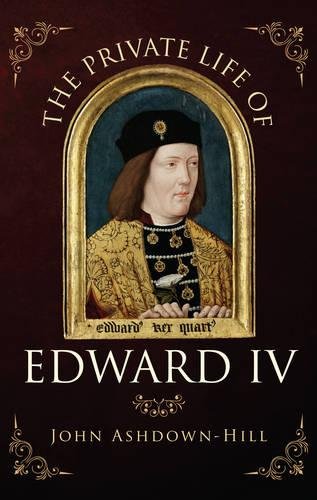
 Image: Amazon

John Ashdown-Hill is a historian and the author of The Private Life of Edward IV (Amberley Publishing, November 2016). To find out more, click here.
To find out more about the author, visit www.johnashdownhill.com.


The Clever Boy would wish to add the following coments:

I have only read the article not the book, but it certainly raises some interesting questions

The questions raised by Ashdown-Hill about King Edward's date of birth and possible illegitimacy are interesting. King Richard III's DNA suggests something was wrong in his descent from King Edward III as well - historians tend to suggest Richard of Conisburgh was not the son of Edmund Duke of York, as in the post from Matt's history Blog Was Richard of Conisburgh Illegitimate? and  “Much Ado About Nothing?” – Pondering Richard III's DNA  from Unofficial Royalty.

The concern with dates and places of birth in fifteenth century lists suggests a keen interest in astrology and that was one of the contributory causes of the downfall of George Duke of Clarence in 1477-78, as it had been with the Duchess of Gloucester in 1441.

The allegation of bigamy makes me wonder if this somehow was a a ghost haunting King Henry VIII and the issue of remarriage and begetting heirs. As it was he was, by Catholic rules, a bigamist and by virtually everyone's rules one or other of his two daughters who succeeded to the throne was illegitimate.

I would have thought that King Edward would have had enough common sense not to commit bigamy because of its likely impact on the succession. It is possible that a relationship with Lady Eleanor Talbot/Boteler was one of those whereby you could be deemed to be married by exchange of personal vows and physical consummation, and one that the eighteen year old Edward stumbled into thinking he was merely having an affair, and which came back to haunt his family. Both Lady Eleanor and his recognised wife the former Lady Grey show distinct similarities in their social and political positions. Did the young King have a penchant for attractive widows, only to find himself snared in different ways by both ladies, and so unable to contract the more prestigious marriage that might be expected for him?

The possibility of a King Edward having a same-sex relationship with Henry Duke of Somerset is very interesting, but I am not at all sure I am convinced. Both men were certainly heterosexual at other times, the King producing a large family with his Queen and, it appears, some  illegitimate children, whilst Somerset's illegitimate son Charles Somerset is the progenitor of the line of the Dukes of Beaufort. 

To share a bed with Somerset, and in that sense to literally sleep with him, may have been a political gesture - it showed that Somerset was taken into royal favour and trusted ( he had been the Lancastrian commander at Towton ) and was calculated to show the young King's independence of and indeed to irritate the Nevilles. In that it succeeded. Until relatively recently for two men to share a bed whilst travelling was no more than a practical matter, and need not imply any sexual relationship

If the two actually did have an affair - well that could explain why, given that Somerset could be held accountable for the death of Edward's father and  brother, that the King was so willing to forgive him and take into his favour, and that this was not just not just a political one in eye for Warwick. Edward had few scruples when eliminating others, including his brother Clarence, if they were seen as a threat, although lesser Lancastrian supporters might be received into favour - not least his future Queen Elizabeth. The King and Duke were part of the wider cousinage that linked the Crown and nobility. Such an affair is not impossible one must suppose, but more evidence or interpretation is required.

As to King Richard I being homosexual I do have to ask if that story true - there seems no clear report earlier than late 1940s with John Harvey's book The Plantagenets: he cites Richard doing penance for a whole range of sins, including that, but this may refer to one incident in the past rather than a consistent life-style choice ( to be horribly modern). The largely all-male world of military life led by Richard may have led to such encounters without denominating them as his sole preference. 

Ashdown-Hill's questioning of the historicity of Jane Shore is interesting as she is so well established in tradition, as in the story of her pleas ensuring the survival of King Henry VI's foundation of Eton. To some to suggest that Thomas More could ever be wrong will send out shock waves...

So I suppose the answer is to read the complete book and see what I think then...


Tuesday, 9 April 2013

The death of King Edward IV


530 years ago, on April 9th 1483, King Edward IV died. Barely 41 his death was sudden and unexpected. The cause of his death has been attributed to, amongst other things, pneumonia, thyphoid and appendictis. It was to prove a disaster for his immediate family and for the House of York - three months later his son had been dethroned and replaced by the deceased King's brother as King Richard III. Little more than two years later he was defeated and killed at Bosworth, and it was the marriage of Elizabeth of York, eldest daughter of King Edward IV, to King Henry VII which ensured that descendents of both branches of the plantagents would occupy the throne.
As King Edward he had been a man determined, indeed ruthless, in fighting to hold on to, or regain, the crown he had to seized in 1461, and was an effective soldier up to his victory at the battle of Tewkesbury in 1471. Therafter he tended towards enjoying the pleasures of success, notably those of the flesh, putting on weight and increasingly engaged with his wife's family the Woodvilles, a family who were far from popular, and noticeably rapacious even by fifteenth century standards. I have posted about them in Woodvilles and Boleyns and in  Anne Boleyn and Elizabeth Woodville.

In these years the King appears to have become rather more like his grandson King Henry VIII at a similar age both in physique and temperament.


File:Edward IV Plantagenet.jpg

 King Edward IV
A portrait of circa 1520 from an original of 1470-75

Image: Wikipedia
In recent years there has been some discussion as to his legitimacy as can be seen in this online biography and in, for example, these blog posts, Was King Edward IV illegitimate?, Edward IV: A Question of Legitimacy, Was Edward IV illigitimate? and Was King Edward IV Illegitimate? (1442) What should be remembered is that it is not King Edward's legitimacy or otherwise which might affect the present line of succession - that derives from King Henry VII, and the Beaufort claim, legitimated, not from Elizabeth of York.


http://www.paradoxplace.com/Photo%20Pages/UK/Britain_South_and_West/Canterbury_Cathedral/Canterbury_Stained_Glass/Edward-IV/Edward-IV-BAR.jpg 

King Edward IV

Canterbury Cathedral glass of circa 1482

Image:paradoxplace.com

Canterbury Cathedral's Stained Glass

King Edward IV and Queen Elizabeth Woodville

Canterbury Cathedral
Image: Sacred Destinations

Caxton and Rivers presenting book to King Edward IV

Antony Earl Rivers and William Caxton presenting a book to King Edward IV,
Queen Elizabeth and Edward Prince of Wales, later King Edward V.
The figures between the King and Earl Rivers may be the Duke of Buckingham and Cardinal Bourchier of Canterbury.

Image: Luminarium.org


King Edward IV was buried in St George's Chapel Windsor - what is left of his tomb can still be seen there.


The tomb of King Edward IV in St George's Chapel Windsor

Image: St George's Windsor/Unofficial Royalty


He had initiated the rebuilding of the chapel a few years earlier, and it remains as his legacy, although not completed until 1528 by his grandson. Within the chapel he concentrated on its relic collection - not only those of St George, but also those of John Schorne and the ancient Welsh treasure of the Cross Neith:


King Edward IV and Bishop Richard Beauchamp of Salisbury (d.1481)
kneel before the Cross Neith (Groes Gnedd)
Boss in the south choir aisle St George's Chapel Windsor

Image: St George's Windsor

The Coronation of King Henry V


Rather like many modern journalists on such occasions the chroniclers who recorded the coronation of King Henry V on April 9th 1413, six centuries ago, tended to remark on the less important if more obvious features. There were two in 1413 - the weather and the food. A snow storm swept across the country. A century and a half later John Foxe the Protestant martyrologist wrote of "the ninth day of April,  called then Passion Sunday, which was an exceeding stormy day, and so tempestuous, that many did wonder at the portent thereof." The contemporary chronicler Adam of Usk wrote that the day was  "...marked by unprecedented storms, with driving snow which covered the country's mountains, burying men and animals and houses and, astonishingly, even inundating the valleys and fenlands, creating great danger and much loss of life."

According to Thomas Walsingham, the monk-chronicler of St Albans, abbey people were undecided as to whether it was a good or bad omen. Some took it to be a sign of impending austerity, but others, in his view more sensibly, saw it as a positive sign, the cold and snowwould bring an end to difficult times and usher in a new era of hope and prosperity, and citing the Song of Songs, with the concept of winter now being past and the rain over and gone. To them this was the beginning of a spring.

The Coronation was held on Passion Sunday, and as a result the banquet afterwards in Westminster Hall was one with Lenten fare, so all the dishes were of fish rather than meat.

In fact we know rather less about this  coronation than about some others of the period, but the saliant features are clear.

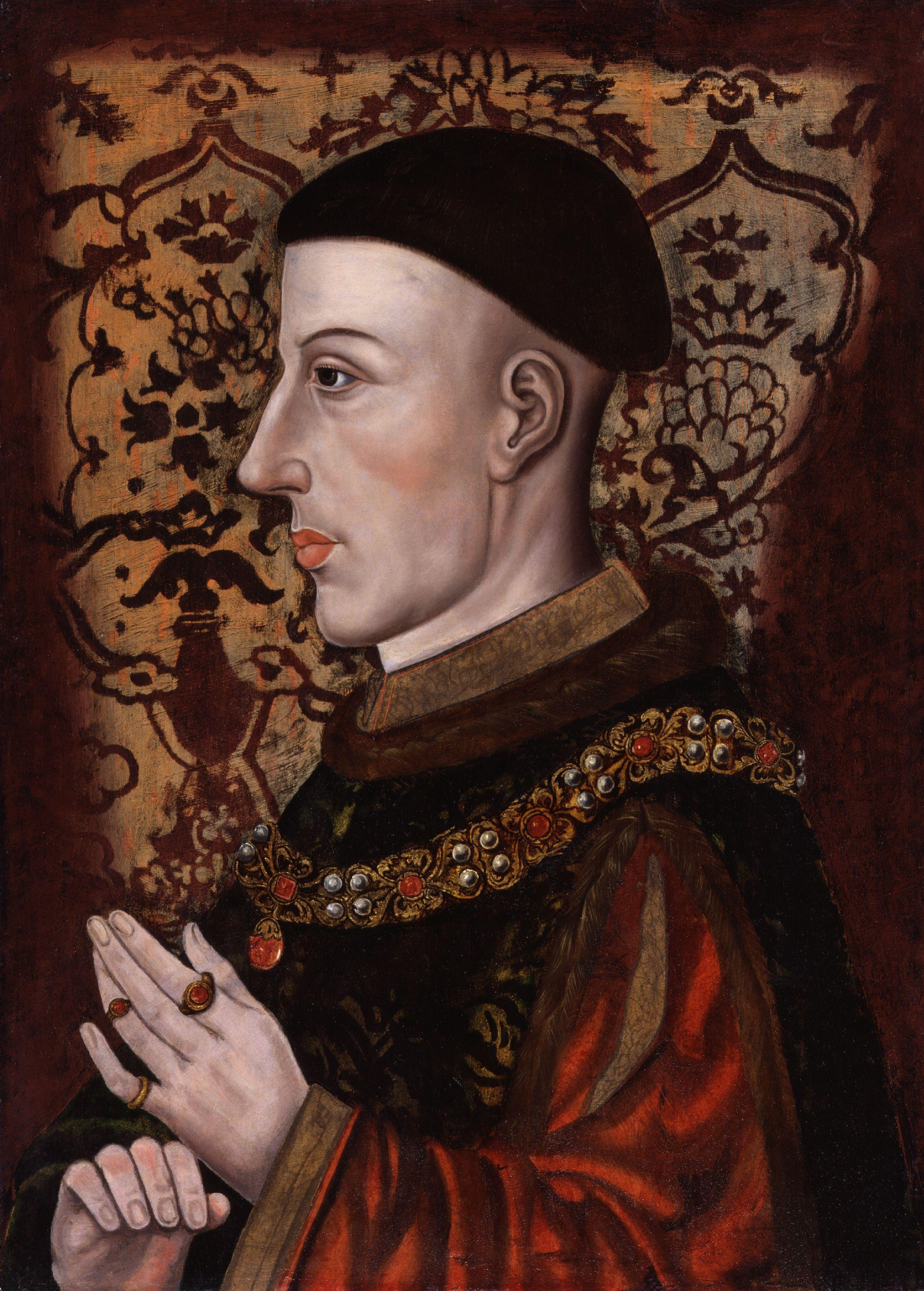
File:King Henry V from NPG.jpg

King Henry V

Image:Wikmedia

The King had arrived in London two days earlier, on April 7th, was met by many lords and knights as well as clergy and citizens in procession and took up residence at the Tower. There he was met by fifty or so candidates for knighthood who waited upon him at table at a feast that evening. The following day, having attended Mass, they rode in splendid array to the royal lodgings where they waited upon the King who dubbed them and as Knights of the Bath, escorted him through the city that day to Westminster ready for the coronation. There he was received in procession and escorted to his palace to prepare in prayer for his anointing.

The officiant at the coronation was the Archbishop of Canterbury, Thomas Arundel, who had crowned the king's father in 1399.

  Thomas Arundel (1353–1414) illuminated initial

Archbishop Thomas Arundel

Image: oxforddnb.com

 
It is possible, indeed probable, that the oil used to anoint the King was the same as usedfor his father and his son, that supply believed to have been delivered by the Virgin Mary to St Thomas Becket, left by him in France, rediscovered and brought back in its ampulla by Edward Prince of Wales, and treasured by his son King Richard II.

Early fifteenth centuries ceremonies did not always go with the smoothness one would expect of such an occasion today - Adam of Usk recorded that during the Mass the King dropped one of his obligatory noble son the floor, and both he himself and those who were present had to search carefully to find it before it could be offered up.

Within weeks Henry was to return to the abbey when he attended divine service in the church on Ascension Day and Whitsunday of 1413, and resumed funding of the rebuilding of the nave of the church that summer.

The closest contemporary depictions of the coronation are from the King's chantry which was built from 1438 onwards and completed about 1450. Its sculpture is an important record of contemporary ceremonial dress for the peers who are also represented. The scheme includes two Coronation groups, perhaps representing the acclamation and the homage:


CORONATION OF HENRY V.

The Coronation of King Henry V from his chantry chapel at Westminster

Image: Project Gutenburg text of E.H. Pearce William de Colchester Abbot of Westmisnter SPCK 1915


 In each of which the Abbot of Westminster, William Colchester, is represented as standing, in cope and mitre, on the King's left hand, Thomas Arundel, the Archbishop of Canterbury, being on the King's right hand. The other carving has the King holding the orb and flanked by the Archbishop and Abbot:


Coronation of Henry V 

The other carving of the Coronation
Above the canopy can be seen the King's badges of the antelope and the swan

Image:Corbis images

In the carving of the coronation the King is shown wearing an arched crown. This is significant. When in 1399 his father had been crowned with St Edward's crown Froissart noted that it was arched - something he clearly saw as noteworthy. The sttae crown worn by the effigy of King Henry IV at Canterbury looks to be identical, allowing that is for artistic licence between a sculptor and a painter, to that worn by King Richard II circa 1390 ;

http://www.anglophile.ru/uploads/posts/2012-06/1340705763_queens-50.jpg

King Henry IV

The head of the effigy on his tomb in Canterbury Cathedral

Image: anglophile.ru


King Richard II

The Westminster portrait of circa 1390

 Image: Wikuipedia

This appears very similar to the crown dated to 1370-80 and which was part of the dowry of King Henry IV's daughter Blanche when she married the future Elector Palatine Louis III, son of King Rupert I,  in 1402, and which can now be seen in the Munich schatzkammer. It was on display in London in 1987-8 at the Age of Chivalry exhibition.


File:Schatzkammer Residenz Muenchen crown of an english queen 1370.jpg


The crown of Blanche of Lancaster

Image: Wikipedia


However from the reign of King Henry V it appears to have become usual to depict  him and his successors wearing a crown with arches, and indeed that the actual crown did have arches long before Tudor assertions that England was an Empire, and hence the current designation of the Imperial State Crown.


  photo

King Henry V

St Cuthbert Window York Minster circa 1440

Image: Gordon Plumb on Flickr


http://www.luminarium.org/encyclopedia/henry5initial.jpg

King Henry V - an illumination of 1451-80

Image: Luminarium

The crown destroyed in 1649 and known as the King's Imperial Crown or the ' Harry Crown' has recently been reconstructed by the Historic Royal Palaces Agency and is on display at Hampton Court. Like Sir Roy Strong in his  piece about the crown in his book Lost Treasures of Britain, the HRPA attribute the crown to the reign of King Henry VII, but with no certain date. I have long thought it possible, if not probable, that the 'Harry Crown' was made for King Henry V, if not actually for his coronation, but at least during his reign. In style it has some resemblance to the Crown of St Wenceslaus in Bohemia, which dates from the mid to later fourteenth century and the reign of the Emperor Charles IV (1346-1378). That does not, of course, preclude the possibility that it may have been modified under subsequent monarchs

There is an online article from the HRPA about the making of the reproduction here, and there is more about it in this post, Henry VIII's Crown.


The reconstructed Harry Crown
Image:Lord Belmont in Northern Ireland blog 

The crown as depicted on the important but sadly damaged statue of King Henry VI from All Souls in Oxford, and probably of 1437-43, appears remarkably similar, as may be seen from this, the only image I can find on the internet:


King Henry VI - statue at All Souls Oxford 


Image; Amazon

The portrait of  King Edward IV in the Royal window at Canterbury cathedral - for which see the following post - also looks to show a very similar crown.

Monday, 18 February 2013

False fleeting perjur'd Clarence


Today is the 535th anniversary of the execution at the age of twenty eight in the Tower of London of George Duke of Clarence following his conviction for treason in a court presided over by his brother King Edward IV. Such appears to have been the stage management of this trial that it was deemed necessary to destroy the official record of it, and we are dependent upon reports from the Croyland chronicler for what we know of it. The Duke was buried with his wife, who had died in 1476, at Tewkesbury abbey. Clarence's downfall may well be seen as the begining of the implosion of the House of York that culminated in Bosworth and the destruction of the family.

Michael Hicks, who has written a typically balanced and well researched biography of the Duke in False Fleeting Perjur'd: George Duke of  Clarence 1449-1478, also wrote the Oxford DNB life of Duke George which can be read here.There is another online life of Clarence here which contains other biographical links. There is an online piece about the Duke's downfall, written from a Ricardian standpoint, here, which contains additional interesting information.


http://upload.wikimedia.org/wikipedia/commons/thumb/8/8b/George_Plantagenet,_Duke_of_Clarence.jpg/200px-George_Plantagenet,_Duke_of_Clarence.jpg

George, Duke of Clarence

A detail from a late sixteenth or early seventeenth century painting from a series of the Constables of Queenborough Castle in Kent. It may derive from a lost contemporary portrait of the Duke.

Image:Wikipedia

The story of Clarence being drowned in a butt of malmsey is nearly contemporary with his death, and his daughter, Bl.Margaret Pole, wore a small barrel on a bracelet, presumably as a reminder of her father's fate. The best explanation I have seen is that he was drowned in a bath tub made out of a vat which had held malmsey - perhaps King Edward recoiled from literally spilling his brother's blood, and opted for drowning as a means of execution.

The Duchy of Clarence is one of the oldest royal Dukedoms, first bestowed in 1362, and deriving its name from the lands of the Clare inheritance - a point brought out at the town of Clare in Suffolk. It is not a particularly auspicious title - of the five Dukes none has left a male heir who has been able to inherit the title. 


Tuesday, 23 October 2012

Woodvilles and Boleyns


With one of the students I am teaching this term I am looking at the life and times of Anne Boleyn. In today's tutorial we considered her background and upbringing, and her time at the Burgundian-Habsburg court of Margaret of Austria and at the French court.

A point which occurred to me some time ago, and which I made in our meeting, was the similarity between Elizabeth Woodville and her family and Anne Boleyn and hers. The physical similarities between King Edward IV and his grandson King Henry VIII are clear, and also the fact that both became King at the age of eighteen - with possibly no few consequences attendant thereupon. Both had continental ambitions that remained fundamentally unrealised.


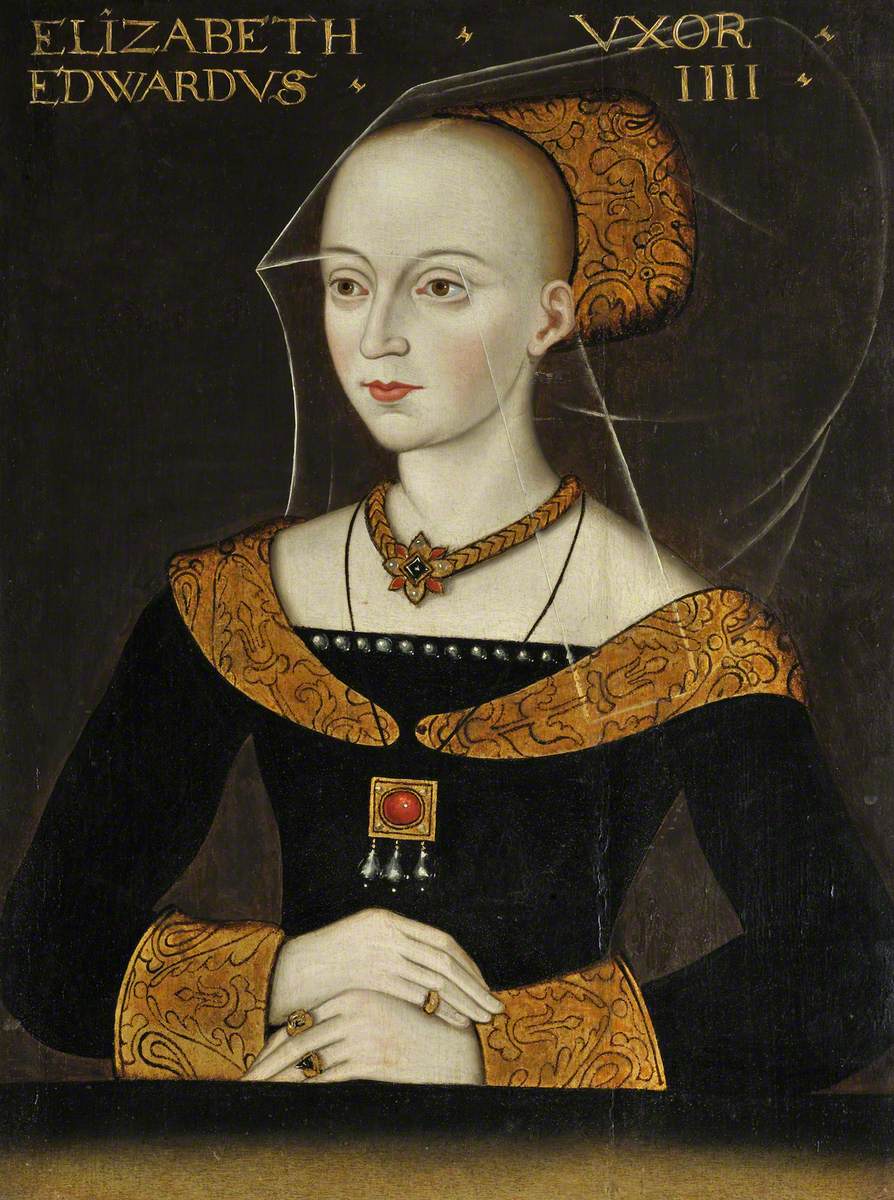
The similarities between Elizabeth and Anne are interesting and noteworthy. Elizabeth was half Burgundian through her mother Jaquetta, Anne had lived at the court in Brussels as a girl. In both cases previous marriages or pr-contacts by their husbands shaped their rise or fall. Both resisted becoming the King's mistress, both were highly controversial choices as Queen consort, both, inevitably, advanced the position of their family. Both their families were far from popular, if not cordially loathed, by others in the political establishment, and both paid a bloody price - Elizabreth Woodville lost her father, two brothers and a son by her previous marriage to the headsman as well, of course, as the disappearance of her sons by King Edward IV; Anne Boleyn lost her own head, as did her brother George his, and the family never recovered its influence.


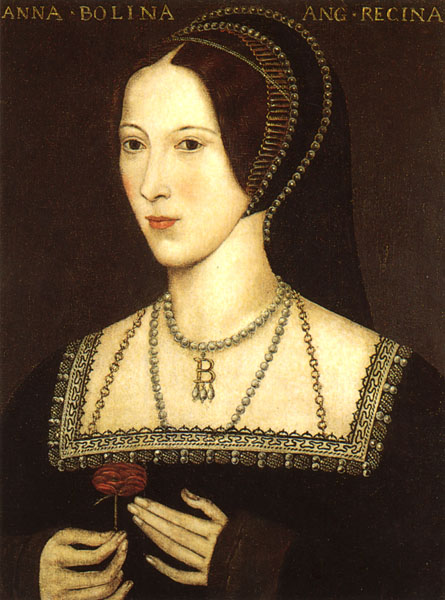
Anne Boleyn
Later copy of a portrait of circa 1534

Image: Wikipedia

Anthony Woodville, Earl Rivers and George Boleyn Viscount Rochford can be seen to have been more considerable figures than might have been supposed the Oxford Dictionary of National Biography lives of them bring this out. That of Rivers, by Michael Hicks, can be read here and that of Rochford by Joseph Block is here.

Both were accomplished in courtly and diplomatic arts, and men of learning with a recognised interest in learning and religious ideas. There is more about Rivers' literary patronage here  and George Boleyn was anxious to advance the evangelical reformist ideas that gained ground with his sister's elevation.


Caxton and Rivers presenting book to King Edward IV

Earl Rivers and William Caxton presenting a book to King Edward IV,
Queen Elizabeth and Edward Prince of Wales, later King Edward V.
The figures between the King and Earl Rivers may be the Duke of Buckingham and Cardinal Bourchier of Canterbury.

Image: Luminarium.org

What strikes me in this similarity is the point that the world of the 1460,70s and 80s was very similar to that of the 1520s and 30s, though clearly the religious controversies of the latter were new in themselves.  The late-medievalist in me tends to see the period as a unity - another reason for not seeing Bosworth as either an ending or a beginning.