Once I was a clever boy learning the arts of Oxford... is a quotation from the verses written by Bishop Richard Fleming (c.1385-1431) for his tomb in Lincoln Cathedral. Fleming, the founder of Lincoln College in Oxford, is the subject of my research for a D. Phil., and, like me, a son of the West Riding. I have remarked in the past that I have a deeply meaningful on-going relationship with a dead fifteenth century bishop... it was Fleming who, in effect, enabled me to come to Oxford and to learn its arts, and for that I am immensely grateful.


Showing posts with label Extraordinary Form. Show all posts

Monday, 4 April 2016

EF High Mass for the Annunciation at the Oxford Oratory


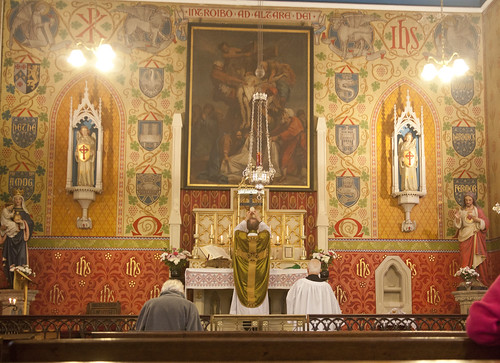
Earlier this evening I attended the EF High Mass for the transferred Feast of the Annunciation at the Oxford Oratory.

Having a High Mass in the Extraordinary Form of the Roman rite on this feast has become part of the Oxford Oratory's liturgical life in recent years, and was a very well attended celebration. The congregation included what might be termed enthusiasts for the traditional form as well as regular attendees of the 6pm Mass and those who had come because it was amajor feast - not either/or but both-and if you follow my mental shorthand. The argument proffered by the declining number of opponents of the older form that people will not attend it was once again disproved

This was a particularly beautiful celebration with the elegant liturgical choreography performed to a very high standard indeed.

Monday, 14 March 2016

Serving on Passion Sunday at Hethe


Yesterday I paid my first visit to the Catholic church of Holy Trinity at Hethe, near Bicester. At lunchtime, in addition to the normal parish Mass there was, a celebration of Mass in the Extraordinary Form by the parish priest, Fr Paul Lester.


Holy Trinity Hethe

Image: oxfordshirechurches.com

I had been asked to go along not just to attend Mass but to serve. It is while since I had that privilege, and despite my somewhat arthritic right hip and knee I managed to act as one of the two acolytes.


Hethe Church - outside of Passiontide

 Image: lmschairman.org


Fr Lester and the serving team yesterday

Image;lmschairman.org


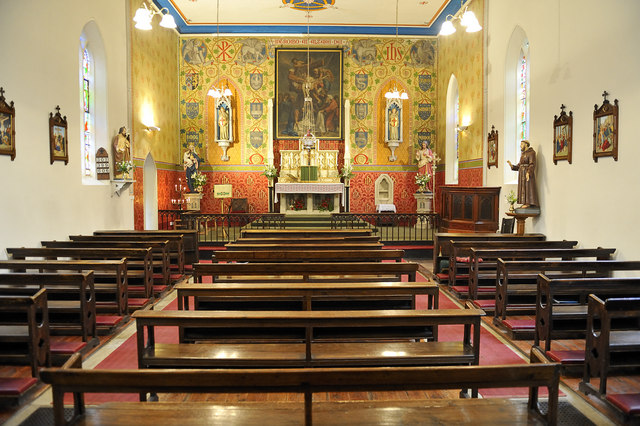
The church was built in 1832 by the old recusant Fermor family. It is rather charmingly rustic, and a rare survival of an early to mid-nineteenth century Catholic church interior - slightly naive, but rather charming, with pretty early twentieth century decoration that is clearly aware of Pugin, but several removes from him.

There is more about the church and its history at http://oxfordlmsrep.blogspot.co.uk/p/more-about-holy-trinity-hethe.html

The church has asplendid up to date sacristy behind this nineteenth century setting, and as a visitor I was made to feel very welcome.

After Mass we had coffee in the adjacent St Philip's Hall, raided the book stall - I got paperback copies of John Betjeman's Ghastly Good Taste  and Miri Rubin's history of late medieval Britain - before going off with my friends David and Matthew for lunch in Bicester. By now it was a very pleasant day when one felt winter was definitely over, but that spring was not here yet, but felt it was on the way.

A very enjoyable foray out into Catholic rural Oxfordshire, and one I would be happy to repeat.


Tuesday, 23 February 2016

Ember Saturday at Caversham


Last Saturday I went with a friend to the Mass for the Saturday in the Ember Week at the Catholic church in Caversham. This is the present shrine church for devotion to Our Lady of Caversham, a revived and restored place of pilgrimage, which appears to have originated as such soon after the Norman Conquest.

I went in 2013 to this liturgy and it was a pleasure to be able to do so again. On this occasion the celebrant of the High Mass was Fr Anthony Conlon, assisted by Fr Ian Verrier FSSP as Deacon and Rev. Keith Crocker as Sub-Deacon.

Dr Joe Shaw's LMS Chairman blog has an illustrated account of the Mass at Pilgrimage to Caversham

The journey to and from Caversham as well as the Mass itself and the opportunity to pray at the Shrine of Our Lady madce this a most enjoyable way to spend part of Saturday.

The previous Wednesday I had been able to attend the Ember Day Mass at SS Gregory and Augustine in north Oxford.

There are online articles about the Ember Days and their historyfrom Wikipedia at Ember days
and from the Catholic Encyclopedia at Ember Days - New Advent


Such quarterly days of prayer and fasting, one for each of the seasons, and originating in the harvests of the Mediterranean world seem an eminently laudable practice.  The loss from the modern calendar of such ancient custom, a casualty of liturgical change, seems pointless. One might well ask why they were not retained as seasonal fasting days of prayer, and why they should not br reintroduced, rather than left to the EF Missal and groups such as the Ordinariate.


Sunday, 24 January 2016

Septuagesima at St William of York in Reading


Today I travelled with a friend who, as a regular worshipped there, makes the journey most Sundays to Mass in the Extraordinary Form at the church of St William of York in Reading. We had an easy journey by train and bus from Oxford to Reading and on to the church.

St William of York was built in 1909, and designed to be enlarged if need arose. The modern extension is to a different plan and the Edwardian intention is still clear.

Today it is a part of a diocesan parish, and also used by the University chaplaincy, the FSSP and the Ordinariate.

We were going to the FSSP 11am Mass for Septuagesima in the Extraordinary Form, the 1962 Missal being their essential Rite. Their website can be seen a Facebook page accessible to all which can be viewed at https://m.facebook.com/fssp.england

The Fraternity celebrant was Fr Matthew Goddard.

As we had arrived early I had a good view of the Altar's transformation from its novus ordo style to a more traditional one, as the additional altar cloths were put on, then a violet frontal and finally the very handsome crucifix and set of six candles.

For the celebration of the Mass Fr Goddard had a particularly handsome Roman chasuble and matching stole and chalice veil in violet fabric with gold and blue decoration, which looked quite new.

The Mass was entirely traditional, beginning with the Asperges and with the Second ( Third ) Confiteor before Communion.

There was an excellent team of young servers and the choir in the west gallery sang the Propers.

All in all this was a prayerful and beautiful liturgy, one that was eloquent of 'otherness' and sacrifice, one that was thoughtful and serious. There was a good congregation, with a good number of children in addition to the servers.

Afterwards we went with another friend who sings in the choir at these FSSP Sunday Masses for lunch at his flat. This was an opportunity to see something of the converted country house in which he lives and to enjoy a series of tasty courses accompanied by fine wines.

After that it was back to Oxford for the three of us to go to Vespers at the Oratory.


Thursday, 7 January 2016

Solemn EF Masses for Epiphany


Yesterday evening I attended the Solemn High Mass in the Extrordinary Form for the Epiphany at the Oxford Oratory.

There had been a Low Mass for the feast at 12.15, but the main celebration was at 6pm. This was very well attended - those who love the EF, regular 6pm attenders and those who wish to keep Epiphany on the proper day, not the nearest Sunday. On the basis of a well-filled church I am tempted, once again, to ask who it is that says Mass in the Extraordinary Form and the celebration of Epiphany on the day traditionally assigned to it are not wanted.

This was a particularly beautiful liturgy, and the calm professionalism with which it was executed brought to my mind the phrase 'noble simplicity' to describe it. This was liturgy that was both elegant and eloquent.

The Choir did a fine job of singing the Mass by Palestrina and the Propers

We had the proclamation of the moveable feasts of the coming year in Latin as well as a sermon from the Provost, Fr Daniel, which linked this celebration into the whole cycle of redemption, of giving thanks for the gifts of this life and the call to spread that news to a world that needs to know it.

Alas there appeared to be no photographs being taken which I could share with readers.

A couple of miles away to the north at SS Gregory and Augustine there was also a Solemn High Mass in the EF celbrated by Fr Saward. The friends with whom I had supper afterwards who had been there said that there were again good numbers ,and that everything was done very well. The commented in particular on the quality of  music - in this case William Byrd - and on the serving.

It is heartening to think that there were two such Masses offered yesterday, and that they were so well supported. Those of us who live in or near Oxford are very lucky, and very grateful, for such provision.

Thursday, 10 December 2015

News from the Birmingham Oratory


My attention has been drawn by a friend to this from the newsletter of the Birmingham and West Midlands branch of the Latin Mass Society :

For the Year of Mercy announced by Pope Francis beginning in Advent 2015, the Birmingham Oratory will introduce a daily EF Low Mass with confessions available. This will initially be part of a novena preceding the patronal Feast of the Immaculate Conception on 8th December, when Pontifical High Mass will be celebrated by Bishop Robert Byrne Cong. Orat. at 7pm (please note – Mass of Ages incorrectly says this Mass is on Monday). Vespers will take place the day before.

There will be a second Pontifical High Mass on the second Sunday in January [tbc - Clever Boy] to be celebrated by Archbishop Bernard Longley – the Mass will be earlier than 10.30am to accommodate the vesting so please be ready for 10am.

The 9.30am Saturday Mass will switch to 7.30am Rorate Masses during Advent. I do hope you will do all you can to support this excellent provision of the Extraordinary Form in the area.

Daily Mass in the EF at the Birmingham Oratory, Edgbaston B16 8UE:

Weekdays 5.45pm Low Mass with confessions available
Saturday 7.30am Rorate Mass during Advent
Saturday 9.30am Low Mass outside Advent
Sunday 10.30am High Mass (EF Vespers at 4.30pm


Any queries should be addressed to the LMS or the Birmingham Oratory - Clever Boy


Tuesday, 3 November 2015

How Far to Extend the Hands at Mass


I thought this post on the Liturgy section of the Zenit website might be of interest to readers, blending historical understanding with issues around liturgical practice:

How Far to Extend the Hands at Mass:
There Are No Strict Specifications


Rome, October 13, 2015 (ZENIT.org) Father Edward McNamara | 8849 hits

Answered by Legionary of Christ Father Edward McNamara, professor of liturgy and dean of theology at the Regina Apostolorum university.

Q: One local priest at Mass extends his hands almost to the fullest extent possible, elbows well out from the body; most others keep their elbows close to the body. Are there any official guidelines regarding this gesture? -- O.K., Dallas, Texas

A: Unlike the rubrics of the extraordinary form of the Roman rite, the current rubrics do not give detailed specifications regarding what is meant by "hands extended." This does not mean that they are arbitrary but presume that a priest, through his formation and observation, knows what this expression means and how to apply it in accordance with liturgical tradition and his own physical makeup.

The extraordinary form is much more specific. As one popular ceremonies book describes the gesture at the collect: "While [the priest] says 'oremus' he extends the hands and joins them again, and he bows his head to the missal. Then he reads the collect, holding the hands uplifted -- but not exceeding the height or width of the shoulders -- and extended, the fingers held close together and bowing towards the missal should the name of the saint in whose honor the Mass is celebrated occur. When he says 'Per Dominum nostrum' etc., he joins his hands."

While a priest celebrating the ordinary form may not be strictly bound to these exact norms, I would say that they do provide a good rule of thumb as to what the Church understands when it asks priests to pray with hands extended. These rules were not invented by some obscure 16th-century curial official but are rather the codification of an already existing custom that had developed over several centuries.

A priest could follow the above rule. However, since the post-conciliar liturgy deliberately left out a strict specification of the gesture, it is also legitimate to extend the hands a little further if he considers it appropriate. For example, some modern vestments tend to require a somewhat more ample gesture than the traditional Roman chasuble. The above rule, however, does caution against exaggerated gestures that tend to draw attention toward the celebrant himself and not the prayer he is reciting.

The gesture of extending and raising the hands in prayer is found in some form in almost all religions. In the Bible we have the example of Moses during the battle against Amalek (Exodus 17:11-12), as well as references in the Psalms and prophets. Thus Isaiah declares to Israel: "When you spread out your hands, I will close my eyes to you; / Though you pray the more, I will not listen. Your hands are full of blood!" (1:15).

These gestures are also found in the New Testament and the early Christians who prayed with uplifted hands, although here there is the added meaning of being united to Christ who extended his hands on the cross. At the beginning it would appear that the practice was to stretch out both arms and hands to resemble the form of a cross. Thus the early Christian writer Tertullian writes, "But we not only lift them [the hands] up, but even spread them out, modeling them after the Lord's Passion, and, while we pray, we confess Christ" (De Oratione, 14). However, he also warns against exaggerated gestures in this respect: "In praying with modesty and humility, we shall the rather commend our prayers to God, not even our hands being lifted up too high, but being lifted up with moderation and seemliness, not even our face being raised upward with boldness" (De Oratione, 17).

There are also many images in the catacombs and other places showing how early Christians made this gesture. These sometimes represent biblical figures such as Daniel or Susanna or a female figure whom some scholars believe represents the souls of those buried in the catacombs interceding for the living.

Although it is not certain, it is probable that early Christians used this posture for both private and public prayer. As time progressed, however, it gradually became an exclusively priestly gesture, at least within the context of the liturgy. It might have died out due to practical considerations, as the number of Christians expanded, churches became more crowded and there was less space to carry out this gesture.

The gesture of the priest stretching out the arms crosswise in certain parts of the Mass also diminished over time, although it continued in some religious orders such as the Carmelites and Dominicans. In general during the Middle Ages the gesture became similar to current practice: thus the "Micrologus," written in the 11th century says: "We extend our arms at the Collects and during the whole of the Canon but only the breadth of the chest, in such wise that the palms of the hands face each other. The fingers are joined together, and their tips must not reach higher than the shoulders nor exceed their breadth, and this must be observed whenever the hands are to be spread ante pectus. In taking up this attitude the priest shows forth in his person Our Lord upon the Cross."

St. Thomas Aquinas also says that "the actions performed by the priest in Mass are not ridiculous gestures, since they are done so as to represent something else. The priest in extending his arms signifies the outstretching of Christ's arms upon the Cross. He also lifts up his hands as he prays, to point out that his prayer is directed to God for the people, according to Lamentations [3:41]: 'Let us lift up our hearts with our hands to the Lord in the heavens" (III, q. 83, a. 5).

We can thus see that from relatively early the gesture became reserved to the priest, at least in the context of the liturgy, and became the fairly austere gesture we know today. This remains the overall spirit of how this gesture should be carried out in the liturgical context.

The faithful may use this gesture outside the liturgy for private prayer, in prayer groups, and, in those countries where it has been approved, during the recitation of the Our Father during Mass.

Some liturgists believe that this practice is an anomaly. It represents the only occasion when a priest prays with hands extended together with the people. In all other occasions in which he extends his hands, he prays alone in representation of the people. Indeed when the Our Father is recited during the Divine Office the priest has his hands joined and not extended. These experts believe that having the priest extending his hands during Mass was a rubrical oversight from 1958 when Pope Pius XII allowed the Our Father to be recited by the people, in Latin, and not just by the priest as had been the practice hitherto. It was logical for the priest to extend his hands before this change but not afterward. They recommend a change of rubric so that the priest, and people, pray with hands joined.

Others sustain that the Our Father, being the Lord's Prayer, is a special case. For the moment this remains a technical debate; the rubrics specify that the priest and concelebrants pray with hands extended.

Finally, for some of the historical data mentioned in this article, I wish to acknowledge my debt to an article written in 1926 by Joseph F. Wagner for the Homiletic and Pastoral Review and made available online by CatholicCulture.org.

* * *
November 3

Regarding the hypothesis that the norm for the priest to extend hands might have been an oversight, a Dominican priest comments, referring to the rite of that venerable order: "I agree that it should have been abolished as the priest is not praying for the people but with them. And in the 1960 Dominican Rite Holy Week Missal (Ordo Hebdomadae Sanctae iuxta Ritum Ordinis Praedicatorum Instauratus, Romae: Ad S. Sabinae, 1960), p. 67, in the rubrics of Good Friday (the only place where the people joined the priest in the Pater at that date in our rite), it says that the priest recites 'item iunctis manibus' -- the 'item' is there because the rubric for the invocation of the prayer was also 'iunctis manibus.' Obviously some Dominican rubricist understood the logic of the gesture. Sadly, in the last edition of our Missal (1965), the rubric is changed to 'extensis manibus.' So someone must have dedicated to mimic the bad logic of the modified Roman Missal."

Other readers asked if the deacon can extend his hands during the Our Father and if the rite is optional where permitted.

The answer to this depends on the country. In those countries where the bishops' conference, with the approval of the Holy See, has allowed the faithful to extend their hands during the Our Father, this obviously includes the deacon. In countries where the practice does not exist for the faithful it does not apply to the deacon.

However, outside of Mass, if a deacon presides at a communion service in the absence of a priest, he may extend his hands at the prescribed moments.

In all countries where it has been approved it is an option and neither faithful nor the ministers, other than priests, are obliged to carry it out.

* * *

Readers may send questions to zenit.liturgy@gmail.com. Please put the word "Liturgy" in the subject field. The text should include your initials, your city and your state, province or country. Father McNamara can only answer a small selection of the great number of questions that arrive.

(October 13, 2015) © Innovative Media Inc.
Tweet
Comment on this article


Name

Email

Comment

Send
In this article
Subjects: liturgy
Related articles
Readings for Sunday, Oct. 11
LITURGY: Rinsing of Hands After Distribution of Communion
No Liturgy Column Today
Both Species for Concelebrants
Proper Readings on a Saint's Day
Latest Tweets
ZENIT Tweets

Saturday, 24 October 2015

Confirmation in the Extraordinary Form


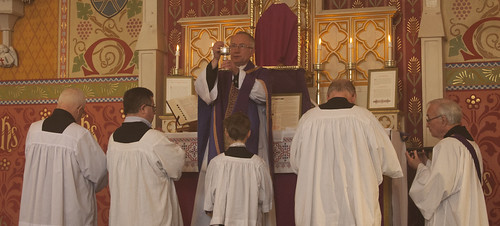
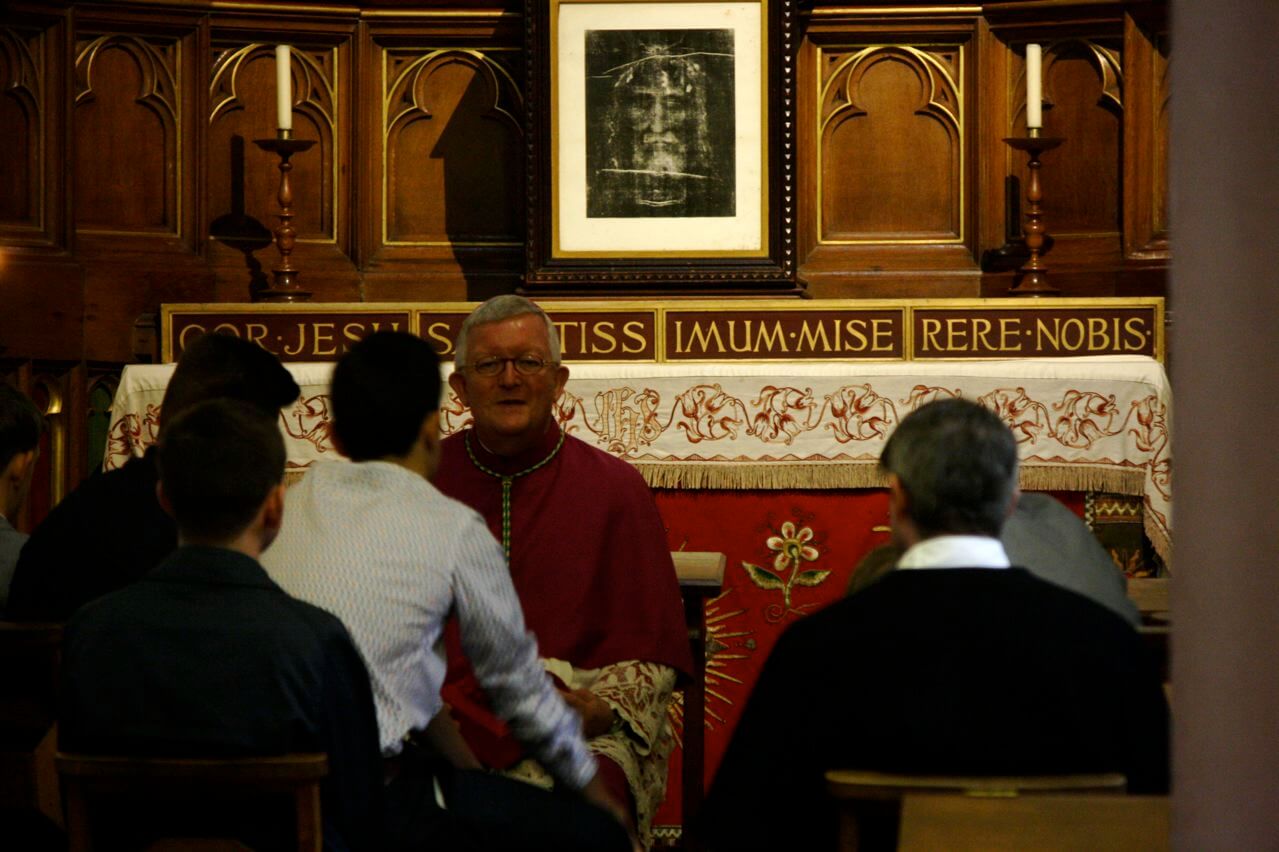
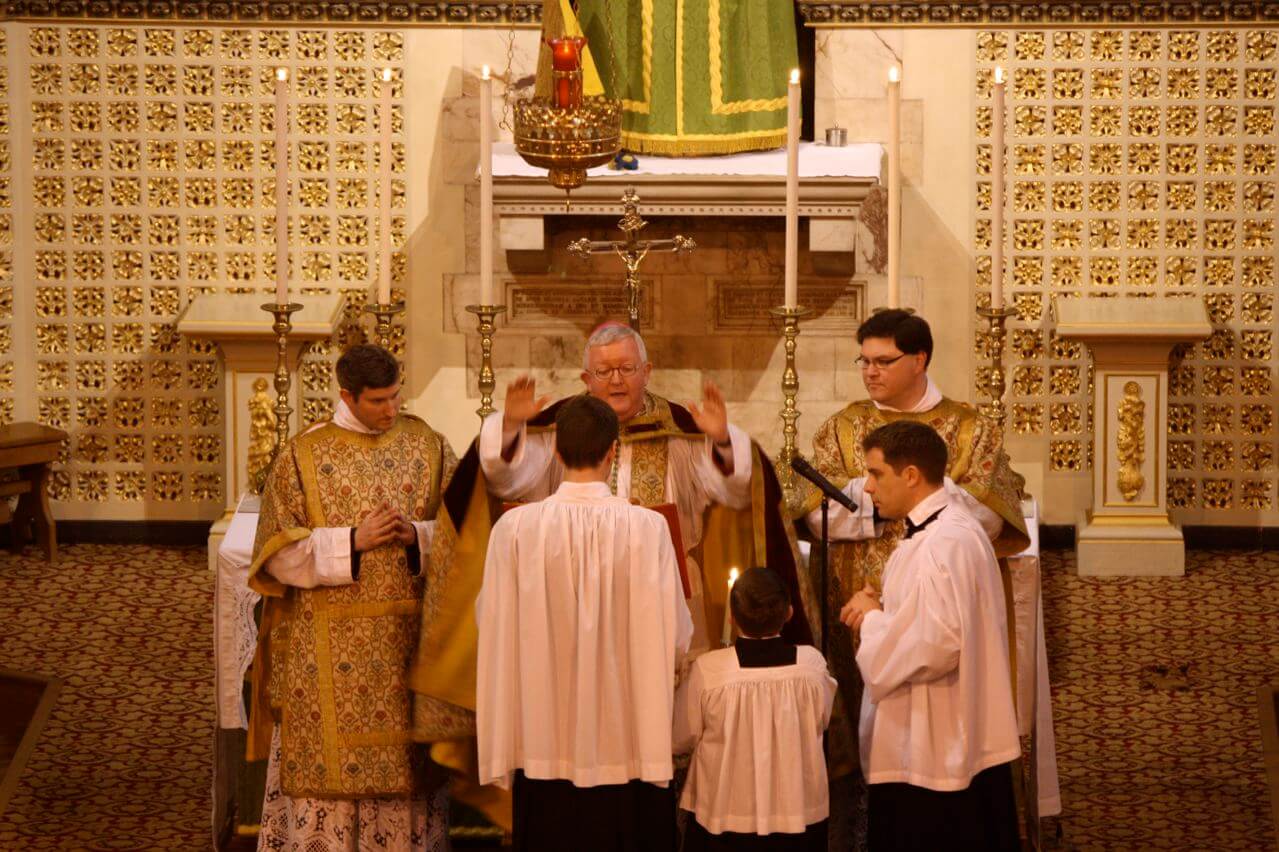
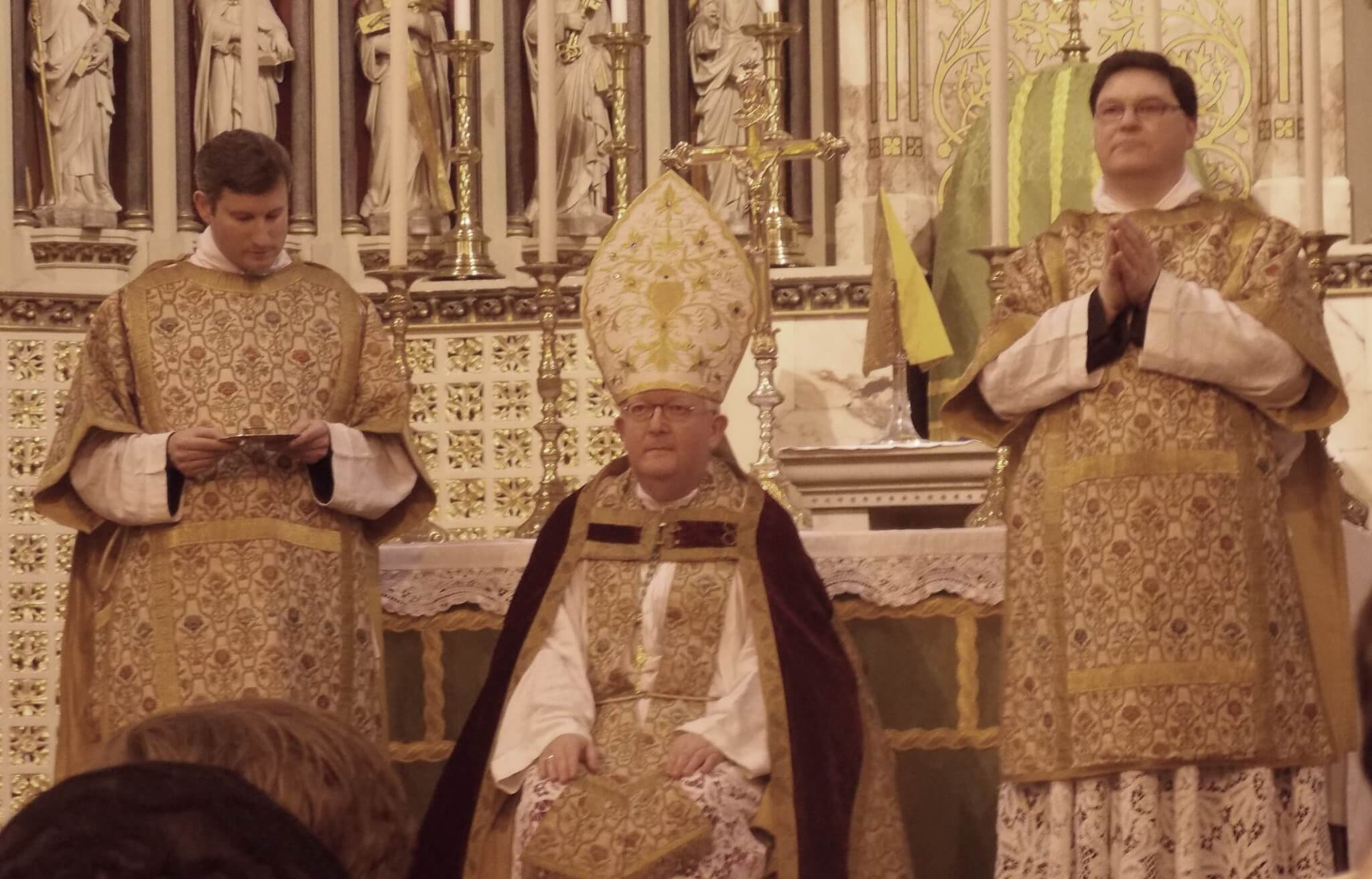
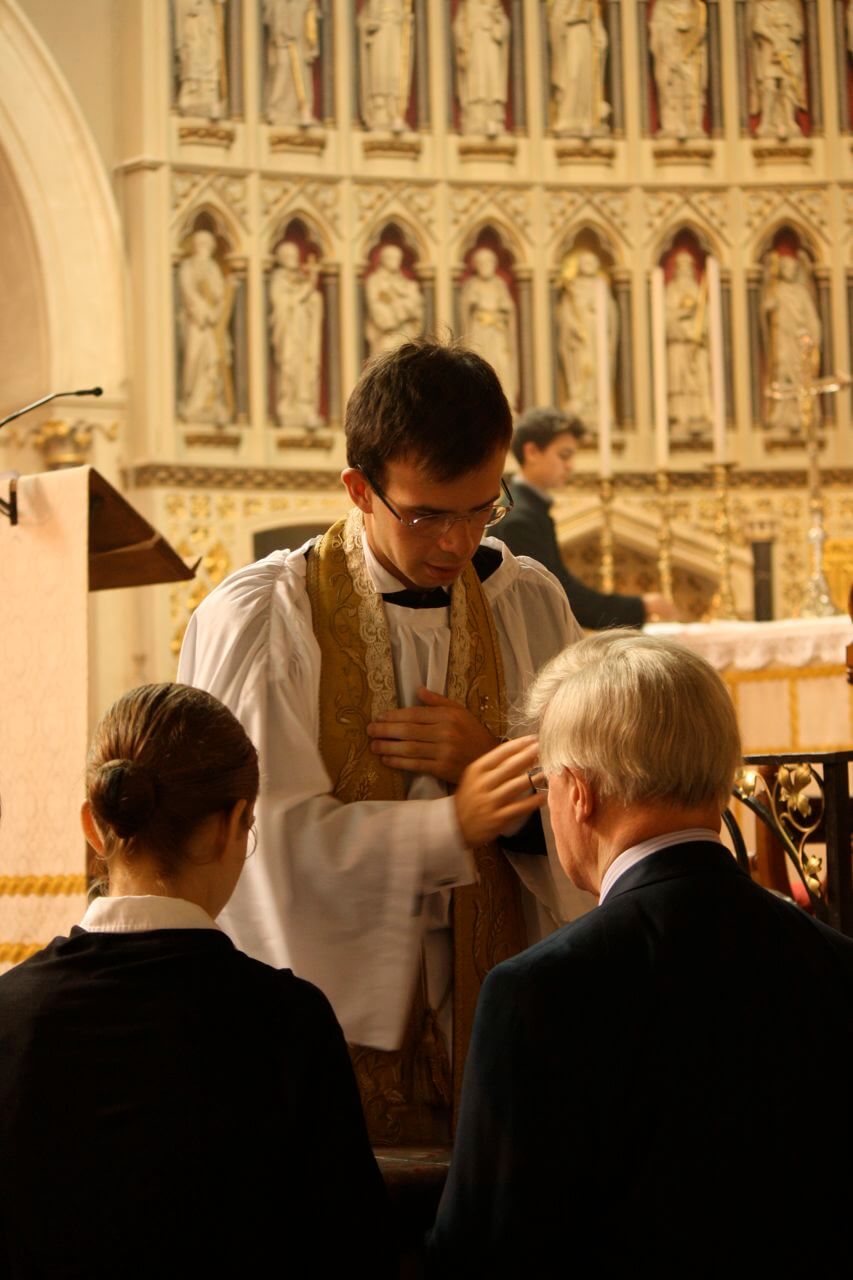
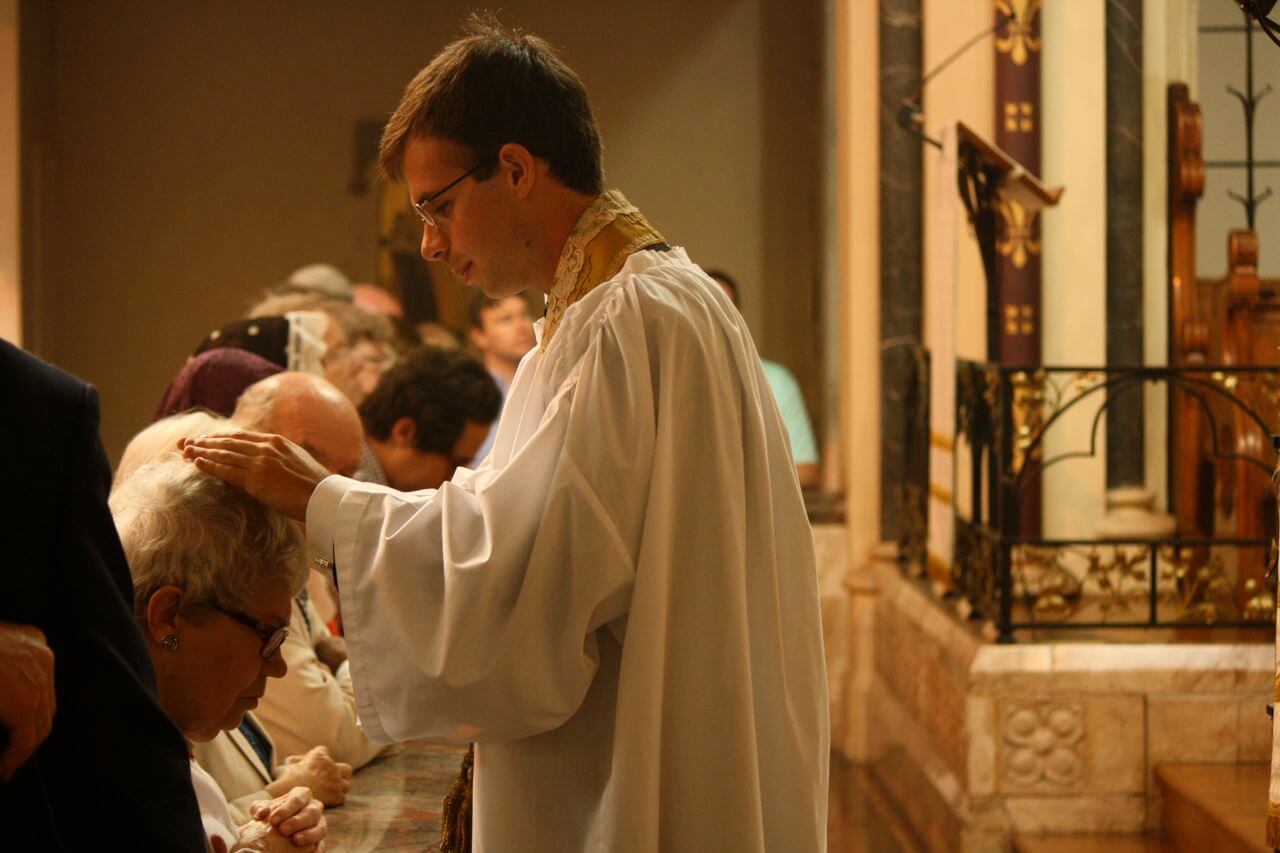
This afternoon the Archbishop of Birmingham conferred the Sacrament of Confirmation in the Extraordinary Form of the Roman Rite on candidates at the Oxford Oratory. Not having attended a Confirmation in this Form previously I went along as an observer, and also to show my support for the confirmands on such an important occasion in their lives.

Before the Confirmation, His Grace catechised and prayed with the candidates in the Sacred Heart Chapel.

IMG_8905

Nine candidates were confirmed, followed by Benediction of the Blessed Sacrament:

IMG_8919


IMG_8915


DSCN8857


DSCN8864

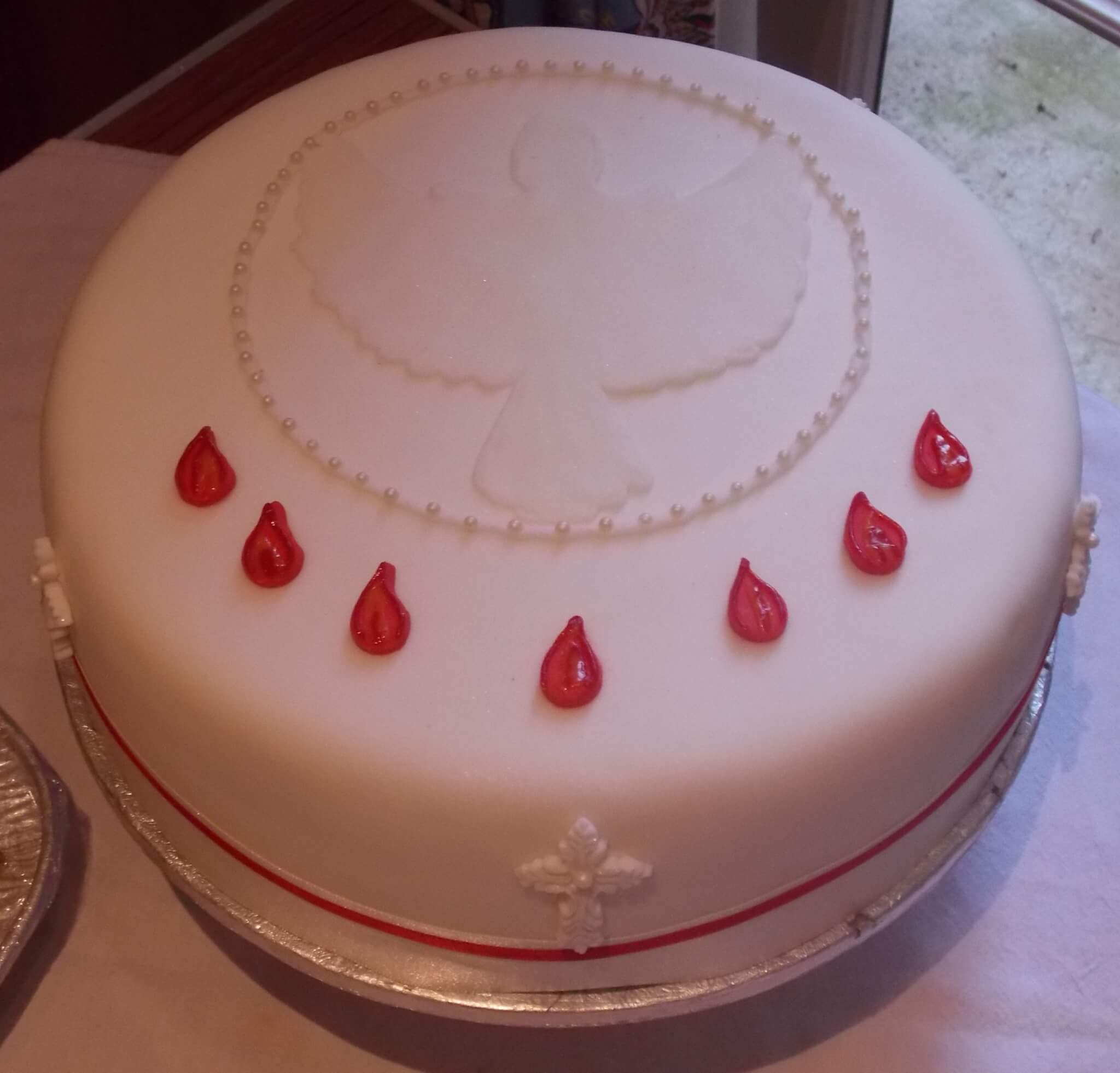
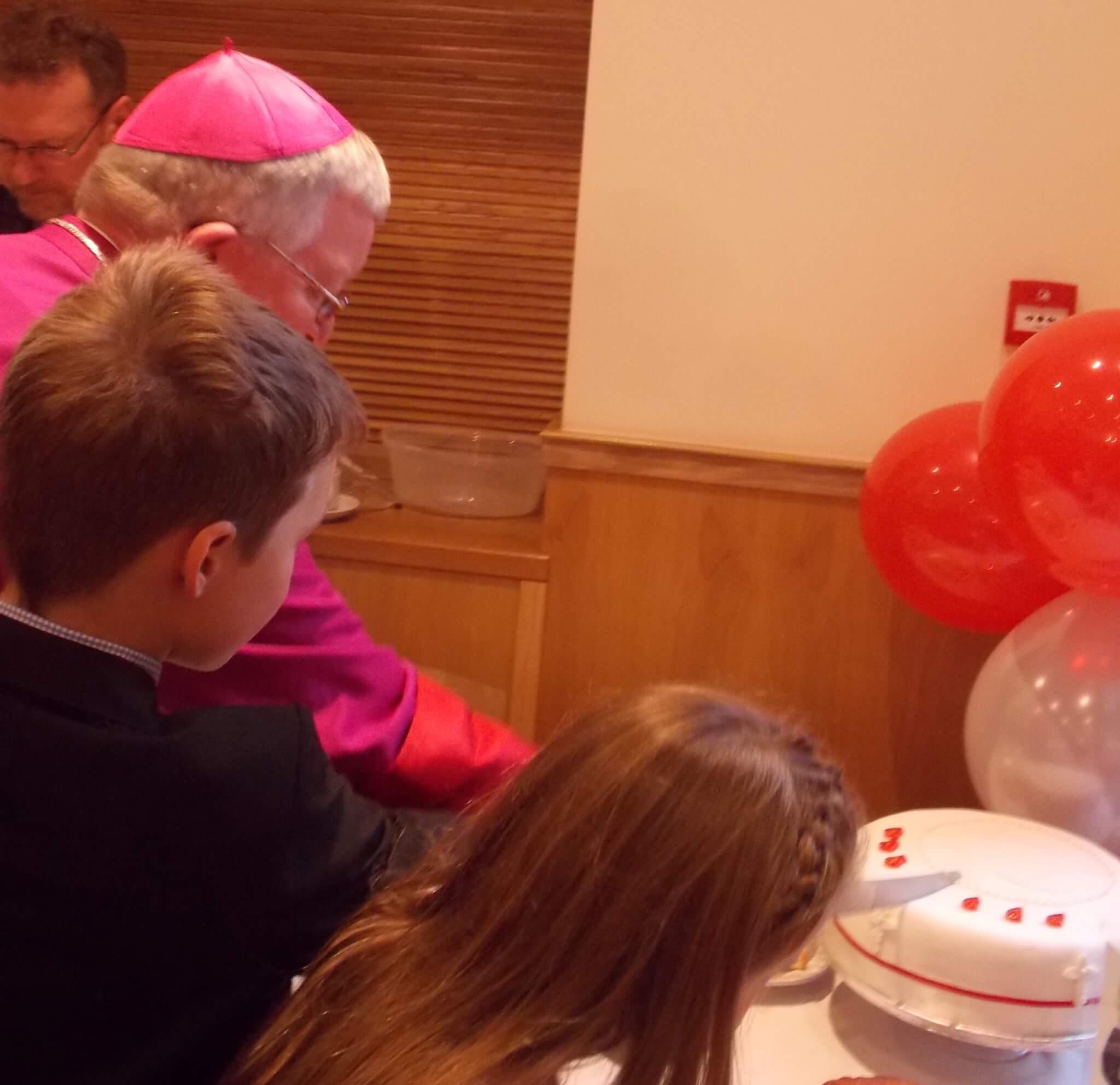
Afterwards there was a reception in the Parish Centre, with a splendidly and suitably decorated cake.

DSCN8824


 DSCN8882

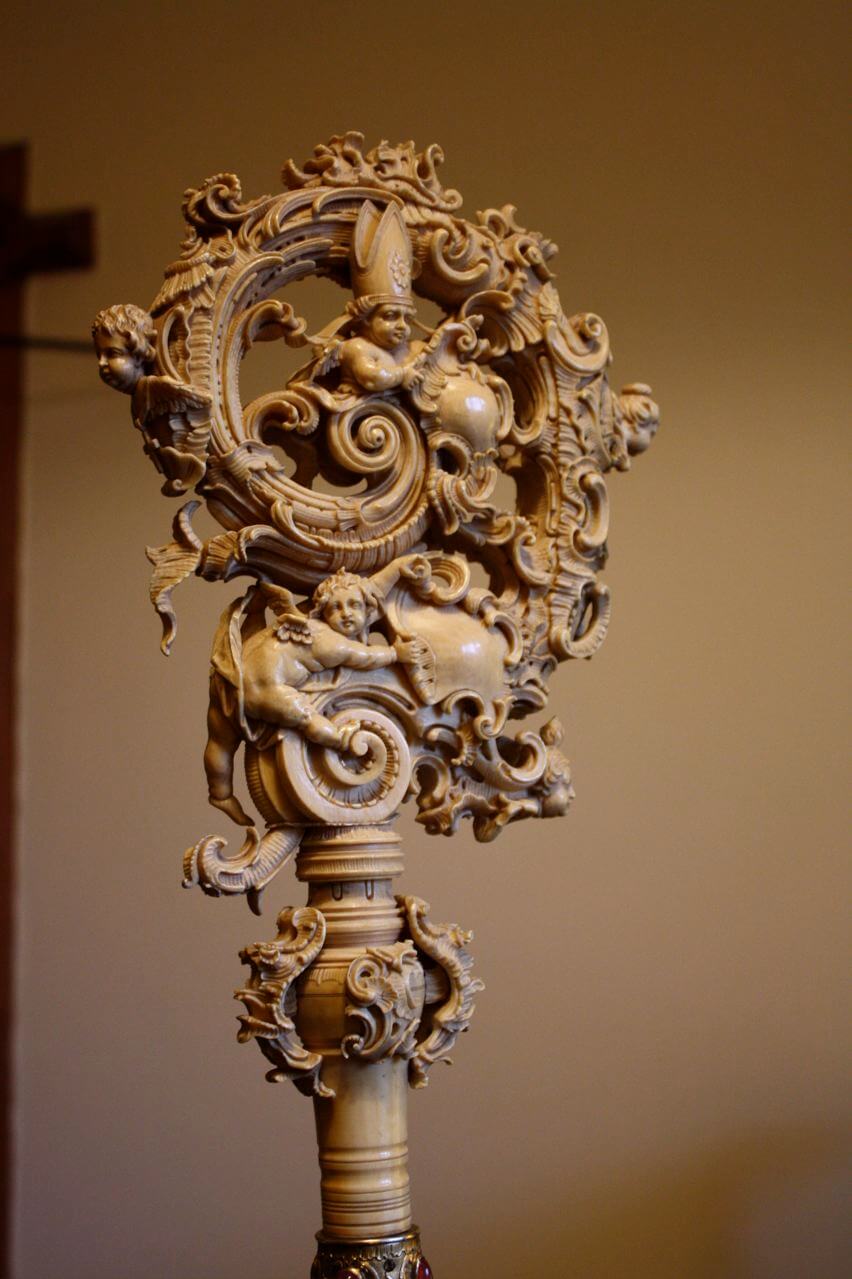
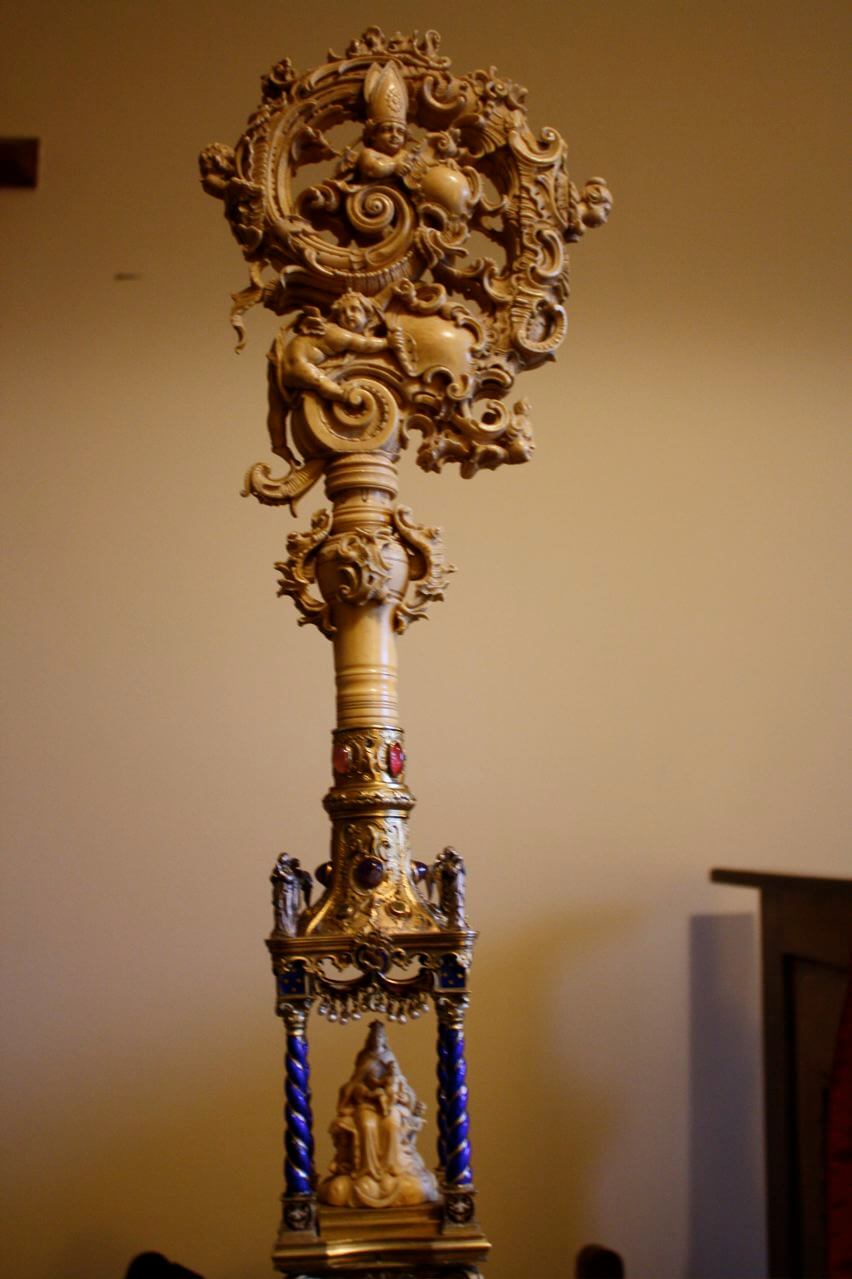
The Archbishop brought a splendid crosier, replete with baroque cherubs:

IMG_8937

 IMG_8938

Images: Oxford Oratory


Tuesday, 18 August 2015

Celebrating the Assumption at the Oxford Oratory


This past weekend we had two days of celebration at the Oxford Oratory for the Assumption of the Blessed Virgin Mary.

On Saturday at 12.15, that is on the usual day of the feast, there was a celebration of a Missa cantata in the Extraordinary Form. The music was provided by ' Amici Cantantes' from Birmingham. The Mass was well attended, and not just by particular enthusiasts or partisans for the EF - this was a Mass which attracted many others who simply wanted to pay honour to the Assumption on the day, and who clearly were not put off in any way by the idea of attending something other than the novus ordo

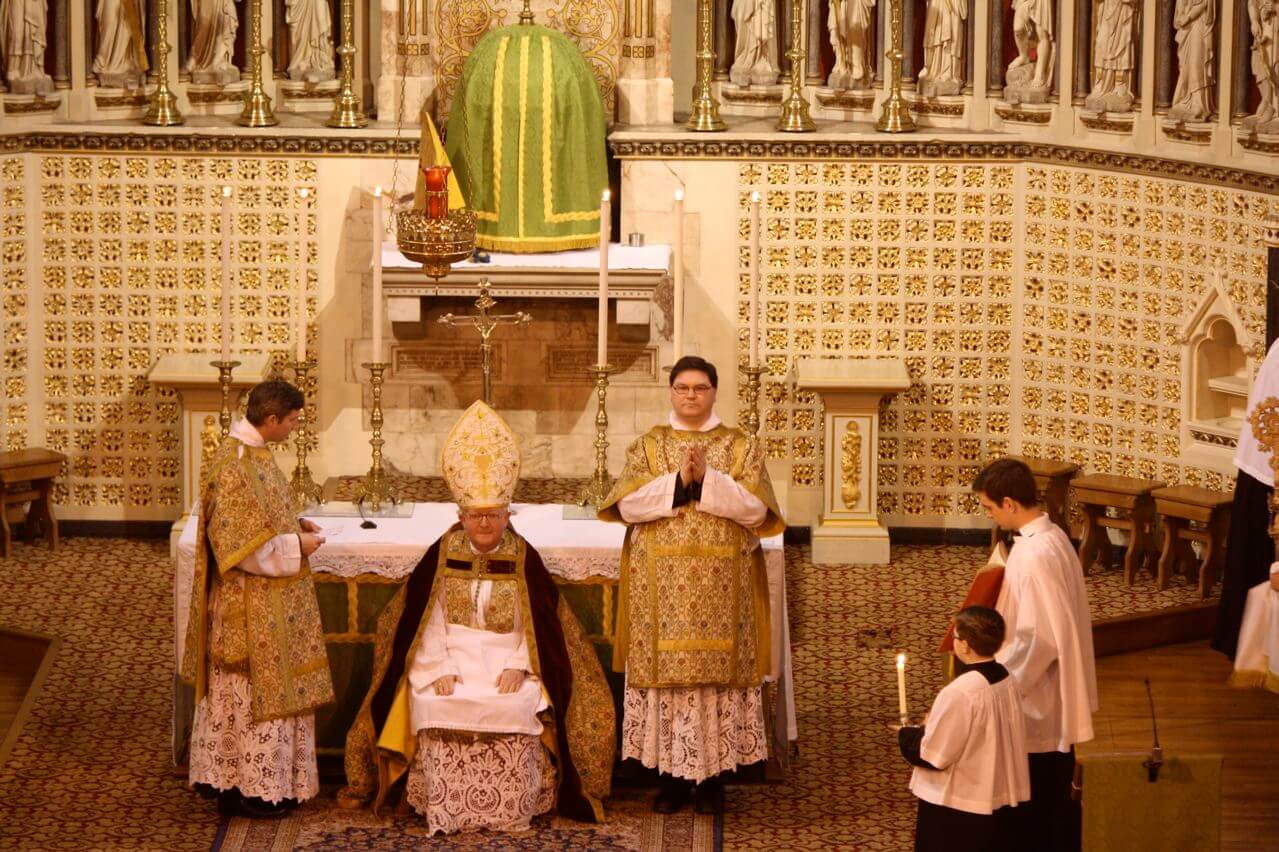
On Sunday, the transferred day for the Solemnity this year, the High Mass for the feast of Our Lady's Assumption was celebrated  by Fr Davide Saron, of the Oratory at Brescia in Italy. As the Oratory website, from which I have taken this part of the post, reminds its readers Fr Davide first visited the Oxford community four years ago, and it was with great pleasure that we were able to welcome him back to celebrate the Solemn Mass in the morning and  to preside at Solemn Vespers in the evening.

IMG_8544

Fr Davide was ordained priest on  May 16th this year, so was able to give first blessings after the Solemn Mass. Please pray for him as he begins his life of priestly ministry, and pray for more Oratorian vocations, both in Brescia and in Oxford!


IMG_8546

Images: Oxford Oratory


Monday, 4 May 2015

Carthusian and other martyrs of 1535


480 years ago, on May 4th 1535, the Carthusian Priors of London, Beauvale and Axholme, Richard Reynolds chaplain to the nuns of Syon Abbey and the rector of Isleworth were hung drawn and quartered at Tyburn for refusing to take the oath to the Henrician Act of Supremacy.


Today is the great feast honoring all of the Catholic Martyrs of the English Reformation: those canonized by Pope Paul VI and those beatified by Popes John Paul II, Pius XI, and Leo XIII. Many of the beatified martyrs, especially those declared martyrs by Popes Pius XI and Leo XIII, are not well known. Perhaps all the beatified martyrs should be canonized by Pope Francis?


This feast was moved to this date in 2000 with a new liturgical calendar for the dioceses of England and Wales approved by the
Vatican; then in 2010 it was elevated to a Feast (not just a Memorial). It is not a Feast or Memorial on the Liturgical Calendar in the USA--I think it should be!

Moving it to May 4 meant that the feast is celebrated on the anniversary of the protomartyrs of the English Reformation,
the Priors of the Carthusian order, a parish priest, and the confessor and chaplain of the Brigittine order at Syon Abbey. These five men, St. John Houghton, St. Augustine Webster, St. Robert Lawrence, Blessed John Haile, and St. Richard Reynolds, were brutally executed at Tyburn before a crowd of Court witnesses. Some sources even suggest that Henry VIII was there in disguise. Drawn on hurdles from the Tower of London (whence St. Thomas More saw them depart), they were hung and quartered while still alive.
Image and text: Supremacy and Suvival


There are online articles about the protomartyrs at John Houghton, Robert Lawrence, Augustine Webster and Richard Reynolds. As the last article points out St Richard was an outstanding spiritual consellor, and known as the Angel of Syon.

Whilst the other martyrs were being disembowelled he encouraged them with the idea that the sharp breakfast they were enduring would lead to the eternal banquet of heaven.

Fragments of the London Charterhouse survive in the present buildings at Charterhouse, and there are substantial fragments of the priory at Beauvale in Nottinghamshire. My previous posts about Syon Abbey can be found by clicking on the link at the end of this post. It appears likely that the pinnacle from the gatehouse of the abbey which the community of Syon has treasured in their wanderings to the Low Countries, Rouen, Lisbon and their return to Devon in 1861 is the one upon which was displayed one of St Richard's quarters following his execution.

This evening I attended a beautiful and well attended Extraordinary Form High Mass at the Oxford Oratory for the feast of the English Martyrs. This obviously commemorated all the martyrs of the years 1535 to 1681, but those from this day 480 years ago were especially in my mind.

Friday, 20 February 2015

EF Mass at Holy Rood


This lunchtime I attended the EF Mass at Holy Rood in Oxford.

The Mass had been organised between the new parish priest, Fr Stanislaw Gibzinski, and the Oxford Ordinariate group. The parish website can be seen at  Holy Rood, Oxford - Thames Isis.

The celebrant was Fr Daniel Lloyd from the Ordinariate.

By everyone's reckoning this was the first such celebration of the Tridentine form in nearly fifty years in the church. By the mid-sixties the variations of the interim rite were appearing and certainly this was the first Mass from the Missal promulgated in 1962 by St John XXIII since the introduction of the Missal of Pope Paul VI in 1970.

Although there was not an enormous congregation - although some people had made the effort to come from  other parts of the city - this was the first of a series advertised for Lent, and on Friday lunchtime, so it was a good base upon which to build.


Friday, 13 February 2015

Forthcoming EF Masses in the Oxford area


I have received information from the Chairman of The Latin Mass Society about celebrations in the Traditional rite in the Oxford area.

In addition to these celebrations I would add that there are regular 8am Masses on Sunday at the Oxford Oratory, and at 6pm on Wednesdays and Fridays and also at 12.30 on first Thursdays at SS Gregory and Augustine.

The clergy of FSSP at St William of York in Reading offer a full pattern of services with a Sung High Mass every Sunday at 11am.

The Shrine of Our Lady in Caversham

Our Lady of Caversham

Image:ourladyandstanne.org.uk

The main additional event coming up for the LMS is their annual Pilgrimage to Our Lady of Caversham, coinciding with the Ember Saturday of Lent, 28th February, at 11:30am. This impressive Mass with extra readings and chants is an ideal liturgical preparation for Lent and Easter. It will be accompanied by the Schola Abelis of Oxford with polyphony provided by Cantus Mangus of London. Caversham is in the outskirts of Reading, and is the Marian Shrine of the Birmingham Archdiocese. it is at 2 South View Avenue, Caversham, RG4 5AB. The LMS encourages peopel to support this event if you can. As i have opined before the Shrine is delightful and a wonderful example of restablishing devotion in aplace celebrate din the medieval period as a place of pilgrimage.


http://ourladyandstanne.org.uk/St%20Anne%20-%20Chapel%20of%20Our%20Lady.jpg

 The Shrine of Our Lady of Caversham

Image:ourladyandstanne.org.uk

This Sunday there is a Missa Cantata in SS Gregory and Augustine's in Oxford at 12 noon. This is part of their regular pattern of an EF Mass at noon on the third Sunday of each month.

On Ash Wednesday there will be Low Mass with ashes at 12.15pm at the Oxford Oratory and a Sung Mass with distribution of ashes in SS Gregory and Augustine's at 6pm.

There will be a Sung High Mass for the Annunciation at the Oxford Oratory on March 25th at 6pm.


Sunday Masses at the church of Holy Trinity, Hethe, near Bicester, continue at 12 noon; that on the 2nd Sunday of each month is Sung. Hethe also now has Low Masses at 12 noon on Saturdays in the church.


File:Holy Trinity RC church - geograph.org.uk - 832586.jpg

Holy Trinity, Hethe

Image:Wikimedia/Geograph

There is also another new venue for the Extraordinary Form at Holy Rood, in Abingdon Road, Oxford. Throughout Lent there will be Low Mass on Fridays at 12:30pm. This has been organised in conjunction with the Ordinariate who use this church.  The address is Folly Bridge, Oxford, OX1 4LD. 

For those who love and appreciate the usus antiquior there is somethimg of an embarassment of riches in this area, unlike some parts of the country, or indeed the world.

Tuesday, 6 January 2015

The Epiphany of Our Lord


Today is the Epiphany of Our Lord according to the traditional use of the Church.

As I have posted on this day in recent years I, and I think many others, would wish to see a return to the traditional date of January 6th for its observance in the Ordinary Form in England and Wales - and indeed in other countries as well - rather tham transferring it to the Sunday. I do very much hope that the Bishops will resolve to petition ther Holy See for a restoration of the customary dates for Epiphany, Ascension and Corpus Christi in the near future. It is surely not unreasonable to expect the faithful - if such they really are - to go to Mass on a day other than Sunday on three occasions during the year, or if they are in a parochial unit with several churches but only one priest to travel a slight distance - it will certainly not be as far as the Magi travelled.

I was quite happy to observe an anticipated Mass and Vespers of Epiphany in the Ordinary Form last Sunday, though otherwise I said the Office for the Second Sunday after Christmas, but, thanks to the rules governing the Extraordinary Form, I am able to observe this wonderful feast on its proper day, that is today. So, as in previous years, and as I described in my post Epiphanylast year, I am saying the Office for Epiphany, will go to the EF Low Mass at the Oxford Oratory at 12.15 and then, this evening, attend the Sung Mass at SS Gregory and Augustine at 6. Those possibilities do, I realise, make Catholic life in Oxford both richer and easier in practical terms than in many other places, and thanks be to God for that fact.


Adoration of the Magi by Gentile da Fabriano

The Adoration of the Magi

This work in tempera on wood, also called Pala Strozzi, was painted in 1423 by Gentile da Fabriano, and is one of the best known images of the Epiphany. It was commissioned by the wealthy banker and intellectual Palla Strozzi for the family chapel in the church of Santa Trinita.

 Image: uffizi.org

A Happy and Joyful Epiphany to you all.


Thursday, 2 October 2014

The Inaugural Mass at St Walburge's Preston


Yesterday the New Liturgical Movement website had an article about the inaugural High Mass last Saturday at St Walburge's Preston for its new role as a shrine for Eucharistic Adoration under the care of ICKSP.

The Mass was celebrated in the presence of the Bishop of Lancaster, who preached, and the whole occasions appears to have been both splendid (in all senses of the word) and also well-attended, which bodes well for this initiative.

The NLM report, which has a link to a set of sumptuous photographs of the whole day, can be seen at News from the ICKSP in England.

I really want to visit Preston - and that is something I would never have imagined myself saying hitherto (notwithstanding the presence of second cousins in the town).


Saturday, 27 September 2014

Inauguration of St Walburge Preston as an ICKSP church


There is post from the New Liturgical Movement about the inauguration today of the very impressive church of St Walburge Preston as a shrine for Eucharistic devotion under the care of ICKSP at the invitation of the Bishop of Lancaster. The NLM post can be seen at Inaugural Mass of New ICKSP Apostolate in Preston, England - Saturday, Sept. 27

I posted about this initiative earlier this year in Good news from Preston.

Friday, 15 August 2014

The Assumption of Our Lady


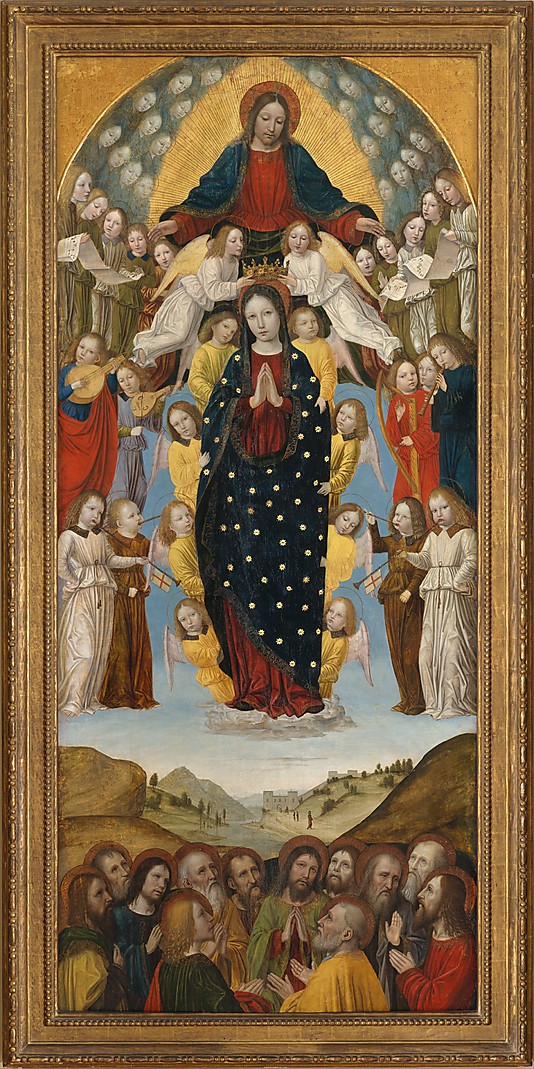
Today is the Solemnity of the Assumption of Our Lady, and to mark the fact here is a rather splendid late medieval depiction of the event.

assumption1

Image: standingonmyhead

I have taken it from Fr Longenecker's blog post for yesterday, which sets out his understanding as a former Evangelical turned Anglo-Catholic, who finally became a Catholic, which can be read at 10 Things to Remember About the Assumption of Mary

The lunchtime Low Mass in the Extraordinary Form for the Assumption at the Oxford Oratory today drew an extremely large congregation - not just EF regulars, but a large number of new faces - and one which many churches wouild be happy with at their main Sunday Mass I suspect. That is something which certainly goes against the idea that the "old" Mass puts people off.

Tuesday, 15 April 2014

Learning more about the Roman Missal


One of the books I have been looking at in Lent is Theological and Historical aspects of the Roman Missal. This is the published version of the papers given at the fifth international CIEL Conference, which was held at Versailles in the autumn of 1999.


File:Missale Romanum Pustet.jpg

The Roman Missal
The 1884 editio typica in a printing of 1911

Image: Wikipedia

I know or have heard several of the contributors and the papers make for extremely good reading. They are not only erudite and informative, and indeed thought provoking on liturgical and historical matters, but also have a reflective quality that makes them good material to use at this season of the year.

I learned a lot from the volume - the authors draw upon the great body of scholarly work that has been done on the history of the Roman Rite, and make available a not inconsiderable number of fascinating details and interpretations which I had either not known or fully appreciated hitherto.

If you are at all interested in the subject matter and can find a copy I would highly recommend it.


Tuesday, 8 April 2014

Good news from Preston


I was heartened to see from Fr Blake's blog post  So why 'Traddies' at Preston? that, at the invitation of the Bishop of Lancaster, the Institute of Christ the King are to take on the church of St Walburge in Preston. This will mean that the church will become a centre for the celebration of the Extraordinary Form of Mass, with provision for Sunday celebrations of the novus ordo.

St Walburge's from the east

Image:myweb.tiscali.co.uk

This announcement lifts the threat to the survival of this spectacular building by J.A.Hansom. Founded as a parish in 1847, the church was initially built in 1850-54, with the addition in 1873 of the sanctuary, and then the addition of what is the  third tallest spire in the realm - exceeded in height only by the medieval spires of the cathedrals at Salisbury and Norwich - at 309 feet in 1886. There is an online history of the church here, and another article about the building here. There is a report on these latest developments in the life of the church and parish here

St Walburge's has been considered a building at risk for several years, so this is a welcome move on architectural heritage grounds alone.

  File:St Walburge's, Preston.jpg

The west front of the church

Image:Wikipedia 

The Institute appear to becoming something of an architectural rescue mission in the North West, having successfully taken on the "Dome of Hope", the early twentieth century church of SS Peter and Paul in New Brighton in the Wirral, in recent years. From pictures of St Walburge's - I have never visited Preston, though the images tempt one to want to go to look at the church - it is a very impressive building, both externally and internally, and does not appear to have suffered wrecknovation.

The interior of the church

 Image: Fr Ray Blake blog

The High Altar and apse

Image: rorate caeli

This really does appear to be good news all round - good news for preserving both the physical and spiritual heritage of Cathplic Preston, good news for the Institute in establishing a second foundation in England, good news for those who love the traditional liturgy, good news for devotional life in Preston and the North West.


Wednesday, 26 March 2014

Usus Antiquior Mass for the Annunciation at the Oxford Oratory


Yesterday evening the 6pm Mass for the Annunciation at the Oxford Oratory was a Solemn High Mass in the Extraordinary Form. This has been established as the practice on this particular feast day at the Oratory in recent years. 

The congregation was a good one in numerical terms - not just those who particularly favour the Usus antiquior, but many others drawn from the regular congregation, and considerably more than would usually be present for either the usual 6pm Mass or a celebration in the EF at 12.15 on a feast day. 

This must be a good sign that people are once more getting used to the Extraordinary Form, and the argument that it "puts people off", if it ever had any validity, is shown to be more than ever invalid or a piece of special pleading.


Monday, 24 March 2014

More on the new Archbishop of Liverpool


Following on from what I posted in New Archbishop of Liverpool I see that the online Catholic news agency Zenit has a post about the translation of Bishop McMahon to the Archdiocese of Liverpool which can be viewed here.

In addition there is also from Fr Tim Finigan this post Greg Murphy interviews Bishop McMahon on usus antiquior in which the Bishop talks positively about his attitude to celebrating the Extraordinary Form of the Mass.