Once I was a clever boy learning the arts of Oxford... is a quotation from the verses written by Bishop Richard Fleming (c.1385-1431) for his tomb in Lincoln Cathedral. Fleming, the founder of Lincoln College in Oxford, is the subject of my research for a D. Phil., and, like me, a son of the West Riding. I have remarked in the past that I have a deeply meaningful on-going relationship with a dead fifteenth century bishop... it was Fleming who, in effect, enabled me to come to Oxford and to learn its arts, and for that I am immensely grateful.


Sunday, 9 September 2012

William the Conqueror


Today is the 925th anniversary of the death in 1087 at the priory of St Gervais outside Rouen of King William I. In case you need a reminder or a summary of the life of this remarkable man there is one here.  The life of him by Prof. David Bates in the Oxford DNB can be read here.
He was a tough, at times ruthless, ruler, but disciplined and energetic - how else would he have achieved success in 1066 - and proved a highly capable ruler, willing to learn and adapt. However one interprets the Norman Conquest it is pivotal to English history and that of the British isles, and William is pivotal the events of invasion, conquest and government in the two decades following. His legacy is remarkable by any standards. I wrote some reflections upon it last year in my post 1066 and All That to which I would refer readers together with its links.
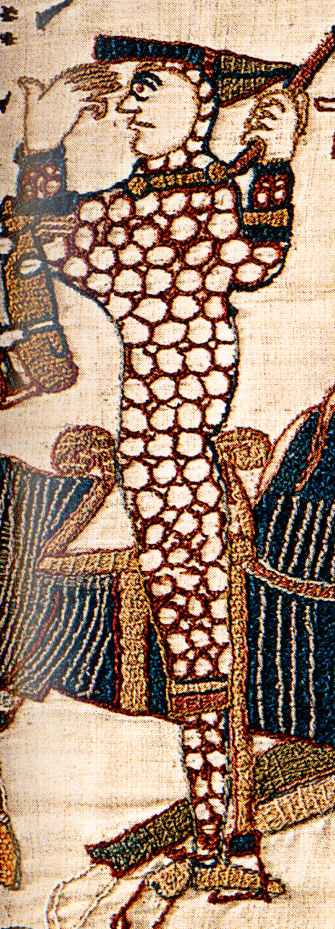
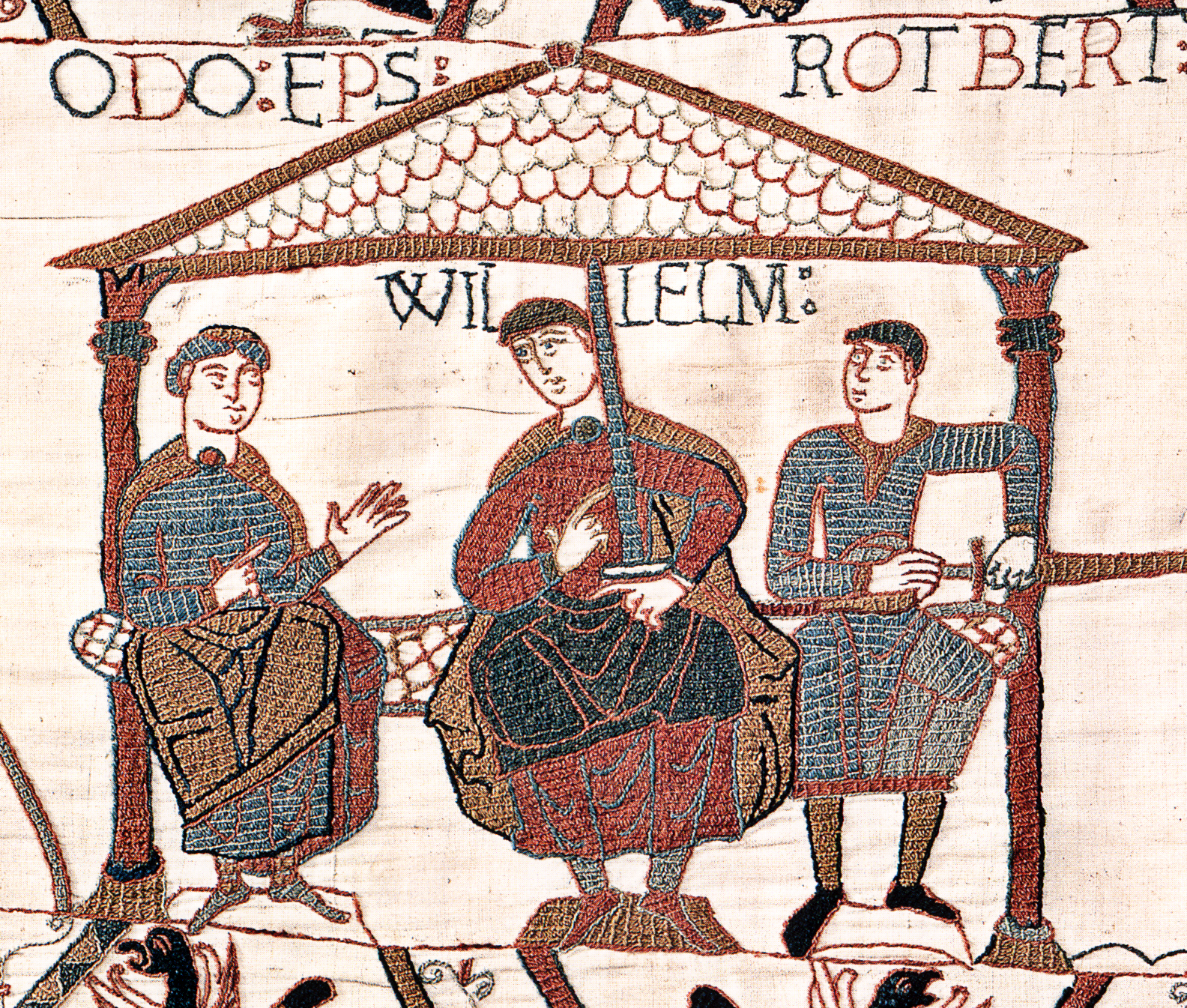
From what we can deduce of his appearance King William was an impressive figure. On the basis of the size of his one surviving thigh bone he was six foot or so in height, and in giving his eldest son Robert the nickname Curthose appears to have mocked him for his lack of height - Robert may have taken after his mother Queen Matilda, whose skeleton reveals her to have been very slight in build. In his later years he put on weight - a contributary cause to his death in 1087, but for much of his life he must have maintained very considerable fitness as a warrior and as a keen follower of the chase. Given his ancestry he may well have appeared more Scandinavian than French, and certainly one of his sons, King William II, was famously red haired, although King Henry I had black or dark hair. If the Bayeux tapestry is to be believed - and it is very detailed and near contemporary - William was brown haired and clean-shaven.

Saturday, 8 September 2012

Ordination in Chelmsford


Yesterday evening I went over to Chelmsford to attend the Ordination of a Norbertine friend from as a priest. I got to know him whilst he was a student here in Oxford. The service was held at the Church of Our Lady Immaculate, which is served by the Norbertine community from St Philip's Priory. Being a medievalist I always tend to refer to them by their other name as Premonstatenians, but that’s just me.

The Ordination was conducted by H.E.Cardinal Cormac Murphy-O'Connor, and was attended by two mitred abbots, other Premonstratensians from England and Belgium and Australia, plus Oratorians, Dominicans, secular diocesan clergy and also nuns from the Ordinariate, and by many parishioners and friends of the candidate from Oxford - most of the usual suspects were there and some others - and from elsewhere, and, not least noteworthy, a uniformed Honour Guard armed with swords and their flag from a Fraternity to which he belonged whilst studying at the University of Louvain.

Image
The Cardinal lays his hands on the candidate’s head in the Ordination rite
Image: Norbertine Vocations

A set of photographs of the Ordination on can be found on this Facebook page, and another set from his First Mass, which he celebrated this morning, can be seen on this Facebook page.

Thursday, 6 September 2012

Walking round Victorian Oxford


This afternoon I gave a guided tour of Victorian Oxford to a group of American students who had been attending a course on Victorian novels at Rewley House, the Oxford University centre for Further Education.
I began by pointing out the vast changes in Oxford between 1837 and 1901 - more far reaching I think than those in the present Queen's reign - and that this was a time of constantly shifting ideas and of the rapid expansion of the city from what  were in the 1830s little more than its medieval limits.
I also stressed three themes - the reform, or re-forming of the University, its curriculum and buildings, especially from the 1850s, secondly the impact of the Oxford Movement in its successive phases and thirdly the contemporaneous nineteenth century debate on Science and Religion and, sometimes, the loss of Faith.
We began outside Rewley House and I outlined the physical and public health problems of the city and the work of men such as Sir Henry Acland in combatting diseases such as cholera in a community living on the banks of a series of what were then polluted streams. I outlined the development of Jericho around the University Printing House as an industrial suburb, and the change in style from the small Greek temple-like church of St Paul in the 1830s to the splendours of the church of St Barnabas  built in 1869 under the patronage of Thomas Coombes the University Printer - a man influenced by the Oxford Movement and concerned for the spiritual welfare of his employees.

photo

St Barnabas Church, Jericho

Image: Isisbridge on Flickr 


 The interior of St Barnabas

Image: Martlet Derbyshire blogspot

I indicated the St Thomas area, about which I did research for my history of rish in 2003. This was a slum parish, the home of the canal and from 1850 the railway, and replete with the social evils Victiorian social reformers toiled to remove or alleviate - drunkeness, violence, prostitution and bad housing. I poined out the part played in seeking to both clean up the area and in raising its spiritual life by the great Thomas Chamberlain, the TractarianVicar of St Thomas from 1842-92.

We then walked into the centre of the city, noting on the way the Ashmolean Museum of 1845, the riposte to the Oxford Movement of the Martyrs Memorial of 1841 and the station or seaside hotel style of the Randolph Hotel of 1864-66 - indicative of changing tastes and fashions.

From there we went to look at the Oxford Union, founded in rooms rented as and when needed in 1823 but which moved to the present site and built there in 1858, with a new Debating Chamber in 1878, and produced an increasing number of major political figures, including Gladstone and Salisbury as Prime Ministers. The decoration of the old Library - the original Debating Chamber on the site - by William Morris and other Pre-Raphaelites marks another aspect of Victorian culture. 

Exeter College is the ideal example of an ancient college extended and partly rebuilt in the Victorian period, and most notably the spectacular chapel by George Gilbert Scott of 1854-60.


The interior of Exeter College Chapel
Image: Wikipedia. photo by DAVID ILIFF. License CC-BY-SA 3.0
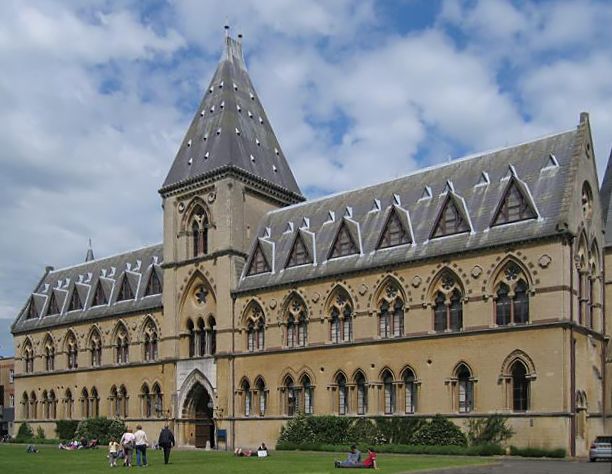
Taking in  on the way the buildings of the old Indian Institute and Rhodes House - evoking the place of the late Victorian University in the service of Empire - we then looked at the University Museum  of 1860.
Not only is is superb example of Victorian architecture by Deane and Woodward but it is in its very inspiration and essence an image of Victorian engineering, scientific enquiry and education. It adjoins what has developed as the University's science area.


File:Oxf-uni-mus-nh.jpg

The University Museum

Image: Wikipedia

It was the setting for one of the most famous occasions in the mid-century debate on Science and Religion in the very yar it opened with the meeting of the British Association and the debate betwwen Bishop Samuel Wilberforce and T.H.Huxley. However as the link about the 1860 Oxford evolution debate points out at the time the event was more nuanced and indeed friendly - a classically Oxford occasion - than later myths might suggest.
File:HuxleyVanityFair.jpg

T.H.Huxley

Image: Wikipedia from Vanity Fair

File:WilberforceVanityFair.jpg

Bishop Wilberforce

Image:Wikipedia from Vanity Fair

Our penultimate stop was Keble College, founded in 1870 to commemorate John Keble and too serve as a training ground for Tractarianism. The buildings by William Butterfield, completed in 1876, capture the grandeur of the founders vision, with a Hall longer than that of Christ Church, the spectacular chapel and the way in which the traditional collge plan was adapted to modern equirements - thus Keble has corridors rather than staircases - and all carried out in brick with stone reserved for the details. 

Our final stop was at an hotel in North Oxford, one of the handsome villas built in the second half of the nineteenth century for academics who were now free to marry and have a family whilst serving as Fellows, and the opportunity to sample another Victorian invention - afternoon tea.

Accession day of the King of Romania


Today is the seventy second anniversary of the accession and coronation on the same day September 6 1940 of the King of Romania following the enforced abdication of his father King Carol II. King Michael is thus within a ew months of equalling the length of reign of King Louis XIV, with, of course, the very regrettable caveat that unfortunately for both the King and for Romanian people, he has only been able to exercise his soverein powers for a few of those years. If his period as King in the years 1927-30, about which I posted in The first accession of King Michael in July is included he has been a monarch longer than the Sun King was.


H.M.The King of Romania in 2007

Image: Wikipedia

The circumstances of his accession meant that the King was that in name only, and forced to concede power to the dictator Antonescu, of whom the online biography here gives a good account of the background to these events and the King was not able to exercise his powers until August 1944 with King Michael's Coup.
There is an online life of the King here.

There is an online version of a series of photographs of the King and his mother, Queen Helen, taken in April 1946 for the magazine Life which show them at the palace at Sinaia when it might still be hoped that he would remain in his kingdom and which can be viewed here.

http://upload.wikimedia.org/wikipedia/commons/thumb/b/b4/Kingdom_of_Romania_-_Big_CoA.svg/208px-Kingdom_of_Romania_-_Big_CoA.svg.png


Image:Wikipedia

Tuesday, 4 September 2012

The Manchester Oratory


I heard the other day that the long awaited canonical erection of the proposed Manchester Oratory has been granted, although it will be based at Cheetham Hill rather than its present base at the church of the Holy Name. The official announcement is on their parish website and can be seen here.

Monday, 3 September 2012

St Gregory the Great


Today, in the novus ordo calendar, is the feast of St Gregory the Great, Pope from 590 until 604, and the Apostle of the English.

To mark his feast day here is another depiction of the Mass of St Gregory, the oft-used later medieval story of how he convinced a doubter of the reality of Transubstantiation. As became usual the scene is shown with the Saint having a vision of the Man of Sorrows.

Mass of Saint Gregory

The Mass of Saint Gregory

Student or follower of Robert Campin about 1440
Oil on panel, 85 x 73 cm
Brussels, Musees Royaux des Beaux-Arts
.
.
.
Some scholars have thought that the Mass of Saint Gregory was a copy after a lost original by Robert Campin dating from around 1410-1415.

Image: aiwaz.net

As with other depictions of this story the painting is an insight into late medieval liturgical practice and also late medieval expectations of what churches and liturgies looked like.

Saturday, 1 September 2012

St Giles and his shrine


Today is the feast of St Giles, a saint to whom I have devotion having been baptised in the parish church dedicated to him in Pontefract, and where I worshipped for many years and serves as Parish Clerk before coming to Oxford.

My posts about him from 2010 can be read at St Giles and  St Giles by Thomas of Coloswar and from last year at St Giles.

St Giles' cult in medieval England, and indeed across Europe, seems to stem from the network of pilgrimage routes which developed around those to Compostella and Vezeley under Cluniac influence in the later eleventh and early twelfth centuries. His shrine at St Gilles in Provence was on the route than linked these other pilgriage roads and attracted pilgrims. There is an account of the abbey and its remains here. 

Severely damaged by both the Huguenots in the sixteenth century and again during the French revolution, only part of the original church is still in use, although it is once again the object of pilgrimage. Its principal and most famous feature is what remains of the monumental west facade with its wonderful sculpture - one of the glories of twelfth century Provencal Romanesque. 


The west front of the abbey of St Gilles

Image: wikimedia commons

There is an interactive site about the facade here and there are  two illustrated sites about it at Introduction and Index to the images of the Benedictine Abbey of Saint_Gilles  and  Images of the Benedictine Abbey of Saint-Gilles. 

Two other sites which discuss it are an essay on Saint-Gilles-du-Gard which can be read here, the patronage ...  and one from the Carnegie Museum about their casts of the sculpture which can be seen here. 

September


The painting is attributed to Paul Limbourg and, in part, to the later painter who worked on the manuscript in the 1480s, Jean Colombe.

September is the time of the grape harvest. Five people gather the grapes whilst another man, who looks to be sampling the vine crop, and a woman, apparently pregnant and perhaps stretching after bending to gather the grapes, watch them. The bunches of grapes are put first into baskets and than transferred to paniers which are borne by mules. The paniers are then loaded into larger whicker containers on carts drawn by oxen, presumably to the winepress linked to the château of Saumur in Anjou which forms the backdrop to the scene.The towers are decorated with gilt fleurs de lys, similar to the details shown on English castles in sixteenth century survey drawings.

Once again in the Limbourg's scenes there is the sense of peace and tranquility, of plenty and a confident enjoyment of the good things of life.

Anjou is still a wine producing region and, unlike some others of  the Duc be Berry's residences, the castle is still excellently preserved as can be seen at the link Château de Saumur. The survival of the château and of parts of other ducal residences confirm the depictions by  the Limbourgs. Even if allowance is made for elements of idealisation in the warm sunlight of the artists' creation, and recalling that France in these years of 1412-16 was a very troubled realm, this is nonetheless confirmation of the medieval castle as primarily an aristocratic residence rising out of its agricultural base. Saumur may well be a fortification of considerable strength, but the message conveyed by the artist, and that expected by the patron, is peaceful.