Once I was a clever boy learning the arts of Oxford... is a quotation from the verses written by Bishop Richard Fleming (c.1385-1431) for his tomb in Lincoln Cathedral. Fleming, the founder of Lincoln College in Oxford, is the subject of my research for a D. Phil., and, like me, a son of the West Riding. I have remarked in the past that I have a deeply meaningful on-going relationship with a dead fifteenth century bishop... it was Fleming who, in effect, enabled me to come to Oxford and to learn its arts, and for that I am immensely grateful.


Tuesday, 12 February 2013

The Pope's Abdication


It was not until late afternoon yesterday that I learned of the Pope's announcement of his intention to abdicate as of the evening of February 28th. His announcement appears to have caught virtually everyone by surprise, though I recall that he had said in an interview with Peter Seewald that he would consider abdication if he thought he was no longer physically able to exercise the Papal office as he thought it should be done. He has been a Pope of surprises, and in this final announcement has continued that way of operating.

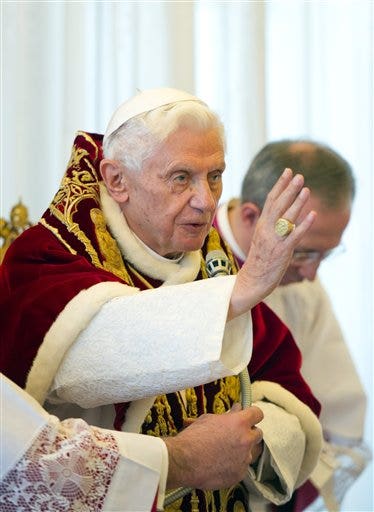

The Pope gives his benediction after his announcement

Image:Fox News

This is clearly the Holy Father's free personal choice, after prayer and reflection, as he said. It should be accepted with respect, and without the wilder theories that will doubtless go the rounds of the internet. He clearly wishes not only to avoid personal distress through infirmity, but to spare the Church another period of leadership by an ailing Pope. That is something he himself will well understand from the latter years of Pope John Paul II. From yesterday's pictures he appears more aged than hitherto, though the emotion of the choice and occasion must have taken its toll.

I am saddened by this news for two reasons. Firstly I am very sorry that someone for whom I have enormous, boundless, respect and admiration considers that they are too frail to continue in office. I have real human sympathy for the Pope, and wish him well in his retirement, the chance to relax and to spend time with his brother, and with God in prayer.

Secondly I am sorry that he will not continue to lead the Church along the lines he has led it since his election - despite his age I looked forward to new initiatives and genuine renovation coming from him.

I also feel great gratitude for all that the Pope has achieved in his pontificate and all that he has given to the life of the Church over so many years. This will be, I am sure, an enduring legacy of writings, formation, liturgical renewal - not just Summorum Pontificum but the new English translation and a real concern for the dignity and tradition of worship in and around the Papacy itself - the initiation and establishment of the Ordinariates, and the intellectual confrontation with secularism.

As someone who was received into full peace and communion two days before Pope John Paul II died I have been so far,  ipso facto, a Pope Benedict XVI Catholic, and consider myself very fortunate indeed to have had him as the visible head of the Church as I have grown into its life and practice.

The precedents for Papal abdication are few. He will apparently return to the status of being a Cardinal again, as did Popes Gregory XII and Pope John XXIII in the early fifteenth century. Will a life of cloistered prayer within the Vatican be possible for him without having the real opportunity to publish or speak again for fear of it being seen as a criticism of his successor? Will he be left in peace to do what he wishes?


Pope benedict XVI in 2009 visiting the reliquary of Pope Celestine V - St Peter of Morrone - who abdicated in 1294, the last Pope of an undivided Western Church to abdicate.

Images:New Liturgical Movement

As loyal Catholics we must continue to pray for the Pope, and for the Cardinals who will elect his successor, for that successor and for the Church.


Monday, 11 February 2013

Carshalton Revisited


Yesterday there was another of the Extraordinary Form Masses at Holy Cross Carshalton about which I have written before. David Forster and I drove up to south-west London along the A40, M40 and so via Heathrow to Carshalton through driving rain and motorway spray - well, David did the driving and I did a bit of map-reading.

We set off, and arrived earlier than previously so that we could have a traing session with other servers, and this time we had a full set of servers. This bodes well for the provision of this form of the Mass in the area, and despite the dreadful weather we had a decent number in the congregation.

As it was Quinquagesima Sunday we had to change the hangings and vestments for violet rather than the novus ordo green, and, of course, change them back afterwards. The parish are very welcoming and the sacristan very obliging on these occasions, and those of us who go as helpers from outside feel both appreciated and also that  we are getting familiar with the church and its furnishings.

The celebrant, as in November, was Fr Alexander Lucie-Smith, the Parish Priest of Knaphill in Surrey, and who is a columnist for The Catholic Herald
Excellent music was again provided by Cantus Magnus, who sang music by the Franco-Flemish Renaissance composer Heinrich Isaac (c. 1450 – 1517).They are led by the organiser of the Mass Matthew Schellhorn, who is the LMS Diocesan Representative for Southwark North.
Over refreshments afterwards we were able to plan for future occasions and have a sense that there is here indeed a stable group and that these Masses are becoming an established part of the Catholic life of the area.

The rain, which was only drizzle in Carshalton, seemed to return in full force with driving sleet when we reached the motorway system - it must have been waiting for us - and it accompanied us all the way back to the outskirts of Oxford. Nevertheless we got back safe and sound and had supper before going off to our own homes. A satisfying day.

The next EF Mass at Holy Cross is scheduled for Laetare Sunday, March 10th at 5pm.


Thursday, 7 February 2013

The Season of Septuagesima


Last year I posted Septuagesima, Sexagesima, Quinquagesima about the traditional forms of the current pre-Lent season, citing posts from the New Liturgical Movement and elsewhere. In Burying the Alleluia I wrote about about the long-standing practice of suppressing the Alleluia from Septuagesima in the pre-1970 Calendar and from the beginning of Lent in the Novus Ordo.

There is an introduction to the history of the season here.

The essential commonality of practice between the Eastern and Western Churches in the matter of fasting until recent decades when the Western liturgical seasons were simplified can be seen in the articles which the New Liturgical Movement has again written about in Some Notes on the Origins and Character of Septuagesimatide (NLM Reprint) . They have also linked to their post The Question of the Septuagesima Season and the Modern Roman Liturgy: Possible Enrichment? from three years ago which has drawn some interesting comments. 

Given the discrepancy which now exists between the OF and EF Calendars as to the Pre-Lent period this is a topic which could be resolved by reversion to ancient usage or by making observance of the pre-Lenten days at least an option in the Novus Ordo

Having written the other day about the way Candlemas is a link, a hinge if you like, between Christmastide and Lent-Easter I am inclined to the view that the traditional Septuagesima season makes for a more pastoral and psychologically satisfying. 

There is a fine set of photographs from the blog Ars Orandi of the traditional liturgy of Septuagesima Sunday in the Extraordinary Form as celebrated at Kinkora in Ontario in 2010 here.


Wednesday, 6 February 2013

Accession Day


H.M.The Queen

Image:wondrouspics

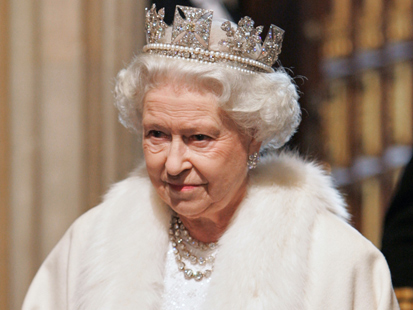
Today is the sixty first anniversary of the Queen's accession to the throne in 1952 and an opportunity to express my loyal good wishes and gratitude to Her Majesty for her life and reign, and for providing for all her peoples a very personal and individual centre of stability and continuity.

Long may she Reign!


Tuesday, 5 February 2013

Writing to my MP


Here is the text of the letter I have sent to my MP, the Rt. Hon. Andrew Smith, who sits for Oxford East, about the legislation being considered today on its Second Reading by the House of Commons to redefine the nature of marriage.

Dear Mr Smith,

I am writing to you as one of your constituents about the proposals being brought before Parliament to redefine marriage.

I am not certain as to how you intend to vote on this matter but I would strongly urge you to vote against such a significant change in the law.

Amongst the criticisms which can be made of this proposal there are three to which I would ask you as my MP to give consideration.

Firstly none of the main political parties proposed this dramatic change in their manifestos at the 2010 General Election. There is no popular mandate for changing the law, and in this case it is one which will ultimately have an impact on very many people's lives. It is as if the proponents of such a change knew it would not receive majority backing and deliberately kept quiet about it. That does not show much respect for the electoral process.

Secondly there is already provision for same-sex Civil Partnerships to ensure property rights and other benefits. The "fairness " argument really does not work. To redefine something as important as marriage to satisfy the aspirations of a minority of a minority is to unbalance social structures in an extremely dangerous way.

Thirdly, and most importantly, such a change will be a fundamental change to our society. As a historian it is, I think, accurate to assert that all previous societies across the world and the vast majority of contemporary ones, whatever their religious or ethical background - Christian, Muslim, Jewish, Hindu, Buddhist or humanistic - view marriage as  between a man and a woman, their essential complementarity leading to the birth of children and the future of the society. This is true for polygamous communities - there too marriage is between two members of the opposite sex. Marriage is not just about companionship, it is the fundamental building block of society and ensuring the future. Morally I believe it is beyond the competence of an Act of Parliament to seek to change a universal practise and understanding - the Sovereignty of the law does ultimately have limits. Such a change would be rather like Parliament legislating that the Moon is made of green cheese and everyone must accept, teach and believe the fact because it has been made the law of the land.

In addition to these points I would add the concern that if this legislation is enacted there will be the real risk of discrimination against those who cannot in good conscience accept it. What enforceable safeguards will be given to Registrars, teachers, clergy, charities, and many others which will not be overturned in the name of a newly invented Human Right?

I look forward to receiving your comments and indeed to seeing how you have voted on this issue.

Yours faithfully,
John Whitehead

The King under the car park


Last week I was posting about the King over the water, this week it is the King under the car park.

Yesterday came the announcement of the results of the DNA testing on the skeleton found on the site of the Leicester Greyfrioars and generally assumed to be those of King Richard III which confirmed that the remains are indeed those of the King. There are reports from the BBC here and from the Daily Telegraph here.

Richard III portrait compared to Greyfriars  skull  

Then and now - King Richard III
Image: BBC
 

Today there is much more, including this piece, again from the BBC, about the facial reconstruction of the skull which can be read here. This has a whole series of links to other pieces about the King's death and the excavations which revealed his remains.

There is a detailed and very well illustrated account of the remains and of the facial reconstruction on the Daily Mail website which can be seen here.There is also another article, again from the Daily Telegraph, with links to others on the topic, which can be read here.


Saturday, 2 February 2013

Candlemas


Today is Candlemas, the Feast of the Presentation of the Lord in the Temple and of  the Purification of Our Lady.

Ambrogio_Lorenzetti_Presentation_in_the_Temple_1342

The Presentation in the Temple
Ambrogip Lorenzetti, 1342
The San Crescenzio Altarpiece, now in the Uffizzi

Image:shafe.co.uk

Candlemas has long been one of my favourite feasts, and since coming to Oxford I have found two additional reasons to enjoy it. It is  the college feast of Oriel - the House of Blessed Mary the Virgin in Oxford commonly called Oriel College, to give it its proper name - and Candlemas is the only major feast of Our lady to fall in Full Term. Today is also the anniversary of the founding of the English Oratory by Bl. John Henry Newman in 1848.

http://www.sightswithin.com/Stefan.Lochner/Presentation_of_Christ_in_the_Temple.jpg

The Presentation in the Temple
Stefan Lochner, 1447

Image:sightswithin.com

These two facts are not, I think, unrelated. Newman was attracted to the Oratory of St Philip by its similarity to the life of an Oxford college, and at Oriel, where he had been a Fellow from 1822 until 1845 he would have been familar with Candlemas as the college feast and from its depiction in the eighteenth century stained glass in the old east window of the chapel - that glass is now in the sourh west window of the chapel.


The Presentation in the Temple by Hans Memling

The Presentation in the Temple

Hans Memling,1463

National Gallery of Art, Washington D.C.

Image: friendsofart.com

Our Lady is the patroness of the Oratory - indeed St Philip saw the Blessed Virgin as the true foundress of his community - so Candlemas was an eminently suitable day on which Newman was to begin the life of the Oratorian community in England 165 years ago.

http://www.saviorsite.com/wp-content/uploads/2010/12/jesus-presentation-in-the-temple.jpg

The Presentation in the Temple
Hans Holbein the elder

Image:saviorsite.com

I attended the beautiful Solemn Mass at the Oxford Oratory this morning and during the opening procession round the church we sang Newman's charming and perceptive hymn for the feast:


The Angel-lights of Christmas morn,
    Which shot across the sky,
Away they pass at Candlemas,
    They sparkle and they die.

Comfort of earth is brief at best,
    Although it be divine;
Like funeral lights for Christmas gone,
    Old Simeon's tapers shine.

And then for eight long weeks and more,
    We wait in twilight grey,
Till the high candle sheds a beam
    On Holy Saturday.

We wait along the penance-tide
    Of solemn fast and prayer;
While song is hush'd, and lights grow dim
    In the sin-laden air.

And while the sword in Mary's soul
    Is driven home, we hide
In our own hearts, and count the wounds
    Of passion and of pride.

And still, though Candlemas be spent
    And Alleluias o'er,
Mary is music in our need,
    And Jesus light in store.

The Oratory
.
1849.


I appreciate the way Bl. John Henry so links the images of Christmas, Lent and Easter with the ceremonies of Candlemas. This idea struck me quite independently many years ago when i was still living in Ponteefract, and it is always good to find one's ideas to have been anticipated and confirmed by the truely wise.
This evening I shall go to support the Oxford Ordinariate in their celebration of Candlemas at Holy Rood, where we are promised music not only from the regular Newman Consort but also from visiting plansong chant singers. A Feast indeed of good things, pressed down and running over.
Bergognone (Ambrogio da Foassano). The presentation in the temple, detail, upper half of an altar. 
Probably from the charterhouse of Pavia. 
Wood,transposed on canvas, 89 x 76 cm 
M.I.346
The Presentation in the Temple 
Bergognone(Ambrogio da Foassone) sixteenth century
Probably from the Charterhouse of Pavia, now in The Louvre

Image:lessing-photo.com

Friday, 1 February 2013

Royal funeral ceremonies in Portugal in 1908


I have posted before in Regicide in Lisbon about the assassination of King Carlos I of Portugal and of his son the Prince Royal Luis Felipe on this day in 1908. 

I recently came across this archive film on YouTube of the funeral procession of the murdered King and his heir. The quality is not high by modern standards but it is not only interesting as a record of the day and I was particularly struck by the black hangings on the hearse and the horses drawing it - a survival of a much older practice as depicted in records of royal funerals of past centuries. 


Here is another YouTube video, this time of the centenary commemoration of the murders held at the Royal Pantheon of St Vincent in 2008, with Dom Duarte in attendance: