Once I was a clever boy learning the arts of Oxford... is a quotation from the verses written by Bishop Richard Fleming (c.1385-1431) for his tomb in Lincoln Cathedral. Fleming, the founder of Lincoln College in Oxford, is the subject of my research for a D. Phil., and, like me, a son of the West Riding. I have remarked in the past that I have a deeply meaningful on-going relationship with a dead fifteenth century bishop... it was Fleming who, in effect, enabled me to come to Oxford and to learn its arts, and for that I am immensely grateful.


Showing posts with label Queen Catherine of Aragon. Show all posts

Monday, 2 April 2012

Arthur Prince of Wales


Today is the anniversary of the death at Ludlow Castle in 1502, 510 years ago, of Arthur Prince of Wales, the eldest son and heir of King Henry VII.
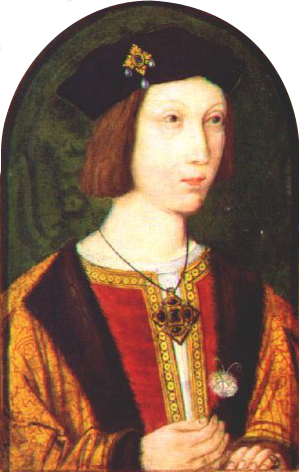
File:Arthur2.png

Arthur Prince of Wales

Image: Wikipedia from a private collection


Although the Prince, who was fifteen remains a somewhat anonymous figure, his death was to prove one of the most momentous or portentious in English history. As a result the succession passed to his brother, the future King Henry VIII, and even more significantly, led to that King's marriage to Arthur's widow, Catherine of Aragon.

There is an online life of the Prince here and the Oxford DNB life by Rosemary Horrox can be read here.

From his surviving portraits the Prince sometimes appears, like his younger brother, to have taken after his mother's family in his appearance and as an adult King Henry VIII looks to have resembled King Edward IV. However in thos portrait there is also a resemblance to King Henry VI:
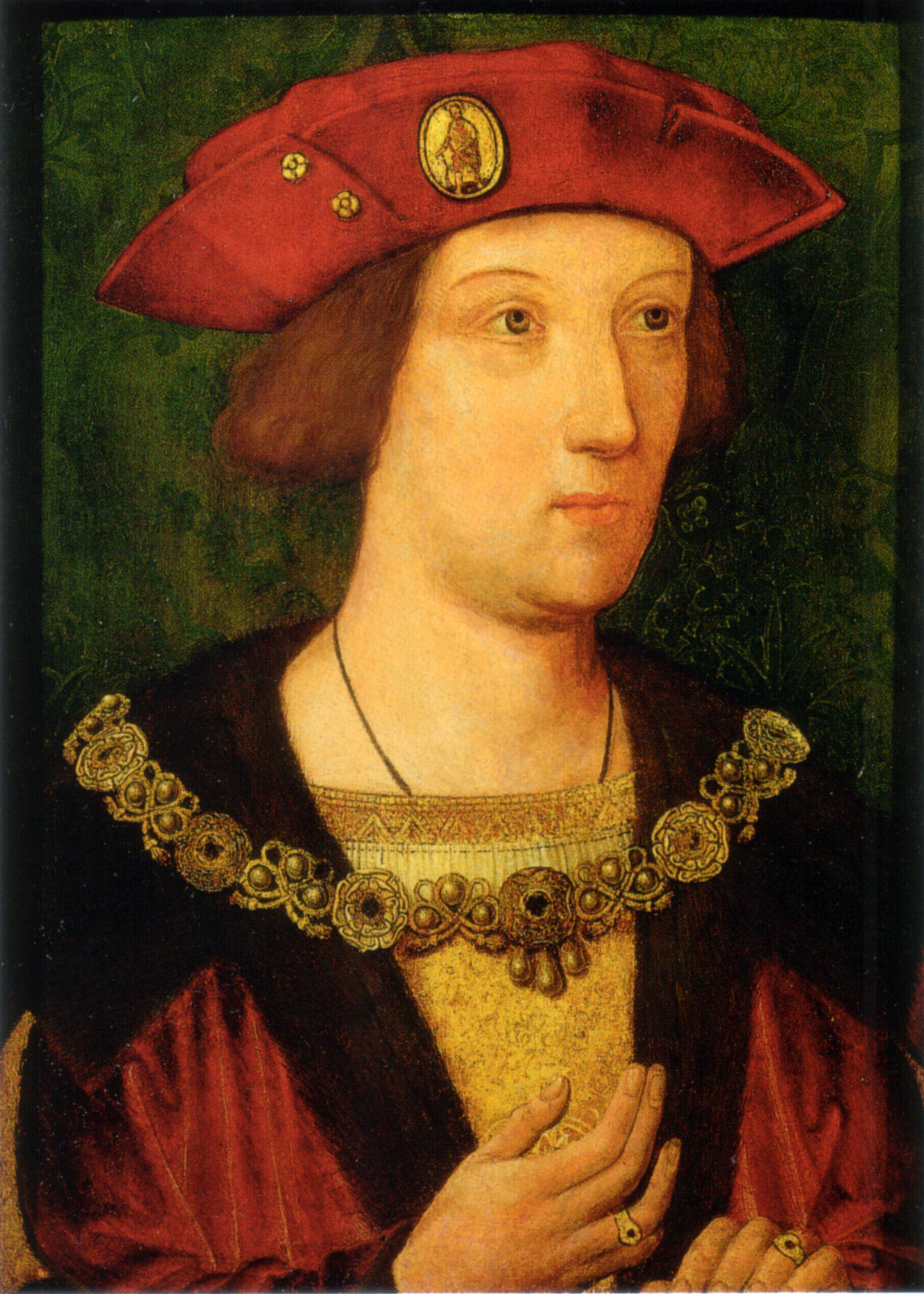
File:Arthur Prince of Wales c 1500.jpg

Prince Arthur circa 1500

Image:Wikipedia from the Royal Collection

To stand in Prince Arthur's chantry at Worcester, its elegrant limestone gothic cage surrounding the plain marble tomb-chest, is to feel very close to events which changed this country, and indeed much of the world forever. Nothing sums up more quickly the impact of the changes that ensued than the mustilated figures, including St George, on the reredos of the chapel. Installed to elicit prayers for the Prince they were defaced under his nephew King Edward VI, and when his neice Queen Elizabeth I visited Worcester in 1575 they were plastered over and the blank wall decorated with a painting of the Royal arms. Not until the nineteenth century were the figures revealed in their battered state.

http://www.whub.org.uk/cms/images/prince-arthurs-chantry-worcester-cathedral2.jpg

The interior of the Prince's chantry at Worcester cathedral

Image:whub.org.uk

There is the mildly intriguing question, given the way that the choice of his name associated the Prince with King Arthur, and the bearing of arms attributed to Welsh and British rulers of the past at the Prince's funeral, as well as the general enthusiasm for all things Arthurian at the time, if he had lived and succeeded his father whether he would have been King Arthur I or King Arthur II.


Friday, 4 March 2011

Westminster chasuble at Wardour


The New Liturgical Movement has recently had two posts about a spectacular rose cope at Wardour Chapel in Wiltshire and a very handsome medieval chasuble that has survived in the collection there.

Following the link about Wardour I found a site produced in connection with last year's display of treasures there, which, unfortunately, I was unable to visit. The history of the chapel includes a list of some of the items that were on display and some photographs, one of which I reproduce here.


IMG_1578.JPG

This vestment, known as the Westminster chasuble, has heraldic motifs on the red velvet fabric that help date it to the era of Queen Catherine of Aragon. Its alternating roses and pomegranates combined with the portcullis badge of the Beauforts and the fleur de lys point to her and her circle. It must therefore belong to the time after her marriage to Prince Arthur in 1501 or from her time as Queen after 1509 until the ''King's Great Matter" wrought such havoc in so many lives and churches, and the life of the nation.

I had seen the chasuble on television on John Betjeman's ABC of Churches many years ago, and was pleased to find this photograph, which is not unfortunately of the highest quality, to share.

I had half expected to see it at the Gothic exhibition at the V&A in 2003-4, but I think it was not on display, although other vestments that have survived from King Henry VII's rebuilding of the Westminster Lady Chapel were there.