Once I was a clever boy learning the arts of Oxford... is a quotation from the verses written by Bishop Richard Fleming (c.1385-1431) for his tomb in Lincoln Cathedral. Fleming, the founder of Lincoln College in Oxford, is the subject of my research for a D. Phil., and, like me, a son of the West Riding. I have remarked in the past that I have a deeply meaningful on-going relationship with a dead fifteenth century bishop... it was Fleming who, in effect, enabled me to come to Oxford and to learn its arts, and for that I am immensely grateful.


Showing posts with label Our Lady of Walsingham. Show all posts

Saturday, 31 May 2025

Marian Pilgrimage - Our Lady of Walsingham


So, finally, perhaps mentally, if not physically, footsore we arrive at England’s Nazareth to seek the intercession of Our Lady of Walsingham. 

My previous Pilgrimage posts about this very special place have been rather more extensive than many others on this Pilgrimage. This is in part due to the fact that we know much more about Walsingham as a shrine, and partly because I have spent much more time there than there’s any of the other shrines on this itinerary. I always seem to make the point, but it is worth making, that Walsingham is a very special place, and one to which one can very easily form a deep and emotional spiritual attachment. If readers have not visited it I urge them to do so, to visit the two Shrines, and to take time there - breathe the clean Norfolk air, breathe the the prayers of others and maybe catch the breath of the Holy Spirit.

All these previous posts can be found by following the links from my article last year. This can be found at Marian Pilgrimage - Our Lady of Walsingham

May Our Lady of Walsingham pray for Pope Leo XIV

May Our Lady, under all the titles by which we have venerated her this May, accompany us through the coming year and indeed, this life.

Ave Maria

Tuesday, 24 September 2024

Our Lady of Walsingham


Today is the first occasion on which Our Lady of Walsingham will be honoured as a Feast rather than just as a Commemoration in the OF Calendar. The new ranking was granted earlier this year and given not only the historic importance of the Shrine but also the remarkable flowering of devotion in the past hundred or so years, first at the Anglican shrine and then at the Catholic one, now elevated to the status of a Minor Basilica.


The Catholic Shrine in the restored fourteenth century Slipper Chapel established in 1934 and now the National Shrine

Image:christtheking.notts.sch.uk

Our knowledge about the origin of the Shrine derives from a unique copy of one source. That is, of course, the so called Pynson Ballade. Written, it is thought, about 1460 it was printed in 1495 by Richard Pynson. The sole surviving copy is in that wonderful collection of early ephemera, the Pepys Library at Magdalen College in Cambridge.

The original text of the Ballad, together with a glossary, can be found on the excellent Archives website of the Anglican Shrine ( www. walsinghamanglicanmedieval.co.uk ) at pynson


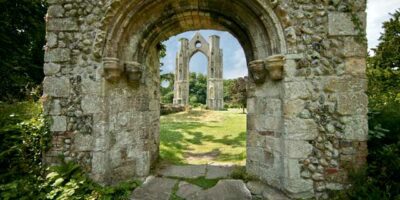
The view from the springs towards the eventual site of the Holy House. which was to the right of the priory church

Image: christtheking.notts.sch.uk.

The reference to the carpenters building the Holy House links well to the archaeological evidence. When the eventual site was excavated it was shown to have been built of split tree trunks like the surviving example at Greensted Church in Essex. That timber Holy House survived until the destruction of the Shrine, enclosed by a late medieval building which functioned rather like a cloister.

It was in that form at the Shrine appeared in 1513 to Erasmus who wrote:  When you look in you would say it is the abode of saints, so brilliantly does it shine on all sides with gems, gold and silver… Our Lady stands in the dark at the right side of the altar… a little image, remarkable neither for its size, material or workmanship.

I In particular may I wish a holy and happy feast day to all my fellow pilgrims over the years to England’s Nazareth.

May Our Lady of Walsingham pray for England her Dowry and for us all


Saturday, 26 September 2015

Our Lady of Walsingham


Last Thursday, September 24th, was the Feast of Our Lady of Walsingham. As someone who both as an Anglican and as a Catholic has been there many times on day or week Pilgrimages or the Anglican National Pilgrimage - at which event I was once crucifer when Pusey House provided the serving team - I am delighted that it now merits its own specific place in the calendar under the Walsingham title.


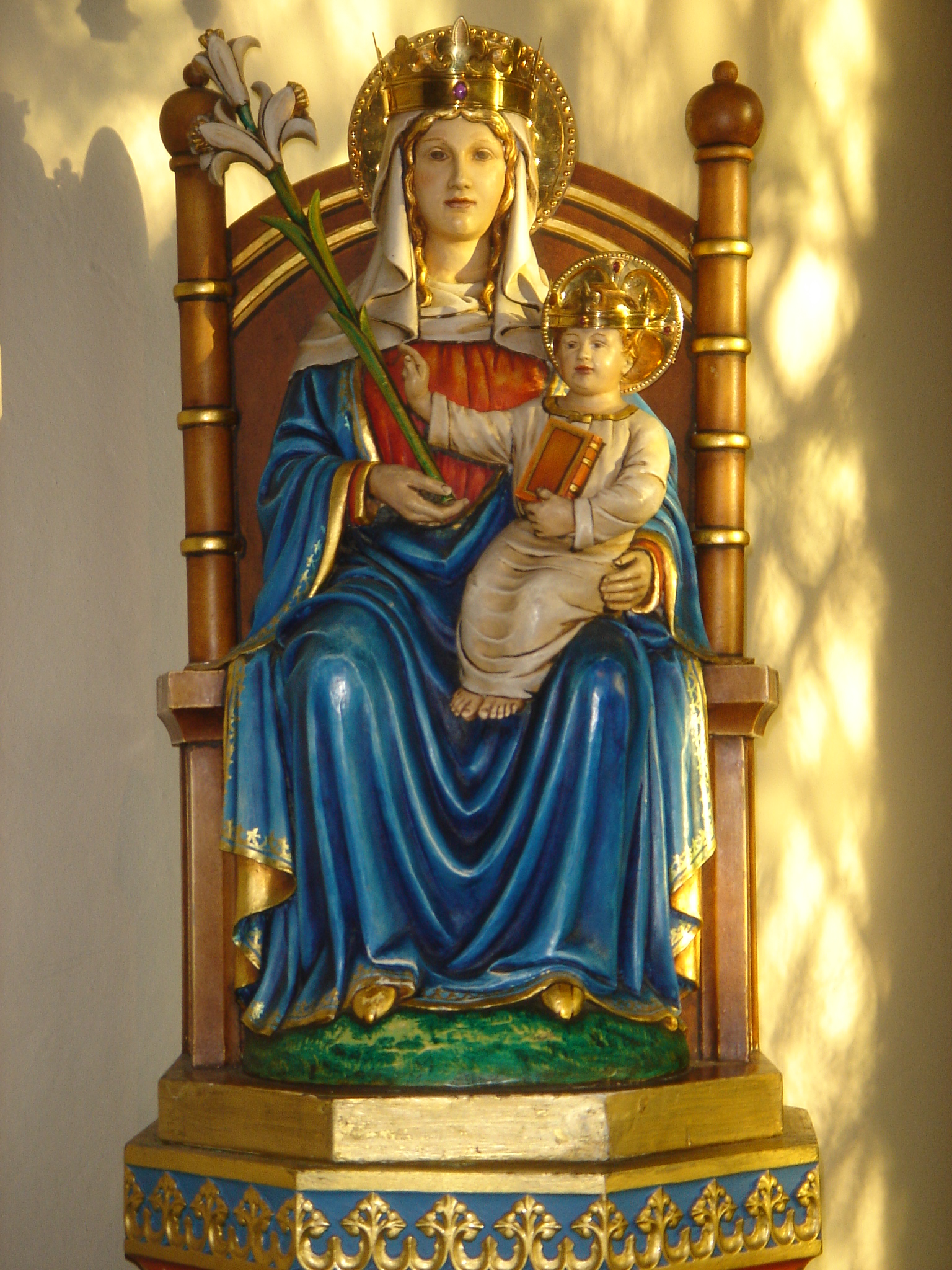
Our Lady of Walsingham

Image: Wikipedia

It is a good day upon which to give thanks for the Shrine, for its re-establishment as a significant place of popular pilgrimage in the twentieth century, and to pray for my fellow pilgrims over the years. As it is also the anniversary of my mother's birth it is also a good day and association upon which to pray and give thanks for her.

In the afternoon I attended a book launch at Blackfriars of a new book on the origins of the shrine, entitled Edith the Fair and published by Gracewing, it was written by Bill Flint, who died last year. The launch was by his widow and daughter, and followed on from one at Walsingham itself a while ago. Bill Flint set himself to uncover identity of the figure normally known as Richeldis. His conclusion is that the visionary/foundress was Edith the Fair, the wife of King Harold II, who was the lady of the manor before the 1066 invasion, and would have been in the traditional date of foundation, 1061.

I bought a copy of the book and read it over the following two days. The basic argument, using Domesday and will and charter evidence, is appealing, and resolves questions as to the date and origin. Flint also gives in its complete form, and with a modern transliteration the Pynson ballad text, which first appeared about 1490. This is useful for anyone else interested in unravelling the story of Walsingham. He has interesting things to say about the symbolism of the statue.

It is clear that Bill Flint loved Walsingham - it is indeed a lovable place - and sought to make an offering to Our Lady by his work.

That said I feel I must add that I think the book would have benefited by both stylistic copy-editing to avoid its tendency to restate its argument and to set out the case being made more clearly. I think it also needed editing by or with a historian who could have avoided unnecessary errors and enhanced the understanding of the period under consideration.

I was surprised that no use was made of the archaeological evidence - easily available in print in a booklet on sale, so far as I know to this day in Walsingham - which points to the original Holy House having been built of split tree trunks, like the surviving Anglo-Saxon nave at Greensted in Essex. Excavations revealed that the paving of the late medieval enclosing New Work , built to protect the original chapel, fitted around an inner wall with a distinctive scalloped profile.


The nave at Greensted

Image:spanglefish.com

That would reinforce a pre-Conquest date rather than a mid-twelfth century one for the foundation and building, and confirm the references in the Pynson ballad to carpenters working on the original chapel.

This evening I attended the transferred feast day Sung Mass of Our Lady of Walsingham offered by the Ordinariate at Holy Rood here in Oxford. As with so many pilgrimages to Walsingham this was a good occasion to meet up with friends, and to give thanks for the message and reality of Walsingham. it also reminded me that it is a while since I was there and that I ought to go again.

Our Lady of Walsingham, pray for us.


Friday, 20 September 2013

Walsingham Revisited


When we boarded the mini-bus at Houghton Fr Richard, who had organised the excursion, said we would now go on to visit Walsingham. This was a hitherto unannounced, but very welcome, addition to our schedule.

I was somewhat intrigued, as were others in the party who are converts from an Anglo-Catholic background, and who have all been to Walsingham on many occasions, to find that several of the  cradle Catholics in the party had never been before to England's Nazareth. The popularity of Lourdes as a destination for Catholic pilgims explains this in large part, but Walsingham is very much part of the Catholic tradition of England as the Dowry of Mary.

Our first stopping place was at the Slipper Chapel where we said a decade of the rosary and spent some time in silent prayer in this part of the medieval pilgrimage shrine that has been restored to the Roman obedience.


http://www.walsingham.org.uk/romancatholic/wp-content/uploads/2011/02/slipper_chapel11.jpg

The interior of the Slipper Chapel

Image:walsingham.org.uk

We then went into village to look round, and at this point the mini-bus experienced a tyre puncture from aprojecting scaffolding pole, which made a delay in our return likely. In the meantime we set off to explore the attractions of Walsingham. I went with Fr Jerome to look at the historic parish church. This was restored after a serious fire in 1961, about which there was an exhibition and booklets, and we spent a while looking at the monumental brasses in the church - a feature of which I think I was hitherto unaware. We also looked at the very fine fifteenth century Seven Sacraments font - described in the church as the best of its kind - and also at the extremely interesting and unusual collection of wall monuments in the building - there are some very unusual designs.

We walked back by the concealed ha-ha road past the site of the medieval priory and original Holy House and past the Anglican Shrine and the Knight's Gate to rejoin our companions in the market place.

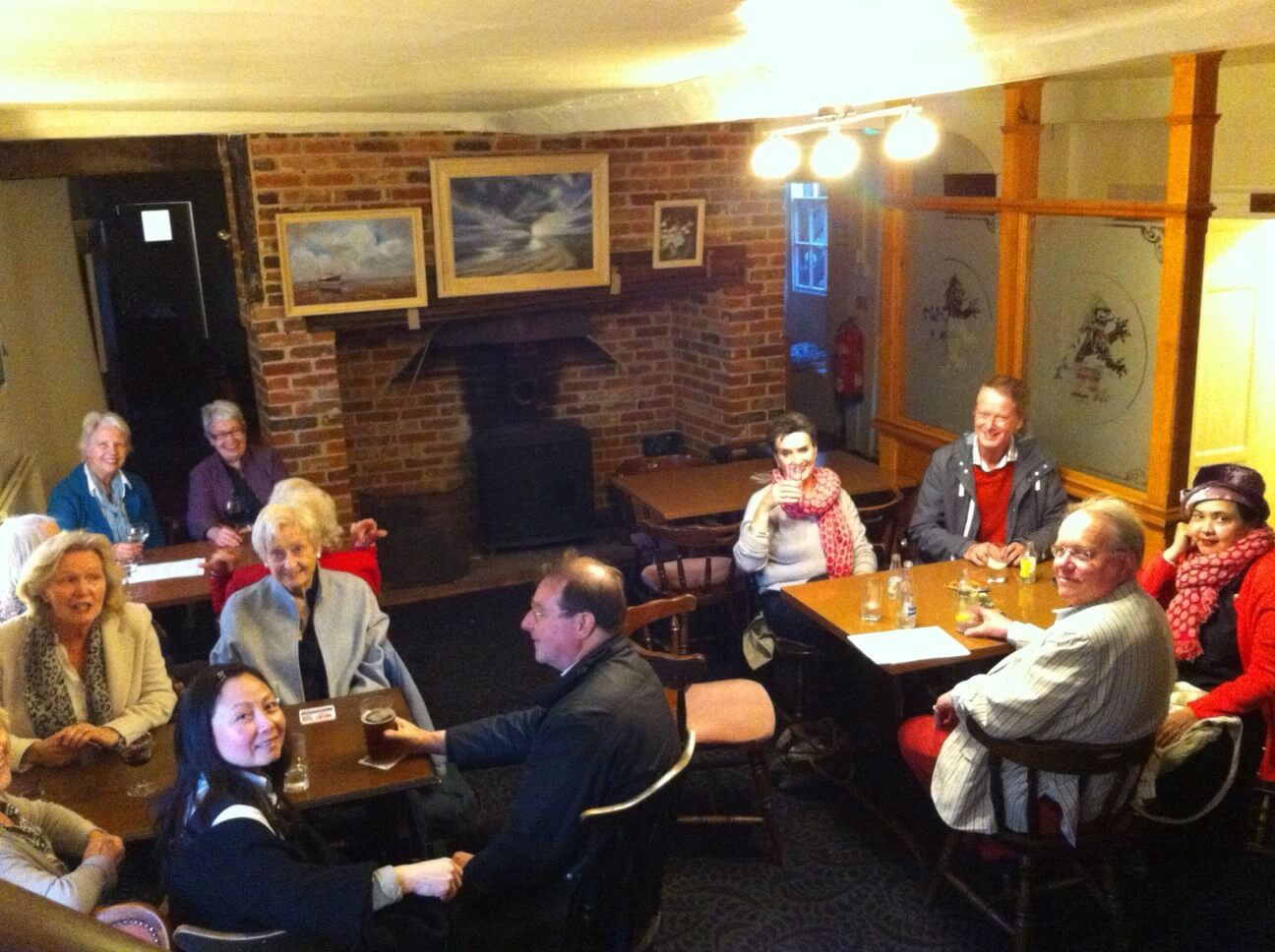
Here we realised that the puncture did indeed mean a delay, and whilst we waited for that to be sorted out we were led to resort to the Black Lion for a pub meal. One of our group decided that Our Lady was determined we should stay in Walsingham, and that led to the serious idea of organising aparish weekend there next year, which seems a very good idea to me.


photo

The pilgrims seeking refuge in the Black Lion
Image: Fr Daniel Seward/Oxford Oratory website 


Fortunately, after some initial difficulty in raising help in deepest darkest Norfolk, the puncture was repaired and we set off back to Oxford. A later return than anticipated but a most enjoyable day.

Monday, 24 September 2012

Our Lady of Walsingham


Today is the feast of Our Lady of Walsingham.
 
File:Our Lady of Walsingham III.JPG 
 
Our Lady of Walsingham
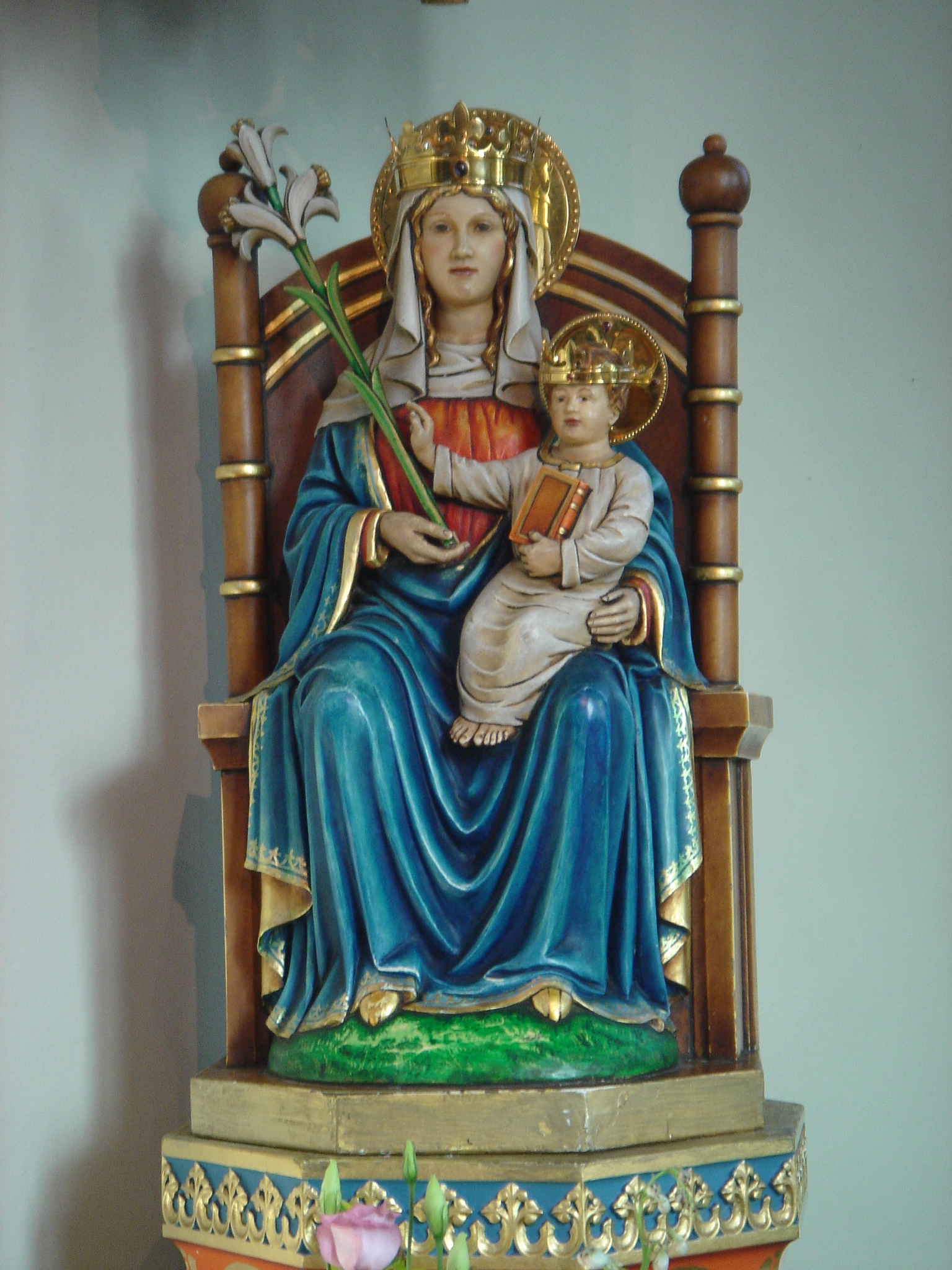
Statue in the Slipper Chapel
 
Image: Thorvaldsson on Wikipedia
 
 
Since 2001 today has been designated as her feast day, and it now surplants in England the feast of Our Lady of Ransom. It was this, originally Spanish devotion, which Pope Leo XIII adapted as the specific Marian feast for the ransoming of England and its conversion and hence its association with what had been England's premier Marian shrine. It was during his pontificate that interest began amongst Catholics in re-establishing it, both at the Red Tower chapel in King's Lynn and by the purchase of the Slipper Chapel at Walsingham itself. It was not however until the remarkable and inspired Vicar of Walsingham, Alfred Hope-Patten, established and caused to prosper the Anglican Shrine that the Catholic hierachy did much to develop the Catholic presence in the village.
 
I made a considerable number of pilgrimage visits there as an Anglican, and Walsingham is a remarkable and special place, a graced place, I came to know and love. In recent years I have had less opportunity to go there, a fact I regret and hope to remedy.
 
Last Saturday evening at the Ordinariate Vigil Mass - for the Ordinariate this counts as a Patronal solemnity and was transferred to Sunday in their calendar - Fr Hunwicke's sermon  raised an interesting historical possibility. He started by describing the shrine as it would have been in 1512 or 13, after the visits of two famous pilgrims.


The Royal Collection © 2008, Her Majesty Queen Elizabeth II; used with permission
 
Erasmus in 1517 by Quentin Mattys
 
Image: Royal Collection/arthistory.about.com
 
In 1513 Desiderius Erasmus (in my humble opinion a rather tiresome ghastly tedious little liberal, but who cares what I think) visited Walsingham and described the shrine of the Holy House thus: 

"When you look in you would say it is the abode of saints, so brilliantly does it shine on all sides with gems, gold and silver… Our Lady stands in the dark at the right side of the altar… a little image, remarkable neither for its size, material or workmanship."
 
He also added that the water from the Walsingham spring was "efficacious in curing pains of the head and stomach."

In the verses he wrote, in the best and latest Humanist style, in honour of Our Lady of Walsingham he referred to some of the reasons that pilgrims came to the shrine on pilgrimage. One was that men came to pray that their wives would conceive and bear them a son.

The previous year an illustrious pilgrim had come, and that may well have been in the forefront of his mind and intentions.
King Henry VIII stayed at East Barsham Manor and then walked two miles - twice as long as usual pilgrims did from the Slipper Chapel - barefoot to Walsingham where he placed a "gold circlet round Our Lady's neck".
 
On 31 January 1510 Queen Catherine had given birth, prematurely, to a stillborn daughter. A son, Henry, Duke of Cornwall, was born on New Year's Day 1511. He lived for only 52 days. In October 1513 Catherine was to lose another son when Henry returned from France. He was either stillborn or died shortly after birth. In December 1514, she had another son, Prince Henry, who died shortly after his birth. Not until 18 February 1516 did the Queen deliver a healthy child, but a girl, the future Queen Mary I. In 1518, Catherine became pregnant for the last time. She gave birth to a daughter on 10 November, but the child was weak and lived either only a few hours or at most a week.

Fr Hunwicke speculated that Ersasmus may possibly have been aware that there was already an awareness of doubts about Queen Catherine's ability to produce the desired male heir to the throne, and hence King Henry's pilgrimage and long barefoot walk to Our Lady in the Holy House. An interesting thought.
A few years after the royal visit East Barsham was rebuilt  - did the owners perhaps anticipate another such pilgrimage?  It remains as an outstanding example of the early sixteenth century country house.
photo
 
East Barsham Manor, dated to 1520-30

Image:stiffleaf on Flickr

Saturday, 24 September 2011

Our Lady of Walsingham


Today is the Feast of Our Lady of Walsingham. In recent years this has become established alongside the celebration of Our Lady of Ransom as the day of the national commemoration of the Shrine, which this year is celebrating the 950th anniversary of the apparitions of Our Lady to Richeldis.

http://upload.wikimedia.org/wikipedia/commons/7/76/Our_Lady_of_Walsingham_III.JPG

The statue of Our Lady of Walsingham in the Slipper Chapel

Image: Wikipedia

The re-establishment of Walsingham as a place of pilgrimage is one of the most remarkable achievements of English Christianity in the twentieth century, and it has been accompanied by valuable bridge-building in recent decades between Catholics and Anglicans. There are links to the websites of both shrines here.

Walsingham is, as I once heard it described, a "graced place" and where as someone once made the point to me one feels at home because one is at home with our Mother. I have appreciated and enjoyed many pilgrimages there as part of my own pilgrimage of faith.

I am always touched by the story of Fr Hope-Patten, the Anglican restorer of the Shrine, being called to the stage of, I think, the Royal Albert Hall at one of the Anglo-Catholic Congresses when his worlk and vbeen praised and it was realised that he was in the audience. When, through the applause, he came to the microphone and, with that definite sense of ecclesial panache without which he would never have achieved what he did, simply siad "All I did was have a statue of Our Lady carved and set up, and she did all the rest." Tumultuous applause.

http://www.theanglocatholic.com/wp-content/uploads/2010/08/Our-Lady-of-Walsingham.jpg

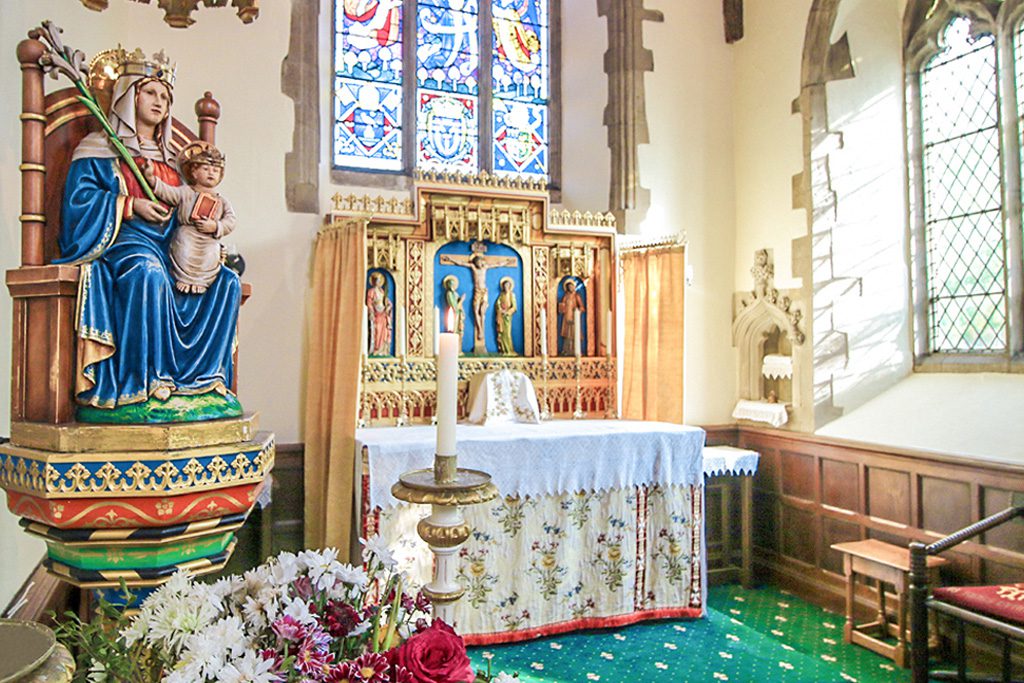
The statue of Our Lady of Walsingham in the Holy House at the Anglican Shrine in festal array.

Image.theanglocatholic

Well, Our Lady seems to be continuing to work through Walsingham, not least at the moment with the Ordinariate which takes its name from here, but also through the individual devotion she encourages amongst so many.

Our Lady of Walsingham pray for us


Monday, 28 March 2011

Richeldis 950

Having heard that there was to be the inaguration of six months of celebrations to mark the 950th anniversary of the apparitions of Our Lady to Richeldis de Faverches at Walsingham in 1061 with a Mass in Westminster Cathedral last Saturday I thought this called for a day out in London. Walsingham has been an important place in my pilgrimage of faith over many years and I wanted to join in the celebrations.


The statue of Our Lady of Walsingham in the restored Slipper Chapel
at the Roman Catholic National Shrine

By a fortunate coincidence a good friend and fellow blogger was passing through Oxford and we arranged to meet up and travel up on the coach together to the cathedral. Thus the Last Knight and the Clever Boy set forth (which sounds a bit like something from Lewis Carroll, or "Childe Harold to the dark tower came" - or, methinks, shades of Cervantes...). Due to delays and demonstrations in London about government policies the coach was delayed and we did not arrive at the cathedral until the offertory. Nonetheless we were there, and able to participate in the occasion.

It was impressive to see the cathedral full and to see the presence of the Anglican Shrine Guardians escorting the statue from the Slipper Chapel in the procession at the end, along with Knights of the Holy Sepulchre and Knights of Malta, clergy from across the country, including the Ordinariate, a goodly numberr of diocesan and assistant bishops and the Archbishop of Westminster as principal celebrant.

Afterwards, as is usual on these occasions, there was the opportunity to meet up with other friends, and make new ones, on the cathedral piazza, before going off for a Lenten, non-alcoholic, drink in a pub and then a meal at an Italian restaurant before we went our seperate ways.

File:OL Walsingham IV.jpg