Once I was a clever boy learning the arts of Oxford... is a quotation from the verses written by Bishop Richard Fleming (c.1385-1431) for his tomb in Lincoln Cathedral. Fleming, the founder of Lincoln College in Oxford, is the subject of my research for a D. Phil., and, like me, a son of the West Riding. I have remarked in the past that I have a deeply meaningful on-going relationship with a dead fifteenth century bishop... it was Fleming who, in effect, enabled me to come to Oxford and to learn its arts, and for that I am immensely grateful.


Showing posts with label Kingdom of the Two Sicilies. Show all posts

Monday, 12 December 2016

The Bourbons of Naples


Today I finished reading Harold Acton's splendid two volumes The Bourbons of Naples and The Last Bourbons of Naples, which gives ahistory of the dynasty who ruled the Kingdom of Naples and Sicily, later the United Kingdom of The Two Sicilies, from 1734 until its annexation by the Piedmontese in 1860-61.

As books they are immensely readable, full of characters and anecdotes, pervaded by a wide and humane sympathy for all things southern Italian, and, in contrast to previous studies in English ( or largely in Italian ), essentially favourable to the Bourbons. Acton was not blind to their failings, but neither is he blind to the failings of the opponants of the dynasty, and is fair minded in his account.


Image result for Ferdinand I of Sicily

King Ferdinand I 

As King Ferdinand IV and III of Naples and Sicily he ruled from 1759, and became the first King of the Two Sicilies in 1816 and died in 1825

Image: Mad Monarchist

As a family they were a strange mixture of the prosaic, if not bucolic, amongst the men and in the case of their wives heroic if flawed like Queen Maria Carolina ( sister of Queen Marie Antoinette, and always ready to remind anyone that she was the daughter of the Empress Maria Theresa)  and Queen Maria Sophia ( sister of the Empress Elisabeth and who lived on until 1925), or a beatus like Queen Maria Christina ( ironically Savoyard by family).

Image result for Ferdinand Ii of Sicily

 King Ferdinand II 

King from 1830-1859 he was much maligned by opponants of his rule

Image: Mad Monarchist

As rulers the Bourbon Kings could usually rely upon the loyalty of the masses, however inchoate, but the problem lay with the aristocracy and what might be expected to be the political class of the realm. Here there seems to have been a feckless, self-serving, dilettante culture more often than not throughout the period amongst those to whom both the monarch and the masses might have expected to provide political leadership and ability, let alone statesmanship.  Though not entirely lacking in gifted administrators the kingdom appears often to be serendipitous in its ways, and the cause of concern to friends, such as Lord Nelson and Prince Metternich, and of temptation to rivals and dissidents. You sense something familiar of modern Italian political culture as you turn the pages of the volumes.

As a political unit, despite mid-Victorian English enthusiasm for the Risorgimento, it is possible to see that Bourbon naples and Sicily enjoyed a civilised, if sometimes eccentric, lifestyle and was in many ways much more advanced than its later detractors would have one believe; it was, for example, the first Italian state to have a railway.
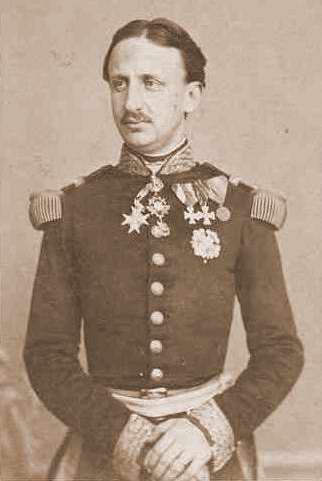
Image result for Francis II of Sicily

King Francis II
King from 1859 he went into exile in 1861 and died in 1894

Image: Mad Monarchist 

These are two very enjoyable books, and a source of both information and insight and also of entertainment and diversion - rather like Il Regno itself.

Image result for Two Sicilies arms

 Arms of the Kingdom of The Two Sicilies

Image:Wikipedia


Saturday, 14 May 2016

Kingdom of the Two Sicilies - amending the Castro succession


The Kingdom of the Two Sicilies

Image:Wikimedia 


 I was sent the following link by a friend about the announcement by HRH the Duke of Castro that he has amended the law of succession to his claim to the throne of the Kingdom of the Two Sicilies to a system of absolute primogeniture, thus putting his two daughters in immediate succession to himself. The post can be seen at  http://royalmusingsblogspotcom.blogspot.co.uk/2016/05/duke-of-castro-adopts-gender-equal.html

As the writer points out this may well call into question the apparent moves to reconciliation two to three years ago with the other claimant branch of the Bourbon house of Two Sicilies represented by HRH the Duke of Calabria. The link to that story can be accessed at  http://royalmusingsblogspotcom.blogspot.co.uk/2014/01/royal-musing-exclusive-reconciliation.html

Looking for illustrations to add to this post I was surprised by the number of T-shirts, mugs, key-rings and suchlike that one can buy on-line with the arms of Il Regno that one can purchase online. Do Cafepress know something we don't? It it a hopeful sign for the future of the cause of the Two Sicilies?

I remeber being told by friends who had been on a motoring holiday that on a mountain road in, I think, the Abruzzi, they passed a very modern road sign proclaiming that drivers had now entered the Kingdom of the Two Sicilies.

Talking to other freinds who are from the south of Italy and indeed from the Two Sicilies, they still resent the denigration of what was in many ways a progressive realm by Italian standards in the mid-nineteenth century and the wholseale asset stripping of economic resources that followed upon unification wiith Piedmont-Sardinia. That led to the poverty of the south. Only now are people outside Italy becoming aware of how the south was an occupied zone, with Piedmontese troops in plenty for many years after 1861.

File:Coat of Arms of Princess of the Two Sicilies.svg

 Arms of a Princess of the Two Sicilies

 Image: Wikimedia 

Tough cookie, Garibaldi, as one might say.

All of which reminds me to try to get on and read Harold Acton's The Bourbons of Naples and The Later Bourbons of Naples.


Saturday, 19 September 2015

The Order of St Januarius


Following on from my previous post about St Januarius here is something about the chivalric order under his patronage from the Kingdom of the Two Sicilies - the Illustrious Royal Order of St Januarius

There is an illustrated online account of the Order at Order of Saint Januarius and an another detailed article by that learned commentator on all such matters chivalric and dynastic Guy Stair Sainty at The Royal Illustrious Order of Saint Januarius. ( I do not know why he translates the prefix as Royal Illustrious rather than Illustrious Royal).

Founded by King Charles VII  - later King Charles III of Spain - in 1738 and designated as the most senior of the Orders of the realm it was designed to be on a par with the other Bourbon Orders of the Golden Fleece in Spain and the Holy Spirit in France - indeed the design of the insignia shows its affinity, indeed derivation, from the latter.

http://www.chivalricorders.org/bourbon/twosicilies/images%5Cstjandec.jpg

The Order of St Januarius
Badge, Star, Collar, Riband, Miniature Collar, Miniature, Rosette and Bar Ribbon

Image:chivalricorders.org


The Badge and Riband


Image: realecasediborbone.it

 
The Badge and Star of the Order
Dated to circa 1870 in an Italian auction catalogue. If that is correct these pieces were made after the occupation and annexation of the Kingdom in 1860 and during the exile of King Francis II


Image:sangiorgioaste.com

The Order has continued to be bestowed by the successors of King Francis II, and these days by rival claimants, the Duke of Calabria and the Duke of Castro.


Wednesday, 29 April 2015

More on the Two Sicilies


Following my post The House of Bourbon Two Sicilies further research on the Internet led me to the online article House of Bourbon-Two Sicilies

This has very useful information on the dynasty and their marriages and children. It also outlines the two lines of claimants to headship of the House, and thus to the crown of the Two Sicilies, since 1960.

It also gives links to the official websites of both claimants.

That of the Duke of Calabria and his line can be seen at www.borbone-due-sicilie.org/

That of the Duke of Castro and his line can be seen at  www.realcasadiborbone.it/en/

I do not feel qualified (at present anyway) to pronounce on the respective validity of the claims, and in the interests of equity and fairness commend both to readers.

The dispute between the two branches of the House is not clarified by the fact that both are currently headed by a Bourbon (Borbon/Borbone) who would claim to be the de jure King Carlo I.

The blog Royal Musings had this illustrated report of signs of rerconciliation between the two branches and a detailed account of the 1900 marriage and Act of Cannes that lies behind the split which happened in 1960 and can be read at RECONCILIATION IN THE HOUSE OF BOURBON-TWO SICILIES


Monday, 27 April 2015

The House of Bourbon Two Sicilies


The Special Correspondent sent me the following link to the website of the Duke of Castro and his branch of the House of Bourbon Two Sicilies  - as opposed to that of the Duke of Calabria - and added that there are some rather good interactive stuff if you click on the shield on the website. The site itself is http://www.realcasadiborbone.it/en/history-documents/royal-symbols/royal-house-coat-of-arms/

For some background on the history of the monarchy see the online article Kingdom of the Two Sicilies, and on and more specifically on the disputed succession since 1900 look at the section

Heads of the Royal House of the Two Sicilies, 1861–present

I have added the website to to the sidebar as House of Bourbon Two Sicilies - Castro line.

File:Coat of arms of the Kingdom of the Two Sicilies.svg

The Royal Arms of the Kingdom of the Two Sicilies

Image: Wilkimedia Commons

Monday, 13 May 2013

Queen Maria Cristina - a miracle


I was interested to read that on 3 May 2013 Pope Francis authorised a decree recognising a miracle due to the intercession of Queen Maria Cristina of the Two Sicilies, a further stage on her process towards beatification.  Her cause was first introduced in 1872.


Maria Cristina di Savoia.jpg


Queen Maria Cristina

Image: Wikipedia
There is a biography here of this princess of Savoy who married King Ferdinand II of the Two Sicilies on 21 November 1832 and who died on 21 January 1836 aged only twenty three as a result of giving birth six days earlier to her only child, the future King Francis II of the Two Sicilies, who was to be the last reigning monarch of the Regno, and who died in 1894.


A less formal portrait of the young Queen 

Image: gogmsite.net


Should her cause proceed to beatification or canonisation it will be interesting to see how some Italians may react to such veneration of a member of the House of Savoy and Queen of the Two Sicilies.

http://www.ofm.org/ofm/wp-content/uploads/2013/05/savoy.jpg

The Queen at prayer

Image:ofm.org