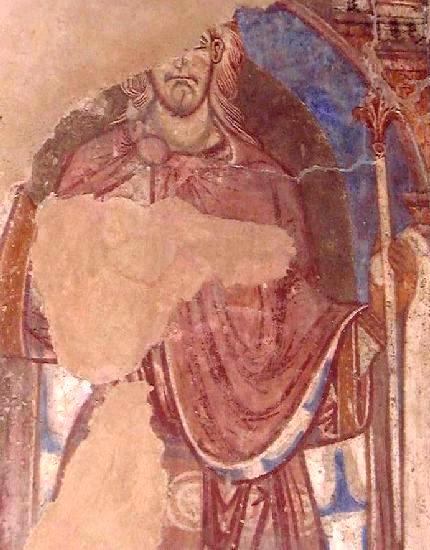
Once I was a clever boy learning the arts of Oxford... is a quotation from the verses written by Bishop Richard Fleming (c.1385-1431) for his tomb in Lincoln Cathedral. Fleming, the founder of Lincoln College in Oxford, is the subject of my research for a D. Phil., and, like me, a son of the West Riding. I have remarked in the past that I have a deeply meaningful on-going relationship with a dead fifteenth century bishop... it was Fleming who, in effect, enabled me to come to Oxford and to learn its arts, and for that I am immensely grateful.


Monday, 12 August 2013

Interpreting the Kaiser


Over the weekend I read Christopher Clark's excellent Kaiser Wilhelm II: A Life in Power.


http://images.thebookstores.net/imagesnew5c/9780141039930.jpg

Image:thebookstores.net

This is a really fine book which I would recommend very highly - It is, I gather, one sometimes rrecommended to Oxford History applicants to challenge their historical preconceptions. With the anniversary of the outbreak of war in 1914 approaching it has a topical appeal as well as being a very readable and insightful book.

In its view it is very similar to Giles McDonagh's biography of the Kaiser which I read the other year and posted about.

The Australian born Clark, who is Professor at Cambridge has produced a narrative that does not claim to be a full biography but rather is an essay in interpretation. As such it is very insightful, definitely revisionist, and both sane and balanced. It is also interesting as astudy of Monarchy in the early twentieth century - the early use of film of the Imperial family for example is highlighted as well as the Kaiser's perhaps unfortunate tendency to make frequent and long speeches which his staff had to try to ensure were tidied up before they reached the press. For Kaiser Wilhelm himself this was a way of reaching out to his people to communicate his ideas about education and other matters. The Daily Telegraph interview of 1907-8 rather put a stop to that.

The book is in part a riposte to the massive three volume biography by Professor John Rohl of Sussex University of the Kaiser, and other works by Rohl and his students. I think Clark makes his case well. He sees many of the problems facing the Kaiser, his Chancellors and ministers as well as his people in the curious nature of the Imperial Constitution of 1871 - what suited Bismarck then was already out of date by the time of his departure in 1890. This almost Stubbsian approach addresses many of Rohl's points.

I have now started on John Rohl's first volume (I think it is the only one so far transalred into English) Young Wilhelm. This 900 plus door stopper wights the proverbial ton to carry round. It should keep me quietly occupied over coming weeks. I will post about it when I have finished reading it.


Saturday, 10 August 2013

St Lawrence


Today is the feast of St Lawrence Deacon and Martyr.


St. Lawrence
Sculpture by Tilman Riemanschneider circa 1502-1510

Image: Christbearers.wordpress 

Thursday, 8 August 2013

Armada reflections


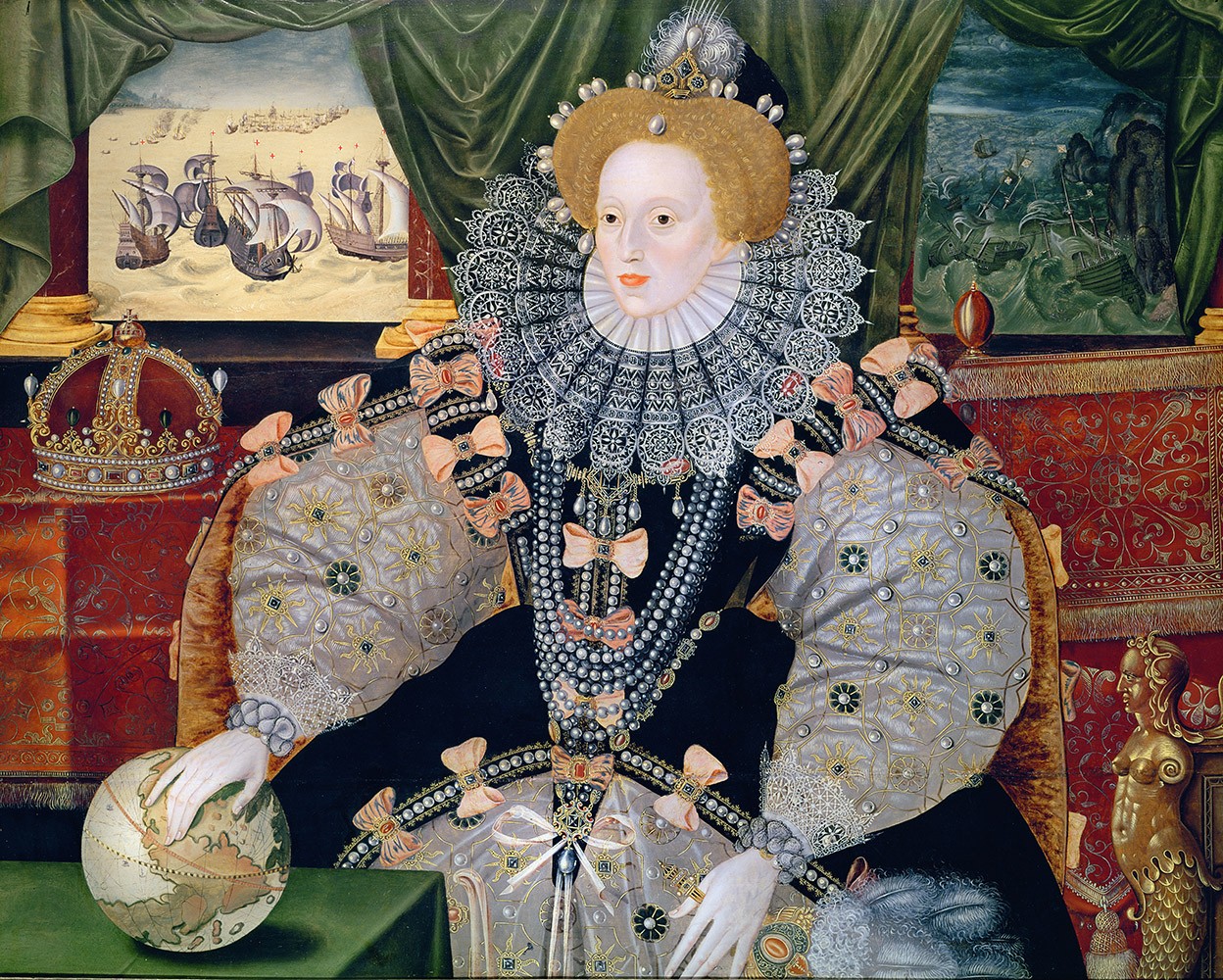
425 years ago today there occurred the battle of Gravellines, the key event in scattering the Spanish Armada, and forcing the Spanish fleet into the North Sea, and the consequent inability to meet up with the Duke of Parma's land army.

There is an online account of the Armada here, which surveys the plan and response of both the Spanish and the English. There is more about the misgivings of the Spanish commander in the online life of him, the Duke of Medina Sidonia.

The invasion plan was an audacious one, which depended on everything coming together. That proved too difficult - it was, so to speak "a bridge too far." The difficulty of such a combined operation at a long distance can be seen also in the essential failure of the Drake-Norris expedition of 1589, the so called English Armada.

For the English the failure of the Spanish Armada through storm force winds as well as strategy - "God blew and they were scattered" as the commemorative medal expressed it reinforced the English establishment's view that God was Protestant and that He was English. The significance of this is  explored in  John Stubbs recent biography of John Donne.

One conscious result appears to have been a change in naval tactics, from close counter boarding to the use of the broadside to disable the enemy from a distance.


File:Elizabeth I (Armada Portrait).jpg

The Armada portrait of Queen Elizabeth I

Painted in 1588 or soon after by George Gower (1540-96)

Woburn Abbey

Image: Wikipedia

If for Queen Elizabeth I this was perhaps her finest hour, celebrated in the Armada portrait and the tapestries which decorated the House of Lords for centuries to come, for her one-time brother-in-law King Philip II it seems to have strengthened his fatalistic streak, and he commented that he had sent his fleet to fight men, not God's winds. It did not deter him from maintaining his campaigns, and in the following years was to intervene in the French succession war after 1589.

File:Philip II, King of Spain from NPG.jpg 

King Philip II

A portrait of circa 1580 

National Portrait Gallery London

Image:Wikipedia

The story of the Armada is one of naval skill on both sides, personal bravery and personal tragedy. For many of the English sailors there was the grim future of death in the following months from disease the government did, or was unable to do,  nothing to alleviate. Spanish survivors turned out to be more lucky when they got home. For the Spanish there was the horrendous journey home, and for those who were shipwrecked on the western coasts of Ireland little hope. The events in Ireland are recounted here. The Dublin government understandably feared an uprising in the country and gave orders to kill any survivors. This appears to have been applied quite rigorously - this is before any Geneva Convention.

One who did survive and got back to Spanish territory was Francisco Cuellar, whose remarkable story can be read here

There remains always the question of what would have happened if the Armada had reached the Flemish coast, received Parma's troops and invaded the south-east of England. How much support it would have received is impossible to calculate, and the sheer difficulty of conducting the campaign at such a distance on the opponent's territory may well have made it unlikely. I suspect if there had been a landing the consequences might have been as unpleasant and bloody as they were in Ireland. We might have been plunged into fighting off an invader, but I suspect the chances of success were always slim, unless there had been a complete collapse of English morale and resistance, and there is not much to suggest that recusants saw the King of Spain as their deliverer.


Wednesday, 7 August 2013

Thought for the day


Today is the feast of St Cajetan, 1480-1547, the founder of the Theatine Order - one of whose founding members went on to become Pope Paul IV. There is an account of St Cajetan's life here and there is another account from Zenit at Saint Cajetan of Thiene.
He appears to have been like St Philip Neri and other Italian saints and founders of the era in his concern to establish communities to revivify the life of the clergy and the Church and in his practical concern for those around him.
St Cajetan
Image: Wikipedia

He wrote in a letter to Elisabeth Porto: “Do not receive Christ in the Blessed Sacrament so that you may use him as you judge best, but give yourself to him and let him receive you in this Sacrament, so that he himself, God your saviour, may do to you and through you whatever he wills.”
Source: Universalis website


Tuesday, 6 August 2013

Transfiguration


File:Transfiguration Christ Louvre ML145.jpg

Byzantine portable Icon of the Transfiguration circa 1200

The Louvre

Image; Wikimedia

From a sermon on the Transfiguration of the Lord by Bishop Anastasius of Sinai included in today's Office of Readings

It is good for us to be here
Upon Mount Tabor, Jesus revealed to his disciples a heavenly mystery. While living among them he had spoken of the kingdom and of his second coming in glory, but to banish from their hearts any possible doubt concerning the kingdom and to confirm their faith in what lay in the future by its prefiguration in the present, he gave them on Mount Tabor a wonderful vision of his glory, a foreshadowing of the kingdom of heaven. It was as if he said to them: “As time goes by you may be in danger of losing your faith. To save you from this I tell you now that some standing here listening to me will not taste death until they have seen the Son of Man coming in the glory of his Father.” Moreover, in order to assure us that Christ could command such power when he wished, the evangelist continues: Six days later, Jesus took with him Peter, James and John, and led them up a high mountain where they were alone. There, before their eyes, he was transfigured. His face shone like the sun, and his clothes became as white as light. Then the disciples saw Moses and Elijah appear, and they were talking to Jesus. 
  These are the divine wonders we celebrate today; this is the saving revelation given us upon the mountain; this is the festival of Christ that has drawn us here. Let us listen, then, to the sacred voice of God so compellingly calling us from on high, from the summit of the mountain, so that with the Lord’s chosen disciples we may penetrate the deep meaning of these holy mysteries, so far beyond our capacity to express. Jesus goes before us to show us the way, both up the mountain and into heaven, and – I speak boldly – it is for us now to follow him with all speed, yearning for the heavenly vision that will give us a share in his radiance, renew our spiritual nature and transform us into his own likeness, making us for ever sharers in his Godhead and raising us to heights as yet undreamed of.
  Let us run with confidence and joy to enter into the cloud like Moses and Elijah, or like James and John. Let us be caught up like Peter to behold the divine vision and to be transfigured by that glorious transfiguration. Let us retire from the world, stand aloof from the earth, rise above the body, detach ourselves from creatures and turn to the creator, to whom Peter in ecstasy exclaimed: Lord, it is good for us to be here.
  It is indeed good to be here, as you have said, Peter. It is good to be with Jesus and to remain here for ever. What greater happiness or higher honour could we have than to be with God, to be made like him and to live in his light?
  Therefore, since each of us possesses God in his heart and is being transformed into his divine image, we also should cry out with joy: It is good for us to be here – here where all things shine with divine radiance, where there is joy and gladness and exultation; where there is nothing in our hearts but peace, serenity and stillness; where God is seen. For here, in our hearts, Christ takes up his abode together with the Father, saying as he enters: Today salvation has come to this house. With Christ, our hearts receive all the wealth of his eternal blessings, and there where they are stored up for us in him, we see reflected as in a mirror both the first fruits and the whole of the world to come.

Source: Universalis


Monday, 5 August 2013

St Oswald King and Martyr


Today is the feast of St Oswald, King of Northumbria. I wrote about him two years ago in my post St Oswald.

This year to mark the day I am reproducing some more depictions of the saint, who was a popular patron of churches not only in his own former kingdom, but further afield.

File:Saint Oswald Durham Cathedral.jpg

Image:Wikipedia


Here are pictures of the reliquary of his skull - assuming it is not with St Cuthbert in Durhan - in the cathedral treasury at Hildesheim in northern Germany. The reliquary is dated to 1185-1189, and is a wonderful example of the work of the period.

Cathedral Museum in Hildesheim,reliquary in the form of the head of St.Oswald,. ca  1185-1189,silver,gilt,niello,feligree,enamel,stone and pearl trimming,oak core.
The reliquary in the form of the head of St.Oswald.
 
It is composed of silver,with gilt and niello decoration and has filigree work and decoration in enamel, and with precious stones and pearl trimming over an oak core.
Image:pinterest.com
 
http://www.heiligenlexikon.de/Fotos/Oswald.jpg

Image; heiligenlexikon.de

At present Hildesheim cathedral is undergoing amajor restoration and fifty of its medieval treasures, including the reliquary, are being sent as an exhibition to the Mettopolitan Museum in New York from this coming September until January  next year - so any North American readers who are nearby will have the opportunity to see them you are nearby.

There is an online article about the cathedral here - although I think the first photograph is not of the cathedral, but of another church in the city - and the cathedral's own English language website can be accessed here. There is an introduction to the historic city of Hildesheim, and its post war restoration and reconstruction here.

Devotion to St Oswald outlasted the middle ages in German speaking lands, as can be seen in this eighteenth century painting:
File:St.Oswald Kirche - Hochaltar Altarbild St.Oswald.jpg
 
Painting of St Oswald as patron of cattle
Eibiswald parish church in Styria, 1764
 
Image:Wikimedia.de


A visit by the Archbishop


Yesterday the Archbishop of Birmingham visited the Oxford Oratory to celebrate the 11am Mass and bless the recently completed parish centre, library and new accommodationblock. In an ecumenical gesture he was accompanied by Metropolitan Kallistos of Diokleia, and the Archbishop stressed the closeness of relations with the Orthodox community, describing them as the closed with any other ecclesial group.

Following the Mass at which he preached, and presided from the recently constructed throne which was used by the Grand Master of the Knights of Malta on his visit in July, the Archbishop and the Metropolitan blessed all the new rooms and buildings. Although this all seemed a quite lengthy procedure Metropolitan Kallistos joked that by Orthodox standards it had been a short occasion ...

There are now two sets of photographs on the Oratory website of the morning's ceremonies. The first New building blessed by Archbishop Longley also includes the text of the Archbishop's sermon. The second set  can be viewed at More Photographs of the Blessing of the New Building.

The visit was a celebration of what has been achieved by the Oxford Oratory Appeal and an acknowledgement of the wider success of the Oratorians in Oxford. Furthermore there were hopes for the completion of the second phase of building and for the new work the Oratory is going to undertake in York.

Deo Gratias.


Sunday, 4 August 2013

The death of King Sebastian of Portugal


Today is the 435th anniversary of the battle of Alcazarquivir in northern Morocco, and the, presumed, death of King Sebastian of Portugal, who had led the invasion force in 1578. I say presumed because his body was never identified with certainty, and thus was begun the tradition of Sebastianism - looking for the return of the missing King.


Dom Sebastian of Portugal


King Sebastian of Portugal- a portrait from the year before his death

Image;traditioninaction.org


There is an online account of King Sebastian here.

For Portugal the consequences were significant. King Sebastian was 24, unmarried and childless. His closest relative and successor was his great uncle, Cardinal Henry, who reigned for the next two years, and died in 1580 without determining the succession. There is an account of the Cardinal King here. The various claimants at that point and the ensuing conflict are outlined in these online articles Struggle for the throne of Portugal , War of the Portuguese Succession and The Descendants of Manuel I of Portugal.

The successful claimant was to be King Philip II of Spain, whose mother was a Portuguese Infanta and was also uncle to King Sebastian, and who also had asizeavle army to hand. He therefore became King Philip I of Portugal, His son and grandson succeeded him in ruling apersonal union of the two crowns until 1640 when the revolt led by the Duke of Braganza, descended from Duchess Catherine, another claimant in 1580-81, together with her husband who had a claim of his own. The success of the rising led to the Duke becoming King John IV and thereby restoring Portuguese independence.


In the years following Alcazarquivir various claimants presented themselves as King Sebastian, only to be despatched, but the idea of his return persisted in the Portuguese territory Brazil until the eighteenth century.

The idea of the return of a lost national leader whose death is not well attested or occurred in a remote place is well known - there are the stories of King Arthur and the Emperor Frederick Barbarossa sleeping until summoned in the nation's hour of need. Similarly imposters and claimants turn up as with the Princes in the Tower, King Louis XVII or the mysteries surrounding the death of the Emperor Alexander I in 1825 and the fate of the Grand Duchess Anastasia in Russia.

Whilst looking on the internet for background on the events King Sebastian's life I found a very interesting, and indeed thought provoking article - it is an academic study, if not actually a dissertation, by an American historian. I am not sufficiently knowlegeable on the topic to express acritical opinion, but the author makes a good case for their argument and how one might understand the King's reign and his motivation for the invasion that ended in his death. It can be read at