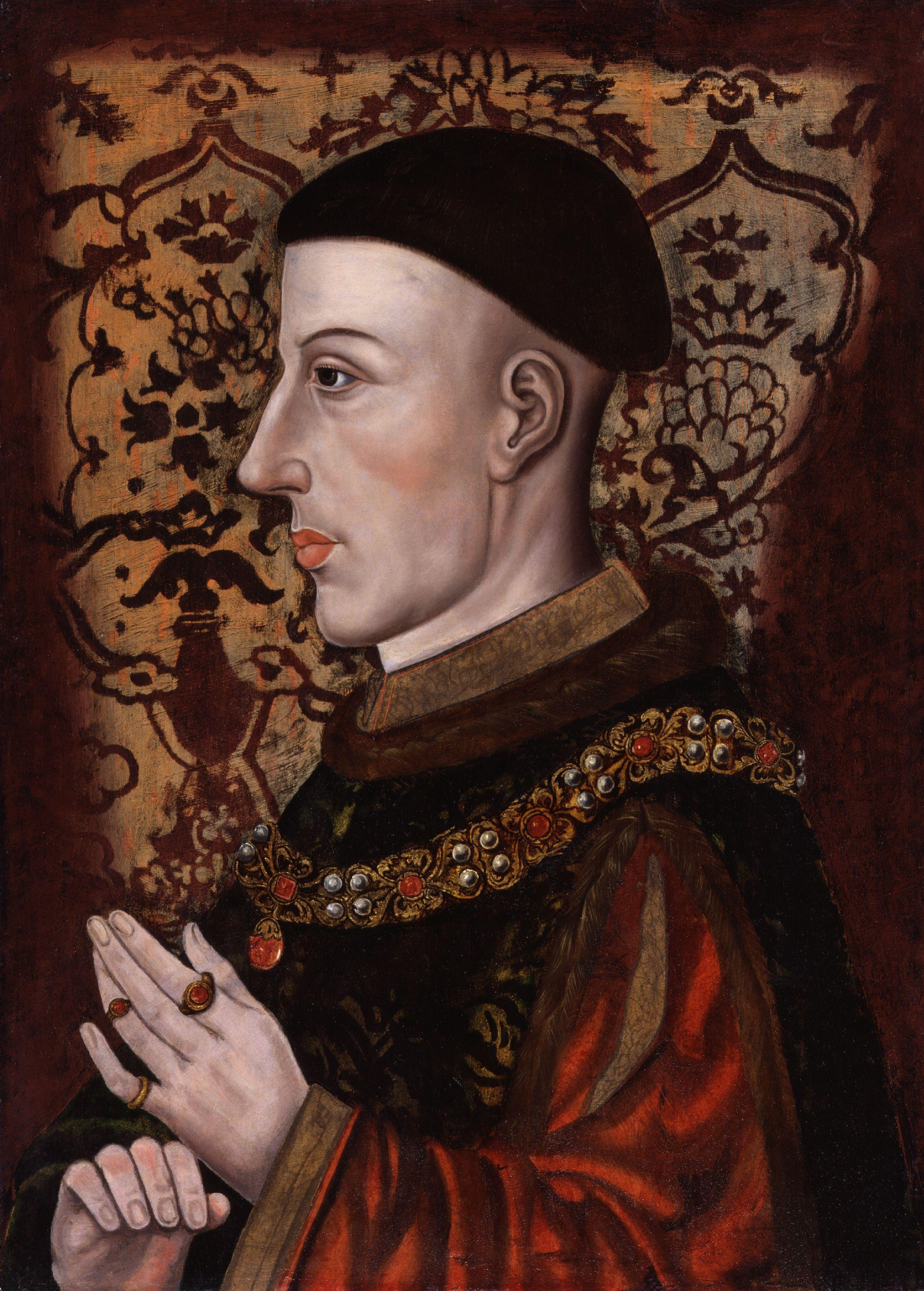
Once I was a clever boy learning the arts of Oxford... is a quotation from the verses written by Bishop Richard Fleming (c.1385-1431) for his tomb in Lincoln Cathedral. Fleming, the founder of Lincoln College in Oxford, is the subject of my research for a D. Phil., and, like me, a son of the West Riding. I have remarked in the past that I have a deeply meaningful on-going relationship with a dead fifteenth century bishop... it was Fleming who, in effect, enabled me to come to Oxford and to learn its arts, and for that I am immensely grateful.


Showing posts with label St Thomas of Canterbury. Show all posts

Saturday, 28 May 2016

St Thomas returns to Canterbury


The BBC News website has an article about the visit to England of the relic of St Thomas of Canterbury from Esztergom in Hungary. An elbow bone fragment believed to have come from the body of St Thomas Becket was taken back to Canterbury Cathedral, 845 years after he was murdered there.

The report, with links to related articles and videos about St Thomas and his relics can be seen below, as can a selection of other articles from various websites about the visit:
Thomas Becket bone fragment carried to Canterbury

Hungarian Pilgrimage to Reunite Thomas Becket Relics with Cathedral

rcdow.org.uk/.../hungarian-pilgrimage-to-reunite-thomas-becket-relics-with-cathedral...
The Hungarian pilgrimage dedicated to St Thomas Becket takes place in May. The saint's relics from the Diocese of Esztergom will be reunited with his relics ...

Reuniting the Relics of St Thomas Becket - Diocese of Westminster

rcdow.org.uk/vocations/blog/reuniting-the-relics-of-st-thomas-becket/
In a joint initiative with the Church of England and the Catholic Church of England and Wales, the Embassy of Hungary will bring a relic of St Thomas Becket, ...

St Thomas Becket relic returns to UK from Hungary after 800 years ...

www.catholicherald.co.uk/.../st-thomas-becket-relic-returns-to-uk-from-hungary-after...
23 May 2016 - St Thomas Becket relic returns to UK from Hungary after 800 years ... The trip would likely include the first ever papal visit to Northern Ireland.

Thomas Becket relic will be brought back to Britain for first time in 800 ...

www.dailymail.co.uk/.../Relic-murdered-archbishop-Thomas-Becket-England-pilgrimag...
23 May 2016 - Church leaders hope that the week-long tour of his relics will help to revive awareness of Becket's importance as well as building bridges ...

Becket's bones return to Canterbury Cathedral

www.anglicannews.org/news/2016/.../beckets-bones-return-to-canterbury-cathedral.as...
23 May 2016 - This relic of St Thomas Becket is touring south-east England this week from its home in Esztergom, Hungary, and will be at Canterbury ...

Bones of Thomas Becket to return to Canterbury – via Hungary ...

www.telegraph.co.uk › News › Religion
21 Jan 2016 - Relics which escaped Reformation and became a symbol of resistance to Communism return to site of murder after 800 years in gesture of ... 


Tuesday, 26 January 2016

Relics of St Thomas from Hungary to visit Canterbury


My attention has been drawn to reports of the visit of relics of St Thomas of Canterbury to his cathedral this coming May. They are coming from Esztergom Cathedral in Hungary as part of an
extended Pilgrimage in honour of St Thomas.

There is a good account of the plans for the events, of the Esztergom relic in particular and of the rise of devotion to St Thomas in Hungary in the Communist era there, in an article in The Daily Telegraph which can be viewed at http://www.telegraph.co.uk/news/religion/12113298/Bones-of-Thomas-Becket-to-return-to-Canterbury-via-Hungary.html

The relic of Thomas Becket that Hungary will loan to Canterbury Cathedral
 
The Esztergom Reliquary of St Thomas

Image: Daily Telegraph


Monday, 11 January 2016

Relics travelling to Canterbury


My attention was drawn to this article in the latest edition of The Tablet about the loan of the reputed crozier of St Gregory the Great to Canterbury Cathedral during the meeting of the Primates of the Anglican Communion and also of a blood stained vestment of St Thomas Becket that is also going to be lent to the cathedral in December.

The article can be viewed, together with a photograph of the ivory crozier head, at Vatican loans Church of England ancient relics ahead of vital gathering

Maybe one should pray that these relics will remind the Primates of the Rock whence Anglicanism was hewn, and that they will be drawn by the Ordinariates or otherwise to seek reconciliation.

Tuesday, 29 December 2015

St Thomas Becket and King Henry VIII


Today is the feast of the martyrdom of St Thomas of Canterbury.

A recent post by Stephanie A. Mann at Supremacy and Survival: The English Reformation
dealt with the fact that it was the destruction of the shrine of St Thomas that was the last straw for Pope Paul III and led to the publication of the excommunication of King Henry VIII. It can be viewed at St. Thomas a Becket and the Long Delayed Excommunication of Henry VIII

There is a useful account by J.C.Wall from his Shrines of British Saints, published in 1905, of the shrine and its decoration, with contemporary illustrations and descriptions as well as an account of the Translation of the relics in 1220 which can be accessed at http://www.historyfish.net/shrines/cw_shrines_four4.html#thomas


Shrine of St. Thomas

The Shrine of St. Thomas of Canterbury.   
Cottonian MS., Tib. E. viii. f. 269.


Stephanie Mann  has posted today about the events of December 29th 1170 and contemporary reactions to St Thomas in The Murder in the Cathedral


Tuesday, 11 June 2013

The Young King


Today is the 830th anniversary of the death at Martel near Limoges of Henry the Young King, the eldest of the sons of King Henry II and Queen Eleanor of Aquitaine to reach maturity. Their second son he was born on February 28th 1155, just after his father's accession and coronation. He himself was crowned in his father's lifetime as King in 1170 - an action which enraged St Thomas of Canterbury as the coronation, a privilege of his see, was performed by Archbishop Roger Pont L'Evêque of York - but died in 1183, six years before his father. As a result he has tended to disappear from regnal lists, and indeed he has no numeral indicator; maybe we should follow the German practice and designate him King Henry (III), but that would cause confusion. Still it should be remembered that there have been nine, not merely eight, crowned English Kings called Henry - and if you are Jacobite in sympathies, then there is also Cardinal York...

One attempt to draw attention to his life is a blog Henry the Young King which offers interesting posts about him.

There is an online account of him here, which cites this description of him :  

A Latin poem by a court official written to commemorate the coronation hints at the charisma of this young prince. There he is described as a charming youth of striking beauty, tall but well proportioned, broad-shouldered with a long and elegant neck, pale and freckled skin, bright and wide blue eyes, with a thick mop of the reddish-gold hair characteristic of his dynasty.


Henry the Young King.jpg

The Coronation of Young King Henry

Image; Wikipedia

As that online account and Elizabeth Hallam's life of him in the Oxford DNB, which can be read here, show he was not universally popular with his contemporaries. This aspect is discussed in the post
A Lovely Place of Sin from the blog about his life.


Given little real authority by his father he spent much of his time jousting. A popular and affable young man, but perhaps not the strongest character - Gerald of Wales wrote of him and his brother Richard that they were "both tall in stature, rather above the middle size, and of commanding aspect. In courage and magnanimity they were nearly equal; but in the character of their virtues there was great disparity... [Henry] was admirable for gentleness and liberality...had a commendable suavity... commended for his easy temper... remarkable for his clemency... the vile and undeserving found their refuge in [Henry]... was the shield of bad men... was bent on martial sports... bestowed his favours on foreigners... [Henry's] ambition magnanimously compassed the world." 

His father's reported statement about him has genuine pathos - "He cost me much, but I wish he had lived to cost me more."


http://theplantagenets.com/wp-content/uploads/2010/10/Yungking.jpg 

The head of the effigy of theYoung King in Rouen cathedral

Image: the plantagenets.com

His Queen was Margaret of France, daughter of King Louis VII and his second wife Constance of Castile; Margaret's elder half sisters, being the daughters of Queen Eleanor from her first marriage, were thus the Young King's half sisters as well. They had a son William who lived for three days in 1177. Following Henry's death she returned to the French court and married secondly King Béla III of Hungary  - thus becoming the only Queen of both England and Hungary.


Henry the Young King

The effigy in the choir ambulatory at Rouen cathedral

Image:professor-moriarty.com


Henry the Young King

A close-up of the face

Image:professor-moriarty.com


One consequence of his death was that when his brother Richard succeeded their father as King in 1189 there was not a division of the Angevin empire within France, as might have happened if the Young King and lived and Ricahrd had been left as Duke of Aquitaine. As it was the Duchy remained linked to the English crown until 1453.
 
In the weeks before his death the Young King had been plundering shrines such as St Martial at Limoges and Roqueamadour to fund a campaign against his father; struck down by dysentery he spent his last days, as is recounted in the Wikipedia article cited above, in penitence and seeking forgiveness. This, and doubtless the reaction to the death of a handsome young ruler who had a considerable following, led to an attempt to present him as a potential saint. As a result his body, on its journey for interment was Rouen as he had requested, was seized for burial at Le Mans by the Bishop before being recovered by the Dean of Rouen and taken to the cathedral there, where it was finally buried on July 22nd. The effigy over his tomb appears similar to that over the heart burial of his brother King Richard I which is also in the choir, and probably dates from the years after 1200.

 
The seal of Henry the Young King

Image; Henry the Young King blogspot


Tuesday, 9 April 2013

The Coronation of King Henry V


Rather like many modern journalists on such occasions the chroniclers who recorded the coronation of King Henry V on April 9th 1413, six centuries ago, tended to remark on the less important if more obvious features. There were two in 1413 - the weather and the food. A snow storm swept across the country. A century and a half later John Foxe the Protestant martyrologist wrote of "the ninth day of April,  called then Passion Sunday, which was an exceeding stormy day, and so tempestuous, that many did wonder at the portent thereof." The contemporary chronicler Adam of Usk wrote that the day was  "...marked by unprecedented storms, with driving snow which covered the country's mountains, burying men and animals and houses and, astonishingly, even inundating the valleys and fenlands, creating great danger and much loss of life."

According to Thomas Walsingham, the monk-chronicler of St Albans, abbey people were undecided as to whether it was a good or bad omen. Some took it to be a sign of impending austerity, but others, in his view more sensibly, saw it as a positive sign, the cold and snowwould bring an end to difficult times and usher in a new era of hope and prosperity, and citing the Song of Songs, with the concept of winter now being past and the rain over and gone. To them this was the beginning of a spring.

The Coronation was held on Passion Sunday, and as a result the banquet afterwards in Westminster Hall was one with Lenten fare, so all the dishes were of fish rather than meat.

In fact we know rather less about this  coronation than about some others of the period, but the saliant features are clear.

File:King Henry V from NPG.jpg

King Henry V

Image:Wikmedia

The King had arrived in London two days earlier, on April 7th, was met by many lords and knights as well as clergy and citizens in procession and took up residence at the Tower. There he was met by fifty or so candidates for knighthood who waited upon him at table at a feast that evening. The following day, having attended Mass, they rode in splendid array to the royal lodgings where they waited upon the King who dubbed them and as Knights of the Bath, escorted him through the city that day to Westminster ready for the coronation. There he was received in procession and escorted to his palace to prepare in prayer for his anointing.

The officiant at the coronation was the Archbishop of Canterbury, Thomas Arundel, who had crowned the king's father in 1399.

  Thomas Arundel (1353–1414) illuminated initial

Archbishop Thomas Arundel

Image: oxforddnb.com

 
It is possible, indeed probable, that the oil used to anoint the King was the same as usedfor his father and his son, that supply believed to have been delivered by the Virgin Mary to St Thomas Becket, left by him in France, rediscovered and brought back in its ampulla by Edward Prince of Wales, and treasured by his son King Richard II.

Early fifteenth centuries ceremonies did not always go with the smoothness one would expect of such an occasion today - Adam of Usk recorded that during the Mass the King dropped one of his obligatory noble son the floor, and both he himself and those who were present had to search carefully to find it before it could be offered up.

Within weeks Henry was to return to the abbey when he attended divine service in the church on Ascension Day and Whitsunday of 1413, and resumed funding of the rebuilding of the nave of the church that summer.

The closest contemporary depictions of the coronation are from the King's chantry which was built from 1438 onwards and completed about 1450. Its sculpture is an important record of contemporary ceremonial dress for the peers who are also represented. The scheme includes two Coronation groups, perhaps representing the acclamation and the homage:


CORONATION OF HENRY V.

The Coronation of King Henry V from his chantry chapel at Westminster

Image: Project Gutenburg text of E.H. Pearce William de Colchester Abbot of Westmisnter SPCK 1915


 In each of which the Abbot of Westminster, William Colchester, is represented as standing, in cope and mitre, on the King's left hand, Thomas Arundel, the Archbishop of Canterbury, being on the King's right hand. The other carving has the King holding the orb and flanked by the Archbishop and Abbot:


Coronation of Henry V 

The other carving of the Coronation
Above the canopy can be seen the King's badges of the antelope and the swan

Image:Corbis images

In the carving of the coronation the King is shown wearing an arched crown. This is significant. When in 1399 his father had been crowned with St Edward's crown Froissart noted that it was arched - something he clearly saw as noteworthy. The sttae crown worn by the effigy of King Henry IV at Canterbury looks to be identical, allowing that is for artistic licence between a sculptor and a painter, to that worn by King Richard II circa 1390 ;

http://www.anglophile.ru/uploads/posts/2012-06/1340705763_queens-50.jpg

King Henry IV

The head of the effigy on his tomb in Canterbury Cathedral

Image: anglophile.ru


King Richard II

The Westminster portrait of circa 1390

 Image: Wikuipedia

This appears very similar to the crown dated to 1370-80 and which was part of the dowry of King Henry IV's daughter Blanche when she married the future Elector Palatine Louis III, son of King Rupert I,  in 1402, and which can now be seen in the Munich schatzkammer. It was on display in London in 1987-8 at the Age of Chivalry exhibition.


File:Schatzkammer Residenz Muenchen crown of an english queen 1370.jpg


The crown of Blanche of Lancaster

Image: Wikipedia


However from the reign of King Henry V it appears to have become usual to depict  him and his successors wearing a crown with arches, and indeed that the actual crown did have arches long before Tudor assertions that England was an Empire, and hence the current designation of the Imperial State Crown.


  photo

King Henry V

St Cuthbert Window York Minster circa 1440

Image: Gordon Plumb on Flickr


http://www.luminarium.org/encyclopedia/henry5initial.jpg

King Henry V - an illumination of 1451-80

Image: Luminarium

The crown destroyed in 1649 and known as the King's Imperial Crown or the ' Harry Crown' has recently been reconstructed by the Historic Royal Palaces Agency and is on display at Hampton Court. Like Sir Roy Strong in his  piece about the crown in his book Lost Treasures of Britain, the HRPA attribute the crown to the reign of King Henry VII, but with no certain date. I have long thought it possible, if not probable, that the 'Harry Crown' was made for King Henry V, if not actually for his coronation, but at least during his reign. In style it has some resemblance to the Crown of St Wenceslaus in Bohemia, which dates from the mid to later fourteenth century and the reign of the Emperor Charles IV (1346-1378). That does not, of course, preclude the possibility that it may have been modified under subsequent monarchs

There is an online article from the HRPA about the making of the reproduction here, and there is more about it in this post, Henry VIII's Crown.


The reconstructed Harry Crown
Image:Lord Belmont in Northern Ireland blog 

The crown as depicted on the important but sadly damaged statue of King Henry VI from All Souls in Oxford, and probably of 1437-43, appears remarkably similar, as may be seen from this, the only image I can find on the internet:


King Henry VI - statue at All Souls Oxford 


Image; Amazon

The portrait of  King Edward IV in the Royal window at Canterbury cathedral - for which see the following post - also looks to show a very similar crown.

Saturday, 29 December 2012

The cult of St Thomas in art


Today is the feast day of St Thomas of Canterbury, the anniversary of his murder in his cathedral in 1170. Last year I posted about some images of St Thomas in art - notably a statue at Chartres.
This year I am illustrating some of the images listed by John Dillon in his post for today on the Medieval Religion discussion group. This is only a personal selection from the great number of extremely interesting examples which he gave.

In part they illustrate, as did my post last year, the spread of his cult from Spain and Sicily to Sweden and Iceland - which produced an important source for his life in a Saga.  Devotion to him spread rapidly in the generation after his death and it remained widespread throughout the middle ages.

Kay Brainerd Slocum's Liturgies in Honour of Thomas Becket (University of Toronto Press, 2004) has a useful chapter (pp. 98-126) on the spread of Thomas' cult.

The chiesa di San Giorgio in Como has a reliquary case housing what is said to be part of Thomas' chin and some bones said to be those of St. Eutichius of Como. The reliquary and the relics can he seen here, here and here. The certificate from 1777 of a recognition of these relics can be seen here.

In Italy St Thomas appears in wall paintings such as this  thirteenth-century fresco of his martyrdom in Pavia's chiesa di San Lanfranco - given the connection with Canterbury this is perhaps not surprising:


http://www.sanlanfranco.it/uploads/pics/w_assasinioTomasBecket.png

Image; sanlanfranco.it


A fresco of circa 1260 formerly in the episcopal place at Treviso in the Veneto and now in that see's diocesan museum shows the martuyrdom as well as King Henry II. In the first view, note the domes in the representation of Canterbury cathedral:it is thought that the artist was familiar with St Mark's in Venice.

http://farm4.static.flickr.com/3505/3972213586_3e47cd62f1_b.jpg

Image: farm4.static.flickr.com


http://farm3.static.flickr.com/2479/3972215200_10e0d6799a_b.jpg

 Image; farm3.static.flickr.com

The influence of Emglish clergy working in Scandinavia doubtless helps explain the presence of devotion to and commemoration of St Thomas there. Here are two photographs  of reliefs on the late twelfth-century baptismal font (ca. 1190-1200) in the church at Lyngsjö (Skåne län) showing King Henry II, the murderers, and St Thomas of Canterbury's martyrdom:

Lyngsjö kirke, døbefont


Lyngsjö kirke, døbefont

Images: nordenskirker.dk


More views of this font are available here (scroll down to Døbefont):


The cult remained popular in Scandinavia into the later middle ages as is indicated by this  altarpiece statue in Härads kyrka, Härad (Strängnäs kommun), Södermanland:


Image:Someday man on Flickr

The great series of miracle windows at Canterbury - how did they manage to survive the destructive urges of iconocl;asts in the sixteenth and seventeenth centuries I wonder - as in the example here of Becket window 4 (circa 1215-1220)

They are closely related in date and style to the early thirteenth-century Becket window in the cathedral at Chartres which can be seen here and to the heavily restored, seemingly early thirteenth-century, Becket window in the north choir of Sens cathedral, which can be seen here.

Sens has close links with St Thomas as his home whilst in exile, and the cathedral preserves vestments which are said to have been his.

There is a link to an article in Vidimus with a discussion of, and some expandable views of, earlier thirteenth-century Becket windows at Sens and elsewhere which can be read here.

St Thomas remained popular with commissions fromn glaziers, and despite King Henry VIII's proceptuion of his image, many examples still survive. Here is a fine early fifteenth century one from York Minster:


http://vidimus.org/wp-content/uploads/2011/01/issue_32_2009_pom5.jpg

St Thomas of Canterbury as depicted in the north choir aisle of York Minster (panel 5b of window nIX )
Given by Thomas Parker, circa 1415-1420

Image: vidimus.org

Here are two scenes from Meister Francke's  early fifteenth-century Altarpiece of St. Thomas Becket , probably commissioned by the English community in Hamburg and dated to 1424-36, and now in the Kunsthalle in Hamburg:

http://upload.wikimedia.org/wikipedia/commons/7/7d/Meister_Francke_007.jpg

Archbishop Thomas enters into Canterbury - an interesting depiction of how in the fifteenth century a bishop might appear when travelling:

http://upload.wikimedia.org/wikipedia/commons/8/86/Meister_Francke_011.jpg


The martyrdom of the Archbishop


Images: Wikipedia

There is an article about Meister Francke here.

Wednesday, 3 October 2012

St Thomas Cantilupe of Hereford


Today is the feast of St Thomas of Hereford, a day which is observed here in Oxford in that he was born in Buckinghamshire and that he served as Chancellor of the University. My post from last year about him, with its links and pictures, can be seen at  St Thomas of Hereford.

To the links I would add this site about his life which can be read here.


A conscientious  Bishop of Hereford from 1275 his conflict with Archbishop John Pecham of Canterbury led to his excommunication and his journey in March 1282 to appeal to Pope Martin IV. Although he received absolution, he died of fever on 25 August 1282.  His bones were brought back to Hereford and buried in the north transept. It is this tomb which has been restored in recent years as a new shrine. On Easter Monday 1287, a series of miracles began, which lasted well into the fourteenth century.
When reviewed by Commissioners in 1307,  over 400 miracles had been recorded – second only to St Thomas Becket in Canterbury. These are well documented in the surviving canonisation depositions. Modern writers, such as Canon Bannister, the great early twentieth century historian of the cathedral in Hereford, may have tended to be sceptical about how medieval people misdiagnosed illnesses or seeming death, but the accounts are rich in circumstantial detail.  In consequence Bishop Thomas Cantilupe was canonised in 1320 and 2 October was designated as his feast day.  

On 25 October 1349 his remains were translated to a new shrine in the Lady chapel and new effigies of bishops were provided either side of the processional aisles, to lead pilgrims to the greatest of all the bishops, the new saint of Hereford. At the same time, offerings at the shrine of St. Thomas helped re-build parts of the cathedral – notably the central tower, with its ball-flower decoration. 

In the late fourteenth century, the cult of St. Thomas declined - there are fashions in saints as in most things - and in the late 1540s, the shrine itself was destroyed, and the relics dispersed. However, devotion to St. Thomas continued in a modest fashion and there is evidence of his relics being used in a procession in Hereford in 1610, to ward off plague. (Adapted from Hereford cathedral website with my own comments on the miracle evidence and the fashion in saints.)

The skull of St Thomas is now preserved in a reliquary at Downside Abbey.

Last year I wrote that there appeared to be no contemporary depictions of him, although it is recorded that he had red hair, and the corresponding temperament. However I had forgotten his own public image on his episcopal seal:


Seal of Bishop Thomas de Cantilupe.

Legend: TOMAS DEI GRATIA HEREFORDENSIS EP(ISCOPU)S (Thomas by the grace of God Bishop of Hereford).
The arms of Cantilupe ancient are displayed on each side of the bishop: 3 fleurs-de-lys. Hereford Cathedral Archives 6460.

Image:Wikipedia

There is also this stained glass figure from the time of his canonisation. The artist appears to have given him red hair.

photo

St Thomas of Canterbury and St Thomas of Hereford
Stained glass in Credenhill Church, Herefordshire.

This has been dated to circa 1300, but I suspect that it dates from the time of the canonisation of St Thomas in 1320. The pairing with St Thomas of Canterbury is significant, and may point to the number of miracles attributed to their intercession.

Image: Gordon Plumb on Flickr

photo

The restored first shrine of St Thomas in Hereford Cathedral

Image: Aidan McRae Thomson on Flickr

Saturday, 7 July 2012

Relics of St Thomas of Canterbury


Today is the feast of the Translation of St Thomas of Canterbury, an event which occured in 1220, and led to the tradition of the Jubilee of St Thomas every fifty years at Canterbury - in 1420 the claims associated with it caused a few riased Papal eyebrows on the part of Martin V in respect of Archbishop Chichele.
The bones of the martyr Archbishop may have been destroyed in 1538, but, as is documented in the recent book The Quest for Becket's Bones, they may have survived at Canterbury. In the arguable absenc eof primary relics there are some remarkable secondary relics of St Thomas Becket.

At Sens cathedral, where St Thomas spent part of his time in exile in the 1160s there are preserved vestments which are believed to be those of St Thomas.

In May the New Liturgical Movement editor Shawn Tribe posted this piece about them:

" I came across the very interesting website of Dr. Genevra Kornbluth which, amongst other treasures, contains her photographs of vestments which are said to have been used by the 12th century saint, Thomas à Becket, and which are housed in the Treasury of the Cathedral of Sens.

Some of you will have no doubt seen some images of a reproduction of this particular chasuble, but these are the first high quality images I have seen of the original itself -- not to mention photographs of other period medieval vestural elements as well.

I am pleased to reprint them here with the kind permission of Dr. Kornbluth. (Please click each image to enlarge them for more detail.)
The chasuble with its famous orphrey pattern

A more detailed view of the orphrey

Alb. Take note of the ornamental apparel as well as the ornamental cuffs. 


The apparel which would have attached to the amice.

Maniple and stole. The cuffs and apparels on the alb are also more visible here.

Pontifical Sandals

You can see more details here.

Photos reprinted with permission. www.KornbluthPhoto.com "


The New Liturgical Movement followed this up more recently with this post by Fr Lawrence Lew, O.P.:


"This mitre, belonging to the treasury of Westminster Cathedral, is currently on display in the Victoria and Albert Museum. It dates to c.1160-1220, and so, is contemporaneous with the life of St Thomas Becket.

Since the 19th century it has been associated with the relics and mitre of St Thomas Becket at Sens Cathedral, although this association is now disputed. The lappets do not match because the one embroidered with an apostle was formerly attached to another mitre, c.1180-1210 also at Sens Cathedral; the floriate lappet is original.

In form and decoration, this mitre does resemble the famed Becket Mitre. The scrolls and floriate embroidery are silver-gilt thread worked on padded white silk. The circular compartments in the embroidery and the red band of silk would have been ornamented with jewels and enamels but these have been removed.

The mitre is 27cm x 23.5cm with a 3cm-wide lappet (extending to 6.5cm at the base) that is 44cm long."

Tuesday, 22 May 2012

The vestments of St Thomas Becket


That indefatigable photographer of the fine arts of the middle ages Genevra Kornbluth has posted, amongst other of her photographs on the Medieval Religion discussion group this link http://www.kornbluthphoto.com/VestmentsBecket.html to her set of photographs of the vestments preserved at Sens cathedral and believed to have been used by St Thomas Becket whilst he lived there in 1164-5 and 1166-70.

Please respect Genevra's rules in respect of her copyright if you wish to use the photographs in any way - the details are posted  on the side bar.

Otherwise enjoy the sight of relics of a martyr prelate and see what twelfth century bishops wore to celebrate the liturgy.


Thursday, 29 December 2011

St Thomas of Canterbury in Monreale and Soria


Here is another depiction of St Thomas made soon after his death. It is part of the decoration of the apse of the cathedral at Monreale in Sicily.

He is shown standing between Pope St Sylvester I and St Lawrence. The association of themes and ideas appears clear - St Sylvester was believed to be the recipient of the Donation of Constantine, with all that was taken to imply for Papal and ecclesial authority, and St Lawrence had been martyred in 258 for refusing to compromise and hand over the Church's wealth, and thereby its independence, to the Imperial authorities. St Thomas is therefore presented as being in good company in respect of Church-State relations.

http://farm4.static.flickr.com/3164/2575093180_0101779142_b.jpg

Image: John Dillon posting on Medieval religion discussion group 29/12/2009

The historical and cultural context of the creation of the mosaic and the cathedral are discussed in John Julius Norwich's splendid and evocative The Kingdom in the Sun, the successor volume to the equally compelling The Normans in the South. Both books make you yearn to travel to Sicily and the rest of the Regno to visit the places he describes.

St Thomas's murder as depicted in a late twelfth-century wall painting in the church of San Nicolás in Soria (Castilla y León). The painting, exceptional in that its shows the Archbishop being stabbed in the back rather than struck in the head, is discussed in two articles here and here. There is a brief BBC film clip showing more of the painting here.

Just as St Thomas's early depiction in the apse mosaics at Monreale has been ascribed to the influence of one of King Henry II's daughters, Joanna/Giovanna, Queen of Sicily, so this painting has been ascribed to the influence of another daughter, Eleanor/Leonor, Queen of Castille.


St Thomas of Canterbury at Chartres


Today is the feast of the martyrdom of St Thomas of Canterbury in 1170.

Quite apart from my work as a medieval historian as a former churchwarden at St Thomas the Martyr in Oxford he is a saint who interests me. My post about both the saint and the church from last year can be read at St Thomas of Canterbury.

As a consequence of the shock engendered by his death and the cult that developed around him St Thomas was widely depicted in art. Many of these representations in England were casualties of King Henry VIII's fulminations against veneration of St Thomas - "that traitor Becket."

Thanks to some posts on the Medieval religion discussion group by Christopher Crockett, that veteran enthusiast for all things Chartrain, I am reproducing some images from Chartres Cathedral, where Becket's supporter John of Salisbury was Bishop from 1176 until his death in 1180.

Clark Maines in an article 'A Figure of St. Thomas Becket at Chartres' in Zeitschrift für Kunstgeschichte XXXVI, 1973), pp. 163-173, identifies one of the figures on the south portal of Chartres cathedral as St Thomas. This can be read on JSTOR if you have access at http://www.jstor.org/stable/1481845 The figure on the right is, in this reading, St Thomas, trampling on King Henry II.

http://images.library.pitt.edu/cgi-bin/i/image/getimage-idx?cc=chartres;entryid=x-fcsp333610220;viewid=FCSP333610220.TIF;quality=m800;view=image


http://images.library.pitt.edu/cgi-bin/i/image/getimage-idx?cc=chartres;entryid=x-fcsp333610225;viewid=FCSP333610225.TIF;quality=m800;view=image

Images:images.library.pitt.edu

Also at Chartres in the ambulatory is a window telling the story of St Thomas, and given by the Guild of Tanners. It can be viewed, with some explanatory notes, here.

Tuesday, 22 November 2011

A scandalous Archbishop?


Depending on whether one follows his younger contemporary Roger of Hovedon who assigns his death to November 22nd or Thomas Stubbs in the fourteenth century, who gives November 26th (our old friend scribal error may explain it - reading xxii as xxvi) hereabouts is the anniversary of the death 830 years ago in 1181 of Roger of Pont L'Evêque, born in Normandy about 1115 and who had been Archbishop of York since 1154.

The Oxford DNB life of Roger by Frank Barlow can be read here.
There is a similar online article here, which mistakenly places his burial at Durham, not York.

As Archbishop he is perhaps most famous for his being seen as an opponent of Thomas Becket, not least over the respective claims of the two archiepiscopal sees. As a friend and I recently agreed Roger was perhaps unlucky to have as his opposite number a future martyr for the liberties of the Church, and to have clashed with St Thomas over the exclusive claims of Canterbury to crown the English monarch. Roger's coronation of the Young King Henry on June 14th 1170 was the final breach between the two men.


Given other circumstances Archbishop Roger might have been remembered as a great servant of church and country and as a magnificent builder and patron. Little of what he built or knew now survives.

York Minster had been badly damaged by fire in 1137 and as Archbishop Roger set about remodelling the choir and crypt in 1154. The new eastern end of the cathedral was completed in 1175 producing an aisled choir, with its own transepts 40 feet longer than its predecessor. The eastern end was squared off and the whole choir raised over a large crypt. This may have been inspired by that at Canterbury which he would have known as Archdeacon to Archbishop Theobald.That is all that survives, as the choir was replaced after 1361 by Archbishop Thoresby's even grander structure. Even then its survival was accidental - the top of the vault was hacked away, and the crypy filled in until it was excavated after the 1829 fire. Part of the rubble from the old choir was used to create the eastern crypt as aplatform for the new fourteenth century altar and shrine of St William. What survives of Roger's crypt can now be viewed as part of the Minster undercroft. Archbishop Roger also extended the transepts by 40 feet and added two western towers, which disappeared with the early fourteenth century rebuilding of the nave.


The remains of Archbishop Roger's crypt at York

Image: York Minster website

In the north aisle of the nave there survives one panel of glass which is thought to have originated in Archbishop Roger's choir glazing. It is a figure from a Tree of Jesse:

http://images.travelpod.com/users/flyin_bayman/castles_beer-06.1146589200.york_minster_-_rare_medieval_stained_glass.jpg

Image: travelpod.com

To the north, behind the Minster, there survives part of a cloister arcade from the Archiepiscopal palace which is normally ascribed to him, as was the foundation of the collegiate church of St Mary and the Holy Angels for his clerks and which adjoined the palace gate. With the expansion of the Minster nave, this became joined to the cathedral in the early fourteenth century, but was a casualty of the reformation; its foundations were uncovered in the 1960s restoration.


https://blogger.googleusercontent.com/img/b/R29vZ2xl/AVvXsEihomZLcKV3czwI83OyteBI2yZ9QYh226J86g_xPOja4QJa87Kwp4VNddkVr7KcSof8G4_c6L6zkJs3OcVXmbTV0Crd_L1UGBvz4DAgr07K92ljAevLXFqM8wFc4kp5uY0U3uxcvI2_mJA/s400/York+Bish+palace+4.jpg

The remains of the palace cloister

Image:matthewpemmott.co.uk

http://farm5.static.flickr.com/4153/5440532377_0f81317a56_z.jpg

The cloister with Archbishop Grey's early thirteenth century chapel

Image: farm5 on Flickr

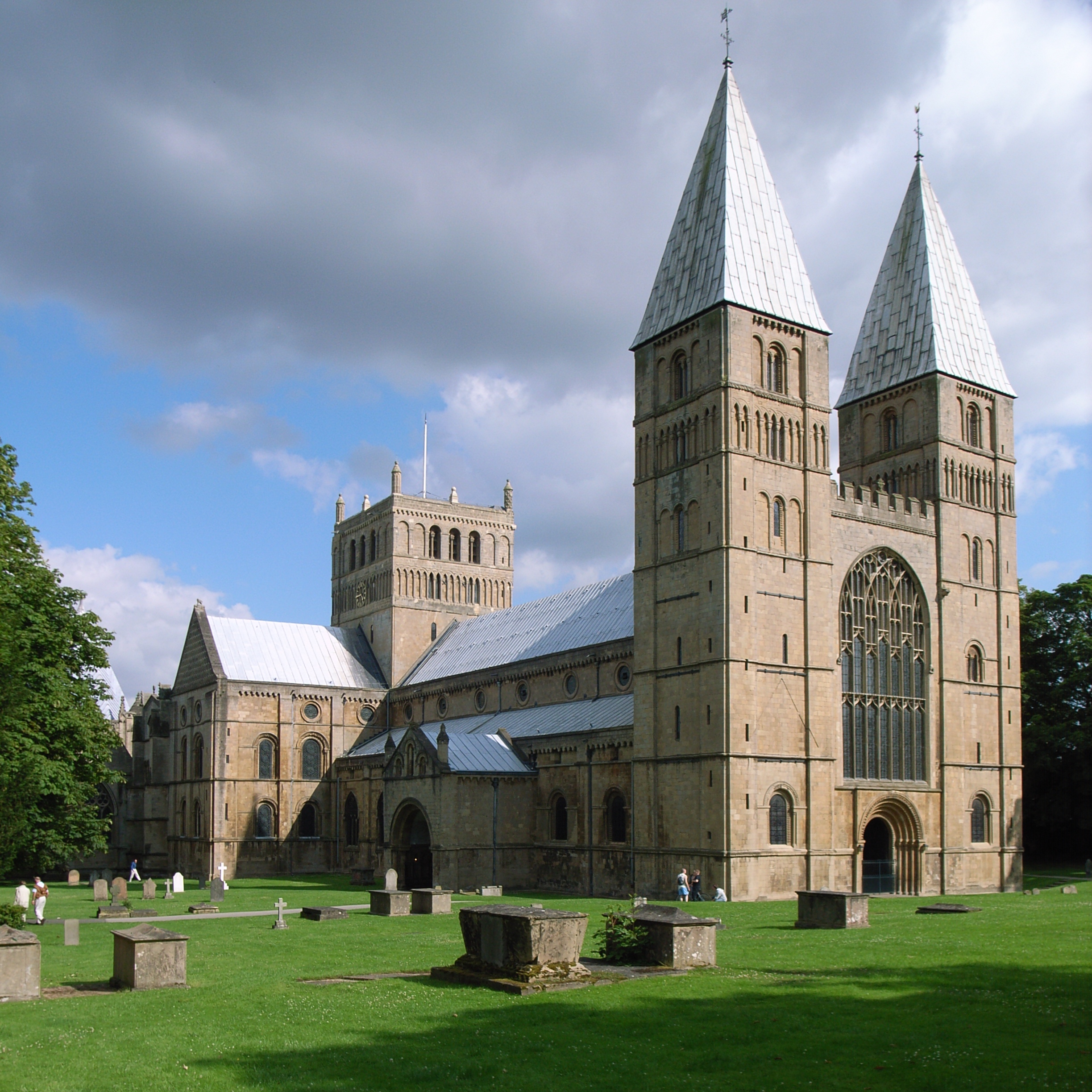
Of the three great daughter churches that functioned as pro-cathedrals in the diocese of York his work of the 1170s at Ripon survives in some nineteenth century reconstruction, but at Beverley anything he did has totally disappeared. At Southwell the church appears to have been completed just before his time, and he would doubtless recognise it, even with its great perpendicular window.


Southwell Minster

Image:Wikipedia

Probably the only other church he would recognise is the fine twelfth century nave of the church on the archiepiscopal manor at Sherburn in Elmet, which was sometimes used by Archbishops for ordinations and meetings.

There is more than a whiff of scandal attached to Roger. According to a letter attributed to John of Salisbury, who first reported this story in 1172 two years after the death of Thomas Becket, and nine years before Roger's own death, as a young and ambitious clerk in the household of Archbishop Theobald of Canterbury, and his Archdeacon from 1148, Roger was involved in a scandal involving a homosexual relationship with a boy named Walter. After Walter made the relationship public, Roger reacted by embroiling Walter in a judicial case that ended with Walter's eyes being gouged out. When Walter then accused Roger of responsibility for this crime, Roger persuaded a judge to condemn Walter to death by hanging. Becket supposedly was involved in the cover-up afterwards, by arranging with bishops Hilary of Chichester and John of Coutances for Roger to swear an oath that he was innocent. According to John of Salisbury, Roger then went to Rome in 1152 and was cleared of involvement by Pope Eugenius III. John of Salisbury further alleges that it was only after bribery that the Pope cleared Roger. Frank Barlow points out in his biography of Becket that while Roger was accused of these crimes, and may even have been guilty of some sort of criminal homosexuality, John of Salisbury, a noted partisan of St Thomas, could almost certainly have had the motive for bringing up this story in 1172 as a means of defaming Roger.The story would naturally have put Roger in the worst possible light. The story does not put Becket in too good a light, and if it is not true or exaggerated then John of Salisbury, distinguished scholar and churchman that he was, does not look so good either- if he actually wrote the letter in question.

The story, whether true, exaggerated or false, is better than most fiction - once again it would make for a good novel or drama, let alone modern newspaper style headlines "Archbishop of York arranged to have ex Gay-lover blinded and hanged" would be quite a good line - with or without phone-hacked evidence.

More seriously the story is a reminder that there have always been scandals and alleged scandals in the Church. That is not to minimise them, but it is also to say that we need to be sure when we pass judgement. The truth or otherwise about Archbishop Roger and Walter is now, presumably, unknowable. Contemporary allegation of scandal should be examined with the utmost seriousness, caution and care.