Saturday, 7 September 2024
The olfactory sense of History
Thursday, 5 September 2024
Camping out on campaign with King Henry VIII
Thursday, 6 July 2017
Jousting
There is an article on the Daily Telegraph online website about the degree of fitness that was required for a medieval jouster, and comparing it with that of modern athletes.
It can be read in two versions at Study reveals jousters are as fit as today's top athletes and at What it takes to be a jouster, the fittest sportsman of them all
It confirms what I have always suspected, that the men who competed in the lists, Kings and princes, aristocrats and knights, were physically very fit indeed. That it was in part training for warfare - just as modern equestrian sports derive from military training in more recent centuries for the cavalry - as indeed was hunting, is true, but, as with the chase, some practitioners were keener and more committed than others, and may well have spent a great deal of time training and keeping physically fit. It was not a hobby you could just indulge in without considerable, and expensive, preparation.
King Henry IV was a noted jouster in the 1390s and McNiven argues in a well-known article which seeks to give an analysis of the King's health, and its decline from fairly soon after his accession, that the King may have suffered from being unable to maintain his customary level of fitness but put on weight and that like some modern athletes suffered health problems as a consequence of his enforced idleness of retirement from physical competition.
It has also been suggested that King Henry VIII's last years were shaped in part by the consequences of injuries he had received in the lists or conditions which developed as a result of jousting. Robert Hutchinson has written about this in The Last Days of Henry VIII:Conspiracies, Treason, and Heresy at the Court of the Dying Tyrant
That said, of course, both these English Kings came off better that King Henri II of France who died as a result of a joust in 1559. No amount of fitness can prepare you for something like his fate.
Tuesday, 29 December 2015
St Thomas Becket and King Henry VIII
Today is the feast of the martyrdom of St Thomas of Canterbury.
A recent post by Stephanie A. Mann at Supremacy and Survival: The English Reformation
dealt with the fact that it was the destruction of the shrine of St Thomas that was the last straw for Pope Paul III and led to the publication of the excommunication of King Henry VIII. It can be viewed at St. Thomas a Becket and the Long Delayed Excommunication of Henry VIII
There is a useful account by J.C.Wall from his Shrines of British Saints, published in 1905, of the shrine and its decoration, with contemporary illustrations and descriptions as well as an account of the Translation of the relics in 1220 which can be accessed at http://www.historyfish.net/shrines/cw_shrines_four4.html#thomas
The Shrine of St. Thomas of Canterbury.
Thursday, 23 April 2015
Raising one's hat for St George

The reverse has arabesque-style ornament of 'crimped' gold ribbons inset with stylised gold rosettes on translucent green enamel. There are large areas of loss to the enamel on the surrounding frame; parts of the dragon have been restored with cold enamel.
This jewel has long been identified as belonging to a homogeneous group of small gold reliefs (émail en ronde bosse), distinguished by their style and enamelling technique. The workshop where the pieces were made can be dated c.1500-20 and several hypotheses exist regarding location, ranging from Spain and southern Germany to the Danube region. More recent and convincing are arguments ascribing the group to the Southern Netherlands in the wake of the great Burgundian tradition of enamelling.
The badge reveals an unusual iconography. St George is usually represented as a young beardless knight with helmet. Here he has a full beard and an abundance of richly curled hair. These features correspond almost exactly to those of Frederick Barbarossa (r.1152-90), as shown in the print on the title page of his biography written by Johannes Adelphus and published by Johannes Grunung in Strasburg in 1520. In this book, which was reprinted eight times between 1520 and 1629, Barbarossa is depicted as the epitome of the virtuous knightly warrior-emperor. The book appeared at a moment of Humanist interest in the glories of the Staufer emperors and encouraged by Maximilian I of Habsburg, Holy Roman Emperor (r.1493-1519), to enhance his own political status. After his marriage to Maria of Burgundy in 1477 Maximilian I became ruler of the Southern Netherlands. In the light of this sixteenth century revival, it may be that this representation of St George, with the features of the great emperor, was intentional. Moreover, Maximilian himself was referred to as der letzte Ritter (the last warrior) and was frequently commemorated 'in the guise of the gallant St George in armour'.
Maximilian died in 1519 and it is known that Charles V, his grandson and successor, was in Antwerp in 1520. It is just possible that this badge was executed on this occasion as a means of honouring the Habsburgs by alluding to the virtues of their Staufer predecessors and their imperial ideal.
The link with Maximilian is strengthened by a curious tradition attached to this jewel: it was known as the 'Holbein George' and was traditionally believed to have been worn by Henry VIII. There is no means of verifying the tradition that this was the 'riche brooch with ye image of sainet George' worn by Henry VIII which may have been presented to him by Maximilian. There is, however, no evidence that any of Henry VIII's jewellery has survived in the Royal Collection and the tradition may have become attached to the jewel while in private ownership.
Whilst it is not known when the badge entered the Royal Collection, it is exactly the type of jewel George IV acquired from Rundell, Bridge & Rundell the Royal goldsmiths from 1797 to 1840. It was probably the 'curious ancient enamelled Badge of the Garter, in glass case' listed in an inventory of jewels at Windsor Castle in 1830 and the 'ancient Badge Tudor' recorded there in 1837.
Text adapted from Ancient and Modern Gems and Jewels in the Collection of Her Majesty The Queen, London, 2008
Provenance
By tradition Henry VIII; first apparently recorded in the Royal Collection in 1830 (copy list by Rundell, Bridge & Co, 16 September 1830 RCIN 1114749, fig.13)
Whether it was made for King Henry VIII or for one of the Habsburg Emperors, both of whom were Knights of the Garter, it is clear that King Henry VIII was a keen devotee of St George. It was in his reign that the chapel of St Heorge was completed at Windsor in 1528, the same period that the King issued coins bearing the image of St George - the gold George Noble - a device not used again intil the end of the reign of King George III. It is from the King reign that there survives the splendid Black Book of the Order of the Garter, that the King chartered teh Guild of St George that evolve dinto the Honorable Artillery Company, and the King chose to be buried at the chapel of St George in Windsor.
My previous posts about St George and his cult can be viewed at St George's Day, Orders of the Day, Hymn to St George from 2010, St George from 2011, St George and the Dragon, St George at Fordington from 2012, Praying to St George, St George in art - dragon slaying and martyrdom, Relics of St George, St George Altarpiece, Medieval Wall paintings uncovered in Wales from 2013, The Martyrdom of St George, Devotion to St George and English Iconoclasm II - the fate of the cult of St George from last year.
Thursday, 26 February 2015
A book from the library of King Henry VIII
Wednesday, 4 February 2015
Ford Lectures 2015
Last Friday afternoon I attended the first of this year's Ford Lectures. This year the series is on " The English People at War in the age of Henry VIII" and the lectures are being given by Dr Steven Gunn of Merton.
The king fought many wars, but how did they affect his subjects? How much did they think about war or talk about war? How did communities cope with the pressures war placed upon them? How did military service relate to the social power and self-image of the landed elite? How did war affect the economy? What weapons did people own, did they know how to use them, were they ready to kill and how many of them died? And how did engagement in war shape his subjects’ relationship with the king and their sense of being English? This year’s Ford lectures will ask all these questions in the context of the century of military, political and social change that lay between Henry’s grandfather Edward IV’s invasion of France in 1475 in the afterglow of the Hundred Years War and his daughter Elizabeth’s attempts to shape a trained militia and a powerful navy to defend England in a Europe increasingly polarised by religion.
His chosen era is rather longer than the King's reign, being the period from 1475 through to the 1570s. This was indeed a time of wars, but they tens to be ones which are not well remembered or studied in the way that the earlier and later campaigns of the Hundred Years War or of the Spanish War and the Civil Wars respectively are.
Monday, 15 December 2014
Espionage at the early Tudor court
Friday, 14 March 2014
More historic discoveries in the news
Monday, 19 November 2012
Nonsuch
Although often termed a palace Nonsuch was perhaps more a very opulent hunting lodge, being only a third of the size of Hampton Court, which lies a few miles to the north. In one way it may have been similar in its status as a royal retreat to the function of the Grand Trianon or Marly to Versailles for King Louis XIV.
Begun on the anniversary of the King's accession, April 22nd, in 1538, the building very soon had gained its distinctive name, there being none such a structure in the country. It is often compared with Chambord, and seen as a response to King Francis I's palace; the seventeenth century, the English Catholic priest Richard Lassels (1603?–68), in his posthumously published The Voyage of Italy, however referred to Fontainbleau as ‘the Nonsuch of France’.
Sometimes described as arguably the first Renaissance building in England Nonsuch appear to me too eclectic for such a description. It incorporated Renaissance features - notably its stucco decoration - and the gardens may well have been the first truly Italianate landscape feature in England. Much of it was however fairly typical of the late Perpendicular domestic style of the age, and the two towers on the south front wondrous pieces of exuberance. In many ways it was King Henry VIII's late medieval fantasy toy castle - inspired by perhaps by Arthurian romances and the like. It was the King's equivalent of the Brighton Pavilion created by King George IV around a place for royal recreation. In both cases the expenditure to create them was lavish, and the emphasis on the exotic.
Like the Brighton Pavilion Nonsuch was less favoured by the King's successors. It was leased by King Edward VI and sold by Queen Mary I, but was reacquired by Queen Elizabeth I in 1596, and in her last years she liked it as much as any of her other residences. Under the early Stuarts it was used occasionally, housed the Exchequer after the Fire of London and in 1670 was given to to Lady Castlemaine, only for her to destroy it a little over decade later. It's loss is, of course, to be greatly deprecated. Only a four contemporary pictures survive of the building, but the excavation of the site in 1959 revealed the plan. The excavation was also important in establishing archaeological investigation of post-medieval sites as an important means of recovering the past.
There is an illustrated online history of Nonsuch here, and there is another online article about the Palace from a local history group, which has more detail as to its history, here.
I have selected two of the pictures to give an idea of both the model and of what has been lost. I think an excursion to see the reconstruction is definitely called for.
Nonsuch
Image: countrylifeimages.co.uk
The south front of Nonsuch
Image: Copyright Roger Poynter/ Friends of Nonsuch
Tuesday, 23 October 2012
Woodvilles and Boleyns
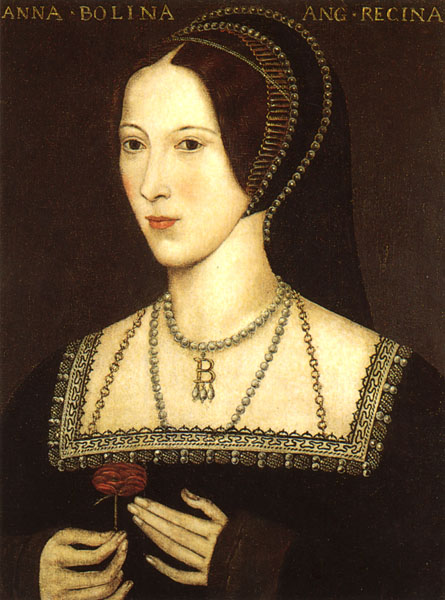
With one of the students I am teaching this term I am looking at the life and times of Anne Boleyn. In today's tutorial we considered her background and upbringing, and her time at the Burgundian-Habsburg court of Margaret of Austria and at the French court.
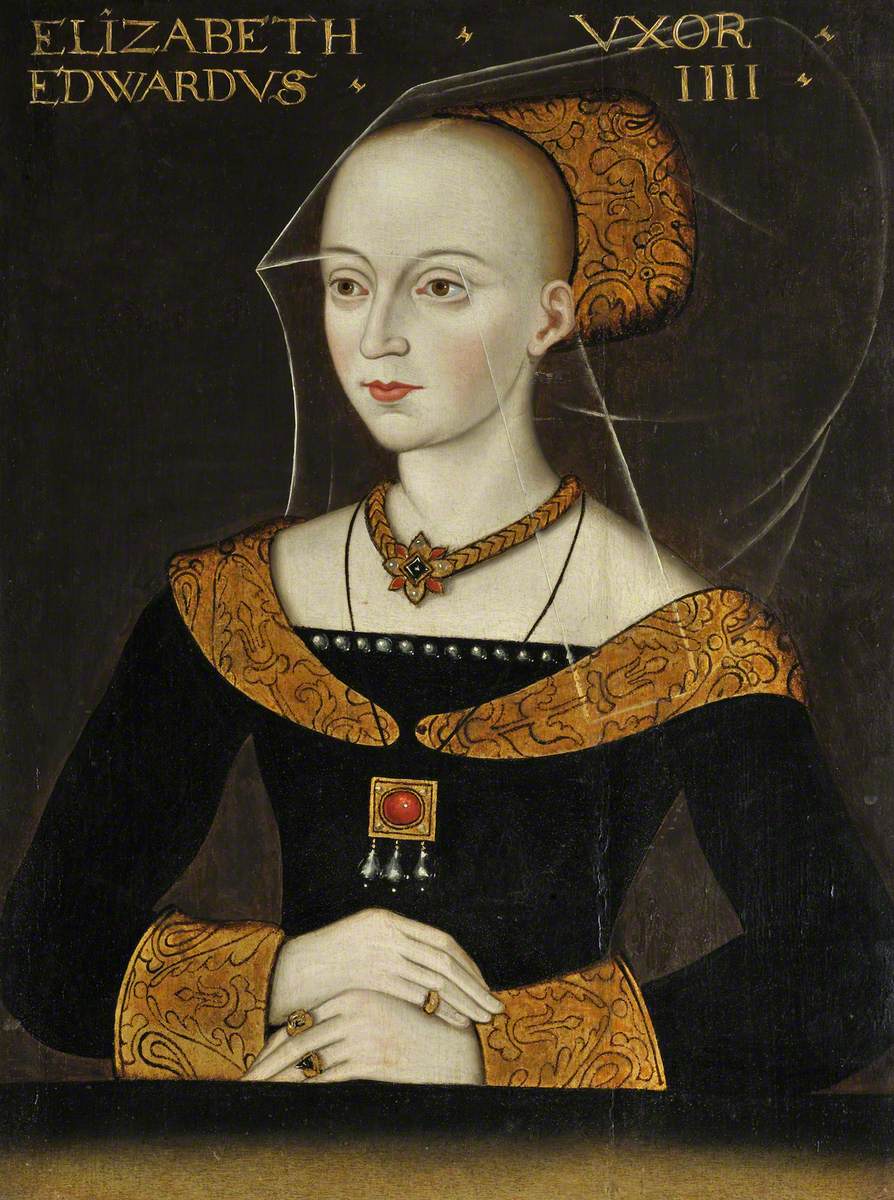
A point which occurred to me some time ago, and which I made in our meeting, was the similarity between Elizabeth Woodville and her family and Anne Boleyn and hers. The physical similarities between King Edward IV and his grandson King Henry VIII are clear, and also the fact that both became King at the age of eighteen - with possibly no few consequences attendant thereupon. Both had continental ambitions that remained fundamentally unrealised.
The similarities between Elizabeth and Anne are interesting and noteworthy. Elizabeth was half Burgundian through her mother Jaquetta, Anne had lived at the court in Brussels as a girl. In both cases previous marriages or pr-contacts by their husbands shaped their rise or fall. Both resisted becoming the King's mistress, both were highly controversial choices as Queen consort, both, inevitably, advanced the position of their family. Both their families were far from popular, if not cordially loathed, by others in the political establishment, and both paid a bloody price - Elizabreth Woodville lost her father, two brothers and a son by her previous marriage to the headsman as well, of course, as the disappearance of her sons by King Edward IV; Anne Boleyn lost her own head, as did her brother George his, and the family never recovered its influence.
Anthony Woodville, Earl Rivers and George Boleyn Viscount Rochford can be seen to have been more considerable figures than might have been supposed the Oxford Dictionary of National Biography lives of them bring this out. That of Rivers, by Michael Hicks, can be read here and that of Rochford by Joseph Block is here.
Both were accomplished in courtly and diplomatic arts, and men of learning with a recognised interest in learning and religious ideas. There is more about Rivers' literary patronage here and George Boleyn was anxious to advance the evangelical reformist ideas that gained ground with his sister's elevation.
Queen Elizabeth and Edward Prince of Wales, later King Edward V.
Image: Luminarium.org
What strikes me in this similarity is the point that the world of the 1460,70s and 80s was very similar to that of the 1520s and 30s, though clearly the religious controversies of the latter were new in themselves. The late-medievalist in me tends to see the period as a unity - another reason for not seeing Bosworth as either an ending or a beginning.
Monday, 8 October 2012
The Harry Crown reconstructed
Looking further I found a much more detailed and informative article in the Guardian (intriguing in itself) about it which has more details and a video of the crown - all of which can be seen here.
I was interested to see that an Oriel friend, Kent Rawlinson, had a part in researching the inventories that have descriptions of the original crown.
I really must go and see this when I can - it is very many years since I visited Hampton Court, and this is an incentive.
Monday, 24 September 2012
Our Lady of Walsingham
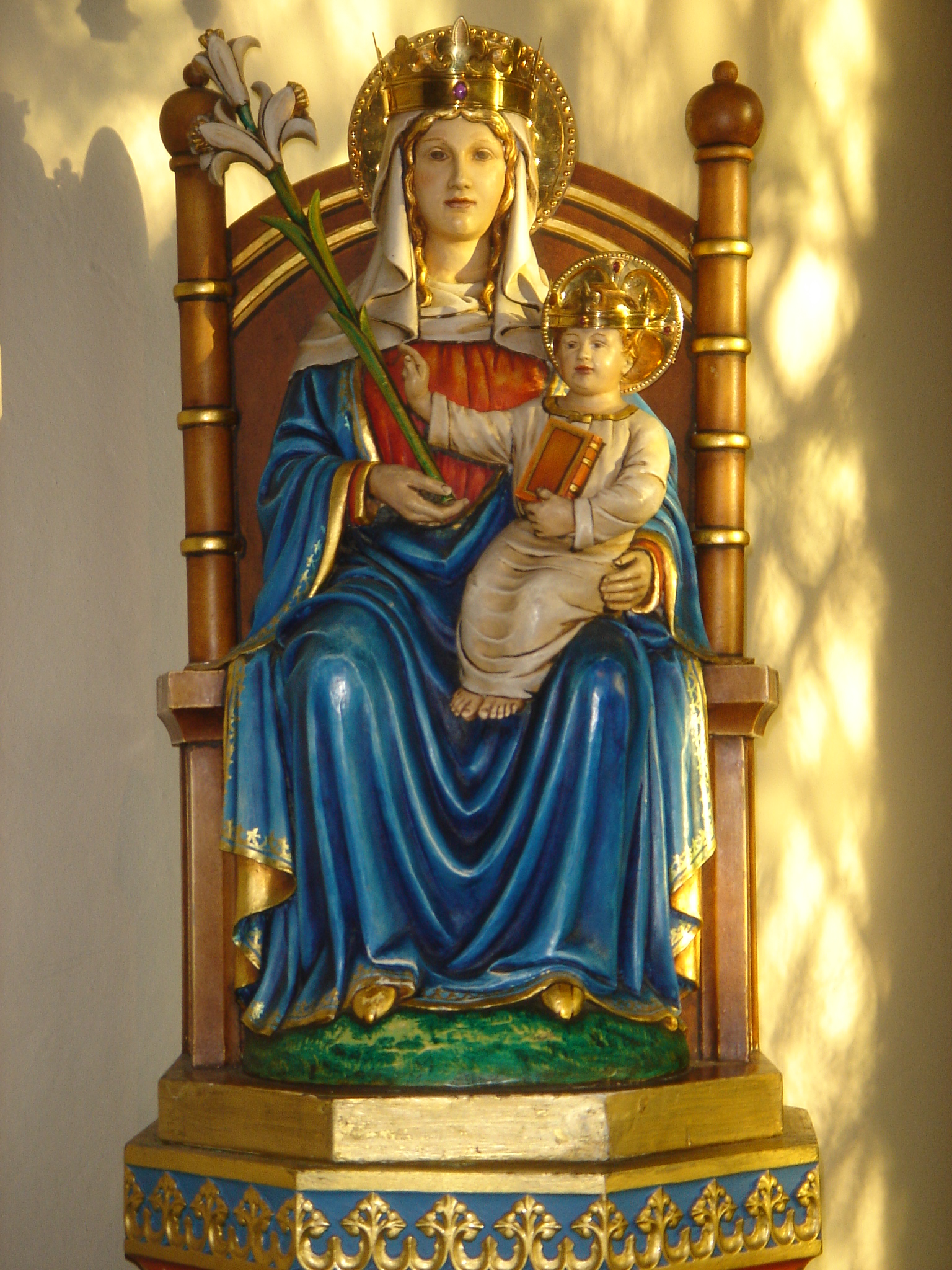
"When you look in you would say it is the abode of saints, so brilliantly does it shine on all sides with gems, gold and silver… Our Lady stands in the dark at the right side of the altar… a little image, remarkable neither for its size, material or workmanship."
In the verses he wrote, in the best and latest Humanist style, in honour of Our Lady of Walsingham he referred to some of the reasons that pilgrims came to the shrine on pilgrimage. One was that men came to pray that their wives would conceive and bear them a son.
The previous year an illustrious pilgrim had come, and that may well have been in the forefront of his mind and intentions. King Henry VIII stayed at East Barsham Manor and then walked two miles - twice as long as usual pilgrims did from the Slipper Chapel - barefoot to Walsingham where he placed a "gold circlet round Our Lady's neck".
Fr Hunwicke speculated that Ersasmus may possibly have been aware that there was already an awareness of doubts about Queen Catherine's ability to produce the desired male heir to the throne, and hence King Henry's pilgrimage and long barefoot walk to Our Lady in the Holy House. An interesting thought.
Image:stiffleaf on Flickr
Monday, 2 April 2012
Arthur Prince of Wales
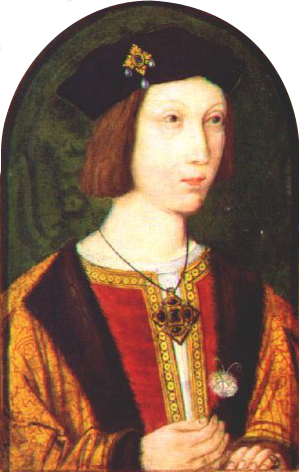
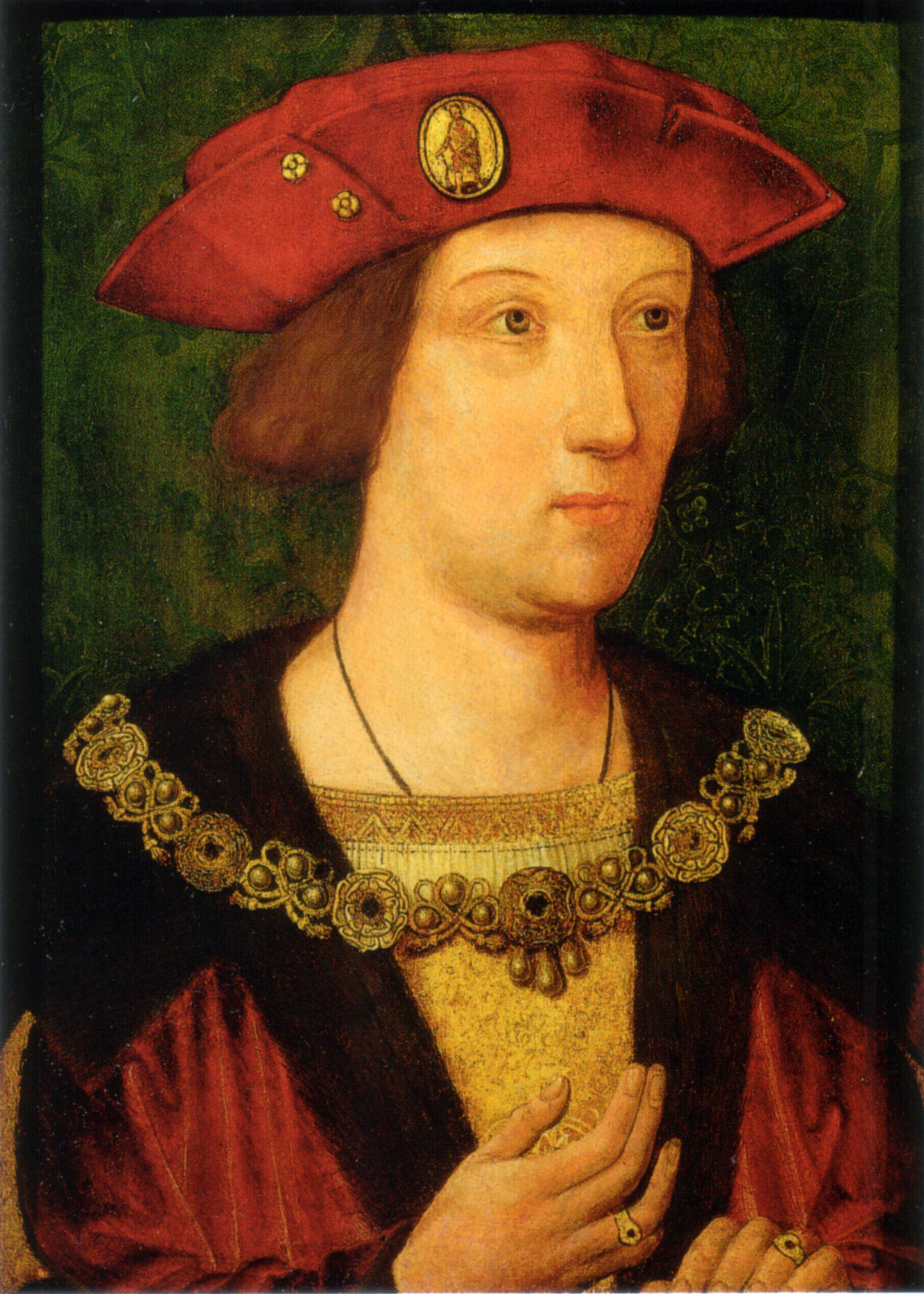
Today is the anniversary of the death at Ludlow Castle in 1502, 510 years ago, of Arthur Prince of Wales, the eldest son and heir of King Henry VII.
Image: Wikipedia from a private collection
There is an online life of the Prince here and the Oxford DNB life by Rosemary Horrox can be read here.
From his surviving portraits the Prince sometimes appears, like his younger brother, to have taken after his mother's family in his appearance and as an adult King Henry VIII looks to have resembled King Edward IV. However in thos portrait there is also a resemblance to King Henry VI:
To stand in Prince Arthur's chantry at Worcester, its elegrant limestone gothic cage surrounding the plain marble tomb-chest, is to feel very close to events which changed this country, and indeed much of the world forever. Nothing sums up more quickly the impact of the changes that ensued than the mustilated figures, including St George, on the reredos of the chapel. Installed to elicit prayers for the Prince they were defaced under his nephew King Edward VI, and when his neice Queen Elizabeth I visited Worcester in 1575 they were plastered over and the blank wall decorated with a painting of the Royal arms. Not until the nineteenth century were the figures revealed in their battered state.
The interior of the Prince's chantry at Worcester cathedral
Image:whub.org.uk
Sunday, 11 December 2011
The Abdication of King Edward VIII
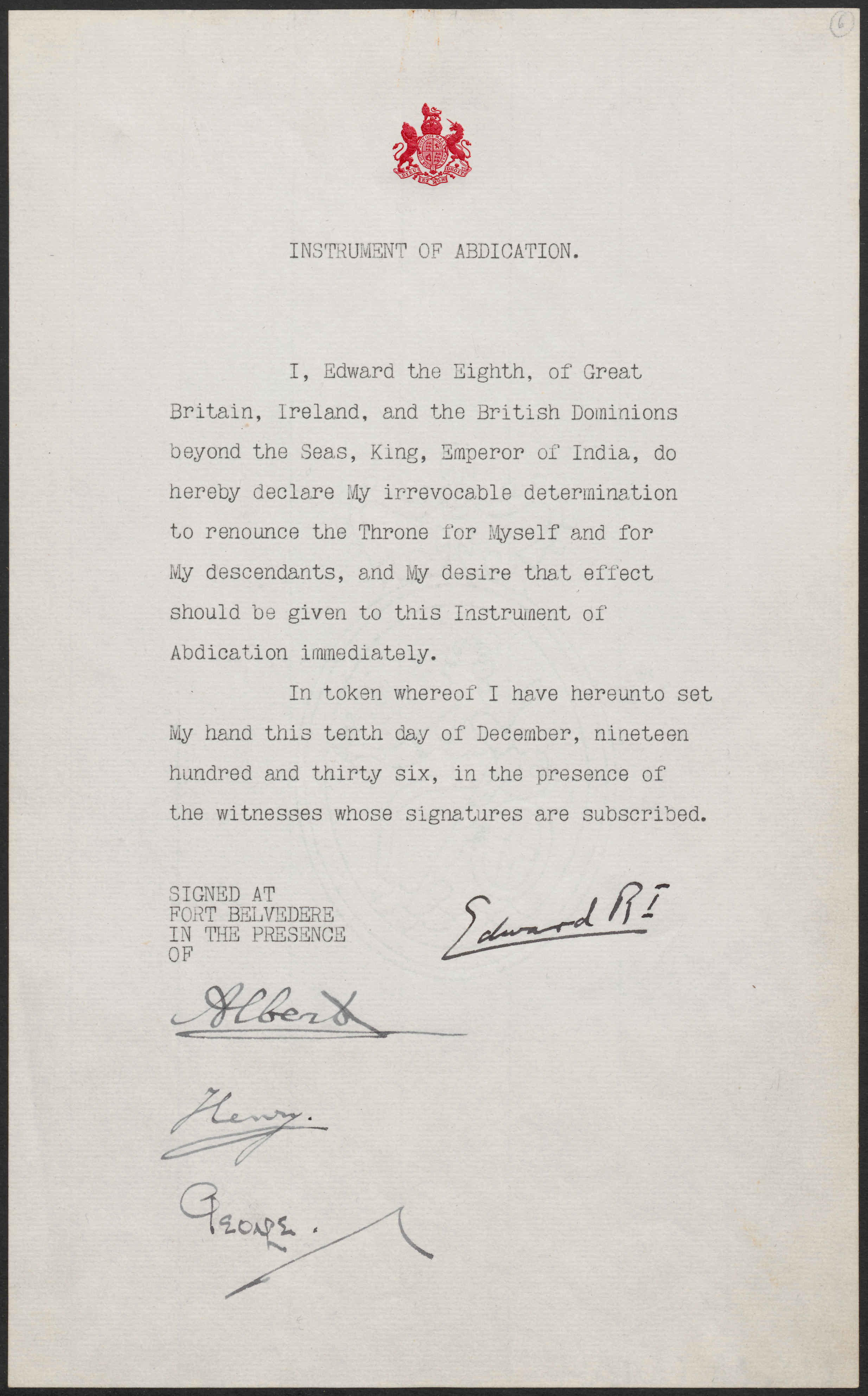
Seventy five years ago today there occured the abdication of King Edward VIII. At the time it was a profound shock to Britain and her Empire, and remains a subject of fascination, and an event with a continuing legacy for the monarchy.
The Instrument of Abdication
It took a day for the necessary legislation to pass through Parliament here and in the Dominions
Image: Wikipedia
Both Crown and subjects were fortunate in that King George VI and Queen Elizabeth were to prove so faithful and conscientious in the exercise of kingship, and to have transmitted that tradition to the Queen and through her to the next generations.
There have been many accounts of the abdication crisis which make for interesting reading, but I was struck by this portrait of the King by his former secretary Sir Alan Lascelles which I found on the internet "Prince Charmless: A damning portrait of Edward VIII".
Lascelles expressed his view of Edward that "for some hereditary or physiological reason his normal mental development stopped dead when he reached adolescence."There are varying interpretations of the life and character of King Edward VIII and Lascelles' view may not be definitive, even if as a former Private Secretary it tends to the authoratative. There is an interesting similarity to a view I have seen of the other English King who was the eighth of his name* - King Henry VIII has been presented as a monarch whose accession at the age of almost eighteen had the effect of stunting his development - not that he was not intelligent, but that he stopped developing emotionally. An interesting, if coincidental, similarity perhaps - and in both cases matrimonial difficulties were to follow.
* In reality there have been eleven English Kings called Edward and nine called Henry (ten if you are a Jacobite) - there are three Kings Edward before the Norman Conquest, and Henry The Young King 1170-83 as co-ruler with his father.