As far as the Royal family are concerned the Silly Season in the media appears to have started early and nastily. First we had the
Sun with its fragment of film from over eighty years ago of the present Queen, her mother and sister making what appear to be a Fascist salute at the encouraging of her uncle, the then Prince of Wales.
Today there are reports that Channel 4 ( no real surprise there) has a programme in the offing about Prince Philip's sisters, their marriages and life in Germany between 1933 and 1945, including comments made at the time that indicate a less than totally hostile view of the Third Reich.
Home movies are an opportunity for anyone - royal or non-royal, now as eight years ago - to do silly things in front of the camera, assuming it is not going to be made public, eight decades later, and to, in all probability, privately make fun of others in the public eye.
I am not surprised that the Queen is reported to be "livid" about these reports.
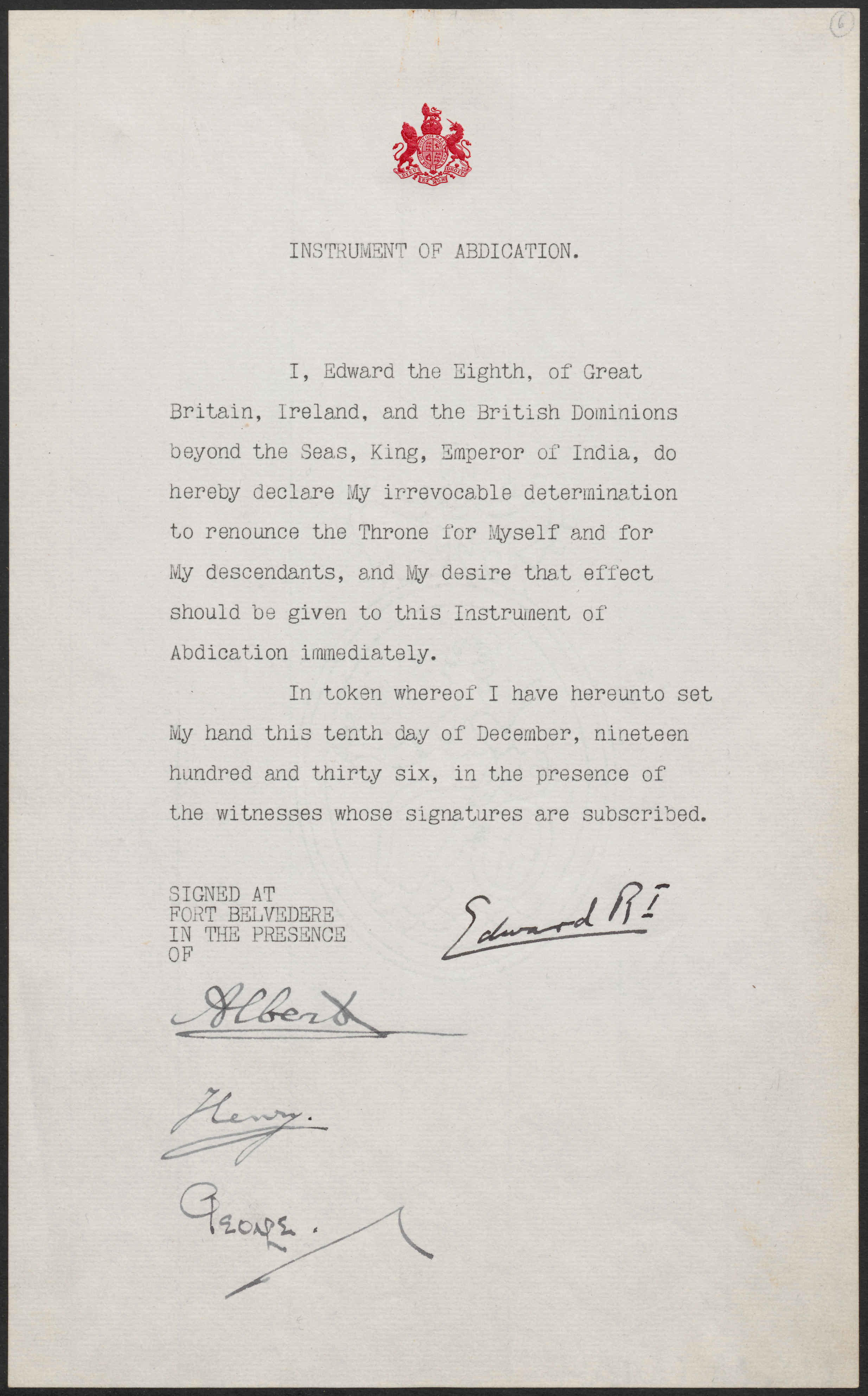
King Edward VIII may well have had an interest in what was happening in Germany. Like many others, including Lloyd George and Churchill, and some of his German cousins, he may well have thought in the 1930s National Socialism offered a way of recovery for the country, especially given growing doubts about the wisdom or fairness of the Treaty of Versailles.
Furthermore we can see that in the inter-war period, with no ability on the part of anyone to foresee, indeed to imagine, the horrors that were to come, the alternatives facing much of Europe - Soviet Communism or one of the variants on Fascism - attracted not a few devotees who later thought better of their enthusiasms. Pluralist government under the rule of law looked an uncertain survivor, and to be challenged from both left and right.
That as Duke of Windsor he retained some links with representatives of National Socialism is known as is the fact that he was slow to end them. In part this may have been that he was flattered to be entertained with his new wife by the Nazi regime late in 1937. In this the cause may partly be that his father King George V, doubtful of his heir's abilities, did not involve him or initiate him into public business before his death. After the abdication the Duke of Windsor appears to have been left without a "minder" to inform and advise him, but relied on a rather odd coterie of old and new friends with often freakish and ill-considered ideas.
I suspect there is a somewhat sinister hidden agenda in the
Sun story aimed at the present Prince of Wales. Just as King Edward VIII had regrettable in hindsight contacts with German leaders in the 1930s, so his great-nephew's contact with environmentalists and Muslims can be represented as dangerous, and the attempt made to set him aside in favour of his son, somewhat on the lines of the 1936 Abdication -itself often interpreted as providential. I am sure such nonsense will not succeed ( it is worthy of some of the daft ideas emanating from some of the Duke of Windsor's so-called friends) but if it is there, as I suspect it may be, it is an unpleasant thought.