Once I was a clever boy learning the arts of Oxford... is a quotation from the verses written by Bishop Richard Fleming (c.1385-1431) for his tomb in Lincoln Cathedral. Fleming, the founder of Lincoln College in Oxford, is the subject of my research for a D. Phil., and, like me, a son of the West Riding. I have remarked in the past that I have a deeply meaningful on-going relationship with a dead fifteenth century bishop... it was Fleming who, in effect, enabled me to come to Oxford and to learn its arts, and for that I am immensely grateful.


Thursday, 6 October 2011

Carthusian reflections


Today being the feast of St Bruno, founder of the Carthusians makes one's mind turn to thoughts and things Carthusian.
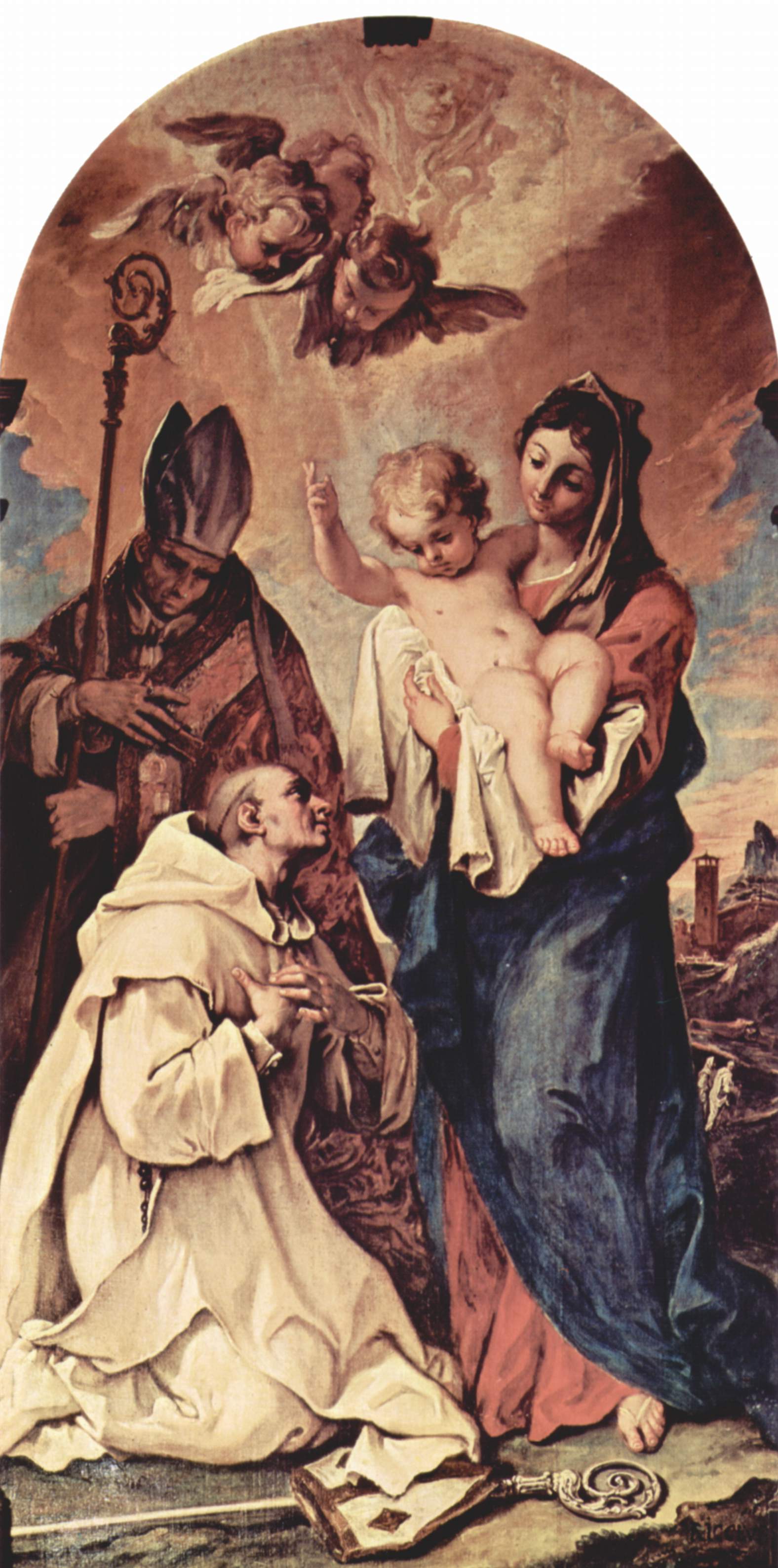
File:Sebastiano Ricci 024.jpg

The founder of the Carthusians, Bruno of Cologne (c1030-1101), adoring the Virgin and Child with Hugh of Lincoln (1135-1200) looking on in the background.
A painting by Sebastiano Ricci (1659-1734)

Image:Wikipedia

It was only when I read some of the writings of John Cassian (c.360-435) that I realised the extent to which St Bruno, following St Benedict's advice, had looked to that description of primitive Egyptian monasticism as a source for his monastic rule. That point is not, I think, one which is brought out adequately in the usual books on monastic life in the middle ages.

On the New Liturgical Movement there is a post
on The Sources and Shape of the Carthusian Liturgy which links to another piece by him from three years ago about the same subject - both are worth looking at.

The carthusians loom fairly large in the life of Bishop Richard Fleming. Not that that was unusual for a late-medieval member of the elite - this was one of the high points of Carthusian influence, when a Charterhouse was becoming a "must-have" for Kings and princes. There is, inter alia, King Henry V's foundation at Sheen, King James I of Scots foundation at Perth, the Castilian royal necropolis of King Juan II at Miraflores near Burgos and the Burgundian ducal one at Champmol in Dijon, and Thomas Duke of Surrey's Mount Grace here in England.

Fleming had links with at least three of the English houses. In his episcopal register
there are references to at least two stays at the house at Beauvale in Nottinghamshire. There is the VCH Nottinghamshire account of the house here, and one from Wikipedia here. There is also the website of the Beauvale Society, which has an excellent slide show of photographs of the existing remains of this tranquil and holy place. I have added that website to the sidebar for future reference.


The remains of Beauvale Priory
Image: Wikipedia


As Bishop of Lincoln Fleming was invited to consecrate a bell at the London Charterhouse, wjhich was not that far from his episcopal residence in the city, but it is a further indication of his links to the Carthusians.

Following his death in 1431 a Carthusian at Sheen, John Stone, wrote his Metrificatio around the lines Fleming wrote for his tomb at Lincoln. Stone clearly knew Fleming and this appears to confirm the presence of something of Carthusian spirituality in Fleming. Given his family connections and diocesan position I would not be surpised were I to discover a link with the house at Axholme, or indeed with the Yorkshire house at Mount Grace.

The house at Sheen - now Richmond in Surrey - is described by the VCH Surrey here and by Wikipedia here. The community was re-established in 1557 and went into exile inthe Netherlands following the death of Queen Mary I. There as Sheen Anglorum it survived until it was suppressed in 1783 by the Emperor Joseph II as part of his excess of zeal to regulate and interfere in church matters. Relics from it are held at Parkminster. There is an account of its history here.

Wednesday, 5 October 2011

St Luigi Scrosoppi


Today is the feast of the other Oratorian saint besides St Philip, St Luigi Scrosoppi (1804-1884), a member of the Udine Oratory. He is the patron saint of those suffering from AIDS and also of football.

There are illustrated biographies of him from the Oxford Oratory here and from the Birmingham Oratory here.

He was noted for his work with orphans, the founder of a religious order for women, the Sisters of Providence, and, with the suppression of his Oratory in 1866, one of those persecuted by the anti-clerical forces that ruled the newly unified Italy.

St Luigi Scrosoppi in mid-life

Image:chili.iol.it

04_san_luigi_scrosoppi.jpg

The best known image of St Luigi Scrosoppi

Pope John Paul II canonised St Luigi Scrosoppi on 10th June 2001, and named him patron saint of those suffering with AIDS.

It was at the intercession of St Luigi that a Zambian man, now Fr Peter Changu Shitima, was miraculously cured of AIDS in 1996. He was at that time a member of the Oratory at Oudtshoorn, near Cape Town in South Africa, and it was to a member of St Philip’s family that his friends turned for help. Here is Fr Peter:

fr-peter-co.jpg

Images from Holy Name Manchester website

Tuesday, 4 October 2011

Celebrating St Frideswide on October 19th


The feast of St Frideswide, patroness of Oxford, falls on Wednesday 19 October.

http://farm3.static.flickr.com/2588/4025405104_229a632fa1.jpg

St Frideswide
Fourteenth century glass in Christ Church Cathedral

Image: Lawrence Lew OP on Flickriver

The Mass at the Oratory at 6 pm will be followed by Benediction, and the annual opportunity to sing one of the more remarkable examples of English hymnography in her honour - but never mind the words, enjoy the strains of Handel's March from Judas Maccabeus

At 7.30pm the Oxford Ordinariate will have Solemn Evensong & Benediction at Blackfriars, St Giles, Oxford. Choral music from the Anglican tradition will be sung by the Newman Consort and the Preacher will be the Abbot of Downside, the Rt Revd Dom Aidan Bellenger OSB. Refreshments will be provided afterwards.

This service, the second in a series, is an opportunity for the Oxford Ordinariate Group to welcome fellow Catholics, Anglicans and all who are seeking to discern God’s will in their lives.


St Frideswide hides in the woods from the unwelcome advances of Algar of Leicester -
a detail from the 1269 shrine base preserved in Christ Church Cathedral.

Image: Sacred Destinations


Forty Hours at the Oxford Oratory October 14th -16th


This is the programme for the annual Forty Hours Devotion at the Oxford Oratory over the weekend of October 14th -16th.

1286034515.jpg

FRIDAY 14th OCTOBER:

6pm Solemn Mass of Exposition in the Extraordinary Form

Adoration until Midnight, followed by Compline with the Dominicans of Blackfriars and Benediction of the Blessed Sacrament

SATURDAY 15th OCTOBER:

ALL NIGHT VIGIL

Refreshments will be available in the Parish Centre all night

5am Matins & Lauds of the Blessed Sacrament

with the Sisters of the Work from Littlemore

6am Mass in the Extraordinary Form

Exposition resumes through the day with a break for

10am Mass

6.30pm Mass for Peace with hymns

Exposition resumes until

12 Midnight The Blessed Sacrament is reposed

SUNDAY 16th OCTOBER:

8am Mass in the Extraordinary Form

9.30am Parish Mass

11am Solemn Mass of the Sacred Heart

After which Exposition resumes until

5pm Solemn Vespers of the Blessed Sacrament,

Procession and Benediction

6.30pm Evening Mass

1286034505.jpg

Our sweet Jesus, througjh the excess of His love and liberality, has left Himself to us in the Most Holy Sacrament.
- St Philip Neri

Monday, 3 October 2011

St Thomas of Hereford


Today is the feast of St Thomas Canteloupe, Bishop of Hereford, and a former Chancellor of both Oxford University and of the realm. He died in 1282, and whose eventual canonization in 1320 was the last of an English confessor, as opposed to martyrs, before the beatification of John Henry Newman last year. In recent years he has attracted more attention from historians and from his cathedral church.

R. C. Finucane's life from the Oxford Dictionary of National Biography can be read here.

The present Dean of Hereford, whom I knew slightly when he was Vicar of Tewkesbury, initiated a scheme to commemorate in the cathedral St Ethelbert the Martyr King and its co-patron with Our Lady, St Thomas and Thomas Traherne, the seventeenth century Anglican devotional writer.

In the case of St Thomas his original tomb base from the 1280s in the north transept has been given a new freretory in medieval style, and it now houses a relic of St Thomas lent by Stonyhurst College. After 1320 his relics were moved to a new shrine in the retrochoir, which was destroyed at the reformation. Since 1881 his skull, which somone had safeguarded, has been housed as a relic at Downside Abbey in Somerset.

http://img1.artweb.com/users/1557/90932_st-thomas-cantilupe-shrine-panel-for-hereford-cathedral.jpg

The west gable of the new shrine
St Thomas of Hereford is on the left, with St Thomas of Canterbury on the right.
Behind are St John the Baptist and St Ethelbert flanking Our Lady and the Christ Child.

Image: petermurphyicons.co.uk

http://www.herefordcathedral.org/CantilupeShrine.jpg/image_preview

The new shrine on the original base

Image: hereford cathedral.org


There is an article which links the Mappa Mundi to the shrine which is discussed in this article
which has this reconstruction of how the ghrine and Mappa might have appeared c.1300 - alas the loss of painted decoration from our historic churches.

http://www.iwu.edu/iwunews/magazine/pastissues/Spring-2007/IMAGES-SPRING07/map_reconstruction.jpg

There appears to be no contemporary depiction of St Thomas but he is depicted in some glass now in the church at Ross on Wye and commissioned by a later Bishop of Hereford, Thomas Spofford OSB, c.1430 for the chapel at his manor house at Stretton Sugwas, north-west of Hereford. The chapel was destroyed by fire in the late eighteenth century but the glass survived and was eventually inserted in the window at Ross.

On the left is, I assume, St Ethelbert holding the cathedral and on the right St Thomas of Hereford. In the middle lights are St Anne holding the Virgin Mary and St Joachim, with the kneeling figure of Bishop Spofford, a friend and patron of Bishop Fleming. Bishop Spofford appears to have had a considerable devotion to St Anne from his time as abbot of St Mary's York.


http://mysite.verizon.net/gamelbar/churchw1.jpg

Image: mysite.verizon.net/gamelbarbthomas1.html

Saturday, 1 October 2011

Ordinariate Liturgical Patrimony lecture on October 15th


From Fr Ray Blake's blog:


Mgr Andrew Burnham of the Ordinariate of Our Lady of Walsingham, the former Anglican Bishop of Ebbsfleet, is visiting this parish on 15th October and will celebrate a Solemn Mass at 12 noon.


This event is organised by the “Association for Latin Liturgy”. He will also speak on “The Liturgical Patrimony of the Ordinariate and the Reform of the Reform” at 2.15pm. Later he will celebrate First Vespers.

Commemorating Bl. Dominic Barberi in Reading


The blessing and unveiling of a Blue Plaque in Reading in memory of Bl. Dominic Barberi will take place on Saturday October 8th at 3.30pm.

http://www.passionists.com/Barberi05.jpg

Bl. Dominic Barberi

Image: Southwark Vocations blog

The plaque is being installed at 59 Caversham Road in Reading, which is next to the railway bridge. This building stands on the site of the Railway Tavern where Bl. Dominic died on August 27th 1849.

Commemorating Bl.John Henry Newman in Oxford


To celebrate the approaching Feast of Bl John Henry Newman the following events will be held in Oxford this coming week:

On Thursday and Friday following the 6pm Mass at the Oxford Oratory, and at 6 pm on Saturday before Mass, there will be a Triduum of prayers and Benediction to prepare for the Feast.

Saturday October 8th


Pilgrimage to Littlemore

The annual pilgrimage is centred on the church of Bl.Dominic Barberi with confessions available 11.15-11.45, Mass at 12 noon, the principal celebrant and preacher being the Rt.Rev.Mgr Andrew Burnham.

This will be followed by refreshments in the adjacent parish hall - bring a packed lunch.

After lunch there will be a lecture by Fr Ian Ker on Newman and the Vocation of the Christian in the World.
During the afternoon there will be tours of the College and of the Anglican parish church of St Mary and St Nicholas which was built by Newman in the 1830s.

The Night Walk to Littlemore

7.45 pm
, starting at The Oxford Oratory, the annual Night Walk to Littlemore, stopping at places associated with Newman and following Bl. Dominic Barberi's route to Littlemore on October 8th 1845.
9.30 pm Candlelit procession from 89 Rose Hill to Littlemore Church.
10 pm Holy Hour and Benediction in the church of Bl. Dominic Barberi.
10.45 pm Procession to the College for thanksgiving prayers.
This is always an enjoyable and interesting, as well as prayerful and reflective, occasion.

Sunday October 9th


11 Solemn Mass
for the feast at the Oxford Oratory.


Bl.Dominic Barberi greeting Newman.

Bl.Dominic Barberi has just come in from the wet and cold. It is late at night on October 8th 1845 and he is trying to dry himself in front of the fire at the College in Littlemore. Newman is on one knee requesting of Dominic Barberi that he be received into the Church.

A relief by Faith Tolkien in the Church of Bl.Dominic Barberi at Littlemore

Image: Communigate