Once I was a clever boy learning the arts of Oxford... is a quotation from the verses written by Bishop Richard Fleming (c.1385-1431) for his tomb in Lincoln Cathedral. Fleming, the founder of Lincoln College in Oxford, is the subject of my research for a D. Phil., and, like me, a son of the West Riding. I have remarked in the past that I have a deeply meaningful on-going relationship with a dead fifteenth century bishop... it was Fleming who, in effect, enabled me to come to Oxford and to learn its arts, and for that I am immensely grateful.


Showing posts with label Queen Victoria. Show all posts

Sunday, 28 August 2016

Queen Victoria's coronet


The following story turned up in the mailing from the agency site Royal Central:


Image result for Queen Victoria coronet 

Queen Victoria's sapphire coronet

Image: The Natural Sapphire Company

The UK government have placed a temporary export ban on Queen Victoria’s coronet in an attempt to keep it in the country.
Queen Victoria’s sapphire and diamond coronet is at risk of being exported from UK soil unless a buyer can be found for the £5 million piece.
Designed by Prince Albert in 1840, the coronet is considered one of the most important jewels in Queen Victoria's reign. Goldsmith, James Kitching, was paid £415 to make the coronet.
Following Prince Albert’s death in 1861, Queen Victoria spent a great amount of time in mourning and did not attend the State Opening of Parliament five years later until 1866 where she wore the coronet instead of her coronation crown.
Culture Minister Matt Hancock said: "Queen Victoria’s coronet is stunning. It is one of the most iconic jewels from a pivotal period in our history and symbolises one of our nation’s most famous love stories. I hope that we are able to keep the coronet in the UK and on display for the public to enjoy for years to come."
The coronet was given as a present to Princess Mary upon her marriage to Viscount Lascelles in 1922 by King George V and Queen Mary. Years later it was sold to a dealer in London, who then sold it to the export licence applicant.
The export licence has however been deferred as a result of the coronet's close connection with our history and natural life, according to the Reviewing Committee on the Export of Works of Art and Objects of Cultural Interest (RCEWA).
RCEWA member Philippa Glanville said: "Key to the self-image of the young Victoria, this exquisite coronet was designed by her husband Prince Albert. Worn in her popular state portrait by Winterhalter of 1842, the year it was made, its combination of personal meaning and formality explains why she chose to wear it in 1866, emerging from mourning for the State Opening of Parliament.
"It evokes vividly the shared romantic taste of the time, and its form has become familiar through many reproductions. Its departure would be a great loss, given its beauty, its associations and its history."
The export of the Coronet has been deferred until 27 December 2016. This could be extended June 2017 if a serious intention of purchase can be found.
An illustrated version of the same report from the BBC News website can be seen at Export ban placed on Queen Victoria's wedding coronet


The history of the coronet and the apparent background story about its appearance on the market is set out in a post on the Royal Musings blog at The last time Queen Victoria's Coronet was worn -- so what's the story

I would agree with the writer of that post that the coronet shold, and probably will, stau in this country and share her implicit questioning of what the Harewood family have done in selling this piece rather than offering it in settlement or coming to some arrangement with the Royal Collection.
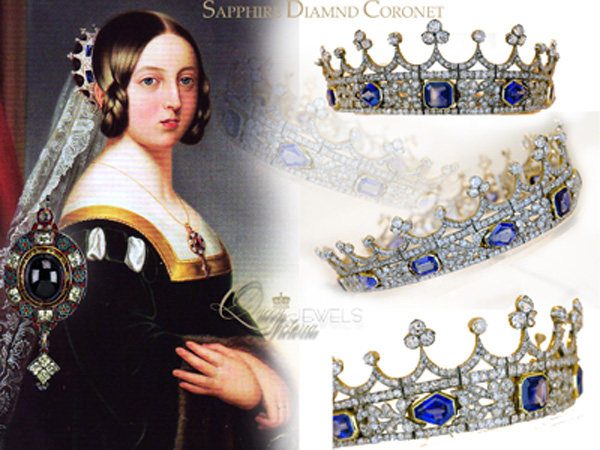

https://royal-magazin.de/wp-content/uploads/queen-victoria-coronet-sapp.jpg

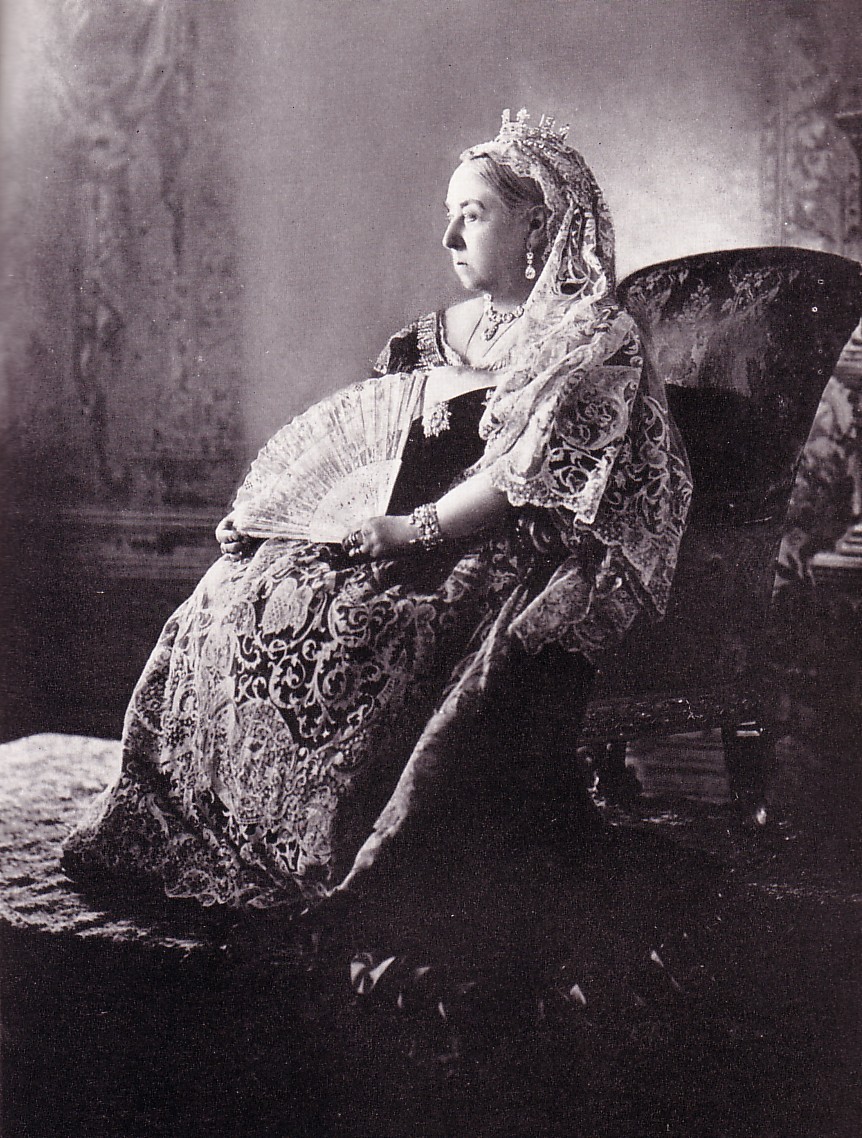
  Queen Victoria wearing the coronet

Image: royal-magazin.de


Wednesday, 9 September 2015

A Royal milestone


Today, at about 5.30 this afternoon, Her Majesty The Queen became the longest reigning British monarch.

The Special Correspondent sent me the link about calculating the exact time when the current reign would break the previous record and which can be seen at http://www.macleans.ca/society/crown-calculus-the-math-behind-queen-victorias-record-reign/

The BBC News website has acomparison of the two longest reigns in  Queen Elizabeth II: Elizabeth and Victoria in numbers

The Daily Telegraph has an illustrated account of the day's events which can be seen at Queen Elizabeth II becomes longest-reigning monarch on a day of characteristic modesty

Now I know Jacobites will, of course, cite the longer de jure reign of King James III and VIII from 1701 -1766. However Princess Philip of the Hellenes, as some Jacobites regard Queen Elizabeth II, will outstrip that in 2016 on May 21st if my rough calculation is right.

Long may she reign ! 


Wednesday, 3 December 2014

Prince Leopold, Duke of Albany


Earlier this year a friend gave me a copy of Queen Victoria's Youngest Son: The Untold Story of Prince Leopold by Charlotte Zeepvat (Thistle). I read the book in the summer and would certainly recommend it to anyone interested in the Queen and her family.


Image:Amazon

The Prince, created Duke of Albany, died early in 1884, 130 years ago, in his thirty first year. He had suffered from haemophilia, which was probably the cause, if not the immediate occasion, of his sudden death whilst on holiday in Cannes. The immediate cause may have been a reaction to his medication - a point which, rather oddly, is relegated to a footnote.

He left two children - Princess Alice, Countess of Athlone, and the last surviving granddaughter of Queen Victoria when she died in 1981, and  Prince Charles Edward, born after his father's death, and who reigned as the Duke of Saxe-Coburg and Gotha from 1900,and who died in 1954. He was grandfather to, inter alia, the present King of Sweden

Amongst its other excellent features - the author has worked through a great quantity of letters in the Royal Archives at Windsor - is a discussion of the significant evidence for haemophilia in the Saxe-Coburg family before the birth of either Queen Victoria or the Prince Consort.

As a biography it is very good on the frustrations Prince Leopold felt due to his illness and the overly possessive, if clearly well-intentioned, actions of his formidable mother.

It also brings out how in his public life as Duke of Albany ne was developing skills and popularity as an active member of the Royal family when it came to opening new ventures and patronage of good causes.

Whilst he studied in Oxford - something he fought to do and achieved, becoming a very popular figure in the University - he lived in a house on Banbury Road, which still stands - it is now the University Careers Office. Given the Prince's often frustrated hopes in that matter he might find that somewhat ironic.

The only slight disappointment in the book is that I feel it should have more on what happened afterwards to the Prince's family - the role of his widow until her death in 1920 for example - and of his friends.

There are an interesting set of illustrations in the book, which help to evoke the life and times of a figure who, if not forgotten, has not hitherto received the attention he deserves, both as a member of the Royal family and as a courageous and obviously likeable young man whose life was cut short by a condition beyond anyone's control at the time.


Monday, 17 March 2014

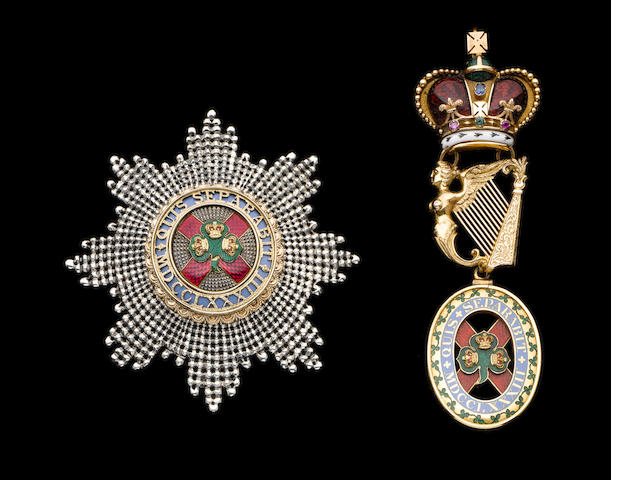
Insignia of the Order of St Patrick


I have posted on several occasions about the Order of St Patrick in The Order of St Patrick in 2011, Banners of the Knights of St Patrick in 2012 and The Order of St Patrick in 2013. There is an online account of the Order, its history and insignia at Order of St. Patrick. A new online piece about the Order has appeared only today in The Order of St. Patrick.

I very much regret that it was allowed after 1922 to fall into abeyance, with only Royal Knights being appointed until 1936, and none since, the last one, the late Duke of Gloucester, dying in 1974. I think it should have been revived, and should be revived - why should this not be done with the forthcoming state visit of the President of the Irish Republic and make him an Extra Knight of the Order?

I am not alone in this opion as can be seen from a letter to The Times a decade ago at Time to revive Order of St Patrick , and more recently these Northern Irish blogpost Quis Separabit: Restore the Order of Saint Patrick  and Order of St Patrick as well as some discussion in the southern political scene at Should the Order of St. Patrick be revived? ( the comments suggest a lack of confidence in the ability of southern Irish politicians rather than doubt about the Order...) and there is the Facebook site Order of St Patrick - Revival.

A quick trawl on the internet produced a considerable number of pictures of the insignia of the Order. There is a wonderful collection of images of the insignia, as well as some of the Officers and Knights, here. Some of the others I found I have copied and pasted in this post.

This example of a diamond star  from the Royal Collection appears to have been made in 1838 for Queen Victoria by Rundell and Bridge :


Star of the Order of St Patrick

 Star of the Order of St Patrick

Image:The Royal Collection © 2012,
Her Majesty Queen Elizabeth II
RCIN 441162


King George V's Diamond Star
Made around 1890, the  centre has a shamrock of emeralds, with the Saint's cross in rubies on a diamond background. 'George, Prince of Wales, April 1910' is engraved on the reverse.

Image:doyle.com.au

 Another jewelled badge of the Order

Image:doyle.com.au

The website these last three illustrations comes has an interesting section on the Order and on the theft of the Irish Crown Jewels - the insignia of the Lord Lieutenant as Grand Master of the Order - in 1907, which can be seen here.


Two stars of the Order were sold in the Harewood: The Attic sale at Christies South Kensington on  December 9th 2012:

Star of the Order of St. Patrick,
Silver, gold and enamel, 81mm. diam. 
Reverse engraved Storr & Mortimer, Jewellers to the Queen, mid 19th century, some enamel damage

Price realized £8,750 (Estimate £2,000 - £2,500)

The provenance was almost certainly Ulick John de Burgh, 1st Marquess of Clanricarde (1802 -1874), and by descent to his son,Herbert George de Burgh-Canning, 2nd Marquess of Clanricarde (1832- 1916), and bequeathed to his great-nephew, Henry Lascelles, 6th Earl of Harewood (1882-1947), and by descent at Harewood House, Yorkshire.

Image:Christies.com


Star of the Order of St. Patrick
Silver, gold and enamel, 68mm. diam, reverse engraved Storr & Mortimer. Early to mid 19th century, some enamel damage to shamrock  
Price realized £5,000 ( Estimate £1,500 - £2,000) 

Image:Christies.com

The Most Illustrious Order of St.Patrick, 

A star and badge of the Order
Made by West and Sons Dublin and hallmarked 1852
Offered but withdrawn at Bonhams 2012 

Image:Bonhams.com 

Badge 

The riband and  badge

Mantle and Collar

The mantle and collar  

Images:medal.org.uk 


Wednesday, 30 May 2012

Queen Victoria goes online


The Bodleian Library has announced a joint venture with the Royal Archives at Windsor to make Queen Victoria's complete journals available online.

There is an account of the project and the material being made available which can be read at HM the Queen launches online resource of all Queen Victoria's Journals


Thursday, 12 May 2011

Long may she reign

Today HM The Queen becomes the second longest reigning monarch in British history, as outlined in these articles in the Daily Telegraph, one a news story The Queen to become second-longest reigning monarch and the other The Queen's longest reigning predecessors gives statistics for her predecessors.

She has now overtaken King George III in the length of time she has served as monarch, and only Queen Victoria has reigned longer.

Jacobites can of course advance the claim of King James III and VIII, who would have reigned almost a year longer than Queen Victoria, but even that achievement of longevity must be in Her Majesty's sights.

Long may she reign!

Saturday, 22 January 2011

Queen Victoria anniversary


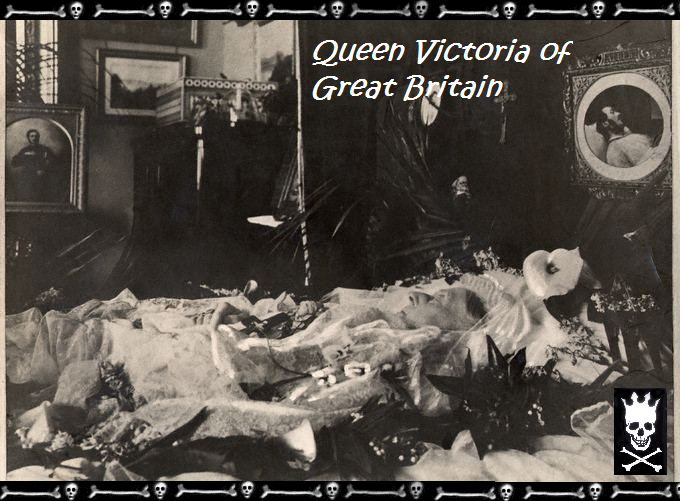
Today is the 110th anniversary of the death of Queen Victoria.

The Mad Monarchist has recently had a series of pictures of monarchs lying on their deathbeds or in state - macabre perhaps, but interesting none the less. One of his photographs is of Queen Victoria taken at Osborne in 1901. I had heard of this photograph from a friend ages ago but not actually seen it before. Its particular interest is that the Queen is holding a crucifix in her folded hands.

https://blogger.googleusercontent.com/img/b/R29vZ2xl/AVvXsEgVh4q3yby8hfF2h2S3wQ4Oo0GjSSZ9pdMRWUT5nT6tnE_K9ebc70mqxk7iUUyP9mtttiFexIWccQn59m903xnN4Oi6fMtbQ0XqttBx6YfWdmF_i3Dv8E4uM3FsYzUvsf4vDtjKQMGSbTY/s1600/victoriagreatbritain.png

The friend who told me of this photograph and I are of the opinion that Queen Victoria's religious opinions would make for a fruitful and interesting piece of research.

She appears to have seen herself as a good Protestant, and was concerned by the rise of ritualism within the Church of England. Yet a glance at the church furnishings she gave to St George's Windsor, the Albert memorial chapel there, the Royal Mausoleum at Frogmore, Prince Albert's design of the church at Whipperingham or the sheer number of religious pictures around Osborne suggest something more complex or nuanced. From her letters and diaries and the recollections of those who knew her also suggest a richer spirituality that the Queen publicly indicated.

She might be bound by her Parliamentary declaration and Coronation Oath to the legal establishment of the Church of England, and affronted at Pope Pius IX claiming the right to appoint territorial bishops within her realm, but she was much more tolerant of Catholics and Catholicism than many of her subjects, and when it came to foreign relatives - well they were family, and that was what mattered. The other year the magazine Catholic Life had a series of articles about the Queen and her attitude to Catholicism, but I only managed to see one of the three. That brought out her much more open minded attitude than is often assumed.

An interesting topic to explore I think.