Once I was a clever boy learning the arts of Oxford... is a quotation from the verses written by Bishop Richard Fleming (c.1385-1431) for his tomb in Lincoln Cathedral. Fleming, the founder of Lincoln College in Oxford, is the subject of my research for a D. Phil., and, like me, a son of the West Riding. I have remarked in the past that I have a deeply meaningful on-going relationship with a dead fifteenth century bishop... it was Fleming who, in effect, enabled me to come to Oxford and to learn its arts, and for that I am immensely grateful.


Showing posts with label King Charles IV of Hungary. Show all posts

Friday, 30 December 2016

Coronation of King Charles IV of Hungary 1916


Today is the centenary of the coronation of  the Bl. Emperor Charles as King Charles IV of Hungary in 1916. The fact that he had received this sacramental was of enormous spiritual significance to the King and his Queen Zita, and why he refused to renounce his rights in 1921.

The ceremony, central to the traditional Hungarian concept of kingship, was both deemed to be a constitutional requirement and also, it seems, as a means of binding the new King, who had succeeded to the throne in late November, to the existing balance of political power within the realm by the Prime Minister, Count Tisza.

The history of the ceremony can be viewed at Coronation of the Hungarian monarch.

There is an account of the preparations for the 1916 coronation in Miklos Banffy's memoir The Phoenix Land and part of that is reproduced online at Coronation-of-Emperor-Karl with additional material. There is also a detailed description of the day, set within the action of a sprawling novel about a Magyar aristocratic family, in Lajos Zilahy's The Dukays.

https://upload.wikimedia.org/wikipedia/commons/thumb/8/86/Crown%2C_Sword_and_Globus_Cruciger_of_Hungary2.jpg/1200px-Crown%2C_Sword_and_Globus_Cruciger_of_Hungary2.jpg 
 The Holy Crown, Orb, Sceptre and Sword of the Hungarian Regalia

Image: Wikipedia
https://i.pinimg.com/736x/43/67/8b/43678b09850acb793b2b9382c6fa614d--emperor-karl.jpg 

Queen Zita and the Crown Prince travel to the Coronation in the State Coach  

Image: Pinterest

Image result for Coronation of Charles IV of Hungary

The King taking the Coronation oath at the foot of the Holy Trinity pillar outside the Coronation Church of St Matthias

Image: Getty Images

http://www.realnews247.com/karl_I_horseback_coronation.jpg

The King on horseback upon the hill composed of soil from every county in Hungary.
This part of the ceremonial involved the King riding up the hill and brandishing his sword to the four points of the compass to symbolise his defence of the frontiers of the kingdom - indeed the oath speaks of extending them.

Image: Monarchy Forum

https://i.pinimg.com/236x/27/dc/c0/27dcc032e33f0a3cc302654a497579d1.jpg

King Charles IV

Image: Pinterest 

http://faktor.s3.eu-central-1.amazonaws.com/thumbs/2015-12-29/4ebdbf986364cb68ca157abf78ee57b0/web650.jpg

King Charles IV, Queen Zita and Crown Prince Otto.
The King died in 1922, Queen Zita in 1989 and Otto in 2011.

Image: viktor.hu

Image result for Coronation of Charles IV of Hungary

King Charles IV wearing the Holy Crown
and mantle of St Stephen and holding the sceptre.
He was Beatified in 2004

Image:Pinterest

Film of the processions and oath taking can easily be found on YouTube 


Monday, 12 October 2015

Emperor Charles Novena


Today I began the Novena for the canonisation of Bl. Charles of Austria as part of the lead up to his feast day on October 21st. For convenience I have downloaded it to my mobile phone.

 https://upload.wikimedia.org/wikipedia/commons/9/93/Karl_of_Austria.jpg

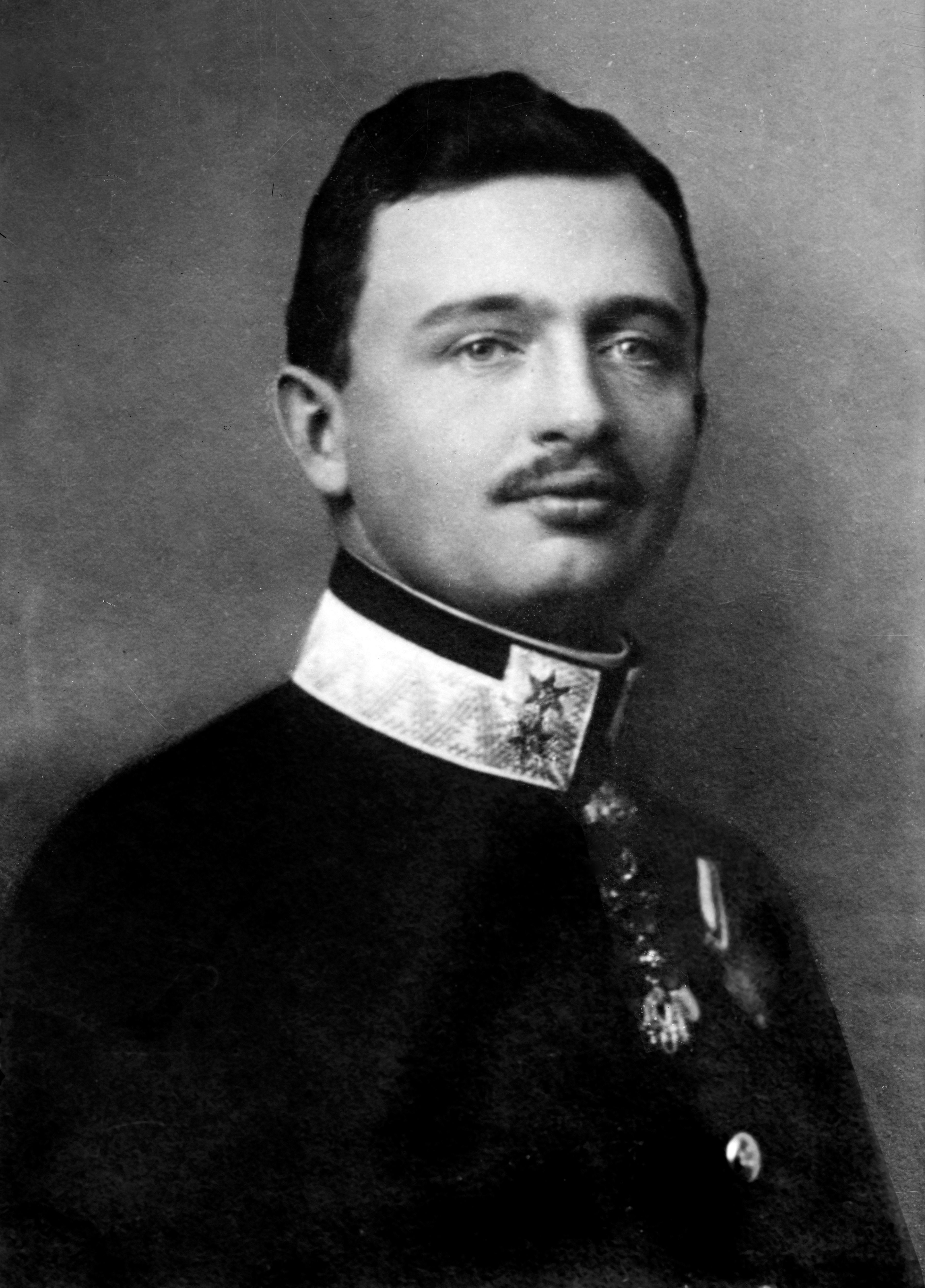
 Bl.Charles of Austria

Image:Wikipedia

The Novena and other prayers as well as a biography and background information together with a gallery of photographs can be found on the Emperor Karl League of Prayer website, at
emperorcharles.org/English/leagueofprayer_english.shtml

Monday, 27 October 2014

Bl.Emperor Karl commemorated by Juventutum in Washington


On The New Liturgical Movement website there is a post about the recent celebration on October 21st of an EF Mass at St. Mary, Mother of God Catholic Church in honour of Bl.Karl of Austria in Washington D.C.

The text is that of a talk given after the  Mass by Juventutem DC leader Daniela Petchik. This was delivered at a reception which followed the Mass, with speeches from H.I.R.H. Prince Bertrand of Orleans-Braganza, the Prince Imperial of Brazil (Vassouras Line), Raymond de Souza and by Daniela Petchik. Miss Petchik was kind enough to provide NLM with her own remarks, which serve as a thoughtful meditation not only on the life and witness of the Emperor but also about the traditional spirituality that Juventutum encourages amongst the young faithful.

The blog post with the speech can be read at Blessed Karl of Austria — Sanctity and Perfection in his Footsteps


Tuesday, 21 October 2014

Blessed Emperor Karl of Austria


Today is the appointed feast day of the Blessed Emperor Karl of Austria. The day was selected as it is the date of his wedding to the future Empress Zita in 1911, and their exemplary married life was recognised as part of his claim to beatification. This is covered on the official website for his cause at The Emperor Karl League of Prayers, and which has a biography, photographs and prayers for his canonization.

The Mad Monarchist blog has an illustrated profile of him at Blessed Emperor Charles I, and Roman Christendom has a blog post from 2008 which concentrates on the piety of the Emperor which can be read at The holy Peace Emperor: Feast Day of the Blessed Emperor Charles of Austria on 21 October. The blog Nobility and other Analogous Elites had a good post last year about him which can be read at Karl of Austria


The Coronation procession of Blessed Karl as King of Hungary in Budapest on December 30th 1916

Image: iwm.org.uk

The psalmody at several points in both Lauds and Vespers today, in the ordinary course of the psalter, appeared very apposite on a day I was observing for a beatified monarch, the successor of both Charlemagne, recognised as a beatus at least by the Catholic Church ( even if his canonisation was by an anti-Pope) and St Stephen of Hungary as founders of the Empire and of the Apostolic Kingdom.

Quite apart from his genuine attempts to end the war in 1917, if the Austro-Hungarian Empire had survived ,WAvoid tragic loss of life if empire had survived it would have by its very existence have been a means of preventing so much more dreadful bloodshed and misery for the peoples of Europe.


The Emperor in the uniform of a Field Marshal
The uniform mayhave been field-grey, but the plumes of the hat would be green. I assume the black arm-band is for the Emperor Francis Joseph.

Image: Mad Monarchist blogspot


Quinta do Monte in Madeira
The Emperor died here on April 1st 1922

Image:panoranio.com 

Sunday, 12 October 2014

Novena for Bl. Emperor Karl


I have set up my mobile phone to give me the link to the Novena for the intercession and canonisation of Bl. Emperor Karl of Austria in the days leading up to his appointed feast day on October 21st.


Emperor Charles I of Austria

The Emperor Karl

Image: newworldencyclopaedia.org

If you are interested in his story and his cause I would recommend the novena which can be found in the prayers section of the website of the Emperor Karl League of Prayer, and the readings provided are a telling insight into the life and spirituality of this good and tragic figure. The website of the League gives, amongst other features, an illustrated biography of the Emperor King.

There is an article about the Emperor from the blog of the Mad Monarchist here, and there are illustrated online biographies of him here and here.


Imperial monogram of Emperor Karl

Image: Wikipedia


Thursday, 12 December 2013

The Order of the Dragon and its curious legacy


Today is the 605th anniversary of the foundation by King Sigismund of Hungary and his Queen Barbara of Cilli of the Order of the Dragon, a chivalric order designed to unite the King's supporters both to his cause and to the defence of Christendom against the Ottoman advance in south-eastern Europe.

Pisanello 024b.jpg 

King Sigismund, about 1418
 A portrait traditionally attributed to Pisanello

Image:Wikipedia

There is a good illustrated and referenced online account of the Order here, and there is a short article about it here. There are also online biographies of King Sigismund and Queen Barbara.

When King Sigismund, King of the Romans and Emperor-Elect as well as King of Hungary, came on a state visit to King Henry V in 1416 he was admitted as a Knight of the Garter, and in return made King Henry a Knight of the Dragon - as well as giving a major relic of St George to the chapel at Windsor. This exchange of diplomatic courtesies is still recalled in the Sword of State of the City of York, which is the one which hung over King Sigismund's stall in St George's chapel Windsor, and is ornamented with the emblem of the Order of the Dragon; I posted about this and its history, with illustrations, this time last year in Emperor Sigismund.


Emblem of the Order

Image:rodoslovlje.com

Unlike the Garter, the Annunziata and the Golden Fleece, the Order of the dragon was not to have a continuous history, and seems to have declined in significance after the Emperor-King's death in 1437, and whilst surviving as Hungarian mark of distinction for the rest of the century until perhaps the disatrous battle of Mohacs in 1526, whenit became merely a memory. No attempt to revive it, as happened with some other monarchical Orders of Chivalry, such as the Order of the Elephant in denmark occurred until apparently, a refoundation at the time of the coronation of King Charle sIV in 1916.

There is, however, one curious legacy of the Order. One of the early recipients was Prince Vlad of Wallachia, whose adoption of the device led to his people referring to him in Romanaian as Dracul  (The Dragon), and yes, his son, also called Vlad, acquired the diminutive form of ... Dracula.

I found in the online article on the Order I mentioned above links to two articles about the Order and the origins of the Dracula story from the Journal of Dracula Studies - a publication to get one's teeth into - and they can be viewed and read by clicking of the highlighted numbers in the following references:


  • Rezachevici, Constantin. "From the Order of the Dragon to Dracula." Journal of Dracula Studies 1 (1999): pp 3–7. Transcriptions available online: [2] (RTF-document), [3] (Barcelona-Esoterismo-Esoterisme-Magia).
  • McNally, Raymond T. "In Search of the Lesbian Vampire: Barbara von Cilli, Le Fanu’s “Carmilla” and the Dragon Order." Journal of Dracula Studies 3 (2001). [4]

Monday, 21 October 2013

Bl. Emperor Charles of Austria


Today is the feast day appointed for Bl. Charles of Austria - the date was chosen because it is the anniversary of his  wedding in 1911 to  Zita of Bourbon-Parma, and his exemplary married and family life was recognised as one of the justifiable causes for his Beatification in 2004. A second miracle was recognised by the Vatican in 2008. This was the cure in Florida of a Baptist, who subsequently converted to Catholicism. There is an account of this here.


File:Kaiser Karl of Austria-Hungría.jpg

Bl. Charles of Austria
A portrait from 1915

Image:Wikipedia

The Emperor-King was clearly, transparently, a good man, a decent man, one who sought peace. His great uncle the Emperor Francis Joseph had expressed the wish to find a negotiated settlement in his last months, and the young future Emperor 's words at the time of the outbreak of hostilities in 1914 record his horror at the enthusiasm for war on the part of some, whilst firmly believing in the the justice of the Austrian cause. His attempts in 1917 to achieve a negotiated peace on the lines advocated by Pope Benedict XVwon him no thanks from the Western allies or from his own in Germany.

Whether he would have been able to reconcile the different communities of his inheritance had he come to the throne in peacetime or even under the terms of the October Patent is unknowable, but he clearly enjoyed popular esteem from the ordinary people and his commitment to their welfare, both before and after November 1918, and that could well have worked in his favour had he been spared.

What is clear is that the peoples of the realms over which he reigned have had a far from happy time for much of the period since November 1918 - dissolving the Habsburg Empire was a disaster.

Usually I say the Novena for his canonisation in the days leading up to today, but having been busy it has not happened this year - mea culpa, so that is something else to start in the coming days. The Novena can be found, along with information about the life of the Emperor and pictures of him on the website of the Emperor Charles League of Prayer. In addition there is the website of the Empress Zita cause. There is a handsomely illustrated online life of the Empress together with that of her husband here


http://www.info-regenten.de/regent/regent-d/pictures/austria-karl1.jpg

The Emperor Charles I

Image: info-regebnten.de

There is a short biography of the Emperor by James and Joanna Bogle entitled A Heart for Europe and there is a much fuller account by Gordon Brook-Shepherd in The Last Habsburg, which includes many of the reminiscences of the Empress Zita who cooperated with the author when he was writing the biography.


The Emperor's Standard
This form of the standard was adopted in 1915

Image: The Habsburg Monarchist

https://blogger.googleusercontent.com/img/b/R29vZ2xl/AVvXsEi4_KuSdCAZSVDE6cEmguk2BAaSOkx93vdN-EF52xWxIpX09sSh9uOuNlmj3iQMF2xy9fsnQWwTlG2mY4BA1LdftQUAevPhkTos934wvOaSBeZ_DqVmT_pPaPsY2gzsb3E18pC8wJ0fHf4/s1600/EhzgOtto12.jpg

At the Beatification of Emperor Charles in 2004 his son and successor Otto of Austria receives communion from Pope John Paul II

Image:New Liturgical Movement


File:Imperial Monogram of Emperor Charles I of Austria.svg

The Emperor's monogram

Image: Wikipedia

May Bl.Charles of Austria pray for the peoples of his dominions, for peace and for us all

Sunday, 21 October 2012

Bl.Emperor Charles of Austria


Today is the appointed feast day for Bl. Charles of Austria, a beatus and monarch about whom I have posted on several occasions in the past, and to whom I have a particular devotion.

Over recent days I have been praying the novena for his canonization from the Emperor Charles League of Prayer. The website for the cause of the Empress can be seen at Empress Zita cause.


Bl. Charles of Austria
Image: Wikipedia

Looking around on the internet I found some other articles about the Emperor which may be of interest. The first is by Gary Potter from 2004, and is quite lengthy, but worth looking at, and can be viewed here.

 
The others are by the well known blogger Andrew Cusack. From 2010 there is this article. There is also a series of linked posts about Bl. Charles which can be seen here,  and one about the introduction of the cause of the Empress Zita which can be read here.
http://www.ww1-propaganda-cards.com/images/austria09v.JPG

The Emperor and EmpressImage: glencoe.mcgrawhill.co

 
I also found an illustrated online article about the Emperor's tomb on Madeira which gives the background to his exile and death there. It can be read here.
   File:Imperial Monogram of Emperor Charles I of Austria.svg

Imperial monogram of the Empeor Charles IImage: WikipediaMay the Blessed Emperor Charles continue to intercede for the peoples of his ancestral realms.

Thursday, 16 August 2012

The Order of St Stephen of Hungary


Other than in Hungary itself, where it is observed on August 20th, the day of the translation of his relics - today is the feast of St Stephen of Hungary, the first Christian King of that country, who died in 1038. There is an online life of him here.
   
My posts about him from previous years can be read at St Stephen of Hungary and  The Holy Crown of Hungary from 2010 and St Stephen of Hungary from 2011.

Saint Stephen I of Hungary Statue

St Stephen of Hungary
Nineteenth century statue at the Fisherman's Bastion in Budapest

Image:judgedredd on Flickriver
As principal patron of the kingdom after the Virgin Mary, to whom he entrusted it on his deathbed, it is not surprising that the chivalric order of the Habsburg Kings of Hungary was under his patronage. Ther had been at least two earlier orders of chivalry founded by Kings of Hungary. In 1326 King Charles Robert (Charles I or Carobert )  instituted the Order of George, which as a chivalric confraternity has manage dto survive to the present day through arather curious descent. The website of its British branch, which includes a history and the text of the foundation document can be seen here.       
In 1408 King Sigismund founded the Order of the Dragon, of which there is a history here. Its foreign knights included King Henry V, but it disappeared after 1526, although, as you will read on the link, it has left a familiar reference in modern popular culture. In 1916 there was, I understand, a brief refoundation by King Charles IV at the time of his coronation.
In 1764 the Empress Maria Theresa - technically and literally King Maria Theresa in Hungary - founded the Order of St Stephen of Hungary as a national Order for the Apostolic Kingdom. There is a handsomely illustrated account, which includes a list of recipients here
It must have been one of the first such orders to have three classes Knights Grand Cross, Knights Commander and Knights, rather than simply being a confraternity of Knights around the Sovereign. As Hungary had a sizeable Protestant population membership was not, like the Golden Fleece, restricted to Catholics. As a result it was the most senior Habsburg Order that could be conferred on rulers such as King Edward VII and King George V or Kaiser Wilhelm II.

Friday, 30 December 2011

Coronation in Budapest


Today is the 95th anniversary of the coronation of the Bl. Emperor Charles as King Charles IV of Hungary in 1916. The fact that he had received this sacramental was of enormous spiritual significance to the King and his Queen Zita, and why he refused to renounce his rights in 1921.

The ceremony, central to the traditional Hungarian concept of kingship, was both deemed to be a constitutional requirement and also. it seem, as a means of binding the new King, who had succeeded to the throne in late November, to the existing balance of political pwer within the realm by the Prime Minister, Count Tisza.

There is an account of the preparations for the coronation in Miklos Banffy's memoir The Phoenix Land and there is a detailed description of the day, set within the action of a sprawling novel about a Magyar aristocratic family, in Lajos Zilahy's The Dukays.

http://www.emperorcharles.org/images/JPG%20800/cd%202/08--The%20Hungarian%20Coronation/Cat%20No%20139-12--King%20Karl%20Taking%20the%20Coronation%20Oath--Magyar.jpg

The King taking the Coronation oath

http://www.emperorcharles.org/images/JPG%20800/cd%202/08--The%20Hungarian%20Coronation/Cat%20No%20139-17--King%20Karl%20on%20the%20Coronation%20Hill--Postcard,%20.jpg

The King on horseback upon the hill composed of soil from every county in Hungary.
This part of the ceremonial involved the King riding up the hill and brandishing his sword to the four points of the compass to symbolise his defence of the frontiers of the kingdom - indeed the oath speaks of extending them.

http://www.emperorcharles.org/images/JPG%20800/cd%202/08--The%20Hungarian%20Coronation/Cat%20No%20140--The%20Hungarian%20Royal%20Family%20Enthroned-Photograph.jpg

King Charles IV, Queen Zita and Crown Prince Otto.
The King died in 1922, Queen Zita in 1989 and Otto in 2011.

http://www.emperorcharles.org/images/JPG%20800/cd%202/08--The%20Hungarian%20Coronation/Cat%20No%20150--King%20Karl%20Wearing%20the%20Crown%20of%20St.%20Stephen--Pos.jpg

King Charles IV wearing the Holy Crown
and mantle of St Stephen and holding the sceptre.

Images: The Emperor Charles League of Prayer

Friday, 1 April 2011

Emperor Charles of Austria obit