Once I was a clever boy learning the arts of Oxford... is a quotation from the verses written by Bishop Richard Fleming (c.1385-1431) for his tomb in Lincoln Cathedral. Fleming, the founder of Lincoln College in Oxford, is the subject of my research for a D. Phil., and, like me, a son of the West Riding. I have remarked in the past that I have a deeply meaningful on-going relationship with a dead fifteenth century bishop... it was Fleming who, in effect, enabled me to come to Oxford and to learn its arts, and for that I am immensely grateful.


Showing posts with label Empress Zita. Show all posts

Friday, 30 December 2016

Coronation of King Charles IV of Hungary 1916


Today is the centenary of the coronation of  the Bl. Emperor Charles as King Charles IV of Hungary in 1916. The fact that he had received this sacramental was of enormous spiritual significance to the King and his Queen Zita, and why he refused to renounce his rights in 1921.

The ceremony, central to the traditional Hungarian concept of kingship, was both deemed to be a constitutional requirement and also, it seems, as a means of binding the new King, who had succeeded to the throne in late November, to the existing balance of political power within the realm by the Prime Minister, Count Tisza.

The history of the ceremony can be viewed at Coronation of the Hungarian monarch.

There is an account of the preparations for the 1916 coronation in Miklos Banffy's memoir The Phoenix Land and part of that is reproduced online at Coronation-of-Emperor-Karl with additional material. There is also a detailed description of the day, set within the action of a sprawling novel about a Magyar aristocratic family, in Lajos Zilahy's The Dukays.

https://upload.wikimedia.org/wikipedia/commons/thumb/8/86/Crown%2C_Sword_and_Globus_Cruciger_of_Hungary2.jpg/1200px-Crown%2C_Sword_and_Globus_Cruciger_of_Hungary2.jpg 
 The Holy Crown, Orb, Sceptre and Sword of the Hungarian Regalia

Image: Wikipedia
https://i.pinimg.com/736x/43/67/8b/43678b09850acb793b2b9382c6fa614d--emperor-karl.jpg 

Queen Zita and the Crown Prince travel to the Coronation in the State Coach  

Image: Pinterest

Image result for Coronation of Charles IV of Hungary

The King taking the Coronation oath at the foot of the Holy Trinity pillar outside the Coronation Church of St Matthias

Image: Getty Images

http://www.realnews247.com/karl_I_horseback_coronation.jpg

The King on horseback upon the hill composed of soil from every county in Hungary.
This part of the ceremonial involved the King riding up the hill and brandishing his sword to the four points of the compass to symbolise his defence of the frontiers of the kingdom - indeed the oath speaks of extending them.

Image: Monarchy Forum

https://i.pinimg.com/236x/27/dc/c0/27dcc032e33f0a3cc302654a497579d1.jpg

King Charles IV

Image: Pinterest 

http://faktor.s3.eu-central-1.amazonaws.com/thumbs/2015-12-29/4ebdbf986364cb68ca157abf78ee57b0/web650.jpg

King Charles IV, Queen Zita and Crown Prince Otto.
The King died in 1922, Queen Zita in 1989 and Otto in 2011.

Image: viktor.hu

Image result for Coronation of Charles IV of Hungary

King Charles IV wearing the Holy Crown
and mantle of St Stephen and holding the sceptre.
He was Beatified in 2004

Image:Pinterest

Film of the processions and oath taking can easily be found on YouTube 


Thursday, 30 January 2014

Mayerling


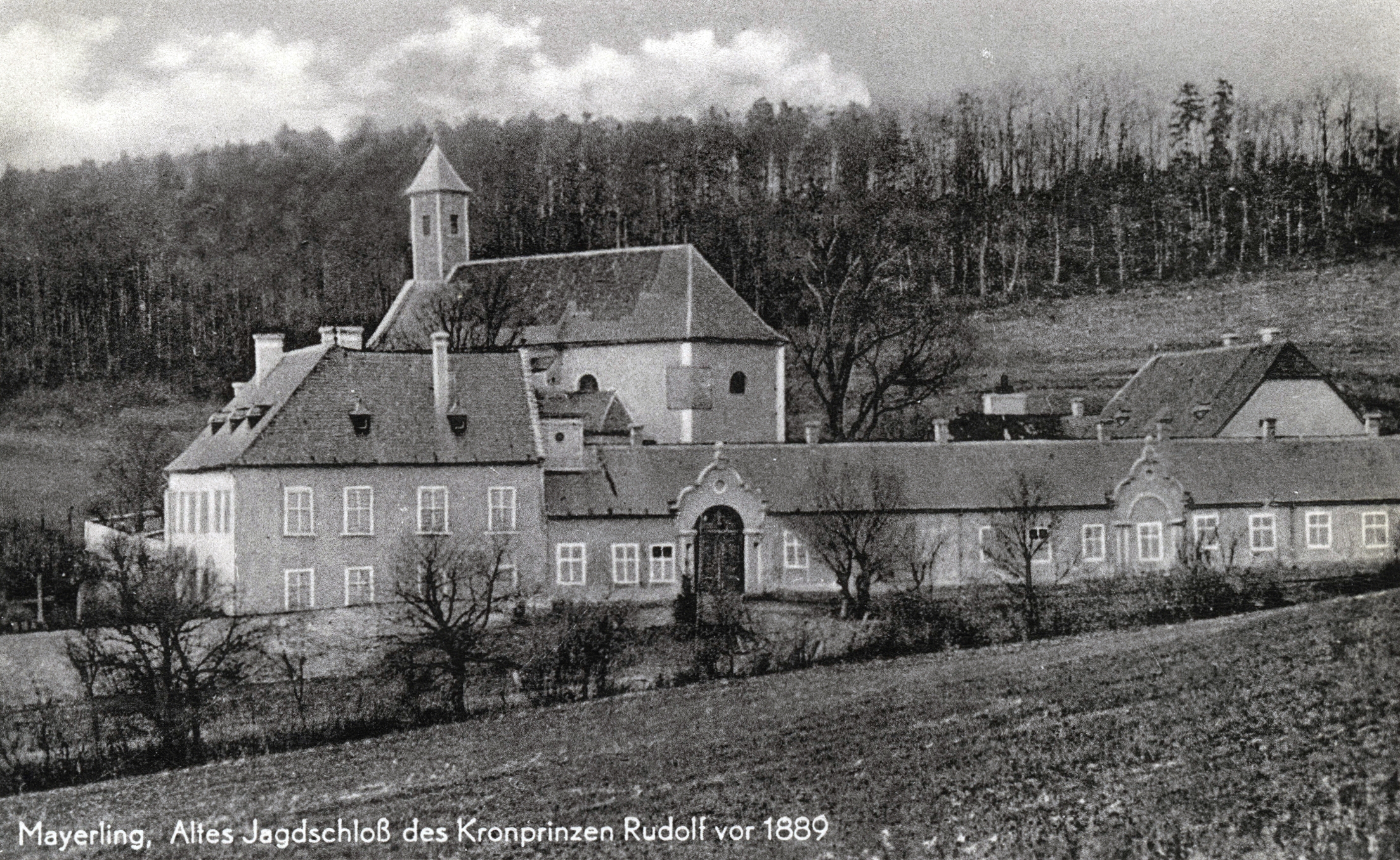
It was on the morning of January 30th 1889, 125 years ago today, that the staff of Crown Prince Rudolf of Austria-Hungary discovered the bodies of the heir to the throne and his teenage mistress Mary Vetsera in their bedroom at the hunting lodge at Mayerling in Lower Austria.


 The hunting lodge at Mayerling as it appeared in 1889

Image: Wikipedia

Immediately shrouded by the Imperial household and government to conceal what had actually happened the story remains mysterious and not fully explained to this day. From members of the Imperial family downwards there have been theories some more or less far-fetched to explain the events of that night and the attempts to present what had happened in as favourable light as possible given the dreadful circumstances.


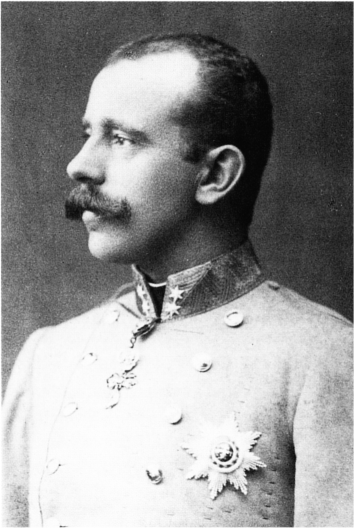
File:Crownprince rudolf 1889.png

Crown Prince Rudolf

This photograph apparently is from 1889, and shows him clean shaven apart from his moustache, as in the photograph of his corpse below. The side-whiskers and beard which he is often shown wearing in photographs appear to have been a fashion he had in earlier years but had abandoned by the time of his death.
He is wearing the Order of the Golden Fleece and the star of the Order of St Stephen.

Image: Wikimedia Commons

There is an online life of the Crown Prince which can be read at Rudolf, Crown Prince of Austria 
abnd one of his wife, who diedin 1945, at Princess Stéphanie of Belgium. The unconventional life of their daughter, who died in 1963, can be read at Archduchess Elisabeth Marie. There is an online life of his mistress which can be read at  Baroness Mary Vetsera.
 

File:Baroness Mary Vetsera.jpg

Baroness Mary Vetsera
 Image: Wikipedia

File:Larisch-&-Vetsera.jpg

The last photograph taken of Baroness Mary Vetsera (at right), wearing the dress in which she was buried. On the left is Countess Marie Larisch, cousin of Crown Prince Rudolf who arranged assignations between him and Vetsera. Her memoirs My Life are usually regarded as a very unreliable account of her part in the story. They are, incidentally, a source for T.S.Eliot's The Wasteland

Image: Wikipedia

The events and theories which seek to explain what happened are set out in this online article which can be read on the Mayerling Incident.

From what I have read over the years of the story I am inclined to believe the simplest, that Rudolf, for whatever reason, killed Mary Vetsera and then, some hours later, shot himself, rather than elaborate theories of a French plot - as apparently was the opinion of the Empress Zita - or that he was assassinated by Austrian special forces as an embarrassment and threat - as in Judith Listowel's biography of the Archduke. Other theories and possibilities are discussed in the last link cited above.

The events of that night still have the power to shock, and it is not surprising they have spawned and inspired so many explanations and also so many films, dramas, a ballet and books.


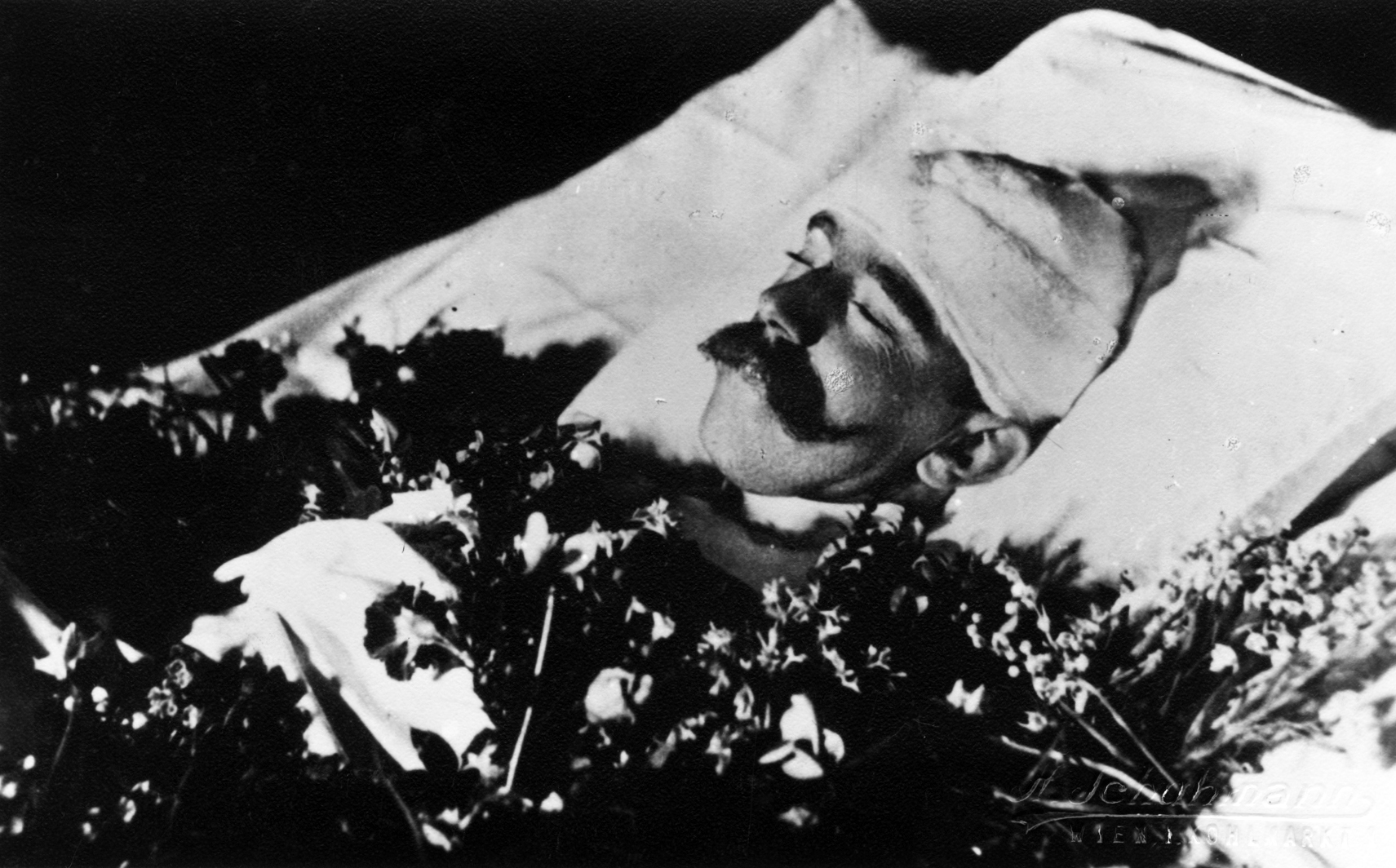
Crown Prince Rudolf placed in a bed for private viewing by his family at the Hofburg Palace in Vienna. His head had to be bandaged in order to cover gunshot wounds. When he later lay-in-state, his skull was reconstructed using wax so that his appearance appeared normal.

Image: Wikipedia

There is an account of Mayerling as it is today here. The hunting lodge was turned by his parents into an enclosed Discalced Carmelite convent of nuns to pray in perpetuity for the soul of the Crown Prince, and it remains that to this day, and that seems as appropriate way as any of marking the anniversary.


mayerling schloss castle jagdschloss alland

The memorial church constructed by the Emperor and Empress at the convent at Mayerling

Image:hotel.travel2austria.com

** I have seen one curious, indeed bizarre, modern memorial the events of 1889. It is a modern house in the village of Wressell in the East Riding near the remains of the medieval castle and which bears in large letters the name "Mayerling". What a name to choose for your home.

Monday, 21 October 2013

Bl. Emperor Charles of Austria


Today is the feast day appointed for Bl. Charles of Austria - the date was chosen because it is the anniversary of his  wedding in 1911 to  Zita of Bourbon-Parma, and his exemplary married and family life was recognised as one of the justifiable causes for his Beatification in 2004. A second miracle was recognised by the Vatican in 2008. This was the cure in Florida of a Baptist, who subsequently converted to Catholicism. There is an account of this here.


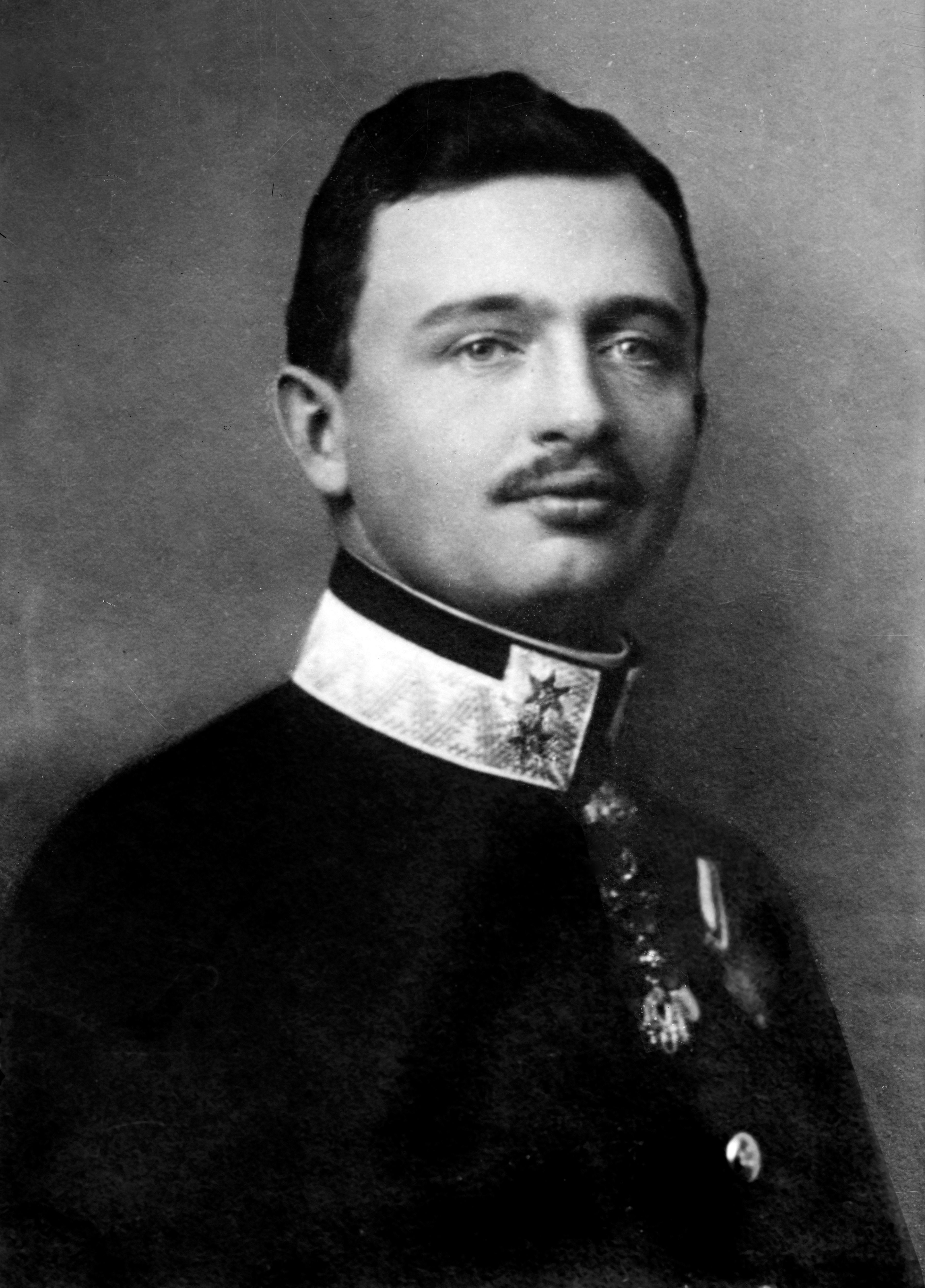
File:Kaiser Karl of Austria-Hungría.jpg

Bl. Charles of Austria
A portrait from 1915

Image:Wikipedia

The Emperor-King was clearly, transparently, a good man, a decent man, one who sought peace. His great uncle the Emperor Francis Joseph had expressed the wish to find a negotiated settlement in his last months, and the young future Emperor 's words at the time of the outbreak of hostilities in 1914 record his horror at the enthusiasm for war on the part of some, whilst firmly believing in the the justice of the Austrian cause. His attempts in 1917 to achieve a negotiated peace on the lines advocated by Pope Benedict XVwon him no thanks from the Western allies or from his own in Germany.

Whether he would have been able to reconcile the different communities of his inheritance had he come to the throne in peacetime or even under the terms of the October Patent is unknowable, but he clearly enjoyed popular esteem from the ordinary people and his commitment to their welfare, both before and after November 1918, and that could well have worked in his favour had he been spared.

What is clear is that the peoples of the realms over which he reigned have had a far from happy time for much of the period since November 1918 - dissolving the Habsburg Empire was a disaster.

Usually I say the Novena for his canonisation in the days leading up to today, but having been busy it has not happened this year - mea culpa, so that is something else to start in the coming days. The Novena can be found, along with information about the life of the Emperor and pictures of him on the website of the Emperor Charles League of Prayer. In addition there is the website of the Empress Zita cause. There is a handsomely illustrated online life of the Empress together with that of her husband here


http://www.info-regenten.de/regent/regent-d/pictures/austria-karl1.jpg

The Emperor Charles I

Image: info-regebnten.de

There is a short biography of the Emperor by James and Joanna Bogle entitled A Heart for Europe and there is a much fuller account by Gordon Brook-Shepherd in The Last Habsburg, which includes many of the reminiscences of the Empress Zita who cooperated with the author when he was writing the biography.


The Emperor's Standard
This form of the standard was adopted in 1915

Image: The Habsburg Monarchist

https://blogger.googleusercontent.com/img/b/R29vZ2xl/AVvXsEi4_KuSdCAZSVDE6cEmguk2BAaSOkx93vdN-EF52xWxIpX09sSh9uOuNlmj3iQMF2xy9fsnQWwTlG2mY4BA1LdftQUAevPhkTos934wvOaSBeZ_DqVmT_pPaPsY2gzsb3E18pC8wJ0fHf4/s1600/EhzgOtto12.jpg

At the Beatification of Emperor Charles in 2004 his son and successor Otto of Austria receives communion from Pope John Paul II

Image:New Liturgical Movement


File:Imperial Monogram of Emperor Charles I of Austria.svg

The Emperor's monogram

Image: Wikipedia

May Bl.Charles of Austria pray for the peoples of his dominions, for peace and for us all

Sunday, 21 October 2012

Bl.Emperor Charles of Austria


Today is the appointed feast day for Bl. Charles of Austria, a beatus and monarch about whom I have posted on several occasions in the past, and to whom I have a particular devotion.

Over recent days I have been praying the novena for his canonization from the Emperor Charles League of Prayer. The website for the cause of the Empress can be seen at Empress Zita cause.


Bl. Charles of Austria
Image: Wikipedia

Looking around on the internet I found some other articles about the Emperor which may be of interest. The first is by Gary Potter from 2004, and is quite lengthy, but worth looking at, and can be viewed here.

 
The others are by the well known blogger Andrew Cusack. From 2010 there is this article. There is also a series of linked posts about Bl. Charles which can be seen here,  and one about the introduction of the cause of the Empress Zita which can be read here.
http://www.ww1-propaganda-cards.com/images/austria09v.JPG

The Emperor and EmpressImage: glencoe.mcgrawhill.co

 
I also found an illustrated online article about the Emperor's tomb on Madeira which gives the background to his exile and death there. It can be read here.
   File:Imperial Monogram of Emperor Charles I of Austria.svg

Imperial monogram of the Empeor Charles IImage: WikipediaMay the Blessed Emperor Charles continue to intercede for the peoples of his ancestral realms.

Friday, 30 December 2011

Coronation in Budapest


Today is the 95th anniversary of the coronation of the Bl. Emperor Charles as King Charles IV of Hungary in 1916. The fact that he had received this sacramental was of enormous spiritual significance to the King and his Queen Zita, and why he refused to renounce his rights in 1921.

The ceremony, central to the traditional Hungarian concept of kingship, was both deemed to be a constitutional requirement and also. it seem, as a means of binding the new King, who had succeeded to the throne in late November, to the existing balance of political pwer within the realm by the Prime Minister, Count Tisza.

There is an account of the preparations for the coronation in Miklos Banffy's memoir The Phoenix Land and there is a detailed description of the day, set within the action of a sprawling novel about a Magyar aristocratic family, in Lajos Zilahy's The Dukays.

http://www.emperorcharles.org/images/JPG%20800/cd%202/08--The%20Hungarian%20Coronation/Cat%20No%20139-12--King%20Karl%20Taking%20the%20Coronation%20Oath--Magyar.jpg

The King taking the Coronation oath

http://www.emperorcharles.org/images/JPG%20800/cd%202/08--The%20Hungarian%20Coronation/Cat%20No%20139-17--King%20Karl%20on%20the%20Coronation%20Hill--Postcard,%20.jpg

The King on horseback upon the hill composed of soil from every county in Hungary.
This part of the ceremonial involved the King riding up the hill and brandishing his sword to the four points of the compass to symbolise his defence of the frontiers of the kingdom - indeed the oath speaks of extending them.

http://www.emperorcharles.org/images/JPG%20800/cd%202/08--The%20Hungarian%20Coronation/Cat%20No%20140--The%20Hungarian%20Royal%20Family%20Enthroned-Photograph.jpg

King Charles IV, Queen Zita and Crown Prince Otto.
The King died in 1922, Queen Zita in 1989 and Otto in 2011.

http://www.emperorcharles.org/images/JPG%20800/cd%202/08--The%20Hungarian%20Coronation/Cat%20No%20150--King%20Karl%20Wearing%20the%20Crown%20of%20St.%20Stephen--Pos.jpg

King Charles IV wearing the Holy Crown
and mantle of St Stephen and holding the sceptre.

Images: The Emperor Charles League of Prayer

Friday, 21 October 2011

Bl. Emperor Charles


Today is the centenary of the wedding of the Archduke Charles to Princess Zita of Bourbon-Parma, the future Emperor Charles and Empress Zita, and now the day appointed as that of his commemoration as a beatus.


http://www.emperorcharles.org/images/JPG%20800/cd%201/04--Engagement%20and%20Wedding/Cat%20No%2070--The%20Newlyweds%20at%20the%20Reception--Postcard,%20Mimosa.jpg

The future Empress and Empress on their wedding day October 21 1911

http://www.emperorcharles.org/images/JPG%20800/cd%201/04--Engagement%20and%20Wedding/Cat%20No%2069--Wedding%20Party%20on%20the%20Balcony%20of%20Villa%20Schwarzau-.jpg

The Emperor Francis Joseph with the Archduke and Archduchess and other family members on the balcony at the Villa Schwarzau.
Archduke Francis Ferdinand can be seen to the rear on the left.


In addition to the continuing cause for the Emperor's canonisation the cause of the Empress has also been introduced and the websites for these can be found at Emperor Charles League of Prayer and at Empress Zita cause.

It is worth reflecting that no other head of state from the twentieth century has been raised to the altars of the church, and one has to go back along way to find one, even canonizations centuries later such as that of the thirteenth century King Ferdinand III of Castile in 1671, let alone one within the lifetime of their children.

The story of the Empress and Empress is a tragedy not only in political and international terms for their peoples, but also a personal one, the piecemeal wearing down of a high-minded, devout, decent young man, devoted husband and father leading to a premature death at the age of 34. What redeems it is his personal holiness, as set out in the readings of the Novena for his cause which I have been saying, or in the various biographies of him.

Monday, 14 March 2011

Empress Zita


Today is the anniversary of the death of the Empress Zita of Austria in 1989.

The cause for her beatification has been introduced and the Empress Zita cause website gives details.

The following video is a photographic biography of the Empress Queen: