Last Thursday, August 20th, was the feast day or day of commemoration of St. Bernard of Clairvaux.
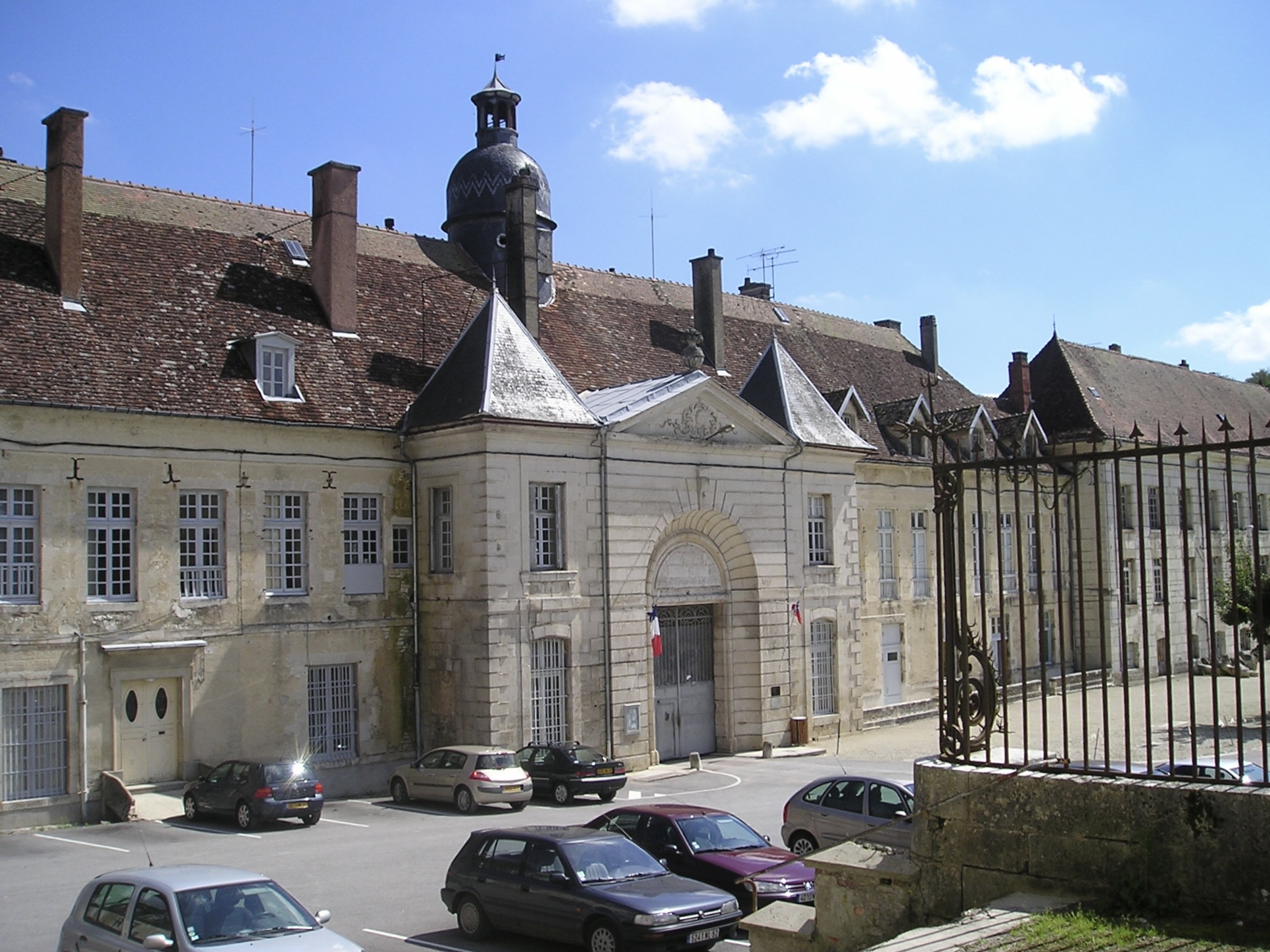
I posted two years ago about my visit to what remains of Clairvaux. This was rather depressing as although there is a visitor centre in the forecourt the remaining portions of the abbey are still used as a prison, to which limited access is possible at certain times - we were not able so to do. It seems extraordinary to me that a site of such historic and spiritual interest shoulds still, after more than two centuries, be used as a prison by the French authorities. The atmosphere is, as I said above, rather depressing and slightly sinister, as well as frustrating to the pilgrim
John Dillon has posted what he describes as some period-pertinent images of St Bernard on the medeval religion discussion group as follows:
a) as depicted (at left, in prayer with bishop St. Malachy of Armagh) in a late thirteenth-century copy (ca. 1280-1300) of French origin of the
Legenda aurea (San Marino, CA, Huntington Library, ms. HM 3027, fol. 106r; image greatly expandable):
http://tinyurl.com/28tzdt3
b) as depicted (standing central figure plus scenes from the life) in a late thirteenth-century altarpiece of Catalan origin (ca. 1285-1290; either Barcelona or Mallorca) in the Museu de Mallorca:
http://tinyurl.com/qa56v5u [click on "Ampliar Imagen"]
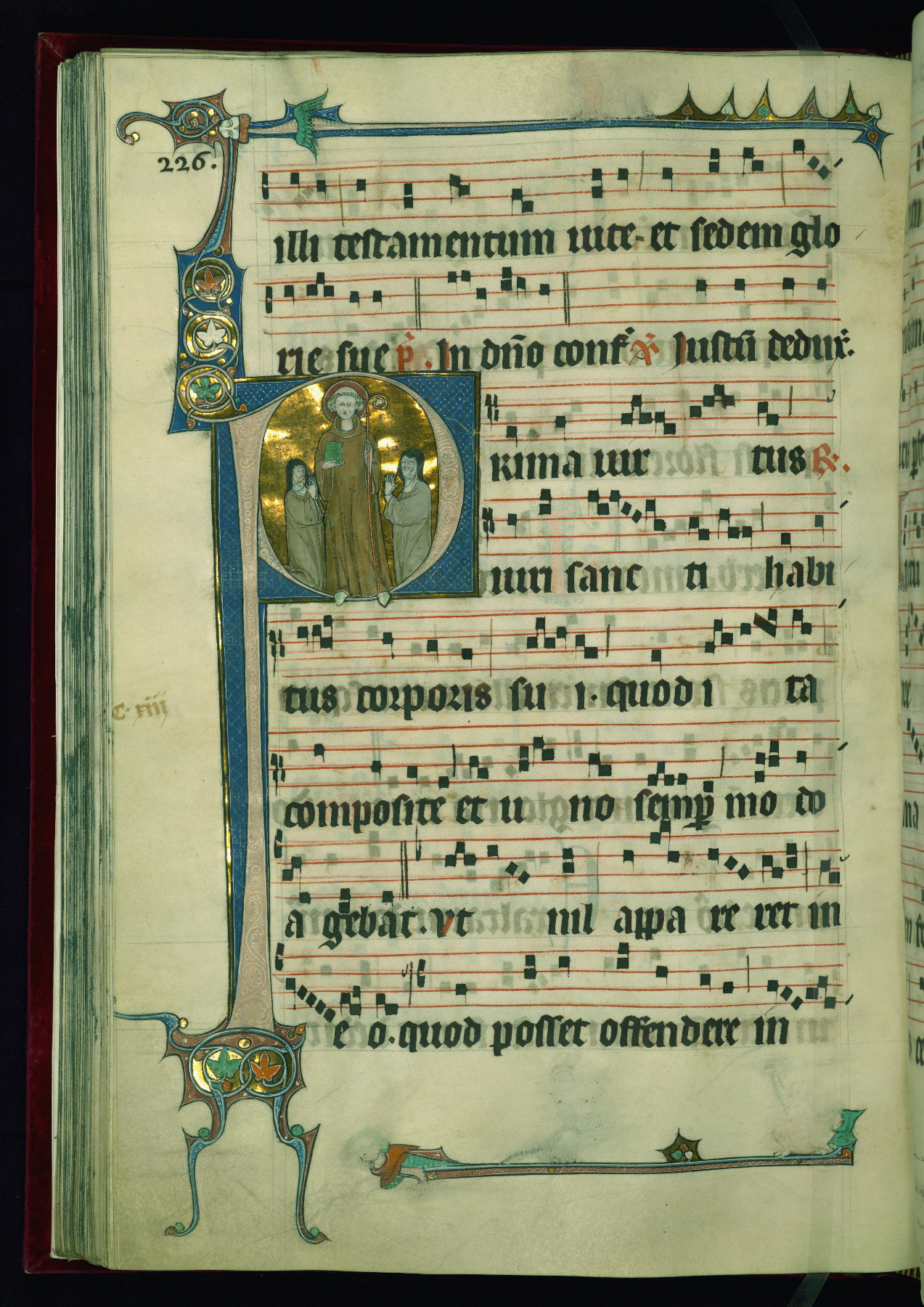
c) as depicted (flanked by two nuns) in the late thirteenth-century Beaupré Antiphoner (ca. 1290) from a house of Cistercian nuns in the diocese of Cambrai (Baltimore, Walters Art Museum, ms. W 760, fol. 113v):
http://www.thedigitalwalters.org/Data/WaltersManuscripts/W760/data/W.760/sap/W760_000234_sap.jpg
http://cistercians.shef.ac.uk/image_gallery/pages/0273.php
d) as depicted (at right; at left, the Emperor Conrad III) in an earlier fourteenth-century copy (ca. 1301-1325) of Vincent of Beauvais'
Speculum historiale (Paris, BnF, ms. Latin 4900, fol. 184r):
http://tinyurl.com/2wzhge3
e) as depicted in an earlier fourteenth-century copy (ca. 1330) of his
Epistulae (Laon, Bibliothèque municipale, ms. 168, fol. 1r):
http://www.enluminures.culture.fr/Wave/savimage/enlumine/irht6/IRHT_099811-p.jpg
f) as depicted (at left; at right, the BVM appearing to him) by Giovanni da Milano in a predella panel of his mid-fourteenth-century Prato polyptych (ca. 1343-1363) in that city's Pinacoteca comunale:
http://tinyurl.com/nascwmz
g) as depicted (at left, second from top [just beneath St. Eulalia]) as depicted either by Ferrer Bassa and Arnau Bassa or by Arnau Bassa alone in their or his mid-fourteenth-century altarpiece of the Annunciation and the Epiphany (betw. 1347 and 1360) in the Museu Nacional d'Art de Catalunya, Barcelona:
http://www.museunacional.cat/sites/default/files/015855-000.JPG
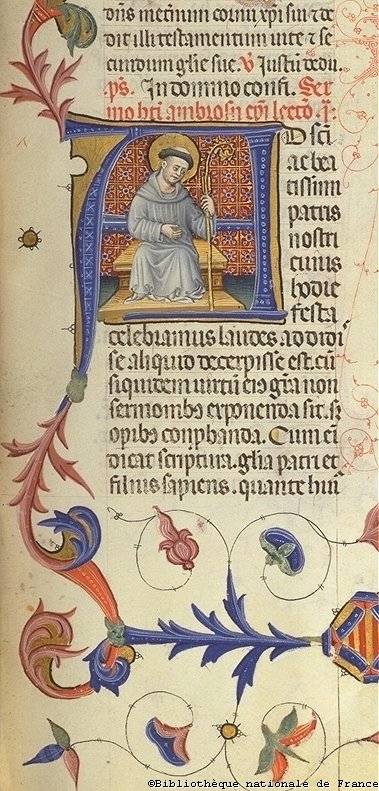
h) as depicted in a mid- to later fourteenth-century breviary for the Use of Paris ("Breviary of Charles V"; betw. 1347 and 1380; Paris, BnF, ms. Latin 1052, fol. 478r):
http://gallica.bnf.fr/ark:/12148/btv1b84525491/f965.image
i) as depicted (at center) in an earlier fourteenth-century copy (1348), from the workshop of Richard and Jeanne de Montbaston, of the
Legenda aurea in its French-language version by Jean de Vignay (Paris, BnF, ms. Français 241, fol. 214r):
http://tinyurl.com/283o38m
j) as depicted (at right; at left, the BVM appearing to him) by Matteo di Pacino (a.k.a. the Master of the Cappella Rinuccini) in the central panel of his later fourteenth-century triptych of the Apparition of the Virgin to St. Bernard (1360s), now in the Galleria dell'Accademia in Florence:
https://acrh.revues.org/docannexe/image/2768/img-1.jpg
Detail view:
https://acrh.revues.org/docannexe/image/2768/img-2.jpg
k) as depicted in a late fourteenth- or early fifteenth-century Cistercian breviary of Catalan origin ("Breviary of Martin of Aragon"; Paris, BnF, ms. Rothschild 2529, fol. 374r):
http://www.aquiweb.com/templiers/images/bernard2.jpg
l) as depicted in one of the numerous pen-and-ink illustrations in the margins of an early fifteenth-century copy (ca. 1400-1415) of the
Chronicon a mundi creatione ad annum 1220, an abbreviation and continuation of the
Pantheon of Godfrey of Viterbo (Paris, BnF, ms. Latin 4935, fol. 17r):
http://gallica.bnf.fr/ark:/12148/btv1b8455934w/f43.image
m) as depicted in an early fifteenth-century breviary (ca. 1414) for the Use of Paris (Châteauroux, Bibliothèque municipale, ms. 2, fol. 304r):
http://www.enluminures.culture.fr/Wave/savimage/enlumine/irht2/IRHT_054146-p.jpg
n) as depicted in an earlier fifteenth-century Franciscan breviary (ca. 1430; Chambéry, Bibliothèque municipale, ms. 4, fol. 594r):
http://www.enluminures.culture.fr/Wave/savimage/enlumine/irht1/IRHT_035713-p.jpg
o) as depicted (at left; at right, the BVM appearing to him) by Filippo Lippi (with workshop assistance?) in a mid-fifteenth-century panel painting (1447) in the National Gallery, London:
http://tinyurl.com/qxobnch
p) as depicted (left of centre, at the building of the abbey of Clairvaux) in a mid-fifteenth-century copy (betw. 1447 and 1455) of Giovanni Colonna's
Mare historiarum (Paris, BnF, ms. Latin 4915, fol. 361r):
http://gallica.bnf.fr/ark:/12148/btv1b6000905v/f791.item
NB: At fol. 369v
; the BnF's image database Mandragore identifies the two standing figures as "s. hildegarde et s. bernard". Yet the manuscript's own chapter heading immediately preceding this illumination describes what follows as De Ildegarde prophetissa theutonie et Ricardo de sancto Victore et eius libris.._. One might think, then, that the standing figure in Cistercian habit and holding a book is not St. Bernard but rather his fellow Cistercian Richard of St. Victor.
q) as depicted (holding a devil on a slender chain) by the workshop of Filippo Lippi in a mid- or slightly later fifteenth-century panel painting (ca. 1447-1469) in the Metropolitan Museum of Art, New York:
https://www.metmuseum.org/toah/works-of-art/1975.1.70b
r) as depicted in a panel from a mid-fifteenth-century stained glass window (ca. 1450) of upper Rhine origin in the Musée national du Moyen Âge (Musée de Cluny) in Paris:
http://tinyurl.com/p8prbtk
s) as depicted (standing over a devil falling to the floor or arising from it) in a later fifteenth-century copy (ca. 1451-1500) from Bruges of Jean Mansel's Fleur des histoires (Paris, BnF, ms. Français 298, fol. 76r):
http://tinyurl.com/pxzp3oz
t) as depicted (upper register at center; with others of his family) in a later fifteenth-century copy (ca. 1480-1490) of the _Legenda aurea_ in its French-language version by Jean de Vignay (Paris, BnF, ms. Français 245, fol. 44r):
http://tinyurl.com/pkjav53
u) as depicted (at center; at left, the Virgin appearing to him) as depicted by Filippino Lippi in a late fifteenth-century panel painting (ca. 1482-1486) in Florence's chiesa della Badia Fiorentina:

Detail view (Bernard):
http://tinyurl.com/otgly5h
v) as depicted (leading a devil chained to him) in a late fifteenth-century Roman breviary (betw. 1482 and 1500; Clermont-Ferrand, Bibliothèque du patrimoine, ms. 69, fol. 1v):
http://www.enluminures.culture.fr/Wave/savimage/enlumine/irht4/IRHT_081510-p.jpg
w) as depicted by the Master of the Modena Book of Hours in a late fifteenth-century Dominican missal from Lombardy (ca. 1490-1500; The Hague, Museum Meermanno, Ms. 10 A 16, fol. 211v):
http://manuscripts.kb.nl/zoom/BYVANCKB%3Amimi_mmw_10a16%3A211v_init
x) as depicted (at right, his lactation by the BVM) in a late fifteenth-century miscellany of canon law (ca. 1490-1500; Troyes, Médiathèques de l'Agglomération Troyenne, ms. 41, fol. 1r):
hxtp://www.enluminures.culture.fr/Wave/savimage/enlumine/irht7/IRHT_108351-p.jpg
y) as depicted (lower register at right) in the very late fifteenth-century Prodigal Son window of the cathédrale Saint-Pierre-et-Saint-Paul in Troyes (baie 232; after July 1499):

z) as depicted (his lactation by the BVM) in an early sixteenth-century collection of private prayers and devotions in Latin and in French (ca. 1501-1520; Oxford, Bodleian Library, MS Douce 264, fol. 38v):
http://tinyurl.com/qdzrl7y
aa) as depicted in an earlier sixteenth-century window panel (baie 6; window is from ca. 1501-1525 with extensive late C19 additions) in the église paroissiale Sainte-Savine in Sainte-Savine (Aube):
http://therosewindow.com/pilot/Troyes-St-Savine/w16-c2.htm
bb) as depicted (with his parents, Aleidis and Tesclin; here considered saints) in earlier sixteenth-century window panels (ca. 1505-1508) thought to have come from the Cistercian abbey of Mariawald in today's Heimbach (Lkr. Düren) in the Eifel southwest of Köln and now in the Metropolitan Museum of Art, New York:
https://www.flickr.com/photos/wallyg/2190512206
cc) as depicted (being tempted by a devil) in an early sixteenth-century book of hours for the Use of Rome (ca. 1510; Tours, Bibliothèque municipale, ms. 2104, fol. 149r):
http://www.enluminures.culture.fr/Wave/savimage/enlumine/irht2/IRHT_051185-p.jpg
dd) as depicted in thirteen panels of varying size from a suite of earlier sixteenth-century windows (after 1535) on the life of Bernard from the Cistercian abbey of Altenberg in today's Odenthal (Lkr. Rheinisch-Bergisches Kreis) just east of Köln and now in Köln in the Museum Schnütgen:
http://tinyurl.com/nfhvggr
Gordon Plumb added a link to his album on Flickr of the St Bernard panels from Altenberg now in St Mary's Shrewsbury:
https://www.flickr.com/photos/22274117@N08/albums/72157611911914112