Once I was a clever boy learning the arts of Oxford... is a quotation from the verses written by Bishop Richard Fleming (c.1385-1431) for his tomb in Lincoln Cathedral. Fleming, the founder of Lincoln College in Oxford, is the subject of my research for a D. Phil., and, like me, a son of the West Riding. I have remarked in the past that I have a deeply meaningful on-going relationship with a dead fifteenth century bishop... it was Fleming who, in effect, enabled me to come to Oxford and to learn its arts, and for that I am immensely grateful.


Friday, 6 August 2021

St Dominic 800


This year is the eighth centenary of the death of St Dominic. Like so many saints his feast day has been moved in recent decades, but this is definitely the correct time of the year to commemorate him.
Image

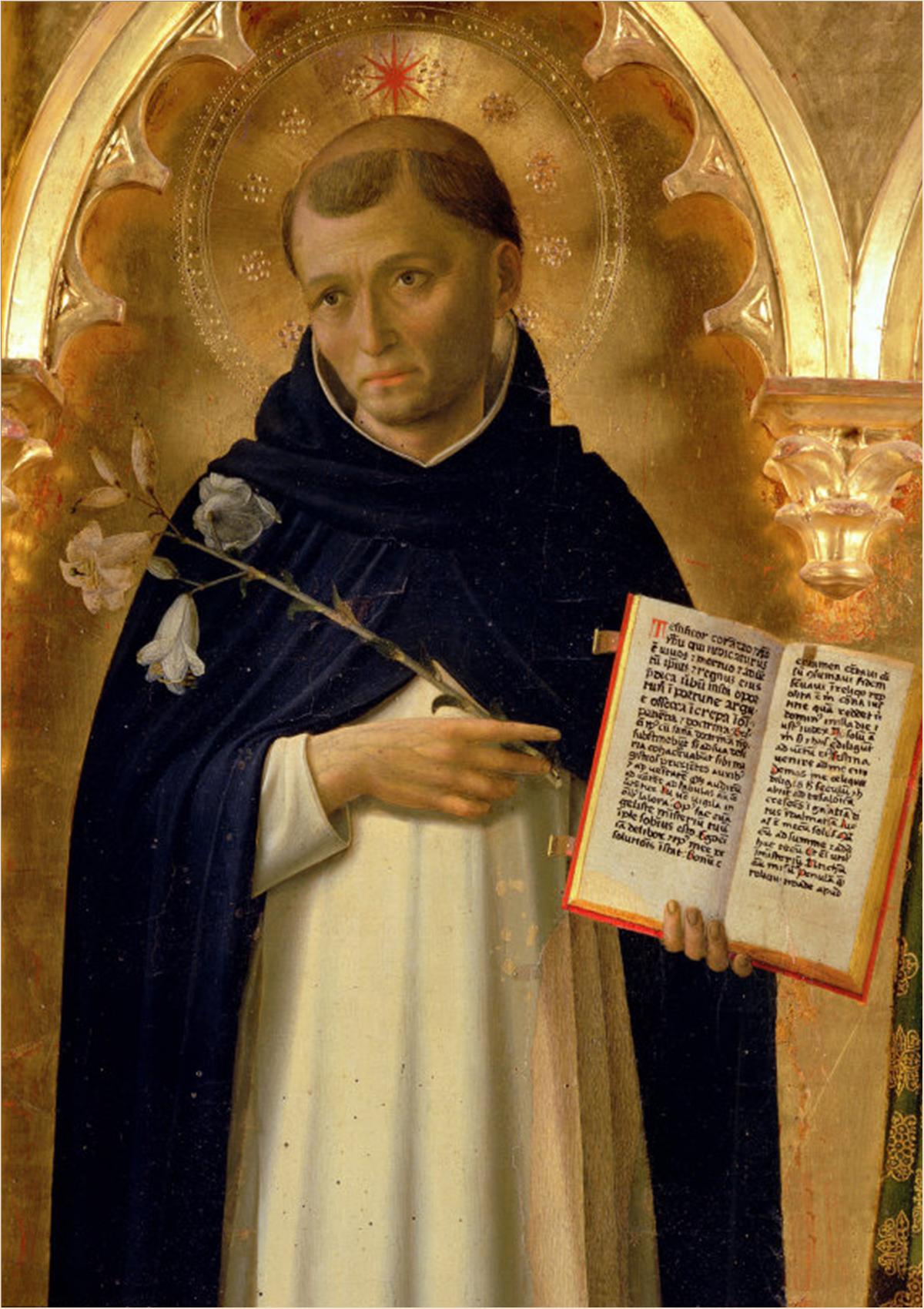
St Dominic
Image: Tekton Ministries

August 4th is his feast day in the 1962 Missal, which I was able to observe this year at Mass,  August 8th in the 1970 one. That is actually the anniversary of his birth in 1170, but his death took place on August 6th 1221. I assume pace my previous post that since 1456 at least he has been displaced by the Transfiguration. 

The Wikipedia life of him can be read at Saint DominicThis  includes a contemporary description of his appearance which makes him seem that much more immediately imaginable than is often the case with medieval saints.

Commemorations are being held by the Dominicans this year and today is a good opportunity for me to send greetings and good wishes to my Dominican friends on this significant anniversary.

Dom1

St Dominic
Fra Angelico, 1442
Image: catholicireland.net


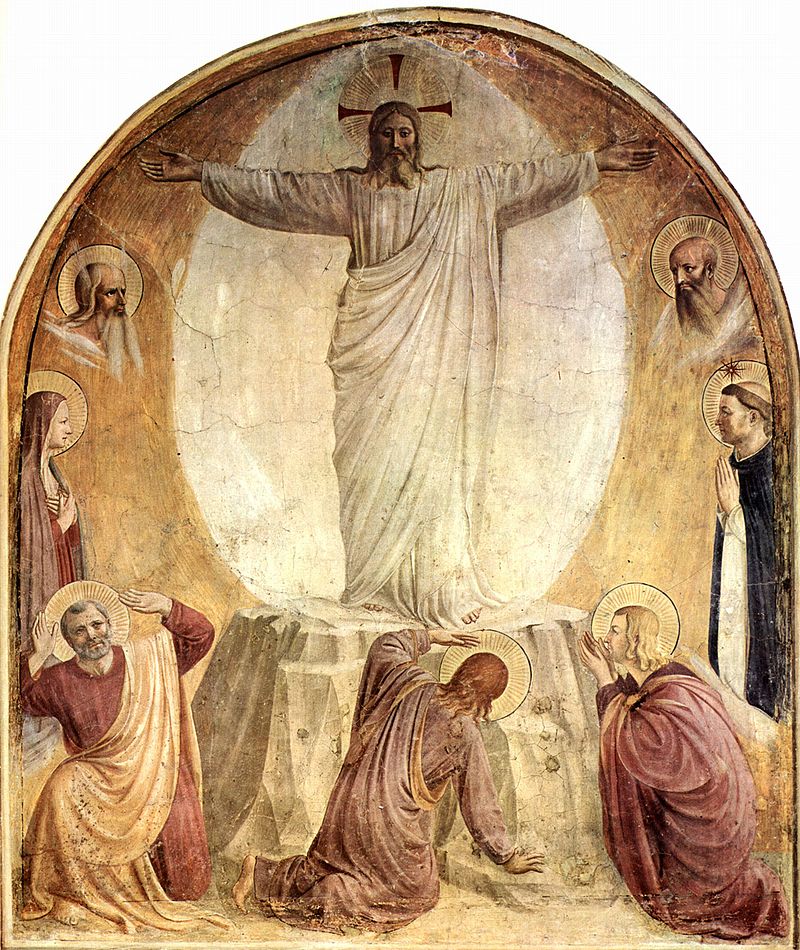
Commemorating the Transfiguration


The Transfiguration
Fra Angelico  
San Marco Room 6 Florence. 1438
Image: Wikimedia

Today is the Feast of the Transfiguration, and has been for not a few centuries. But one might ask why it is celebrated today, in August, rather than in the lead up to Easter, which is where the historic event fits into Our Lord’s earthly life and indeed it sets Him on the road to the Passion. The Lenten season does commemorate the Transfiguration on the liturgical path to Easter, so why is it celebrated now?

As the author of the Wikipedia article at Feast of the Transfiguration about the feast admits the origins of its celebration in the ninth century are obscure and that different dioceses celebrated it on various dates. By the mid-fifteenth century it was celebrated in Rome on August 6th.

570 years ago, in 1456, the news arrived in Rome on August 6th of John Hunyadi’s great victory over the Ottoman besiegers of Belgrade on July 22nd. That is recounted in Siege of Belgrade (1456). Hunyadi’s triumph was celebrated across Christendom - here in Oxford a procession and special service was held by the University - and Pope Callixtus III ( the other Borgia Pope ) made August 6th the universal celebration of the Transfiguration. He also mandated, or confirmed, the daily ringing at noon of church bells in thanksgiving for the deliverance. By a strange coincidence the Pope was to die on August 6th 1458.

Pope Callixtus III Siena (cropped).jpg

Pope Callixtus III 1455-58
A portrait from 1455 by Sano di Piero
Image: Wikipedia 


Thursday, 5 August 2021

‘Traditionis Custodes’ - the continuing debate


The reaction to Traditionis Custodes, and by extension to many other recent, and indeed not so recent, but related events in the life of the Church appears, not surprisingly, to continue unabated.

Today brought two online articles to my attention which may be - should be in fact - of interest to readers.

The first is a feature on the New Liturgical Movement, and introduced by Peter Kwasniewski, by Dr Tomasz Deckert, who is a Polish academic, about the liturgical debate in the Church since Vatican II and the reception of change by the faithful. It can be read at “Traditionis Custodes, or Competing Concepts of Unity” — Guest Article by Dr. Tomasz Dekert

The second is from Rorate Caeli and reproduces an open letter to the Pope from a number of prominent Italian laity and published in Il Foglio. Writing about the Church being on fire they themselves are scorching in what they say. The article can be read at A Public Letter from Italian Laity: Francis, enough! Stop the ideological Civil War on the Church


Wednesday, 4 August 2021

A possible tourney casualty from Hereford


I came across a link to an article on Live Science from six years ago about a skeleton of what appeared to be a knight of perhaps the twelfth century which had been found in the burial ground around Hereford Cathedral. 

The discovery came as part of a major landscaping project of the open space adjoining the cathedral which involved thr recovery of numerous burials from the twelfth to the nineteenth century. 

The one which attracted attention was of a man aged about forty five, whose teeth suggested he had been raised in Normandy - which would imply a date of birth before 1204 - and then moved to Herefordshire. He was notable for having suffered a series of blunt trauma injuries - some broken ribs which had healed, others which were healing when he died. The favoured suggestion to explain this was that he had engaged in tournaments or tourneys - hence the injuries were from blunt, not sharp weapons - and had suffered either direct blows or falls from a horse. The article can be read here.


Tuesday, 3 August 2021

Medieval summertime


The Canadian based website Medievalists.net has in its latest collection an interesting short article about life during the summer months in the middle ages both in terms of work and of leisure. Many things change, but many other things do not it seems.

The illustrated account can be seen at Summer in the Middle Ages


Monday, 2 August 2021

Reliquary of St Dorothy from Basel


The Liturgical Arts Journal has an article today about a delightful fifteenth century reliquary from Basel Cathedral. Made or assembled in several stages in the 1450s it contains relics of St Dorothy and is now on display in the Historisches Museum in the city. It is yet another reminder both of medieval craftsmanship and also of the losses we have suffered over subsequent centuries.

The illustrated article can be seen at From the Treasury of Basel - The Reliquary of St. Dorothy


The continuing restoration of Wentworth Woodhouse


The Art Newspaper has a report today about the latest developments in the massive and utterly commendable restoration project at Wentworth Woodhouse in Yorkshire. The aspect they particularly feature is the plan to restore the derelict Camelia House, but which still has its eighteenth century camelias, and they are back in bloom.

The article, which also outlines both the scale of the house and the scale of the restoration facing the Trust who now own this remarkable building, can be read at Eccentric Wentworth Woodhouse estate—home to centuries-old camellias—gets set to bloom again in Yorkshire

I have posted about Wentworth Woodhouse before in Wentworth Woodhouse from 2014 and last year in Wentworth Woodhouse: A House and its Follies

Growing up only about twenty miles away from  this historic building which was inaccessible and reading about it in Pevsner, who for once waxes lyrical about a country house when describing it, Wentworth Woodhouse has intrigued me for upwards of sixty years. The fact that it is now being saved from the ravages inflicted upon it by the twentieth century is truly heartening.


Saturday, 31 July 2021

More about Thomas Cromwell’s house at Austin Friars


The publication of the recent research into Thomas Cromwell’s sizeable London house adjoins the Austin friary which I linked to in Thomas Cromwell’s house at Austin Friars has led others to write about it. 

The always well researched TudorTravel Guide has a very good online account of the development and arrangement of the house and also looks at the  way in which it illuminates Cromwell’s rise to power and the exercise of that power.

The illustrated article can be read at Austin Friars: Cromwell's City Power House