Once I was a clever boy learning the arts of Oxford... is a quotation from the verses written by Bishop Richard Fleming (c.1385-1431) for his tomb in Lincoln Cathedral. Fleming, the founder of Lincoln College in Oxford, is the subject of my research for a D. Phil., and, like me, a son of the West Riding. I have remarked in the past that I have a deeply meaningful on-going relationship with a dead fifteenth century bishop... it was Fleming who, in effect, enabled me to come to Oxford and to learn its arts, and for that I am immensely grateful.


Showing posts with label King William I. Show all posts

Monday, 15 September 2025

A further video critique of “King and Conqueror”


After I last about this series and linked to the Welsh Viking’s well informed criticisms I came upon two from History Revealed which offers many of the same criticisms, and also addresses the matter of “colour blind” casting in a somewhat different way. The presenter sets out his basic case in an extremely short video which can be seen at Were there Black Anglo Saxons soldiers? 


His much fuller criticisms on that subject and many others can be seen at The BBC Tries to Recreate the Battle of Hastings | Fails Miserably! 

He does not draw attention to the fact that at King Edward’s coronation the Archbishop is wearing vestments of the fourteenth of fifteenth centuries, not the eleventh.

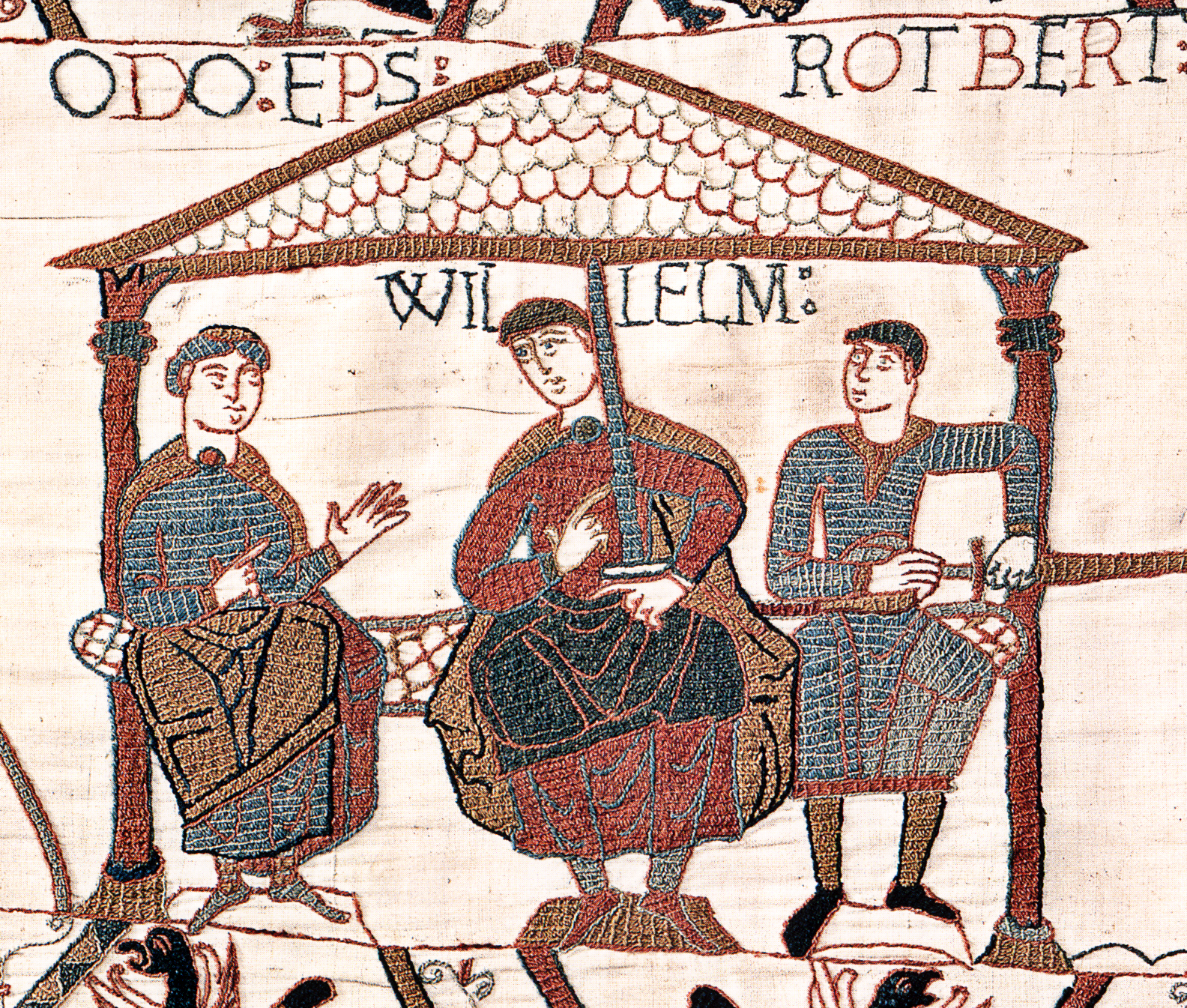
He likes the oath scene from 1064, but given that the Bayeux Tapeastry shows two caskets containing the relics why not show that scene instead of having a few bones on a cushion?


Sunday, 14 September 2025

Another critique of “King and Conqueror”


When I first posted about the series “King and Conqueror“ several months before it appeared on television, and again after it did become available, I linked to a video by the Welsh Viking which offered a devastating critique of the costuming and armour in the series. This can be watched at The Costuming in "King and Conqueror" Looks Terrible. Like, Really Terrible.

The same presenter has now produced another video which further deconstructs what is offered to the viewer and makes many searching and informed criticisms of this production.

His video can be seen at We Need To Talk About King and Conqueror 

The one point where I would raise a question or two is in respect of ‘colour blind’ casting. As the Welsh Viking’ demonstrates we do have evidence of some people from Africa, or of African descent, both from north of the Sahara and also from sub-Saharan Africa, in Anglo-Saxon England. The questions about this need to include numbers and percentages, and also at what times, as well as their social status. That people of such ancestry or origins were present in trading communities there could not perhaps surprise us, but their presence in elite society or on the battlefield may be seen as doubtful. 

I will return to this topic in coming days with another video that does not stint in its criticisms on this and many other aspects of this lamentable series.

Sunday, 31 August 2025

“King and Conqueror “ - an academic’s critique


Following on from my last post I am copying and pasting an article by Professor Marion Turner which was published by the Daily Telegrapgh a few days ago. I will make my own comments about this as a postscript.


Episode one

False: Harold saved William’s life.

The future William the Conqueror is invited over to England for Edward the Confessor’s coronation and, on arrival, he and his men are attacked, but saved by Harold Godwinson (who later succeeds Edward to the throne), who does not know who they are. This is all made up: William was not at the coronation (and was a teenager at the time). In the series, this is the beginning of a sequence of parallels and back-and-forths between William and Harold which works well in terms of drama, but doesn’t reflect history. William’s fictional visit does, however, gesture towards the long and complex background between England and Normandy, especially the fact that Edward the Confessor had spent decades of his life in exile in Normandy and probably did feel great affinity with his Norman relatives and friends who had protected him.


False: It was vanishingly rare for two people to have the same name

Many names have been changed, and that grates. Obviously the programme makers think that the audience will get hopelessly confused. The most egregious example here is that Queen Edith (the daughter of Godwin, sister of Harold Godwinson and wife of Edward the Confessor) has become Gunhild (which was the name of her sister). The historical Edith was initially called Gytha (her mother’s name) but was always known as Edith after her marriage and during her queenship. She was never Gunhild.


The series has made another Edith – a fairly shadowy historical figure, who may have been Harold Godwinson’s first wife or long-term mistress – into a major character. Indeed they also change his second wife’s name to Margaret – as she was another Edith.


Episode two

Maybe: Earl Godwin blinded and killed Edward the Confessor’s brother

This may be true. Alfred (here called Aethel) was certainly horrifically blinded and killed after being invited back to England from exile under false pretences. The principal blame is usually ascribed to Harold Harefoot, son of King Cnut and Ælfgifu , but some sources also implicate Godwin (Earl of Wessex, father of Harold Godwinson, and later the father-in-law of Edward the Confessor). Different versions of the Anglo-Saxon Chronicle say different things, so the jury is out.

True-ish: The Godwins were exiled on trumped-up charges

In King and Conqueror, Emma of Normandy (mother of Edward the Confessor) engages in complicated machinations, paying the Earl of Mercia (one of the three most important earldoms along with Wessex and Northumbria) to provoke the Godwins so that ultimately they can all be exiled, as revenge for what happened to Alfred. What actually happened is that there were problems in Dover; Edward ordered Godwin to punish the town’s leaders, but Godwin refused, and Edward seized the disagreement as a pretext to get rid of this too-powerful earl. So the Godwins fled into exile (in 1051). King and Conqueror depicts them all fleeing to Flanders. Some of them did go there, but others – including Harold – went to Dublin. The scene (in the next episode) in which Harold and William meet up in Flanders and sit in baths together talking about how much they love their wives certainly did not happen…


Episode three

False: Godwin made Harold Earl of Wessex over the head of Swein, Harold’s older brother

This did not happen. In King and Conqueror, Godwin relinquishes his title to Harold while he is still alive, bypassing Swein who is violent and unreliable. Historically, Harold did not become Earl of Wessex until 1053, after the death of his father. Swein had died the previous year.

True-ish: Baldwin of Flanders was the lynchpin of Northern Europe

Baldwin, count of Flanders, was a major political player in the eleventh century. In King and Conqueror we see both Norman and English exiles flocking to him, and he dabbles in all kinds of high politics, ending up effectively controlling the throne of France. This is all basically true: he had his finger in all the northern European pies. Emma of Normandy had stayed with him in exile; he had supported her son Alfred; he helped his daughter Matilda’s husband William, and he was indeed regent of France. Some of the Godwins did stay with him in exile and he helped Godwin to return to England with force. There is some serious embellishment of his ambitions at times, especially later in the series when we see him plotting against his daughter, which is not true. (In a different way, it is also puzzling that we see him living in a tent and cooking his own dinner.) But in general, King and Conquerorgets it right in emphasising Flanders’s importance, and Baldwin’s political talents.


Episode four

False: Edward the Confessor beat his mother Emma to death


This is the strangest bit of the whole series. Edward seems to have some kind of psychotic episode and punches his mother to death. This is completely fictional. What actually happened would have made very good drama too, in a more psychological way: a few months after he became king, Edward allied with the earls – including the Godwin family – to exile his mother and take her money and treasure away from her. This was partly in revenge as his mother had never wholeheartedly supported him and had done more for her son by her second husband (Cnut), Harthacnut.

This extraordinary invention is part of the way these characters are imagined in King and Conqueror. Edward is portrayed as a mentally unstable, very weak, religious obsessive, absolutely controlled by his mother – and then suddenly rebelling against this control. He also refuses to have sex with his wife, despite her best efforts. The historical picture does not support this characterisation overall. He and his wife did not have children, but they almost certainly tried. At times in his life, and in his reign, he fought successfully and reigned competently – and he did stand up to his mother. He also went hunting a lot, and seems to have been a vigorous and outdoorsy man, quite different from the character portrayed here.

Emma was an extremely wily and powerful politician for most of her life. She was married to two kings – Aethelred and Cnut – and managed to help two of her sons (Harthacnut and Edward) to be king. She rallied support in Normandy and accumulated great wealth and power. And in her willingness to act strategically, particularly in marrying Cnut who was effectively deposing her own sons, we can see ruthlessness and an eye to the long game.


False: William killed Henry, the king of France

This densely imagined scene, in which William manages to kill his erstwhile ally while hunting and then works with Baldwin to pretend that bandits killed him, is entirely fictional. Part of the alleged motivation – that Henry had killed William’s father – is also fictional. It is true that William and Henry were allies early on, and that Henry then attacked Normandy, so they had a changing and difficult relationship. But this is another one of the made-up murders of this episode.


Episode five

Maybe: Harold was tricked into promising, over holy relics, to support William’s claim

This is one of those things we really do not know. According to King and Conqueror, William and Harold meet in Normandy to discuss the succession. William tricks Harold into taking his hand in public, across holy relics, and demands that he agrees to support his claim to the throne when the time comes. Harold gets out of it by promising to support the rightful king. Cunning! Did any of this happen? This is essentially what is depicted in the Bayeux tapestry, which shows Harold swearing solemnly to support William in this way. We only have this story from Norman sources, and this became part of the Norman story: that Harold swore to support William, and that in taking the crown himself he was betraying both his word and God. Obviously, it was in William’s interests to promote this version of events. But we do not know that Harold went to Normandy at all at this time (c.1064). We can be sure that other things that happen during this visit in King and Conqueror – such as Harold and William’s half-naked mud-fight – don’t reflect the historical record…


Episode six

True-ish: Tostig betrayed his brother

In “King and Conqueror”, Tostig, now Earl of Northumbria, turns against his brother, Harold, because he blames him for the death of his wife and child. It is true that Tostig did betray Harold and allied with Harald Hardrada of Norway, but this was for political reasons. Harold defeated Harald Hardrada and Tostig at Stamford Bridge.

Maybe: Harold deceived a lot of people at the time of Edward’s death

Did Edward name Harold as his heir? In King and Conqueror, Harold makes this up. At the time, English sources generally said that Edward had indeed named Harold, and this wasn’t disputed by the Normans. Although others had a better claim, Harold was in many ways the obvious choice. We also see him putting aside his long-term wife, Edith, to marry Margaret, sister of the Earl of Mercia – portrayed here as an outrageous betrayal. There is some truth in this. Harold had had a long relationship with Edith the Fair, with whom he had children, though it is not clear if they were married. He did marry the sister of the new Earl of Northumbria (Morcar) and the Earl of Mercia (Edwin) – though she was, of course, called Edith too.


Episode seven

False: Almost no time passed between Edward the Confessor’s coronation and death

The whole series takes place in a hugely compressed timescale. Children that are born in the early episodes are toddlers at the end. In fact, Edward ruled for over 23 years. There were years of anxiety about the succession. When William left his wife and child in charge of Normandy, his child was not a toddler but a teenager. The Godwins had been firmly established as the dominant family in England for 14 years by the time Edward died: they returned from exile in 1052 and he died in 1066. Their time in exile was a very short blip amidst decades of dominance. Queen Edith (Gunhild in the series) looks like a teenager throughout, but she was a woman of about forty by the time her husband (Edward) died. Matilda (William’s wife) is already pregnant by the time Edward is crowned but in fact William and Matilda were not married until about 10 years later.

True: A blazing comet was seen in the sky before the Battle of Hastings

This one is true. Halley’s comet was seen in April – admittedly the battle was not until October, but the comet was noticed and interpreted as meaning that change was coming. We’ll see it again around 2061 so who knows what that year will hold.


Episode eight

True: William and Odo pretended that Harold was killed by an arrow in the eye

The Bayeux Tapestry depicts Harold dying with an arrow in his eye.

We see the arrow being placed in Harold’s eye after his death and Odo (William’s brother and the bishop of Bayeux) loudly declaring that it was God’s arrow and yet another sign of God’s will. This is all broadly true to the spirit of what happened. The idea that Harold was killed by an arrow in the eye has become famous because it is depicted in the Bayeux tapestry, but early accounts of the battle do not corroborate this story. In general, the tapestry, although made in England, shows the Norman point of view and was commissioned by Odo. It is a propaganda piece, which is often interested in symbolism and ideology rather than historical fact. This episode does a good job of showing how William and Odo use religion to support William’s claim. It demonstrates how William understood statecraft and the power of images and propaganda. As with the swearing on relics of episode five, these are scenes well-known to many from the Bayeux tapestry, that extraordinary product of the age – coming back to England next year.


“King and Conqueror” is available on iPlayer. Marion Turner is the JRR Tolkien Professor of English literature and language at the University of Oxford.


Postscript by the Clever Boy


I agree with most of what Prof. Turner says but am told that Tostig’s wife rather than dying with their child gave him several -four - children, and, following his death, remarried and bore six more children.


More significantly I do disagree with her in respect of the arrow in King Harold’s eye. Many years ago I saw a feature on the BBC about the inaccuracy of this interpretation of the depiction of the King’s death. 


Firstly the inscription indicating his death by its very position refers to the falling armed figure being cut down by the equally armed rider on horseback after the viewer has seen the famous image of the figure with the arrow in his head


Secondly the extremely detailed detailed early nineteenth century engraving of the as yet unrestored tapestry made by the meticulous Charles Stothard indicate that the shaft of the famous arrow was missing but - and it is a very important ‘but’ - Stothard showed the needle holes where it had once been. They indicate the arrow is actually in the standing figure’s forehead, and not his eye socket. Indeed the nineteenth century restorer has had to give a slight bend to the shaft to get it into the figure’s eye.


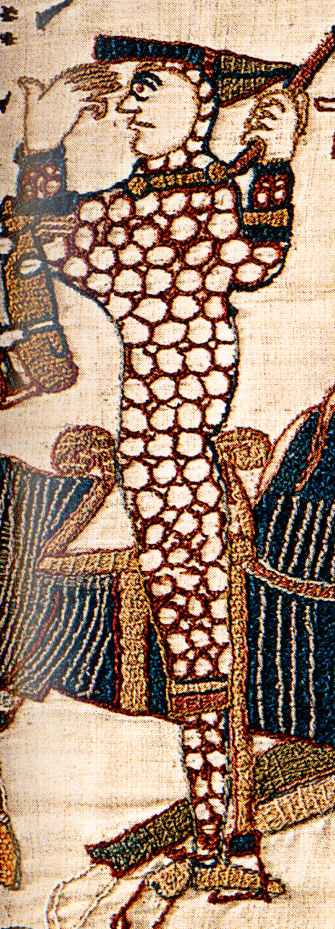
Apropos the Bayeux Tapestry the creators of this televisual travesty comprised of inaccuracy have ignored the evidence of the embroidery in one other significant area. This is a point missed by Prof. Turner. The Tapestry shows Harold Godwinson and the other leading Anglo-Saxons with long moustaches - possibly even waxed methinks - and Duke William and his companions as clean shaven. So what do the television make up department do? Yes, of course, they make King Harold clean-shaven and give William the Bastard a moustache that would not be out of place in an RAF drama from WWII. Mind you maybe in their view of history perhaps there were bi-planes in the skies over Sussex in 1066..


Saturday, 30 August 2025

“King and Conqueror”


Several friends have discussed with me the new television historical drama “King and Conqueror”. I have no wish to view what is manifestly inaccurate in terms of narrative, setting, costuming…you mention it  - everyone with any knowledge of the eleventh century can see glaring faults in it.

Earlier this year I noted some of these shortcomings in two posts in March and April, which can be seen, with the appropriate links, at How not to represent the Norman Conquest and Life in the Middle Ages - as it was and as it was n’t

The Daily Telegraph review is hardly favourable as can be seen here:
 

KING AND CONQUEROR REVIEW

The BBC's new Sunday night epic is more Monty Python than Game of Thrones


King & Conqueror, review by Ed Power:

The BBC’s new Sunday night epic is more Monty Python than Game of Thrones


King & Conqueror is a historical epic that, despite its starry cast, doesn’t feel particularly historical or epic


James Norton as Harold Godwinson and Indy Lewis as Margaret in King and Conqueror, a historical drama let down by atrocious dialogue 


King & Conqueror (BBC One) kicks off with the most fateful meet-cute in British history – the 1066 clash of kings between Harold Godwinson and William the Conqueror. But these two mortal foes have crossed paths already – as the series spells out when they hail each other mid-battle. “William!”, shouts Harold. “Harooold!”, responds William. It’s an unintentionally hilarious moment – rather than duelling monarchs, they sound like mates who know each other from five-a-side football. It isn’t the only time the viewer will be tempted to laugh out loud during this historical drama.

If Game of Thrones is the standard reference point for this sort of fare nowadays, the comparison that springs to mind watching King & Conquerer – which, after that opening, rewinds to the years leading up to Harold’s last stand in modern east Sussex – is Monty Python and the Holy Grail. All that is missing are peasants digging for dirt and John Cleese wearing a funny helmet.

It does at least have a duo of stellar leads. Sir Hunkalot James Norton commands the spotlight as a dashing Harold Godwinson. So dashing that it’s hard to work out how he’s going to lose England to the ghastly Normans. In the baddie corner, meanwhile, William is played with tremendous earnestness by Nikolaj Coster-Waldau, aka Jaime Lannister from, yes, Game of Thrones.


So dashing is James Norton as Harold Godwinson it’s hard to work out how he could lose control of EnglandCredit: BBC/CBS Studios/Lilja Jons

Jaime was a villain with a heart of gold. But initially, Coster-Waldau’s William comes over as a good bloke who wants the best for his underdog kingdom perched preciously on the French coast. A heroic halo similarly hangs over Norton’s Harold, busy prowling the borders of his father’s kingdom of Wessex, convinced the dastardly Mercians are up to no good.

King & Conquerer is written by Michael Robert Johnson, whose credits include Guy Ritchie’s fun Sherlock Holmes adaptation, and who has been upfront about prioritising drama over biographical fidelity in his latest project. As he told the BBC: “You can’t just dramatise the facts because the peaks and troughs of the emotions are never in the right place.”


Nikolaj Coster-Waldau’s William the Conqueror initially comes across as a well-intentioned underdog.


Historical accuracy indeed flies out the arrow-slit early on as a young William, in England for the coronation of Eddie Marsan’s Edward the Confessor in 1042, rescues Harold from bandits. The foes share an undeniable sizzle in their limited screen time together. Alas, they are cruelly betrayed by atrocious dialogue that swaps out the usual cod-Shakespeare for a disastrous attempt to bring 1066 bang up to date.

“Pull your head out of your arse, Harold!” declares the future King’s bad-boy brother, Sweyn (Elliot Cowan), early on. The various female characters, meanwhile, converse like 21st-century girl bosses parachuted into the Middle Ages. “I’m leaving England – I’m taking the children with me,” says Harold’s wife, Edith (Emily Beecham), as England’s Green and Pleasant Land is about to be washed in Saxon blood.


Elsewhere, there are groan-out-loud concessions to viewers who think Hastings is the aphorism-spouting cop from Line of Duty. “The Mercians crossed our border in violation of the peace agreement,” yells Harold in the first of eight episodes. He all but whips out a map and outlines the various kingdoms with a pointer.

Another misstep was surely the decision to film in Iceland, which is distractingly grim, dark and lacking in trees – and surely bears little resemblance to Harold’s England. Additionally, the budget doesn’t seem to have been the most massive either: 11th-century London is depicted as a single castle with a few cottages scattered about, while every other fortress looks identically lacklustre.


King & Conquerer’s best asset is its cast. Beecham and Clémence Poésy are convincingly gritty as Harold and William’s love interests. It’s got a great villainess, too, in Juliet Stevenson as Emma of Normandy, who plots to drive Harold and his dynasty out of Wessex and install her family from across the Channel as the protector of her son (fantastically hapless Marsan).

But the show never surmounts its massive spoiler problem – we all know how the tale finishes, and there aren’t enough surprises along the way to make the journey worthwhile. In the end, and despite a starry ensemble, King & Conqueror is a historical epic that doesn’t feel particularly historical and isn’t nearly as epic as the subject matter demands.


I have seen not a few online articles which to a greater or lesser extent slate the series for its inaccuracies and complete fabrications.

So on Sunday evenings find something better to do than watch this historical nonsense - sit and watch some paint dry. 

Better still read a decent history of the events of 1066.

My next post will reproduce an article from the Daily Telegraph, and written by an Oxford academic, which sets out the incredible number of inaccurate features in the series.

Tuesday, 3 September 2024

Recreating the ‘Mora’


Earlier this year I noted in a post that there is a French project to build a replica of King William I’s flagship, the ‘Mora’ , in his Conquest fleet from 1066 and to sail it to London to mark the millenary of his birth in 2027. My article with the link to the original story in the Daily Telegraph can be seen at Progress on recreating two historic ships

I found subsequently a more detailed account of the ship and the reconstruction plan in a 2022 Guardian article which can be seen at French team to build replica of William the Conqueror’s warship

The work on the new vessel is now advancing in a building site at Honfleur. This was was reported by The Connexion in French team build faithful replica of William the Conqueror’s warship

The article explains that the construction site can be visited to see eleventh century techniques faithfully followed and to learn more about the events of 1066. According to the article the current plan is to have the ship in the water in 2027, and actually crossing the Channel in 2030. 

Wikipedia has an account of the surprising amount that is known of the vessel at Mora (ship)

The History Jar has a short article, from 2016, which tries to strike a humorous note, about the ship at Matilda’s ship – the Mora but which much more importantly includes a link to the essay on The Freelance History Writer from 2014 about the meaning and possible significance of the name, which is referenced in the Wikipedia account. Although one might think that perhaps not all of the possibilities considered were in Duchess Matilda’s mind when she commissioned this handsome, and clearly, from its decoration, very special gift for Duke William they do indicate the range of references and concepts that hovered around the planning of the invasion.

We can I think be certain that the Duchess did not brake a bottle of champagne over the prow of her gift, because champagne had not been invented in 1066, but the ‘Mora’ is, I suppose, the first sea going vessel known to have associated from its very beginning with a royal lady.

I assume that this project is not a deeply plotted and belated response and attempt to undo Brexit with an invasion by M.Macron. Maybe ardent Brexiteers will be gathering when the new ‘Mora’ sets sail to repel invaders….


Friday, 20 March 2015

St Wulfram


Today is the feast of St Wulfram who died in 703. He was Archbishop of Sens, and according to legend at least, a missionary to the Frisians. There is an online account of his life and cult at Wulfram_of_Sens

There are two old English churches dedicated to him, at Ovingdean in Sussex and at Grantham in Lincolnshire. As is explained in the article linked to above one of the saint's arms appears to have been given by King William the Conqueror to Abbot Ingulph of Croyland, and then, following a fire at the abbey was preserved at Grantham. It appears to have been venerated there until the reformation in the sixteenth century.

There is an account of the building and its development at St Wulfram's Church, Grantham

The church of Grantham was given to Salisbury Cathedral and supported from the revenue it yielded two prebends, those of Grantham Australis and Grantham Borealis.

The article linked to about the church speculates that there was Salisbury influence in the spire. This is possible, indeed quite probable, but Lincolnshire is very much spire country, so maybe too much should not be made of the Salisbury link.

Saint Wulfram's church

The Church of St Wulfram, Grantham

Image: genuki.org.uk/copyright Ron Cole 


It is certainly true that in a county of spectacular spires Grantham is one of the finest - whether it is the finest in the country, as Simon Jenkins asserts, is perhaps open to discussion, but it is serious contender.
The rest of the church is fine, but as it lacks a clerestory the overall impression is of a somewhat sombre and long interior, despite the large fourteenth and fifteenth century windows visible in the photograph. A church very well worth visiting in a county full of wonderful but surprisingly still little known medieval churches.


Sunday, 9 September 2012

William the Conqueror


Today is the 925th anniversary of the death in 1087 at the priory of St Gervais outside Rouen of King William I. In case you need a reminder or a summary of the life of this remarkable man there is one here.  The life of him by Prof. David Bates in the Oxford DNB can be read here.
He was a tough, at times ruthless, ruler, but disciplined and energetic - how else would he have achieved success in 1066 - and proved a highly capable ruler, willing to learn and adapt. However one interprets the Norman Conquest it is pivotal to English history and that of the British isles, and William is pivotal the events of invasion, conquest and government in the two decades following. His legacy is remarkable by any standards. I wrote some reflections upon it last year in my post 1066 and All That to which I would refer readers together with its links.
From what we can deduce of his appearance King William was an impressive figure. On the basis of the size of his one surviving thigh bone he was six foot or so in height, and in giving his eldest son Robert the nickname Curthose appears to have mocked him for his lack of height - Robert may have taken after his mother Queen Matilda, whose skeleton reveals her to have been very slight in build. In his later years he put on weight - a contributary cause to his death in 1087, but for much of his life he must have maintained very considerable fitness as a warrior and as a keen follower of the chase. Given his ancestry he may well have appeared more Scandinavian than French, and certainly one of his sons, King William II, was famously red haired, although King Henry I had black or dark hair. If the Bayeux tapestry is to be believed - and it is very detailed and near contemporary - William was brown haired and clean-shaven.


Friday, 14 October 2011

1066 and All That


In August I was having dinner with two friends, one of whom is a teacher in his native Germany and he talked about a plan to bring his pupils on a summer school to Hastings next year. Perhaps prompted by the memory of the old postage franking from Hastings on book catalogues describing the town as "Hastings - popular with visitors since 1066" complete with a smiling Norman helmeted face against a conventional representation of the sun my mind turned to a new hermeneutic of interpretation of the Norman Conquest. In this it is to be understood as a summer school - well, early autumn - that got a bit out of hand. Lanfranc and Anselm as school masters had stayed back in Normandy and left it to the head-boy to take the party unsupervised over the Channel, and, well, he did rather more than they had planned.*

Reflecting on this conceit it occurred to me that there was more, and something much more serious, that I could say about the Battle of Hastings today, its 945th anniversary.

Even allowing for the dangers implicit in a post hoc ergo propter hoc argument no event in the last thousand years has been more important to the life of England - and hence the English speaking world - that the Norman Conquest. the only rival is the drawn out process of the reformation. W.C.Sellar and R.J.Yeatman, those influential Oriel historians and authors of what Sir Michael Howard, formerly Regius Professor of Modern History in the University one described, to great applause in Oriel Hall at a History appeal dinner, as "the greatest work of historiography written in the twentieth century" 1066 and All That, published in 1930, got it right. It is a uniquely memorable event - not even 55BC comes close.

I am always inclined to be irriated, inter alia, by those who dismiss medieval history as irrelevant, and to ignore, or try to ignore, the impact of what happened in 1066 and what flowed from it really invites the most severe of censures (even if I do restrian myself when in conversation).

The life of the Conqueror by David Bates in the Oxford DNB can be read here and Prof. Bates writes that "he possessed an energy and an instinctive political intelligence which still seem awesome across a gap of nine hundred years." To stand before the tomb which encloses all that remains of the King-Duke - a single thigh bone - is, in my experience, an awe-inspring experience in the grandeur of St Etienne Caen.


photo

The modern tomb of King William I in the Abbey of St Etienne Caen.
The original tomb was destroyed by the Hugenots in 1562.

Image: yurigetsradical on Flickr


The invasion of 1066 was not the first in the eleventh century, nor was it to be the last successful one of this country - 1326, 1399, 1461, 1485, 1688 all come to mind. Given that William was of Viking descent (and it the Bayeux Tapestry is to believed, of arguably Scandinavian appearance ) he invites all the more comparison with King Swein and, more importantly, his son King Cnut of Denmark and their invasions of 1013-14 and 1016. Indeed without their intervention the events of 1066 would probably have never occurred - by displacing King Ethelred II and his family, and later the death of King Edmund II, the exile of the West Saxon dynasty and the life of King Edward the Confessor all helped create the siuation Duke William seized in 1066. As Donald Matthew argues in his book on the Conquest the underlying question for the English in the eleventh century was not if, but by whom, their country would be invaded and ruled.

The chattering classes of Iseldone or Isendone [as Islington is termed in Domesday Book] in 1066 (can one envisage them? Well if not, try) might have thought William was just another invader who would come and ultimately go, but he did not. With the events of 1066, whether it was obvious at the time or not, the centre of political and cultural gravity shifted decisively.


http://www.lucasbrouwers.nl/blog/wp-content/uploads/2010/10/william-the-conqueror.jpg

The statue of the Conqueror in his birthplace Falaise

Image:lucasbrouwers.nl

One simple measure of the impact of King William and his conquest can be seen in respect of the institution that above all embodies the historical and constitutional link accross the centuries - the Monarchy. The fact that the later medieval habit of numbering and listing Kings "after the Conquest" led eventually to that phrase being forgotten - thus of the eleven Kings Edward we only number those from I to VIII, those after the Conquest. What one might idly reflect would happen were we to have King Edmund III or King Alfred II or King Edgar II? (I think we may safely assume that Ethelread and the other Ethel- varients are consigned to the past... )

Although the names Edward and Edmund were revived in honour of the Anglo-Saxon royal patrons and intercessors St Edward the Confessor and St Edmund by King Henry III, royal names have tended to reflect the effects of the Norman Conquest.

So the Duke of Cambridge who is, through both Queen and Prince Philip a 29 times great- grandson ( and a 28 times one through Queen Mary) of the Conqueror, and also descended from him through Diana Princess of Wales, bears the baptismal names William Arthur Philip Louis - and not, for example, Cnut Swein Harald Olav.

If William might be an obvious link, then Arthur reflects in part that rediscovery by Anglo-Norman writers after 1066 of the British legends and their adaptation to twelfth century cultural conditions. Philip first became used in the West from the naming of King Philip I of France (1060-1108), and his name reflected Eastern Orthodox devotion to the Apostle through the King's mother Anna of Kiev. Louis originates as the Frankish name of King Clovis, but it appears to be with the French King Louis VI (1108-1137) that it too became widely used. Not only do they indicate French influence, but they were to become two of the most widely used names amongst the Capetians and their descendents.


* One regular reader may recall the partial inspiration for this notion.