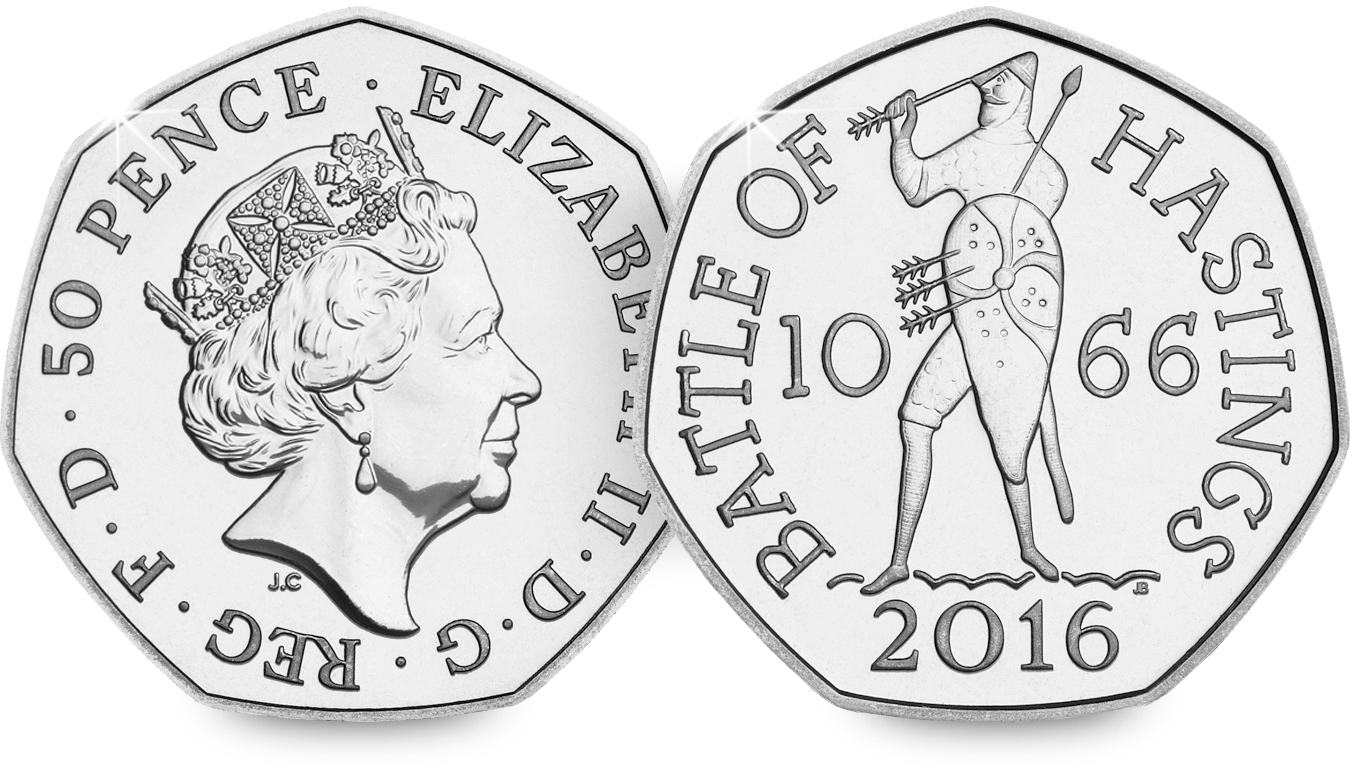
In August I was having dinner with two friends, one of whom is a teacher in his native Germany and he talked about a plan to bring his pupils on a summer school to Hastings next year. Perhaps prompted by the memory of the old postage franking from Hastings on book catalogues describing the town as "Hastings - popular with visitors since 1066" complete with a smiling Norman helmeted face against a conventional representation of the sun my mind turned to a new hermeneutic of interpretation of the Norman Conquest. In this it is to be understood as a summer school - well, early autumn - that got a bit out of hand. Lanfranc and Anselm as school masters had stayed back in Normandy and left it to the head-boy to take the party unsupervised over the Channel, and, well, he did rather more than they had planned.*
Reflecting on this conceit it occurred to me that there was more, and something much more serious, that I could say about the Battle of Hastings today, its 945th anniversary.
Even allowing for the dangers implicit in a
post hoc ergo propter hoc argument no event in the last thousand years has been more important to the life of England - and hence the English speaking world - that the Norman Conquest. the only rival is the drawn out process of the reformation. W.C.Sellar and R.J.Yeatman, those influential Oriel historians and authors of what Sir Michael Howard, formerly Regius Professor of Modern History in the University one described, to great applause in Oriel Hall at a History appeal dinner, as "the greatest work of historiography written in the twentieth century"
1066 and All That, published in 1930, got it right. It is a uniquely memorable event - not even 55BC comes close.
I am always inclined to be irriated,
inter alia, by those who dismiss medieval history as irrelevant, and to ignore, or try to ignore, the impact of what happened in 1066 and what flowed from it really invites the most severe of censures (even if I do restrian myself when in conversation).
The life of the Conqueror by David Bates in the
Oxford DNB can be read
here and Prof. Bates writes that "he possessed an energy and an instinctive political intelligence which still seem awesome across a gap of nine hundred years." To stand before the tomb which encloses all that remains of the King-Duke - a single thigh bone - is, in my experience, an awe-inspring experience in the grandeur of St Etienne Caen.

The modern tomb of King William I in the Abbey of St Etienne Caen.
The original tomb was destroyed by the Hugenots in 1562.
Image: yurigetsradical on Flickr
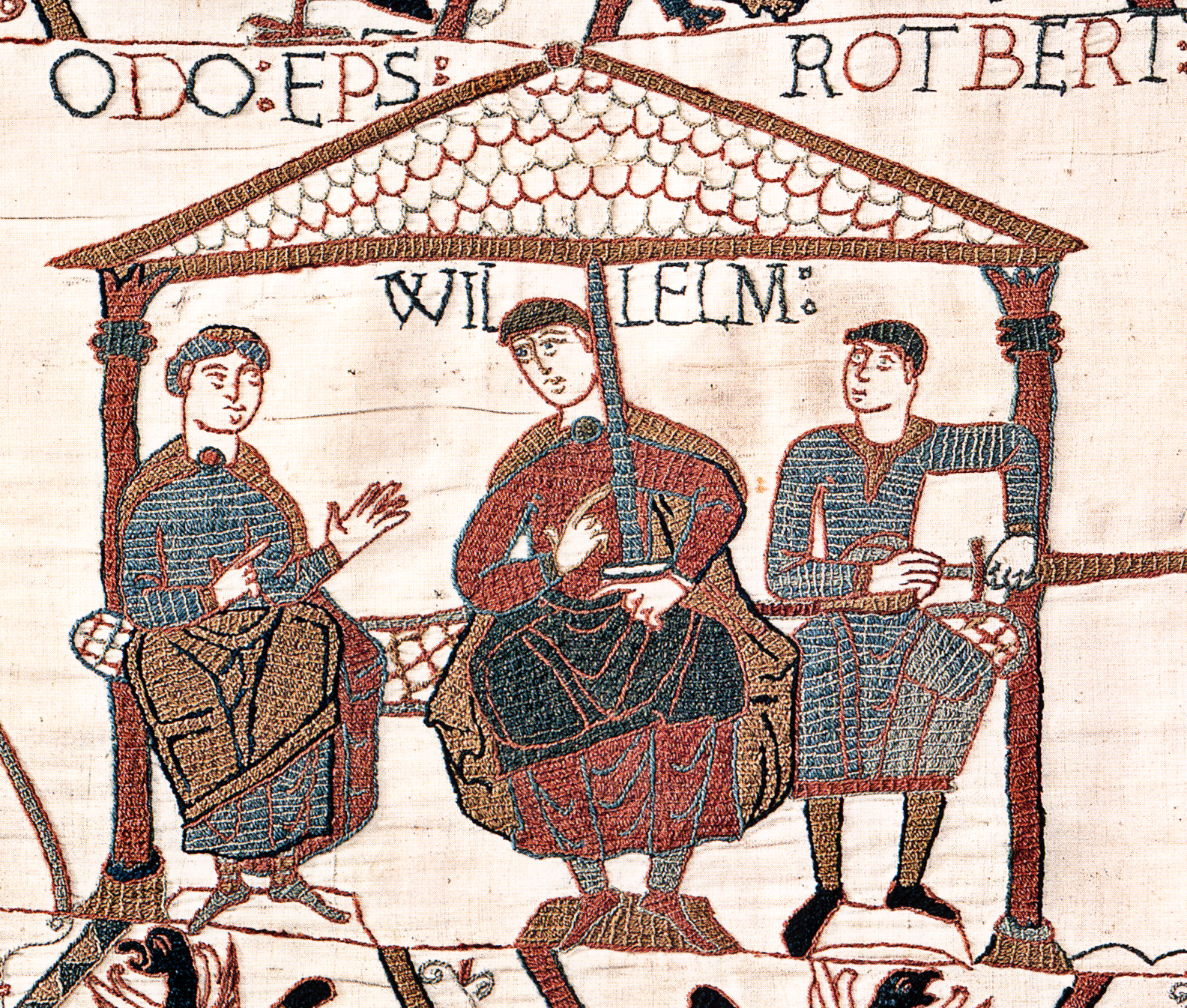
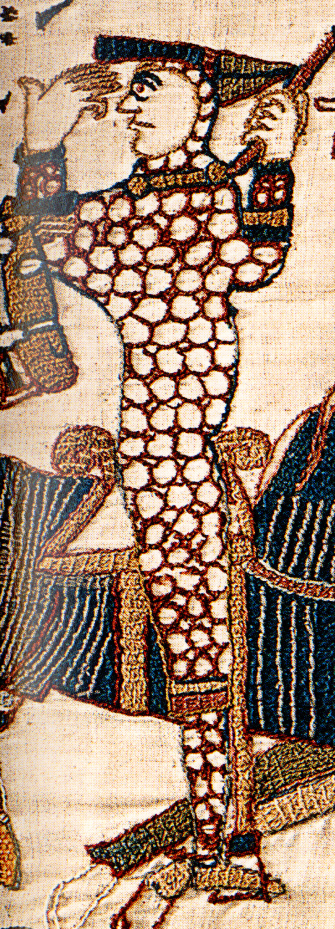
The invasion of 1066 was not the first in the eleventh century, nor was it to be the last successful one of this country - 1326, 1399, 1461, 1485, 1688 all come to mind. Given that William was of Viking descent (and it the Bayeux Tapestry is to believed, of arguably Scandinavian appearance ) he invites all the more comparison with King Swein and, more importantly, his son King Cnut of Denmark and their invasions of 1013-14 and 1016. Indeed without their intervention the events of 1066 would probably have never occurred - by displacing King Ethelred II and his family, and later the death of King Edmund II, the exile of the West Saxon dynasty and the life of King Edward the Confessor all helped create the siuation Duke William seized in 1066. As Donald Matthew argues in his book on the Conquest the underlying question for the English in the eleventh century was not if, but by whom, their country would be invaded and ruled.
The chattering classes of Iseldone or Isendone [as Islington is termed in Domesday Book] in 1066 (can one envisage them? Well if not,
try) might have thought William was just another invader who would come and ultimately go, but he did not. With the events of 1066, whether it was obvious at the time or not, the centre of political and cultural gravity shifted decisively.

The statue of the Conqueror in his birthplace Falaise
Image:lucasbrouwers.nl
One simple measure of the impact of King William and his conquest can be seen in respect of the institution that above all embodies the historical and constitutional link accross the centuries - the Monarchy. The fact that the later medieval habit of numbering and listing Kings "after the Conquest" led eventually to that phrase being forgotten - thus of the eleven Kings Edward we only number those from I to VIII, those after the Conquest. What one might idly reflect would happen were we to have King Edmund III or King Alfred II or King Edgar II? (I think we may safely assume that Ethelread and the other Ethel- varients are consigned to the past... )
Although the names Edward and Edmund were revived in honour of the Anglo-Saxon royal patrons and intercessors St Edward the Confessor and St Edmund by King Henry III, royal names have tended to reflect the effects of the Norman Conquest.
So the Duke of Cambridge who is, through both Queen and Prince Philip a 29 times great- grandson ( and a 28 times one through Queen Mary) of the Conqueror, and also descended from him through Diana Princess of Wales, bears the baptismal names William Arthur Philip Louis - and not, for example, Cnut Swein Harald Olav.
If William might be an obvious link, then Arthur reflects in part that rediscovery by Anglo-Norman writers after 1066 of the British legends and their adaptation to twelfth century cultural conditions. Philip first became used in the West from the naming of King Philip I of France (1060-1108), and his name reflected Eastern Orthodox devotion to the Apostle through the King's mother Anna of Kiev. Louis originates as the Frankish name of King Clovis, but it appears to be with the French King Louis VI (1108-1137) that it too became widely used. Not only do they indicate French influence, but they were to become two of the most widely used names amongst the Capetians and their descendents.
* One regular reader may recall the partial inspiration for this notion.