Once I was a clever boy learning the arts of Oxford... is a quotation from the verses written by Bishop Richard Fleming (c.1385-1431) for his tomb in Lincoln Cathedral. Fleming, the founder of Lincoln College in Oxford, is the subject of my research for a D. Phil., and, like me, a son of the West Riding. I have remarked in the past that I have a deeply meaningful on-going relationship with a dead fifteenth century bishop... it was Fleming who, in effect, enabled me to come to Oxford and to learn its arts, and for that I am immensely grateful.


Showing posts with label King James III and VIII. Show all posts

Saturday, 9 January 2016

Jacobite commemoration


Yesterday was the 250th anniversary of the funeral of the Stuart claimant King James III and VIII in St Peter's in Rome, and to commemorate the events of his death and burial H.M. Ambassador to the Holy See laid a wreath at his tomb. The ceremony, which was ecumenical in spirit, is described by the Ambassador on his blog, and I am very grateful to the friend who forwarded the link to it to me. The post, together with a photograph of the wreath laying, can be seen at
http://blogs.fco.gov.uk/nigelbaker/2016/01/08/history-and-healing-remembering-the-stuarts/

The Special Correspondent also sent me a Jacobite link yesterday, and I am similarly grateful to him. In my post about the death of King James III and VIII I quoted the fact that from January 14th 1766 the Papacy recognised King George III as the British monarch. The Holy See never extended to the cliamant King Charles III and King Henry IX the formal recognition as monarch it had extended to their father. However it was not, apparently, until 1792 that that implicit recognition was given formal and explicit form in a Papal brief, and was responded to by the claimant who styled himself in Rome 'Cardinal Henry called Duke of York' (i.e. saying by implication  that despite being called Duke of York he was King incognito ) in a protest against Pope Pius VI's decision. It can be read at http://www.jacobite.ca/documents/17921104.htm


http://ichef.bbci.co.uk/arts/yourpaintings/images/paintings/blmu/large/nsc_blmu_t9110_large.jpg

'Cardinal Henry called Duke of York'
A portrait at Blairs Museum, Aberdeen

Image:bbc.co.uk 

Friday, 1 January 2016

King James III and VIII


Today is the 250th anniversary of the death in Rome in 1766 of the Jacobite claimant to the throne King James III and VIII.

He given full regal honours for his funeral and burial in St Peters Basilica, having enjoyed Papal recognition as King of Great Britain and Ireland, but from January 14th of that year the Papacy  to the chagrin of both of his sons recognised King George III as being the British monarch.

I wrote about King James III and VIII in a post in 2013 for the 325th anniversary of his birth in a piece which can be seen at The birth of King James III and VIII

An important part in keeping the image alive amongst adherents was played by artists for whom the claimant King and his sons sat.


The claimant King James as a teenager

Francois du Troy

Image: magnoliabox.com

https://upload.wikimedia.org/wikipedia/commons/c/c9/Prince_James_Francis_Edward_Stuart_by_Alexis_Simon_Belle.jpg

Monarch in waiting in 1712

Alexis Simon Belle

Image: Wikimedia

James can still lay claim to being the longest reigning British monarch, even if in exile. His reign of sixty four and a quarter years will be exceeded on June 3 ( if my quick calculation is right ) by Queen Elizabeth II.

Had he given up his Catholic faith he might well have succeeded his half-sister Queen Anne in 1714, and indeed the idea of his being adopted as heir to the throne by King William III had been suggested by King Louis XIV. The sticking point for both sides was James' Catholicism.

He might well have proved a good monarch, and one might add that he was not that dissimilar in some ways to King George I and King George II, even if he had a less turbulent or colourful private life - though his Queen Clementina left him at one point to live in a convent. After 1745 he had poor relations with his eldest son, very much like the Hanoverians.

His pietism was something he had in common in essence with reigning Catholic contemporaries such as the Empress Maria Theresa and her son the Emperor Joseph II as well as Danish and Prussian contemporary monarchs.

His stated intention if in power was to allow freedom of religion, and ask that his subjects would grant him the same. That was in reality a difficult request - even the most recent legislation still forbids the British monarch himself or herself from being a Roman Catholic because of the Supreme Governorship of the Church of England. Given the realities [sic] of Synodical Government it is difficult to see why that matters at all. However it does point to the question as to whether any eighteenth century monarchy could envisage much in the way of plurality of denominations before the 1780s - as the Emperor Joseph II and his brother-in-law King Louis XVI found they got precious little thanks for liberalisng measures in that decade.

How realistic were the chances of a Jacobite or Stuart restoration? This is difficult to answer, and would have depended upon the cirumstances. The Duke of Berwick, illegitimate son of King James II appears to have been more realistic that many others in his assessment of his half-brother's chances, and favoured, had it been possible, a coup d'etat on the death of Queen Anne.

With successive defeats and consequent executions the numbers and confidence of Jacobites inevitably declined. What were the chances for the '08, the'15, the'19, the '45, or indeed of the'59 had it got that far off the ground. They were all dependent on French or Spanish support, the Stuart claim being a useful distraction for a continental power to use when at war with Hanoverian Britain.

In some places, not least Oxford, but also the western Midland counties, parts of the north and in Scotland, Jacobite sympathies remained strong with or alongside Toryism and High Church or Non-Juring Anglican, Scottish Episcopalians and Roman Catholics. As late as the 1770s Dr Johnson could assert that given the chance and opportunity the country would welcome back the Stuarts.

Romantic Jacobitism, which still has an appeal today, and has included not a few people over the years - including at times Queen Victoria herself - may in part have been the curse of the movement, in that drinking deep in the wee small hours to the King over the Water did ( and does) little to bring him back.

I have seen the argument that the extent of the threat posed by the Jacobite cause to the 1689 Settlement and the Hanoverians was talked up by Walpole to maintain his position as chief minister. I am not sufficiently informed as to pronouncing on this, but I can see how the fear of Popery and Absolutism - however ill-founded - was easily exploited.

Once in exile from an island realm the sheer physical difficulty of getting back increased in time as the population settled don to rule by, or in the name of, the Hanoverians.


https://upload.wikimedia.org/wikipedia/commons/thumb/3/34/Prince_James_Francis_Edward_Stuart_by_Louis_Gabriel_Blanchet.jpg/769px-Prince_James_Francis_Edward_Stuart_by_Louis_Gabriel_Blanchet.jpg

The dream of Kingship

Louis Gabriel Blanchet 1741

Image: Wikimedia

Old Mr Misfortune, as he was known to British agents in Rome, spent his last years as a distinguished figure, but one who was estranged from his son and heir, a devout widower who doubtless to many appeared a link to an ever receding world.


His monument in St Peter's and his reburial there together with his sons in 1939 were paid for respectively by King George IV and King George VI, rather as Queen Victoria commemorated King James II at St Germain. A case of keeping things in the family.


Tuesday, 22 December 2015

King James VIII lands at Peterhead


Three hundred years ago, on December 22nd 1715, there arrived at Peterhead in Scotland, with the hope of leading an army to his successful installation on the throne, the Stuart claimant King James III and VIII.

Portrait of James Francis Edward Stuart (1688-1766), Alexis Simeon Belle, Follower of

The Jacobite King James III and VIII 
A portrait of c. 1717

Image:historicalportraits.com


An eighteenth century engraving of the landing at Peterhead

Image: Wikipedia


Originally the plan had been to land at Montrose, but the ship sailed north a avoid a vessel there and when the claimant arrived at Peterhead there were no troops to meet him. Unlike the engraving reproduced above James was so ill with seasickness that the ship's captain had to carry him ashore.

By the time he arrived the critical moment in the chances for the success of the rising had already passed, and the coronation as King of Scots on January 23rd at Scone never took place, and in February 1716 he was advised to return to the continent so as to safeguard his person.

On a seasonable Jacobite link it is often said that "O Come, All ye Faithful" originated as a Jacobite anthem. The origins of the hymn and its Jacobite associations are discussed in the online account at

O Come, All ye Faithful 


Tuesday, 19 May 2015

Conference on the Stuarts in Exile - June 11th


I was alerted by an advertisement in the latest edition of the Birmingham Archdiocesan newspaper Catholic Today to this forthcoming conference at Oscott College. It promises to be a very interesting day:

Nationality, Religion and Music:  the Stuarts in exile

Thursday 11th June 2015


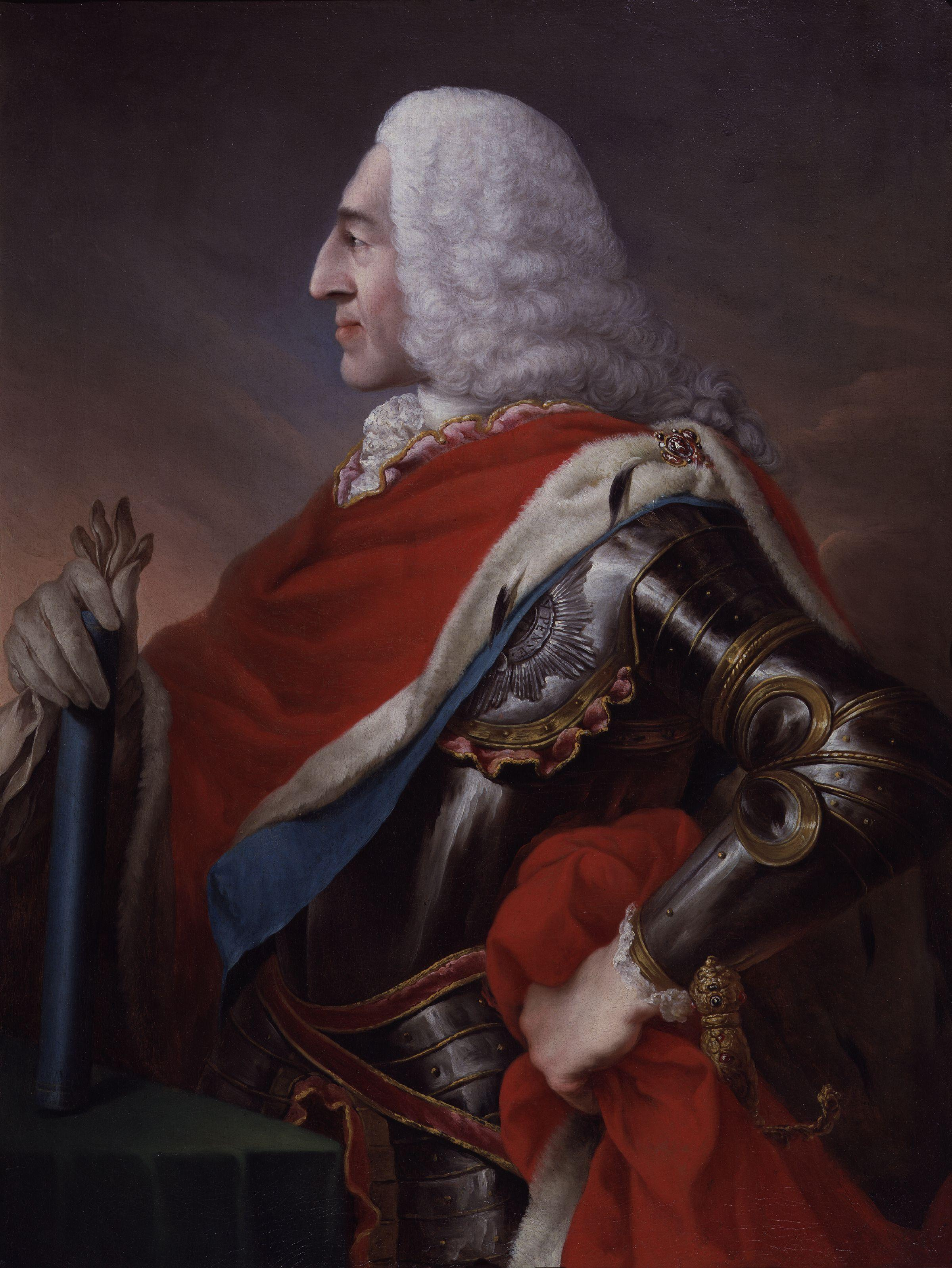
Cardinal York - King Henry IX

10.30 Arrivals and coffee
11.00 – 12.30 Lecture: Dr Gabriel Glickman, University of Warwick, author of The English Catholic Community 1688-1745 :

               Jacobitism and Catholics in the Three British Kingdoms


12.45 Lunch
Special Exhibition open. College chapel and museum open to visitors.
 
2.00 – 3.30 Lecture: Dr Edward Corp, University of Toulouse, author of The Stuarts in Italy 1719-66: a Royal Court in permanent exile, and other works on the exiled Stuarts:

 
      Religion, Nationality and Music at the exiled Stuart Courts


3.30 – 4.00 Tea 

 
4.30-5.30 Abbot Geoffrey Scott (Douai Abbey), co-editor of Catholic Gentry in English Society: the Throckmortons of Coughton, and author of Gothic Rage Undone: English Monks in the Age of Enlightenment:


         Illustrated Lecture: ‘Stuart images and a Chapel in exile’ (the private chapel of Queen Maria Clementina in Rome)


6.00 Buffet Supper
 
7.30  Concert by Cappella Fede and Harmonia Sacra directed by Peter Leech:


     The Cardinal King: rediscovered music composed for Henry Benedict Stuart in Rome 1740-90

Various booking packages available for the day and/or evening. For all further information and bookings, please contact Mrs Maggie Wilson.

Tel: 0121 321 5026 
Email: maggie.wilson@oscott.org                                                                                                                                                        


Sunday, 3 August 2014

Jacobite Heraldry


Thanks to the friend who sent me the original post about Fr Elvins and the former Slains Pursuivant I republished earlier I can now also give the link to the splendid display of the heraldic ancestry of the Jacobite claimants King Charles III and King Henry IX and I. This was commissioned by Peter Drummond Murray, and as a Scots Herald, not surpringly, he displays the Royal Arms in their Scottish form rather than the English version. The display can be seen here.


Monday, 10 June 2013

The birth of King James III and VIII


Today is the 325th anniversary of the birth in 1688 of Prince James Francis Edward, son of King James II and VII and Queen Mary of Modena, the Prince of Wales whose birth was to lead to the overthrow of his father in the late autumn of that year. Despite scurrilous attempts to claim that he was a changeling as he grew the physical resemblance to both his parents became ever more apparent.


http://25.media.tumblr.com/tumblr_m3up59iGsz1qbohcko1_500.jpg

The young Prince James
Nicholas Lagilliere

Image: thestuartkings.tumblr.com

He succeeded his father as the de jure King James III and VIII in 1701, and died on January 1st 1766 - thus claiming the crown longer than the reign of Queen Victoria.

There is an online life of him here. Edward Gregg's not especially sympathetic biography from the Oxford DNB is here.

His life was spent almost entirely in exile, a life of genteel and pious frugality, indeed a life noted for its piety derived from both of his parents, in St Germain and the fringes of the French court, Avignon and the Palazzo Muti in Rome. It was an unhappy life much of the time, waiting for a restoration that never happened, and with an unhappy marriage and estrangement from his elder son. Nonetheless a not inconsiderable number of impressive portraits were commissioned from painters, presumably in response to demand as well as the need to publicise his claims.

Thus he appears as the appealing and romantic young claimant to the throne in this portrait by Jean-Francois Detroy now at Fairfax House in York:

http://ichef.bbci.co.uk/arts/yourpaintings/images/paintings/yfh/large/ny_yfh_ct1989_339_large.jpg

Image:BBC

He appears as a dashing but serious young man in 1712

https://upload.wikimedia.org/wikipedia/commons/thumb/c/c9/Prince_James_Francis_Edward_Stuart_by_Alexis_Simon_Belle.jpg/220px-Prince_James_Francis_Edward_Stuart_by_Alexis_Simon_Belle.jpg

Image:Wikipedia

and as a monarch in waiting in Alexis-Simon Belle's portrait of 1712-14 now in the British Embassy in Paris:

http://www.gac.culture.gov.uk/images/standard/14900.jpg

Image: gac.culture,.gov.uk

Louis Gabriel Blanchet's portrait of 1741 now in the National Portrait Gallery suggests a majestic presence, even if the reality was somewhat different: 


File:Prince James Francis Edward Stuart by Louis Gabriel Blanchet.jpg
 
Image:Wikipedia
 

In some respects he was  not that unlike King George I and King George II - not least in his estrangement from his heir. In his later years he was referred to by Hanoverian agents as Old Mr Melancholy. Had he been willing to give up his Catholicism then his life might have been very different, and there would no doubt, had he done so by that time, have been no Hanoverian succession in 1714. His own view was that he was happy to offered tolerance to his subjects, but sought it in return for his own deeply held beliefs

Loyal as I am to Her Majesty I am sure that had I been around in years after 1688 I would have been a Jacobite. Had I been a Catholic then I can see myself clearly as a Jacobite and had I been an Anglican then Non-Juring would have been the option.

I cannot really be logical and say when I would have stopped being Jacobite - I might well have found an excuse with the death of Cardinal York/ King Henry IX in 1807, but then again I might not - I suspect it was with the long continuance of Hanoverian rule that people came to accept it. I do not know if anyone has worked out indicators of support for the two lines or dynasties at anything like the popular level in 1688-9, 1701, 1714, 1715, 1745 or whenever. In 1745 there was certainly a popular welcome for Prince Charles Edward as he marched south, and panic in London at his approach.

I am not alone in my a
mbivalence - King George IV made a contribution to Canova's tomb for the exiled Stuarts in St Peter's, Queen Victoria erected a memorial to King James II and VII in the church at St Germain, and was to be heard, certainly when in Scotland expressing sympathies for Charles Edward and the events of the '45, and in 1939 it is said that King George VI discreetly paid the costs of the new Stuart tomb when their bodies were moved to accommodate the burial of Pope Piux XI. Today the Queen's website has this to say today about the man born to be King 325 years ago.
.

Thursday, 12 May 2011

Long may she reign

Today HM The Queen becomes the second longest reigning monarch in British history, as outlined in these articles in the Daily Telegraph, one a news story The Queen to become second-longest reigning monarch and the other The Queen's longest reigning predecessors gives statistics for her predecessors.

She has now overtaken King George III in the length of time she has served as monarch, and only Queen Victoria has reigned longer.

Jacobites can of course advance the claim of King James III and VIII, who would have reigned almost a year longer than Queen Victoria, but even that achievement of longevity must be in Her Majesty's sights.

Long may she reign!