Once I was a clever boy learning the arts of Oxford... is a quotation from the verses written by Bishop Richard Fleming (c.1385-1431) for his tomb in Lincoln Cathedral. Fleming, the founder of Lincoln College in Oxford, is the subject of my research for a D. Phil., and, like me, a son of the West Riding. I have remarked in the past that I have a deeply meaningful on-going relationship with a dead fifteenth century bishop... it was Fleming who, in effect, enabled me to come to Oxford and to learn its arts, and for that I am immensely grateful.


Showing posts with label King Edward the Confessor. Show all posts

Wednesday, 10 September 2025

Further historical criticism of “King and Conqueror”


The History Extra website has further critique of the basic accuracy of the narrative in “King and Conqueror”, and in particular in respect of Queen Emma, and her death on March 6th 1052.

With some difficulty I have cut and pasted the article:

King and Conqueror’s most gruesome death should never have happened and would be “totally out of character”

Historian Tom Licence takes issue with one of King and Conqueror’s most egregious historical liberties

Illustration of Emma of Normandy and two of her children
Published: August 31, 2025 at 8:58 PM

Bringing the Norman Conquest of 1066 to the small screen, King and Conqueror plays fast and loose with real history to tell the story of how Duke William of Normandy became King William I of England.

The eight-part drama begins with the coronation of King Edward the Confessor and ends exactly where you think it would, with King Harold Godwinson, the last crowned Anglo-Saxon king of England, dead on the field at Hastings with an arrow in his eye.

That’s a span of more than 20 years – and as such there is a lot of editing of the historical record going on.

Some important characters are missing, and not just Edgar Aetheling, the claimant many overlook in the 1066 story. Events happen out of order. And a lot of real historical figures die in times, places and ways that raise eyebrows.

But one particular plot point is so shocking, so unexpected, that we put it to medieval historian Tom Licence to get his reaction. And it’s such a massive spoiler that we’ve hidden it after these two images of the show's leads, James Norton as Harold and Nikolaj Coster-Waldau as William the Conqueror.

Edward the Confessor is portrayed in King and Conqueror as a weak and ineffectual man, touched even – he believes he hears the voice of God whispering to him. 

The Clever Boy will interject here that asking Edward was canonised a century later he might well have heard the Voice of the Almighty. So much for modern speculators attitudes.

If there is anyone whispering in his ear, it is his mother, Emma of Normandy.

The real Emma was queen consort to both Aethelred the Unready and Cnut the Great, the only woman to have married two English kings. Two of her sons were also kings, first Harthacnut, and then Edward the Confessor. For her whole life, she had been an able political player.

In King and Conqueror, she is vicious and manipulative, a woman who dominates Edward and goads him for his failures. She is the power behind his throne.

When Edward finally snaps, he does so totally and utterly. In a moment of red mist worthy of Game of Thrones, he beats his mother to death with his crown.

Did Edward the Confessor beat his mother Emma of Normandy to death with this crown?

“Beating someone to death with his own crown? I mean, no, I don't think Edward did that, not to his mother.”

That’s the view of historian Tom Licence, who was speaking to us while recording an episode of the HistoryExtra podcast on Edward’s life.

“We can't be absolutely certain, but that would be totally out of character and wouldn't fit with my understanding of their of their relationship”

That’s the view of historian Tom Licence, who was speaking to us while recording an episode of the HistoryExtra podcast on Edward’s life.

“We can't be absolutely certain, but that would be totally out of character and wouldn't fit with my understanding of their relationship.”

What was Edward’s character? Elsewhere on HistoryExtra, Licence writes that though Edward had a holier-than-thou reputation (he is known as ‘the Confessor’ for a reason) he was a king who was “strong, glorious, feared by his enemies”.

“Edward's way of punishing people was to take away their assets or to put them into exile. He hit them in the pocket, not over the head,” says Licence.

“He was not that sort of ruler. I could imagine Cnut the Great doing that. I could definitely imagine Aethelred the Unready doing that.”

Aethelred the Unready was Edward’s father, and the man behind the St Brice’s Day Massacre of 1002 – the attempted slaughter of all the Danes living within his lands as revenge against the Viking incursions. Cnut was the king who claimed the throne through during the Danish Conquest of 1016, which is why Edward spent his youth in exile in Normandy.

What happened to the real Emma of Normandy?

There’s no record that the real Emma of Normandy was murdered, by her son or otherwise – but she was removed from the royal court.

Emma had all the cards before Edward becomes king, but there's a very clear turnaround, says Licence.

“As soon as Edward gets on the throne, Emma's power is broken. He takes away her wealth, he deposes her favourite bishop, her lands are removed from her and she's sent, pretty much into retirement to Winchester, where she lives out her days”

Emma died in Winchester of an unknown cause in 1052, almost a decade after she was sent there. “There's a good 10 years where she's doing nothing and has no influence whatsoever,” Licence points out.

But there may have been another woman guiding Edward after Emma was removed from court – his wife, who happened to be Harold Godwinson’s sister.

“The way I see it, Edith of Wessex, takes over [Emma of Normandy’s mantle]. Emma ceases to appear on the charters. Edith appears, and she is the one who's there at his councils and helping him make his decisions.”

It was Edith who commissioned a tract called The Life of King Edward, which is one of the prevailing sources for our view of Edward as a pious ruler.

Edith, whom Edward marries in 1045, is the person who's orchestrating his theatricality,” says Licence.

“She embroiders his garments, she commissions goldsmiths to make all the jewels that he wears, and she ensures that when he walks on stage in front of the public … he looks like a saint, like some patriarch from the Old Testament, like someone almost divine.”

What was Edward’s relationship like with his mother?

While the real Emma and Edward may not have been at each other’s throats, historian Tom Licence characterises their relationship as being distant and predominantly political.

“Today we might think of this in terms of parental neglect or a mother not looking after her son as she should,” says Licence.The 

“And what Edward felt was that all through those years in exile she hadn't done enough to support him, to promote his claim to the throne, to help him come back to England.”

What Emma had done instead was marry Cnut – and then had children with him.

“He had become king in Edward's place, so you could just imagine how Edward would be feeling, how his mother had maybe betrayed him and allowed her new son to replace him – almost like a cuckoo in the nest.”

Nonetheless, Licence doesn’t think that sense of betrayal would manifest into physical violence. He does, however, have a theory as to why Edward was depicted this way in King and Conqueror.

“A previous biographer who didn't like Edward very much wrote that he was the sort of man who probably beat his wife. I don't think that's justified, or that we have any warrant for that.

“And beating to death Emma, with a crown? No, no. Just, no.”


 Rather than using photographs from “King and Conqueror” I have added here an eleventh century depiction of Queen Emma

Saturday, 24 June 2017

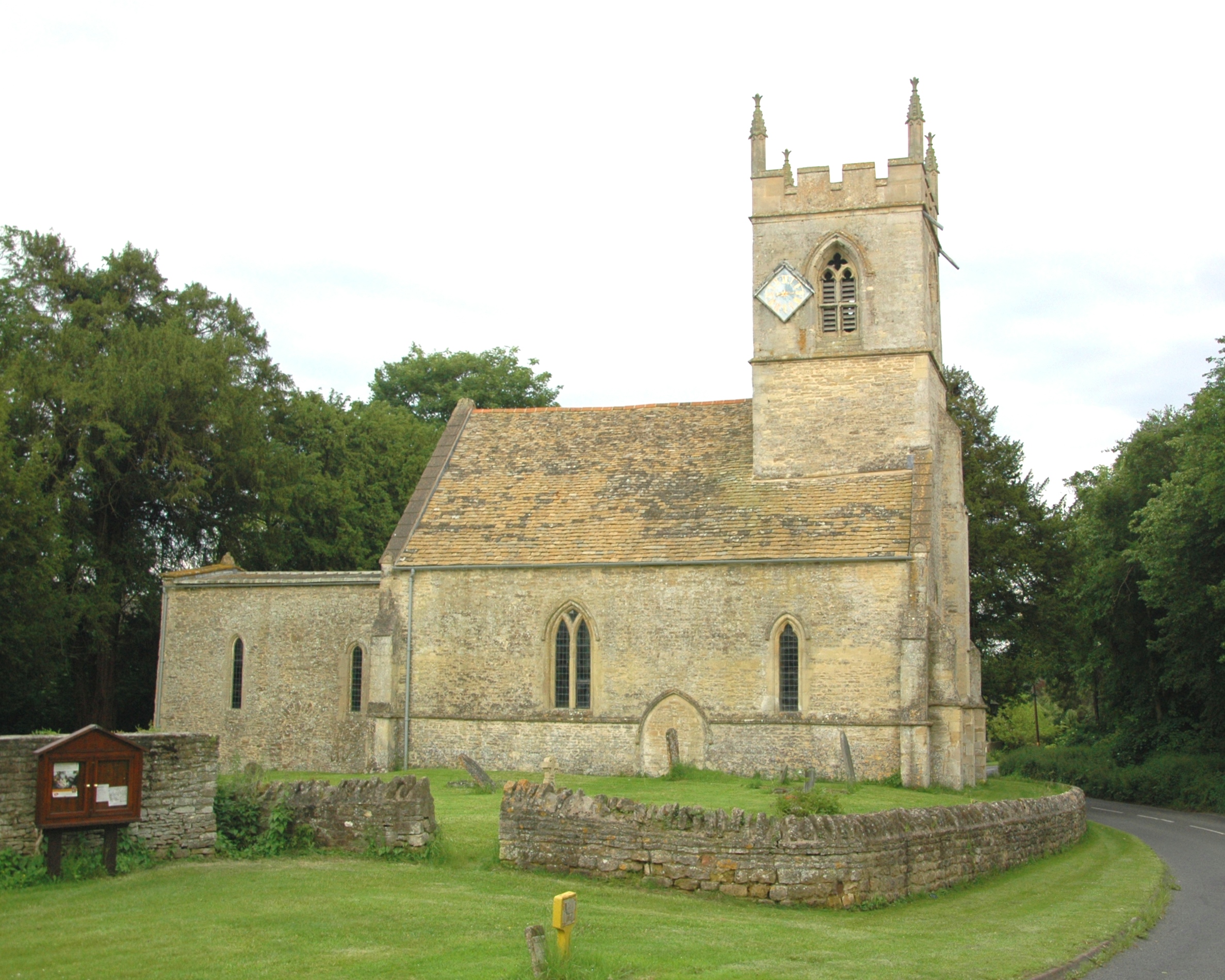
Woodeaton and Islip


This afternoon I went with a friend for a pleasant excursion to two villages just to the north-east of Oxford, Woodeaton and Islip. As it was warm and sunny it was especially pleasant, as well as an opportunity to catch up with him and his news.

Woodeaton is virtually an outermost suburb of Oxford but a distinct village community with a clear identity. The village is pretty and has real charm clustered around the parish church.

The church is medieval with significant remains of wall painting both figurative and red-lining, and an impressive array of Georgian woodwork. The impression is rather that of what must have once been common before Victorian restorations took place. It is largely pre-Tractarian and pre-Camden Society, and that in itself is of real interest.

https://upload.wikimedia.org/wikipedia/commons/d/d9/Woodeaton_HolyRood_north.JPG

The Church of Holy Rood, Woodeaton from the north

Image:Wikipedia


The church interior looking east

Image: Wikipedia


The church interior looking west

Image: Wikipedia

St Christopher and red-line decoration in Woodeaton Church

Image: Wikipedia


  Red-line decoration around a lancet window in the tower in Woodeaton Church

Image: Wikipedia

There is a useful account of both the village and church at Woodeaton. As an example of a small rural parish church it is an excellent example from which to illustrate or teach the evolution of the building and worship of the established church over eight or more centuries. The extensive remains of the red-lining masonry simulation is a reminder of just how skillful and competant medeival decorators were and of how brightly finished even a small rural church could be. Definitely a church well worth visiting.

We then travelled on a short distance to Islip. This is more clearly still a village in the country, and rather larger, with an impressive set of thatched houses around the church. The first thing to strike me was that same master-builder or architect built the tower of both Woodeaton and Islip churches.


Islip StNicholasTheConfessor E.JPG 

St Nicholas Church Islip

Image: Wikipedia 

The church was extensively restored in 1861, and the result is perhaps rather bland, although it does retain original features. There is more about its history at St Nicholas' Church, Islip and at Islip, Oxfordshire. The parish website has more at St Nicholas Islip./our-history/our-church-building/ The VCH Oxfordshire account of the village can be read at Islip | British History Online

The accounts cited above refer to the now lost chapel of St Edward the Confessor, the most famous son of the village, born at Islip in 1004. Demolished in the 1780s it is depicted in this eighteenth century engraving:


Image result for islip church oxford wall paintings

The Chapel of St Edward the Confessor at Islip

Image: St Nicholas Islip

In 1824 some medieval wall-paintings were uncovered in the south aisle. They included an Adoration of the Magi and a weighing of souls both of which were considered to have been painted late in the 14th century. There was also an earlier Adoration, over which the later version had been painted, and there was also a Resurrection. All the paintings, alas, were plastered over during E.G.Bruton's restoration of the St. Nicholas' in 1861. There is however in the church a watercolour showing what they looked like.

These paintings are discussed in John Edwards Some Lost Mediaeval Wall-Paintings Oxoniensia Oxfordshire Architectural and Historical Society 1990 and in J.C.B.Lowe The Lost Paintings of Islip Church Oxoniensia Oxfordshire Architectural and Historical Society 2000

In the church there are references to King Edward the Confessor and also to Archbishop Simon Islip of Canterbury.

After looking at the church in the best antiquarian tradition we repaired to the nearby pub for a drink sitting in the late afternoon sunshine before returning to Oxford for an early supper. A most enjoyable afternoon out.


Tuesday, 5 January 2016

The Death of St Edward the Confessor


It was on this day 950 years ago in 1066 that King Edward the Confessor died.


King Edward on his deathbed and being prepared for burial

The Bayeux Tapestry

Image;englishhistoryauthors.blogspot.com


On his deathbed the King apparently nominated his brother-in-law Harold Godwinson as his heir, thus excluding both his closest blood relative Edgar the Atheling, grandson of his elder half-brother King Edmund II, and also the man who appeared to have been his chosen heir, Duke William II of Normandy. This was to cause problems...

He was buried in his newly consecrated abbey at Westminster


The King's body is carried to Westminster Abbey

Image: Wikimedia 

In the rebuilt abbey his shrine still survives in its place of honour behind the High Altar, surrounded by the tombs of later monarchs.


The Shrine of St Edward
The base is from King Henry III's rebuilding in 1269, the upper part a restoration by Queen Mary I

Image:volokh.com


Prof Frank Barlow's biography of the King unpicks the complexities of the reign for modern readers.

Whatever he achieved as King is ultimately less important than the facts that by design or accident he brought about the rule of the Norman Kings and all that was to entail and that he was to be revered  by later monarchs as an ideal exemplar of kingship, one whose laws were seen as fundamental to good government, whose regalia sanctified the wearer, one whose prayers they earnestly solicited.


The cult of St Edward

St Edward, between St Edmund and St John the Baptist, presenting King Richard Ii to the Virgin and Child
The Wilton Diptych c.1397

Image Wikimedia


Tuesday, 13 October 2015

St Edward the Confessor


Today is the feast of the Translation of St Edward the Confessor.

This evening the Oxford Oratory marked the day with Compline, a sermon and Benediction. we were encouraged in advance to pray for the conversion of England. St Edward is not only a national patron and patron of the monarchy, but he is also a local man, having been born at Islip, which lies to the north-east of Oxford.

http://catholicsaints.info/wp-content/gallery/saint-edward-the-confessor/saint-edward-the-confessor-01_0.jpg

St Edward the Confessor holding the ring returned by St John the Evangelist
From the Wilton Diptych

Image: catholicsaints.info

Compline was sung in the traditional Latin form by the clergy and the choir. The sermon was preached by Fr Jerome, who began by querying, but very respectfully, Mgr. Ronald Knox's assessment of St Edward as being, in temporal terms, a failure - the Mgr's sermon on St Edward is the second reading in today's Office of Readings.

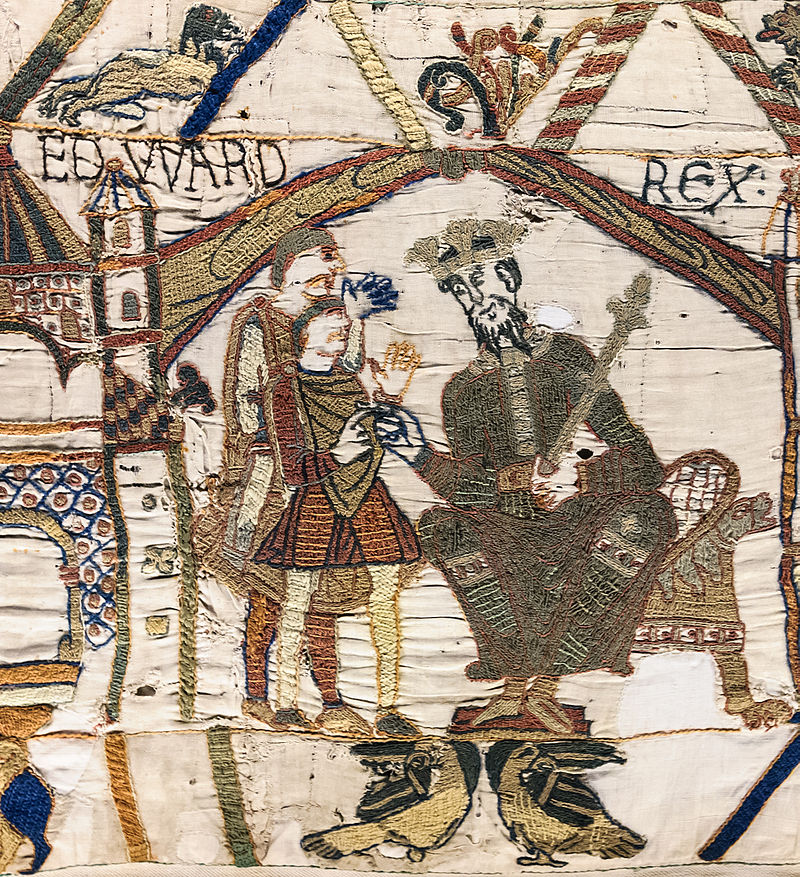
 Bayeux Tapestry scene1 EDWARD REX.jpg

St Edward the Confessor as shown on the Bayeux Tapestry

Image:Wikipedia

As King the Confessor reigned for almost as long as his four predecessors, died in possession of his throne, set an example of good government and pious care for the poor - symbolised by the story of his giving his ring to a beggar, who was in reality St John the Evangelist - and was married faithfully to his Queen, Edith. This example of a sustained if childless marriage was something Fr Jerome highlighted, with no doubt all the reports and rumours swirling round the current Synod in Rome in mind.

Gordon Plumb posted these stained glass images of St Edward on the Medieval Religion discussion group:

York Minster, Great East Window, 1d, left-hand figure c.1408:
https://www.flickr.com/photos/22274117@N08/17079983721
and detail:
https://www.flickr.com/photos/22274117@N08/17079223292

York Minster, Great East Window, 1d, arms of Edward the Cofessor c.1408:
https://www.flickr.com/photos/22274117@N08/17080737435

North Luffenham, St John the Baptist, 2c, early 14thC.:
https://www.flickr.com/photos/22274117@N08/21110955533

Cockayne Hatley, St John the Baptist, Bedfordhire, nIII, 1a early 14thC.:
https://www.flickr.com/photos/22274117@N08/2285002785

Wrangle, St Mary and St Nicholas, nVII, A 4, c.1410-30:
https://www.flickr.com/photos/22274117@N08/8170499758

York Minster, sXXXIV, 5c early 14thC, head 15thC.:
https://www.flickr.com/photos/22274117@N08/4934716140

Oxford, Balliol College Chapel, sIII, 1c, c.1529:
https://www.flickr.com/photos/22274117@N08/5901643848

Harpley, St Lawrence, Norfolk, wI, A6, 15th C.:
https://www.flickr.com/photos/22274117@N08/3320361898

Long Melford, Holy Trinity, Suffolk, nXVII (right-hand figure):
https://www.flickr.com/photos/22274117@N08/2230905801

Heydour, St Michael, Lincolnshire, nVI, 2a, c.1360:
https://www.flickr.com/photos/22274117@N08/3450473166

All of which makes me think that I really ought to get around to reading Frank Barlow's full biography of the King rather than just the shorter pieces by the Professor.