Once I was a clever boy learning the arts of Oxford... is a quotation from the verses written by Bishop Richard Fleming (c.1385-1431) for his tomb in Lincoln Cathedral. Fleming, the founder of Lincoln College in Oxford, is the subject of my research for a D. Phil., and, like me, a son of the West Riding. I have remarked in the past that I have a deeply meaningful on-going relationship with a dead fifteenth century bishop... it was Fleming who, in effect, enabled me to come to Oxford and to learn its arts, and for that I am immensely grateful.


Showing posts with label Brazilian monarchy. Show all posts

Monday, 20 June 2016

The Mad Monarchist on the state of Brazil


The running, and escalating, political crisis in Brazil, which has not gone unnoticed on this blog, has attracted a further comment today from The Mad Monarchist with his post A Word on the Crisis and Opportunity in Brazil


Friday, 18 March 2016

Brazil and its little local difficulties


From following the news in the papers and internet I gather that in Brazil they are having problems with, and indeed, for, the President and ex-President.

Well now, regular readers will know what I am going to write, but the good people of Brazil really should know what they ought to do - undo the disaster of 1889 and restore the Imperial monarchy.

Mind you the dynasty needs to sort out who is the definitive claimant to the throne these days, but is that any worse than the current threats of impeachment, continuing and proliferating allegations of corruption and fraud, and the abuse of office to protect political allies?

Long live the Emperor!


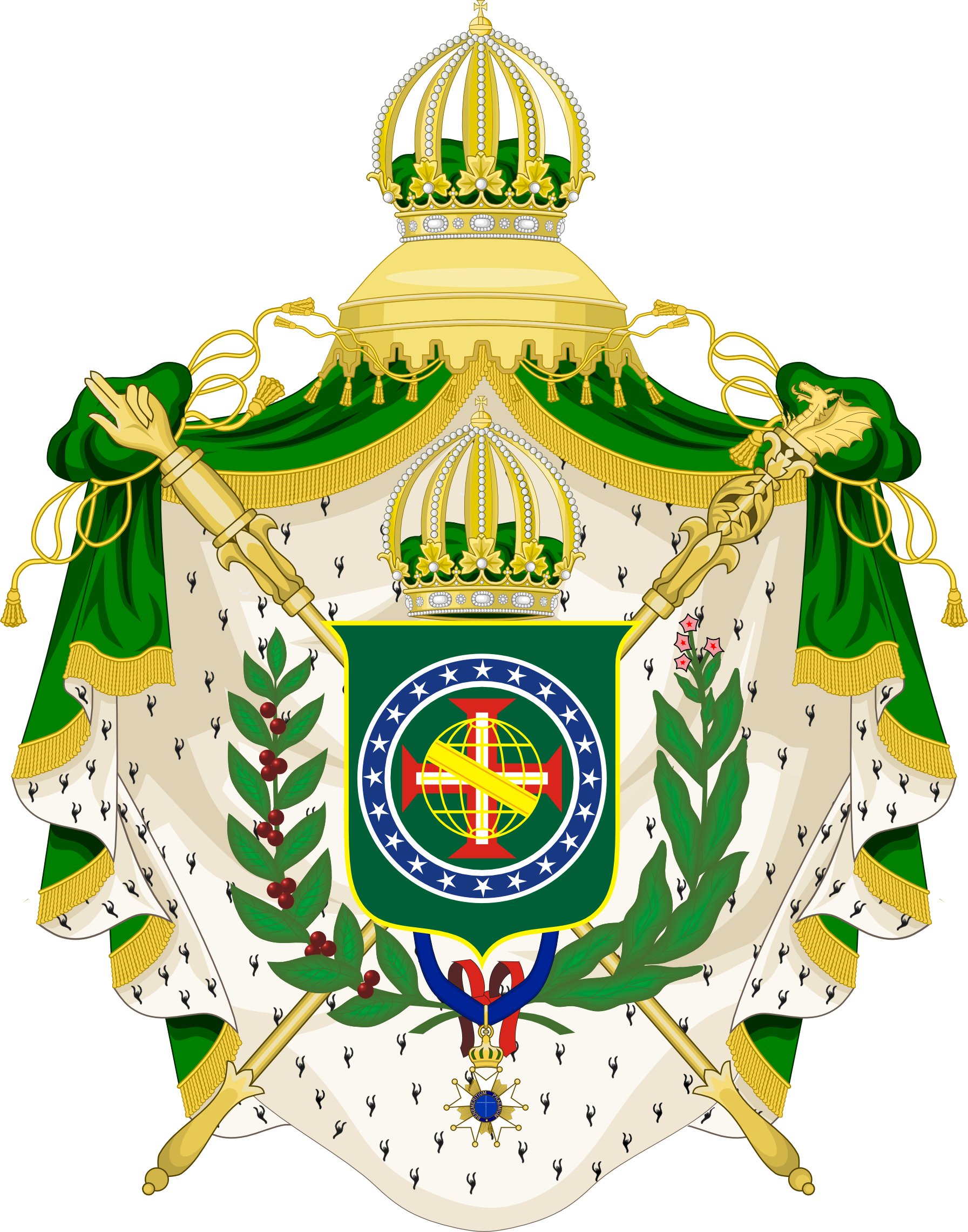
The Imperial Arms of Brazil

Image:Wikimedia

Thursday, 27 August 2015

Brazilian Monarchists take to the streets


The indefatigable Special Correspondent ( whom I had the pleasure of meeting up with by chance in Oxford last weekend) has sent me this link to a Facebook page about the current activities of Brazilian monarchists. This suggests that support for the admittedly divided Imperial House is surprisingly strong given that the country was declared to be a republic on 1889.

The article as posted which is in French, and has some rather striking photographs, can be viewed at
 https://www.facebook.com/VexillaGalliae/posts/525434377612241


The Imperial Arms of Brazil

Image: Wikimedia


Saturday, 1 December 2012

Coronation of Emperor Pedro I of Brazil 1822


Today is the 190th anniversary of the coronation of Dom Pedro I, the first Emperor of Brazil, in 1822.


File:Pedro I Imperador 1823 (crop).png

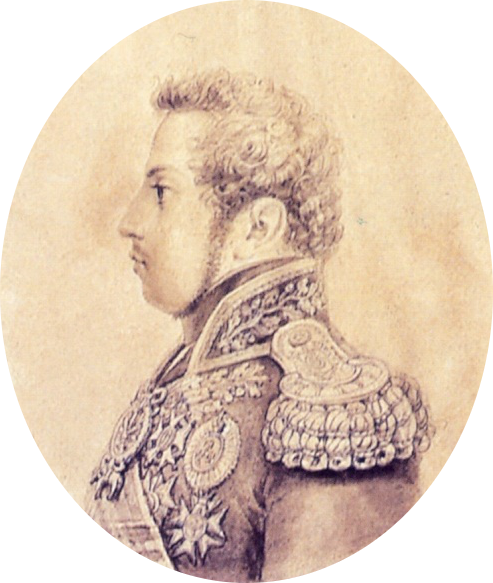
Emperor Pedro I in 1823

Image: Wikipedia

The Emperor, born in 1798, and the son of King Joao VI of Portugal, was in many ways the architect of Brazilian indepedence, and is still hailed as such. As Regent he had proclaimed Brazil's independence on September 7th 1822, and was acclaimed Emperor on October 12th. In 1826 he was also King Pedro IV of Portugal from March to May in succession to his father before abdicating the throne in favour of his daughter Queen Maria II. In 1831 he abdicated as Emperor in favour of his son Pedro II so as to invade Portugal on behalf of his daughter whose position, and that of the liberal constitionalists was being disputed by Pedro's younger, more traditionalist, brother as King Miguel I. Having secured his daughter's rights he used the title Duke of Braganza, and died in 1834.

There is an illustrated online biography of the Emperor and his remarkable career here.

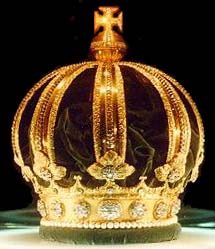
The crown used for his coronation was made quickly and in 1841 replaced with a new one for the coronation of Emperor Pedro II, as detailed here.

The fact of their being a Brazilian coronation is in itself interesting. The parent monarchy in Portugal had abandoned the ceremony with the accession of King Joao IV in the successful revolt for independence against King Philip III ( IV of Spain ) in 1640. King Joao had then proclaimed the Virgin Mary as Queen of Portugal.

The coronations of both the reigning Emperors of Brazil, and indeed the fact that the present Portuguese crown was made in Rio de Janeiro during the long residence of King Joao VI there as an exile from the Peninsular War, points perhaps to a romantic revival in such ceremonial and an appreciation of its value in the early nineteenth century.

Monday, 18 July 2011

Emperor Pedro II of Brazil


Today is the 170th anniversary of the coronation of the fifteen year old Emperor Pedro II of Brazil on 18 July 1841, and the first use of the new Imperial crown made for the new ruler.

Wikipedia has a lengthy illustrated biography of the Emperor as well as an assessment of his legacy and an article about the history of the Empire of Brazil from 1822 to 1889.

The downfall of the Brazilian monarchy and the Emperor Pedro's exile and death in Europe was the result of a military coup by a minority, who favoured a military dictatorship rather than a constitutional monarchy, supported by some of the rich coffee growers who resented the monarchy's successful final abolition of slavery a few years previously. Popular sympathy was with the Emperor, but the other contributory factor to the end of his rule was his own sense of ennui, and a fatalistic lack of belief in the future of the monarchy. As a result he put up no resistance and went off two days later into exile.

Monarchist support did contionue and a century later the monarchy still had significant support in areferendum to, in effect, confirm the establishment of the republic. There is more about the Emperors and the house of Braganza-Orleans on this website about the Brazilian Monarchy.

File:Manuel de Araújo Porto-alegre - estudo para a sagração de Dom Pedro II - c. 1840.jpg

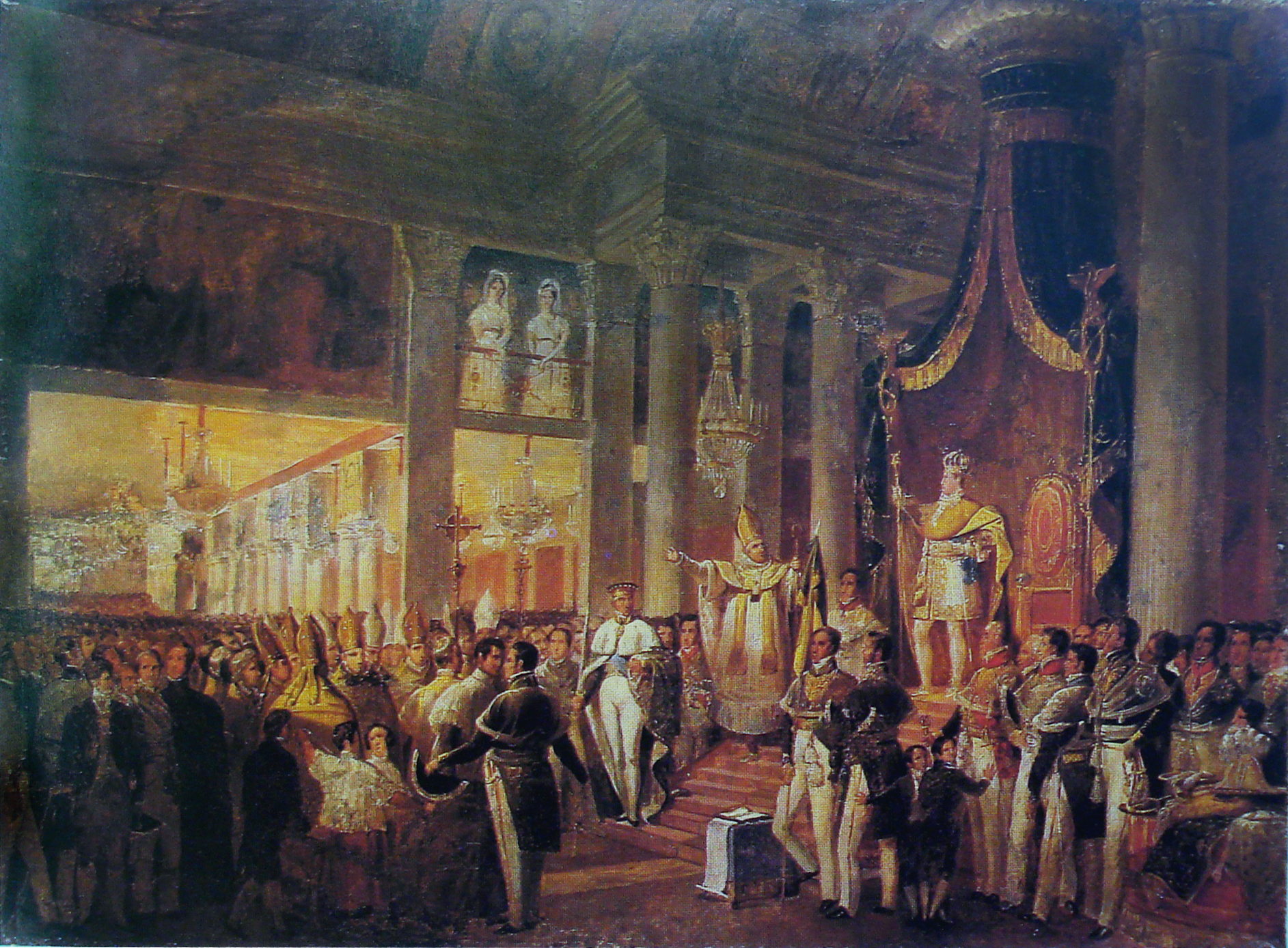
The coronation of Emperor Pedro II in 1841

The coronation of the two reigning Brazilian Emperors is of interest in that the monarchy whence it derived, that of Portugal, had abandoned the rite in the seventeenth century with King Joao IV, but it became an integral part of the Brazilian constitutional dispensation, with the Emperor wearing the crown and robes of stae at the opening and closing of the parliamentary session.


There are details about the crown and other regalia here.


Emperor Pedro II, wearing several elements of the regalia, and crowned with the Imperial Crown of Brazil, here portrayed arriving to deliver the Speech from the Throne in the opening of the annual session of the Brazilian Imperial Parliament (General Assembly) in 1872. Painting by Pedro Américo.

As the online biography shows the Emperor was an enlightened ruler, anxious to promote the development of his country, and keenly interested in the scientific and technical developments of his age. This brought him during his incognito visit to Europe in 1871 to visit the sinking of a new colliery a few miles from my home town. As a result it was named in his honour the Dom Pedro with the result that for the next century or so the Emperor of Brazil was commemorated by a coal mine on the outskirts of the small town of Normanton, between Pontefract and Wakefield.

That however is not the limit to my interest in this remarkable ruler, who deserves better recognition, both for what he achieved and for what his empire might have achieved had it not been overthrown.