Once I was a clever boy learning the arts of Oxford... is a quotation from the verses written by Bishop Richard Fleming (c.1385-1431) for his tomb in Lincoln Cathedral. Fleming, the founder of Lincoln College in Oxford, is the subject of my research for a D. Phil., and, like me, a son of the West Riding. I have remarked in the past that I have a deeply meaningful on-going relationship with a dead fifteenth century bishop... it was Fleming who, in effect, enabled me to come to Oxford and to learn its arts, and for that I am immensely grateful.


Saturday, 2 June 2012

Coronation Day


Today is the anniversary of the Coronation of H M The Queen in 1953.

There will doubtless be specific commemorations next year on the sixtieth anniversary, but in so far as the Coronation and all that it conveys and symbolises lies, as it does, at the very heart of the Monarchy, then it is a very appropriate event to recall this Jubilee weekend. This, and not the lesser doings of day to day governance and the popular interest in the lives of the Royal Family, is what the Monarchy is about - providing a structure of Christian rulership that is mediated by ecclesiastical sanction, fundamental ties of loyalty, the maintenance of the rule of law and the sustaining of the national community in time and space.


http://www.vam.ac.uk/users/sites/default/files/2006al1129_cecil_beaton_coronation_robes1.jpg


The Queen on her Coronation Day.
The defining photograph by Cecil Beaton.

Image: vam.ac.uk


http://news.sky.com/sky-news/content/StaticFile/jpg/2007/Sep/Week2/1585047.jpg

The Duke of Edinburgh pays homage
Image:sky.news.com


Friday, 1 June 2012

Joining in the Jubilee


As the main weekend of Jubilee celebrations has approached it has been impressive to see ever more shops, pubs, houses and public spaces being decked out with Union flags and bunting and stylish shop window displays with books and commemorative items, often with affectionate humour involved in their design and display. 

This suggests a quiet and very typically understated British way of celebrating such events as Jubilees and Royal Weddings - we slightly surpise ourselves at our patriotic display and enthusiasm, but keep it within the best of decorum and dignity - very like the Monarch and Monarchy we are celebrating.

Therein is part of the key - this celebration is about us as well as about Her Majesty, because we sense that somehow we are part of this rather mysterious institution that we periodically realise is not just how to choose a head of state, but incorporates our history and institutions, our identity and personality. The Monarchy is not just a family and a way of governing, it is also us. When we say Britain, or rather  the United Kingdom, is a Monarchy we actually mean something much more than the presence of the Monarch and her family - we are speaking of ourselves as a national community.

No doubt some at least of the bunting and flags will stay in place to encourage UK competitors at the Olympics. However, and I hope the London 2012 people will not be too upset by my saying this, I doubt if people feel for the Olympics what they sense about the Queen and her Jubilee. Yes, we may well, ironically, become couch potatoes and watch the competitions, but, let's be honest, for all the popularist hype, the Olympics are, of their very nature, infinitely more eliteist than the Jubilee - and who had heard of anyone organising a street-party to mark them?

http://aldbourne.net/graphics/community/uploads/union_jack_bunting_500.jpg 
Image:aldbourne.net

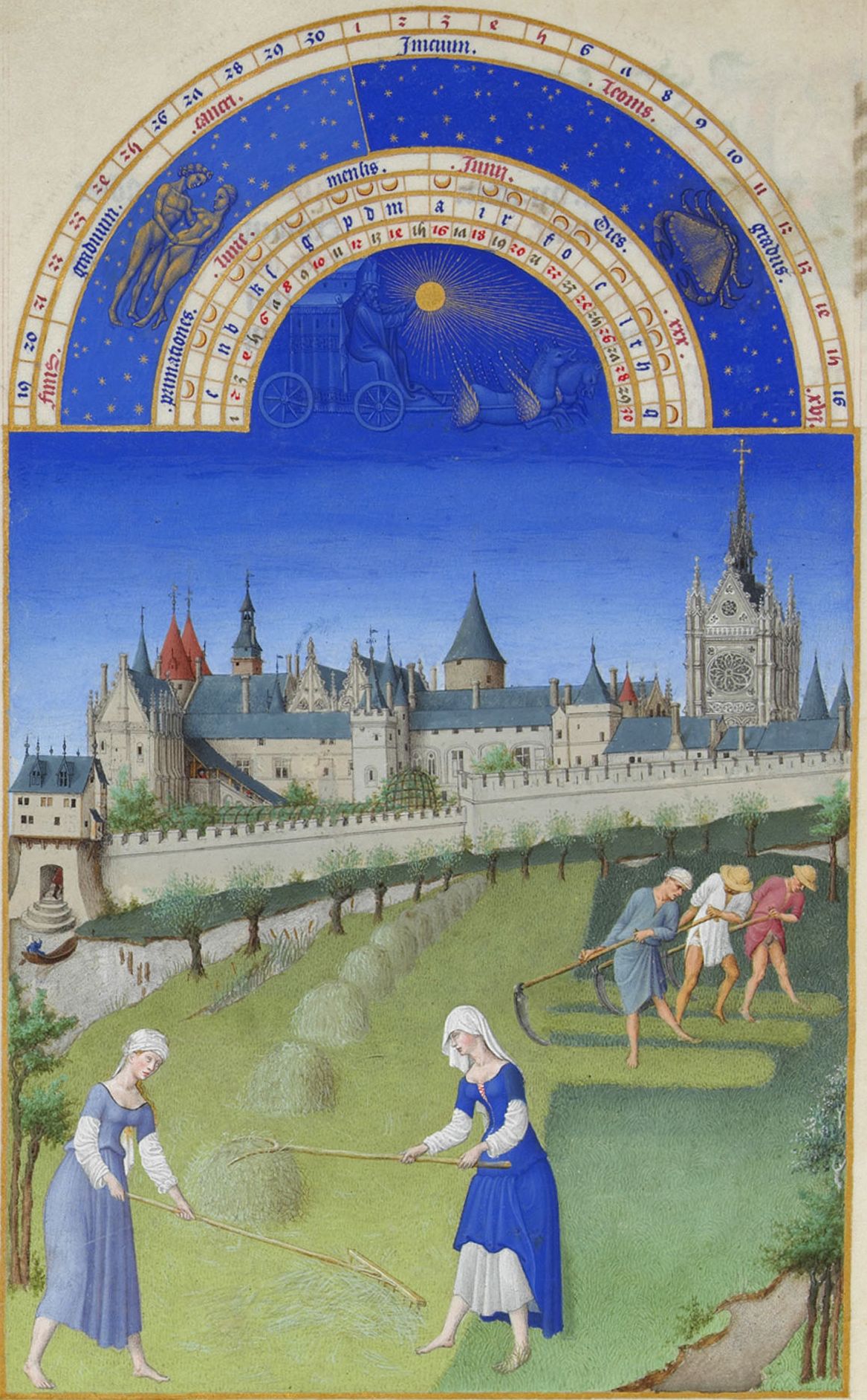
June


Image:Wikipedia

All three Limbourg brothers, Jean, Paul and Herman, are believed to have had a hand in this page, as well as possibly Jean Colombe, the artist who continued the work on the Book of Hours in the years 1485-89.

Here, as in the May page, is a depiction of a royal residence in central Paris but shown with a rural scene of hay making in the foreground. The buildings are the the Palais de la Cité with the Sainte Chapelle, clearly identifiable on the right. In addition to the Chapel considerable  parts of the other buildings still survive. This was the seat of much of the royal administration of Capetian and Valois France, although the King had largely given it up as a royal residence by this date in favour of the Louvre or other palaces.

Thursday, 31 May 2012

Ordinariate Evensong at Blackfriars


Last night I attended the Ordinariate Solemn Evensong for Whitsuntide at Blackfriars here in Oxford which I publicised the other week.

The Newman Consort were once again in good voice, and sang the early sixteenth century Magnificat Regale by Robert Fayrfax; Msgr Burnham said in his words of thanks that this was rather rarely performed - I think its length may inhibit its use on other than grand festal occasions - and as something wrtten for the Court had been chosen to mark the Jubilee. The Monseigneur also made the point that such music is part of that patrimony the Ordinariate is seeking to recover and share with other Catholics. The Anglican choral tradition is indeed well suited to use such splendid pre-Reformation music which is very much part of a common patrimony for Catholics and Anglicans.

The church at Blackfriars is a very dignified setting for such services, and it was good to see the very handsome red cope and stole, together with the matching humeral veil, all decorated with fine gold embroidery, which belongs to the Priory being used.
 

Wednesday, 30 May 2012

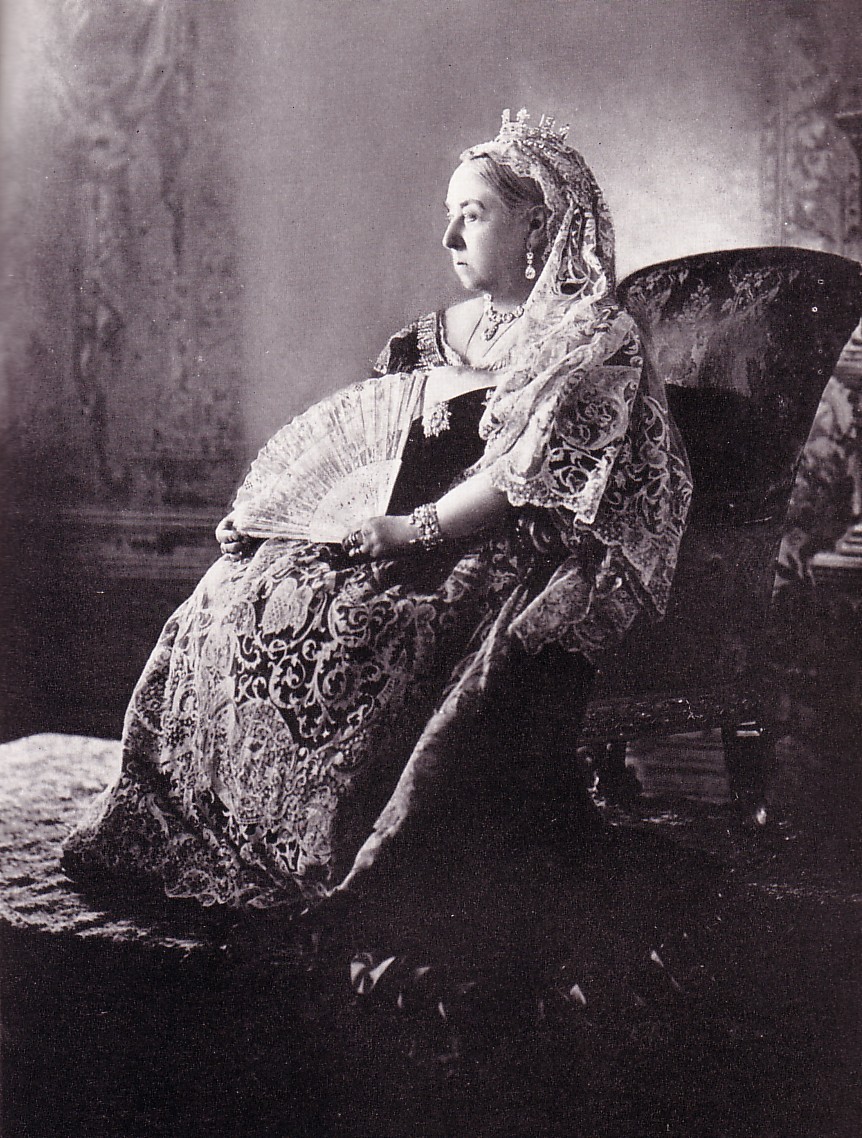
Queen Victoria goes online


The Bodleian Library has announced a joint venture with the Royal Archives at Windsor to make Queen Victoria's complete journals available online.

There is an account of the project and the material being made available which can be read at HM the Queen launches online resource of all Queen Victoria's Journals


Lunch at Long Compton


Yesterday I travelled with a friend northwards, and just across the county boundary into Warwickshire, having been invited for lunch by friends at Long Compton. The journey took us past Blenheim Palace and through Woodstock, and past the turnings to those other great early eighteenth century Oxfordshire country houses, Ditchley and Heythrop Park, and eventually past also the turnings to Great and Little Rollright, and the nearby Rollright Stones, and so we descended the long hill into the village at Long Compton.

It is typical village of the Cotswold area, with a handsome medieval church, and a local tradition of witchcraft - well in the past anyway. I gather from abit of online research that the village was apparently notorious for witchcraft. Local belief in the power of witches continued until well into the twentieth century. In 1875, a Long Compton man slew one old woman with his sickle because he was convinced that she had caused the debilitating pains and cramps in his legs.

Tradition also claims that in the sixth century St Augustine visited the church and raised a man from the grave.


cotswold village of Long Compton

Long Compton church and its distinctive lych-gate

Image: cotswolds.info

The whole journey was an exercise in a reading of the passing scene in the best traditions of W.G.Hoskins and The Making of the Engliah Landscape. I really always mean after such a day out to read up more about the history of the area, but so often fail to do so.

We had a most enjoyable lunch and spent time sitting and talking with our friends in their garden, before driving back, this time in clear sunlight and with a detour across towards the Banbury road which took us through rolling countryside, lush after the recent rain and displaying a wonderful range of foliage greens, the hedgerows heavy with May blossom - which to my eye appeared much brighter in the sunlight of late afternoon than it had during the overcast morning - and the verges thick with cow parsley, or, to give it its more romantic names, Our Lady's Lace or Queen Anne's Lace.

This was both a chance to spend time with friends and an opportunity to see the English countryside as one imagines it to be, but often fears that it is no longer. Howevere in this part of the country at least the trees and hedgerows flourish and it is possible to look at a landscape unascarred by pylons, windfarms, television masts, chimneys... This is still the England of rural life and of popular fiction - one could people the places we passed with any number of plots and scenarios. The whole day was a tonic to the mind, the spirits and the palate.


Tuesday, 29 May 2012

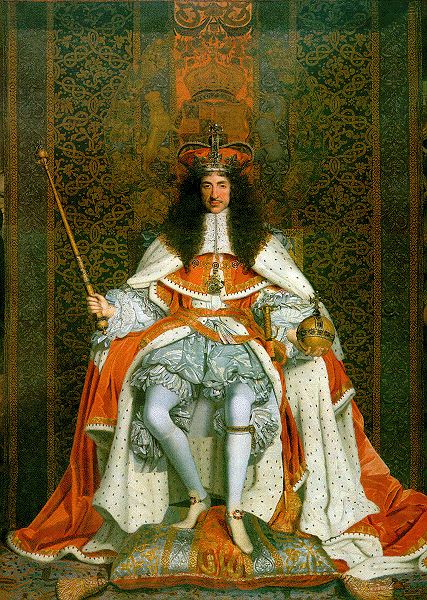
Oak Apple Day


Today is Oak Apple Day, commemorationg the Restoration of King Charles II to the throne in 1660.

Parliament had ordered the 29th of May, the King’s birthday, to be forever kept as a day of thanksgiving for our redemption from tyranny and the King’s return to his Government, he returning to London that day.
— Samuel Pepys’s Diary 1st June 1660


King Charles II in Coronation robes
Quotation and image from The Monarchist blogspot


Next time there is talk or rearranging Bank Holidays we should remind Parliament of this decision and get Oak Apple Day re-established as a national day.

It is certainly a day upon which to give thanks for the Monarchy and to pray for it and for the Royal Family. In this Jubilee year it seems all the more appropriate to do so.

I have only once managed to get a sprig of oak leaves to wear on this day as a button-hole. Perhaps something to try to do more strenuously in future years.

A revised version of my post for this day last year. My post from the previous year can be read at Restoration.


Monday, 28 May 2012

St Philip's Day Sermon


The link to the text of the sermon given by Msgr Marcus Stock last Saturday, together with some pictures, can be found at this post from the Oxford Oratory website: