Once I was a clever boy learning the arts of Oxford... is a quotation from the verses written by Bishop Richard Fleming (c.1385-1431) for his tomb in Lincoln Cathedral. Fleming, the founder of Lincoln College in Oxford, is the subject of my research for a D. Phil., and, like me, a son of the West Riding. I have remarked in the past that I have a deeply meaningful on-going relationship with a dead fifteenth century bishop... it was Fleming who, in effect, enabled me to come to Oxford and to learn its arts, and for that I am immensely grateful.


Showing posts with label Restoration. Show all posts

Friday, 29 May 2015

Happy Oak Apple Day!


Having been busy with posts about deposing Popes and crowning Kings of France I have almost forgotten to wish readers a happy Oak Apple Day and to celebrate the Restoration of King Charles II in 1660. a day upon which to render thanks to God for the happy events of that day and to pray that other nations may yet be similarly blessed.


Thursday, 29 May 2014

Oak Apple Day


In addition to being Ascension Day this year May 29th is always Oak Apple Day, the anniversary of entry on his thirtieth birthday of King Charles II into London in 1660, and seen as the symbolic date of the Restoration. 

Samuel Pepys recorded that "Parliament had ordered the 29 of May, the King's birthday, to be for ever kept as a day of thanksgiving for our redemption from tyranny and the King's return to his Government, he entering London that day." Until 1859 it was observed as a public holiday, and I see no reason for not re-instating it - the average churlish republican (and you have to be churlish to be a republican in my opinion...) is not going to look too good opposing a public holiday.

One year I did manage to get some oak leaves to wear on May 29th - not that that was as easy as getting arose for St George's day.


Image;calendarcustoms.com

Maybe the Church of England, which would not have itself been restored without the Restoration settlement, should re-introduce in Common Worship the special service of thanksgiving for May 29th which was was removed from the Book of Common Prayer in 1859. Given that King Charles II died a Catholic, and showed himself favourable to Catholicism, it could be restored as Anglican patrimony in the Ordinariate.

There is an online account, with links, of surviving commemorations of Oak Apple Day here. In Worcester the day is still marked by decorating the Guildhall gates and railings with oak leaves.Worcester was named as “the faithful city” for its Royalist allegiance during the Civil Wars. The celebrations at Worcester are illustrated, and others at Northampton, Castleton (which is surely a much older tradition converted into a celebration of the Restoration and Aston-on-Clun are all covered in the blogpost Oak Apple Day by Elizabeth Hanbury, which also refers to other surviving celebrations.


The oak is a reference of course to the King hiding in the oak tree at Boscobel House in Shropshire during his flight after the battle of Worcester in 1651. The oak tree where King Charles hid at Boscobel is not the original but is a direct descendant of the original. there is more about it at Royal Oak.

https://blogger.googleusercontent.com/img/b/R29vZ2xl/AVvXsEieZT4CuzO0mmoY_zw8bKhU_YEghAKYBZOV7w1m37HeHQzsKCJom3ptyM2dXmY66gM98SLlmndvpSI6JDLUqTwIS6KMzYDK_MOxtqVZ_EL2f9udN-FGbBD-fNz_RABV6NNz0BrG4FogxDc/s1600/ROYAL_OAK_BOSCOBEL.jpg

The Royal Oak at Boscobel

Image: Ana the Imp


Happy Oak Apple Day!

Wednesday, 29 May 2013

Oak Apple Day


Today is Oak Apple Day, the anniversary of King Charles II's entry into London on his thirtieth birthday in 1660, and the symbolic date of the Restoration of the Monarchy.

I have posted about the day in previous years in Oak Apple Day in 2011 and last year in Oak Apple Day. I have also posted in 2010 Restoration, and in 2011 the relevant post The Battle of Worcester 1651

There is an account of the traditions associated with the day here, and of its history as a public holiday, with its own special Book of Common Prayer service until its removal in 1859.


Image

The statue of King Charles II - the "pious founder" - at the Royal Hospital Chelsea, 
decorated for Oak Apple Day

Image: inpursuitofhistory.wordpress.com 

I would argue that it should be restored as a public holiday, or linked to the end of May Spring Bank Holiday.

It is certainly a day on which to give thanksgiving for the Restoration and the contined blessing of the Monarchy in our national life.

The problem is finding oak leaves to wear in one's button hole - I did manage it once here in Oxford, when some friends raided a tree in the Parks, but only once.


Tuesday, 29 May 2012

Oak Apple Day


Today is Oak Apple Day, commemorationg the Restoration of King Charles II to the throne in 1660.

Parliament had ordered the 29th of May, the King’s birthday, to be forever kept as a day of thanksgiving for our redemption from tyranny and the King’s return to his Government, he returning to London that day.
— Samuel Pepys’s Diary 1st June 1660


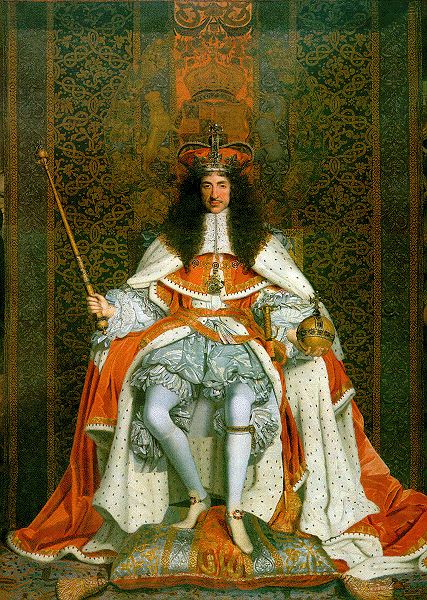
King Charles II in Coronation robes
Quotation and image from The Monarchist blogspot


Next time there is talk or rearranging Bank Holidays we should remind Parliament of this decision and get Oak Apple Day re-established as a national day.

It is certainly a day upon which to give thanks for the Monarchy and to pray for it and for the Royal Family. In this Jubilee year it seems all the more appropriate to do so.

I have only once managed to get a sprig of oak leaves to wear on this day as a button-hole. Perhaps something to try to do more strenuously in future years.

A revised version of my post for this day last year. My post from the previous year can be read at Restoration.


Saturday, 3 September 2011

The Battle of Worcester 1651


Today is the 360th anniversary* of the Battle of Worcester and the defeat of the Royalist forces led by King Charles II.

As a result the King had to flee to various Royalist families, some of whome were recusant, for shelter. This led to various escapades over the next six weeks before he left on October 16th and reached the continent in safety. These included hiding in what became the Royal Oak at Boscobel House and the ride with Jane Lane to Trent in Dorset.

The story is recounted very readably in the first chapter of Arthur Bryant's biography of the King and in Richard Ollard's book on the escape.

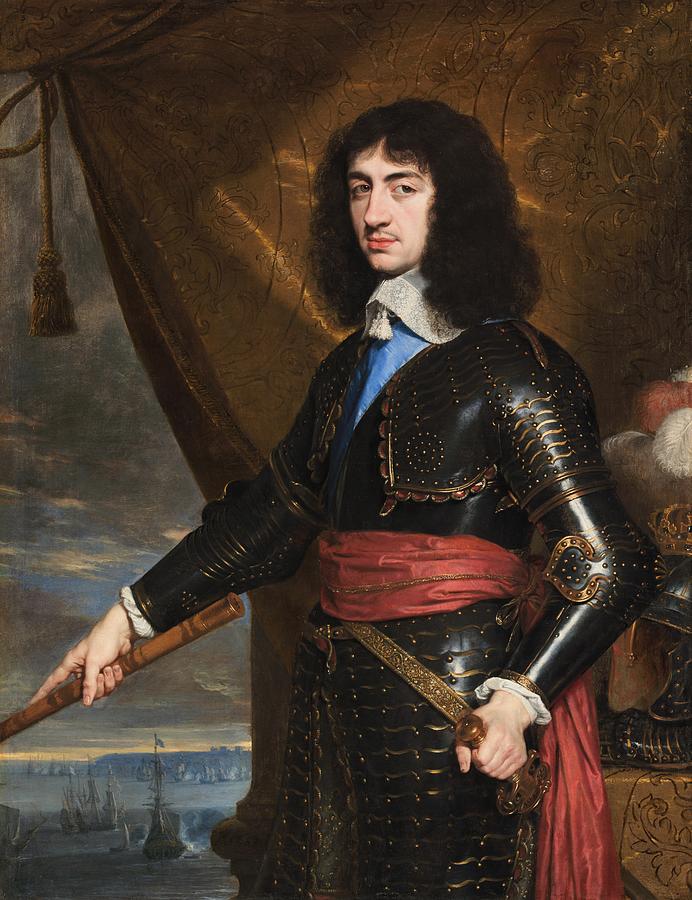
File:Charles II (de Champaigne).jpg

King Charles II circa 1653
Portrait by Philippe de Champaigne

Image: Wikipedia

Following the Restoration in 1660 the date of the King's entry into London on May 29 became associated with the symbolism of the Royal Oak, becoming known as Oak Apple Day, but the events of the actual escape belong to the early autumn of 1651.

* If one is being punctillious of course one should allow for the fact that in 1651 England, unlike Scotland, was still on the Julian Calendar rather than the Gregorian reform in 1651, and was to remain so for another 101 years.

Sunday, 29 May 2011

Oak Apple Day


Today is Oak Apple Day, commemorationg the Restoration of King Charles II to the throne in 1660.

Parliament had ordered the 29th of May, the King’s birthday, to be forever kept as a day of thanksgiving for our redemption from tyranny and the King’s return to his Government, he returning to London that day.

— Samuel Pepys’s Diary 1st June 1660


King Charles II in Coronation robes
Quotation and image from The Monarchist blogspot


Next time there is talk or rearranging Bank Holidays we should remind Parliament of this decision and get Oak Apple day re-established as a national day.

It is certainly a day upon which to give thanks for the Monarchy and to pray for it and the Royal Family


Thursday, 27 May 2010

Restoration


Saturday May 29th is, of course, the 350th anniversary of the Restoration of the Monarchy when King Charles II entered London, in the twelfth year of his reign. I am indebted to the Australian Radical Royalist for some of this piece, and the images of the commemorative coin. The fact that it is being issued is an improvement on what happened fifty years ago, when so far as I recall it the anniversary passed unmarked.


Following General Monck's march on London and the collapse of what remained of the regicide regime amidst popular calls for a free Parliament the Long Parliament having finally agreed to dissolve itself - it had gained the power not to be dissolved without its own consent ( does that sound at all familiar at the moment? ) the new, so-called Convention Parliament assembled on 25th April 1660, and soon afterwards received news of the Declaration of Breda in which Charles II indicated the moderate basis upon which the Restoration could be based. The English Parliament resolved to proclaim Charles King and invite him to return, which message reached Charles at Breda on 8th May 1660. The King landed at Dover and travelled to London which he entered in state on May 29th, his thirtieth birthday.

The Convention Parliament was dissolved in December 1660, and King Charles was crowned in Westminster Abbey on 23th April 1661.

I stress that fact that Charles II was in his twelfth year as King for two reasons. Firstly that is the legal point established in 1660 - he had been the lawful King of England since his father's death in 1649, and in Scotland he had been crowned in 1651.
The other reason is that in my home town of Pontefract the castle was held by a royalist garrison in January 1649 who were under siege from Parliamentarian forces. Upon hearing of the regiicide they proclaimed Charles II as King, and produced siege coins in his name, and with the inscription Post Mortem Patris Pro Filio which subsequently became the motto on the arms of the borough of Pontefract.