Once I was a clever boy learning the arts of Oxford... is a quotation from the verses written by Bishop Richard Fleming (c.1385-1431) for his tomb in Lincoln Cathedral. Fleming, the founder of Lincoln College in Oxford, is the subject of my research for a D. Phil., and, like me, a son of the West Riding. I have remarked in the past that I have a deeply meaningful on-going relationship with a dead fifteenth century bishop... it was Fleming who, in effect, enabled me to come to Oxford and to learn its arts, and for that I am immensely grateful.


Showing posts with label Westminster abbey. Show all posts

Tuesday, 20 May 2025

The Order of the Bath 300


Last Friday the Most Honourable Order of the Bath held its quadrennial Service for the Installation of Knights Grand Cross in their designated chapel, that is the Lady Chapel of King Henry VII in Westminster Abbey. 

This year the service was of particular interest as it also witnessed the installation of the Prince of Wales as the new Great Master of the Order as successor to his father the King who had held the position from 1975 until his accession as Sovereign. 

Furthermore the Order is celebrating this month the tercentenary of its foundation as an Order of Chivalry in 1725. The origins of the Knights of the Bath are, of course, much earlier - probably in the twelfth century. They were a class or type of knight who had been initiated into the degree by the ritual bath, denoting purity, the admonition of older knights, a vigil and ritual dubbing. 

Some of the elements of the insignia used by the 1725 Order, notably the white knots in the collar, and the crimson mantles ( and possibly the white ones of the Officers of the Order ) derive from these early origins.

Knights of the Bath were usually created to mark coronations, royal weddings and similar royal celebrations. Under King James I it began to look a little more like an Order, with the introduction of the badge with three crowns and the motto Trio juncto in uno presumably as part of the Kings ambition to unify his realms into one polity. 

The complex history of the modern Order and its important statute revisions, notably in 1815 and 1847, changes to the insignia, the conscious inclusion of the medieval rituals and then their almost immediate abandonment, the creation of the various Officers of the Order, the revival of the installation ceremony in 1913, and much more can be found in the Wikipedia account at Order of the Bath


A much more detailed account, published in 1920, which includes a great deal about the ceremonies for the admission of later medieval and early modern knights, can be seen using the Archive website at Jocelyn Perkins The Most Honourable Order of the Bath


A friend who was in the congregation has shown me the Order of Service which has additional information about the Order and sets out the ceremonies in the Chapel. This can be seen online as part of the Westminster Abbey website about the Order and its tercentenary at The King and The Prince of Wales celebrate 300th anniversary of The Order of the Bath  | Westminster Abbey

The  one from 2022, where much is obviously the same, although not including the presence of the Sovereign and the installation of the Great Master, is available at order-of-service-order-of-the-bath-2022

One slight change is that the gold and silver coins offered at the altar that year were Victorian; this year, to mark the tercentenary they were from the reign of King George I.

There is more from the Westminster Abbey website about the Order and the service last Friday at Order of the Bath | Westminster Abbey

The processions at the Service last Friday can be seen on the Royal Family Channel. Unfortunately, this does not include the ceremonies in the Lady Chapel of King Henry.VII, and what there is would actually benefit from some judicious editing. That said it does give an idea of the occasion. The video can be seen at  Prince William Receives New Title Previously Held by King Charles


Sunday, 4 May 2025

Marian Pilgrimage - Our Lady at the North Door and Our Lady of Pew in Westminster Abbey


The Pilgrimage now makes its way southwards to Westminster, to the Abbey and to two Marian shrines, those of Our Lady at the North Door in the now-destroyed Galilee attached to the North Transept, and that of Our Lady of Pew opening off the north ambulatory. This appears to have had a second shrine to Our Lady of Pew within the adjacent Palace.

My blog post from last year about these linked shrines can be seen at Marian Pilgrimage - Our Lady at the North Door and Our Lady of Pew in Westminster Abbey

In Westminster Abbey is the tomb of Cardinal Langham O.S.B., a monk of the abbey from its estates in Rutland, who rose to be Prior, Abbot, Bishop of Ely, Lord Treasurer and Lord Chancellor and finally Archbishop of Canterbury. In 1368 he was made a Cardinal. At the that time Cardinals were virtually always based at the Curia, so, like his Dominican predecessor Robert Kilwardby a century earlier, he resigned Canterbury and moved to Avignon. He presumably participated in the Conclave of 1370. Four years later there was the possibility of his return to Canterbury but that did not happen. He died in Avignon in 1376, and was reburied at Westminster in 1379. His life is set out in more detail by Wikipedia at Simon Langham and by Westminster Abbey at Simon & Thomas Langham

May Our Lady at the North Door and Our Lady of Pew pray for the Papal Conclave and for the election of a wise and holy Pope


Friday, 6 December 2024

A thirteenth century Imperial link to Westminster Abbey

  
Westminster Abbey never seems to cease to yield up new treasures from its archives and stores. The Daily Telegraph reports the discovery that a silk seal bag for a 1267 charter in the archives at the Abbey is made of fabric identical with that used in 1225 to wrap the bones of the Emperor Charlemagne in his shrine at Aachen.

The fabric appears to have been woven either in al-Andalus in Spain or possibly in Syria. This is not just an indicator of the range of trading links, interesting as they are, but more immediately of a link between the English royal abbey and the German cult centre of the first Holy Roman Emperor. That it was a very special fabric is indicated by the fact that it was woven in the twelfth century and already old when used in both thirteenth century Germany and England.


That King Henry III might want to associate his promotion of the cult of St Edward the Confessor with that of the canonised Carolingian Emperor is not that surprising. 

What the article does not speculate upon is how the fabric actually arrived in England. Two possibilities occur to me. In 1235 King Henry’s sister Isabella, and with whom he had a close brotherly bond, married the Emperor Frederick II and travelled to Germany. It is possible that the fabric came to England in a gift exchange then or before the Empress’ death in 1241. 

A second possibility is that the fabric came after 1257 when the younger brother of the English King, Richard Earl of Cornwall, was elected as King of the Romans and crowned at Aachen. Although Richard was never able to establish his undisputed rule over all his German territories, he retained the title until his death in 1272.

Wikipedia has biographies of King Henry’s siblings at Isabella of England  and at Richard, King of the Romans


Sunday, 13 October 2024

St Edward the Confessor - Anglo-Saxon and Catholic Christian


Today, were it not a Sunday, would be the Feast of St Edward the Confessor, a patron of England, of the Monarchy and of the Order of the Garter. His feast is kept on the anniversary of the translation of his relics at Westminster  in 1163 and 1269 rather than the anniversary of his death.

Edward the Confessor - Wikipedia 
  
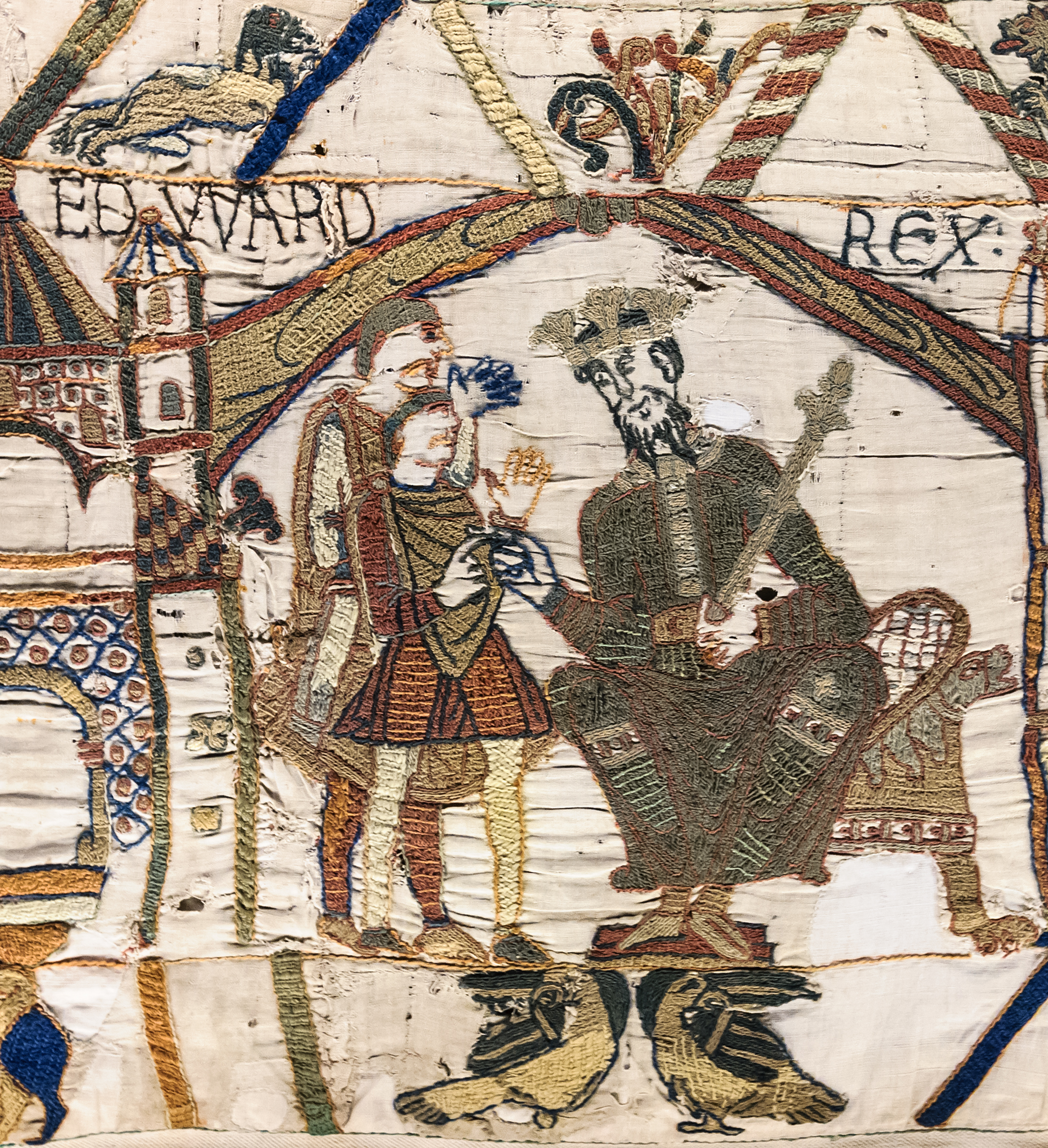
St Edward the Confessor from the Bayeux Tapestry

Image: Wikipedia 

Edward the Confessor - Simple English Wikipedia, the free encyclopedia

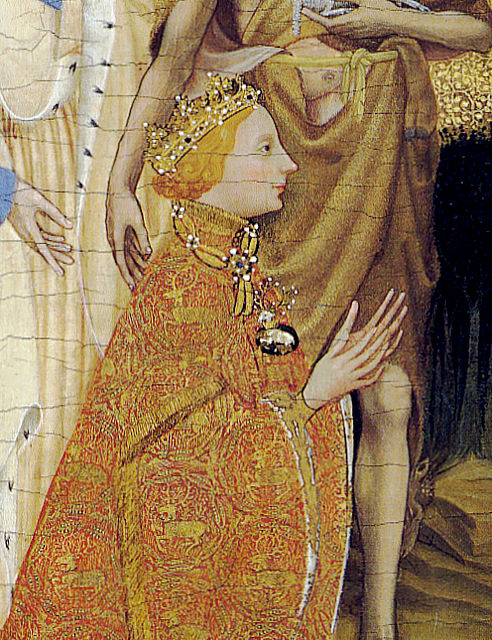
St Edward the Confessor from the Wilton Diptych, circa 1397
This was from probably peak of his cult under King Richard II

Image: Wikipedia

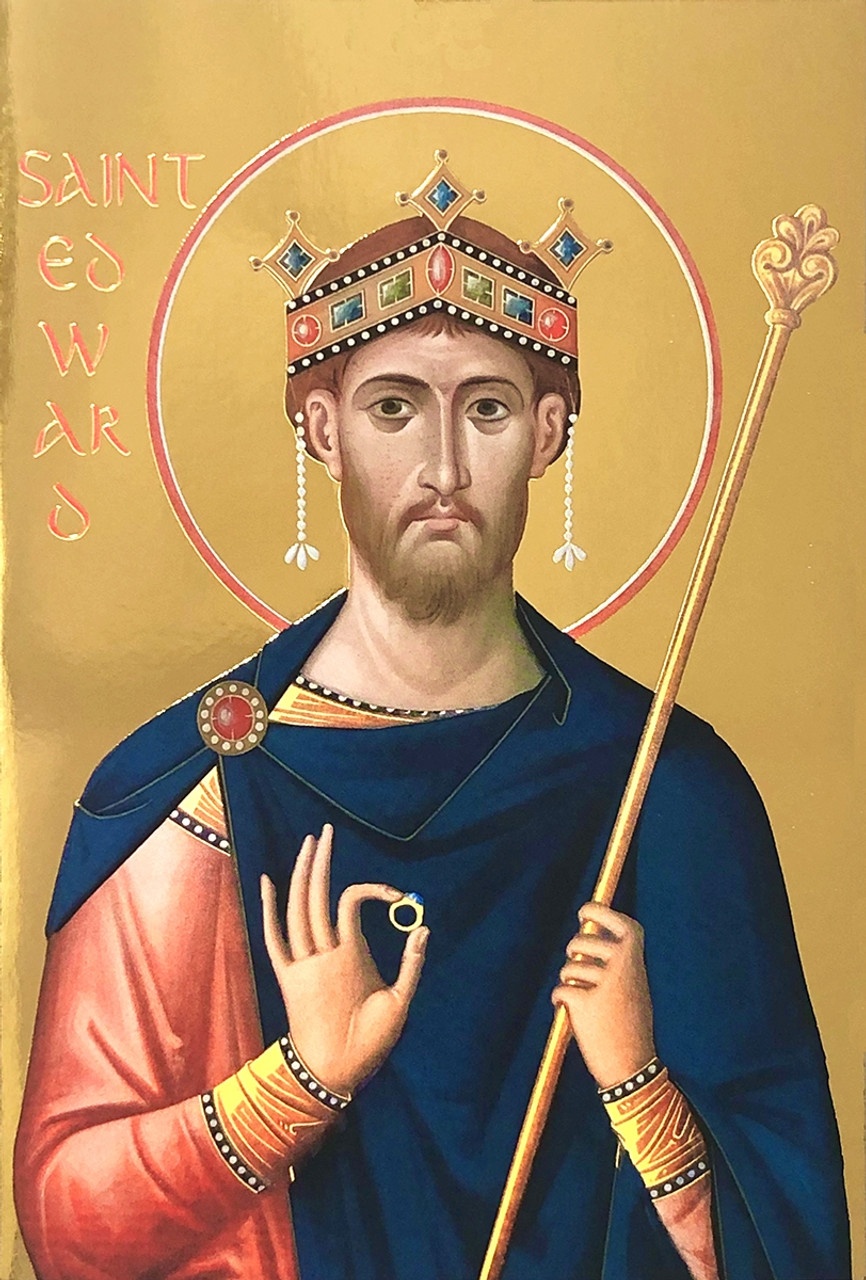
St Edward the Confessor Icon Greeting Card

St Edward the Confessor as depicted in an icon commissioned in 2019 for his shrine in Westminster Abbey

Image: Westminster Abbey

Wikipedia, which is very detailed in its lives of Anglo-Saxon royalty, has a lengthy account of his life and cult at Edward the Confessor

The other week I posted in More academic folly  about the blinkered nonsense of those academics who re-name courses and journals dealing with Anglo-Saxon history and literature as Early English or Early Medieval - there is, I stress, nothing wrong per se in that specific terminology - because of a “woke” perception, notably in the US, that “Anglo-Saxon” has white supremacist connotations.

Thomas Casemore has written a very good article about this phenomenon, and its wider implications, in The Catholic Herald. It can be read at Another attack on Britain’s Christian heritage: Don't say 'Anglo-Saxon' Catholic


May St Edward the Confessor pray for the King and the nation


Saturday, 12 October 2024

The Sacristy at Westminster Abbey


Writing about the proposed rebuilding of the north-west tower and spire of the Abbey of St Denis coincides, I find, with publicity about a not altogether dissimilar project at what is in not a few ways its English equivalent as a royal monastery and necropolis, Westminster Abbey. This is the plan to rebuild on the excavated medieval foundations the Great Sacristy which was an original part of King Henry III’s scheme. It stood to the north of the nave, an almost freestanding structure on an L plan, linked at one end to the North Transept, and on the other to the north door of the nave. It was demolished in the early eighteenth century. The new building will rise from the medieval foundations and provide storage space and serve as an entrance for visitors to the Abbey, who will then walk round to the West Door to enter the main building. As a new building in the present reign it is to be named the King Charles III Sacristy.

Westminster Abbey has produced two short videos about the project which can be seen with the Dean at Introducing: The King Charles III Sacristy. and with the architect at  Designing: The King Charles III Sacristy . The main website, which includes those two videos, can be viewed at The King Charles III Sacristy | Westminster Abbey

There is also a video of The Queen visiting the site as the recently announced Patron of the scheme, which can be seen at Camilla tours site of new King Charles III Sacristy at Westminster Abbeyand in a longer version at Queen becomes Patron of Westminster Abbey's Sacristy project

There is a report on the excavation from the archaeologists responsible for the work, Pre-Construct Archaeology, which can be seen at Westminster Abbey – Pre Construct Archaeology

There are other reports from 2020  about the excavation in The Guardian at Lost medieval sacristy uncovered at Westminster Abbey, and shorter ones in Current Archaeology at Sacristy uncovered at Westminster Abbey, and in Archaeology Magazine at Medieval Great Sacristy Uncovered at Westminster Abbey - Archaeology Magazine


Sunday, 16 July 2017

The Coronation of King Richard II


Today is the 640th anniversary of the coronation of King Richard II in Westminster Abbey on July 16 1377.

The chronicler of St Albans Abbey Thomas Walsingham wrote of it as "a day of joy and gladness.... the long-awaited day of the renewal of peace and of the laws of the land, long exiled by the weakness of an aged king and the greed of his courtiers and servants" - as translated in May McKisack The Fourteenth Century.

The most recent piece on the occasion appears to be by Andrew Spencer 'The Coronation Oath in English Politics 1272-1399' in B.Thompson and J.Watts (eds) Political Society in Later Medieval England: A Festschrift for Christine Carpenter ( Boydell 2015 ) which can be accessed here

As Spencer points out Walsingham recorded that although only the magnates could hear the boy king assent to the Coronation Oath Archbishop Sudbury, preceded by the Marshal, repeated it to all in Abbey, asking if would accept to be so ruled.

The rubrics were revised to stress the authority of the monarch and the touching of the Crown of St Edward  by the peers when they made their homage glossed as indicating their responsibility to support the Crown.

The ceremony was a long one and at the end the ten and a half year old King had to be carried from the Abbey to his Coronation banquet in Westminster Hall in the arms of Sir Simon Burley his tutor. This story is perhaps the beginning of the emergence of Burley and what may be his 'myth' - whether Sir Simon was just the devoted retainer of the boy King's father who was  consequently dear to the monarch who tried to save him in 1388 from the Lords Appellant is a topic historians are nowadays questioning.

It was probably at this point that the King lost one of his ceremonial slippers, which came to be seen as a bad omen - but such mishaps do occur and may be no more than that, and secondly such are the things people remember; King Charles I's choice of wearing all white to his coronation became seen as a forecast of his future status as the Royal Martyr, the King in White who reigned in the Isle of Wight, or the fact that a large precious stone fell out of King George III's crown at his coronation was remembered when the American colonies rebelled.


The most recent work on the Wilton Diptych suggests that the crown the King is depicted wearing may indeed be the one he wore for the recess from the Abbey, and that it was one that had been made for the youthful King Edward III.

Image result for Richard II Wilton Diptych

King Richard II as he may have appeared at his Coronation in 1377
From the Wilton Diptych painted in 1397

Image:ReedDesign


Apart from the impact on those who witnessed it the most important question that arises is probably that of the impact upon the young King Richard himself. Westminster remained central to his personal spirituality and to the spirituality of his kingship, the shrine of St Edward and the recipient of his patronage, including the portrait of him presiding in Parliamentary robes with his regalia which still survives in the Abbey. Here too the crown, identical to that on the tomb effigy of his supplanter and successor King Henry IV at Canterbury, is clearly a depiction of a real item, not just an artistic convention. Shakespeare's dramatic account of the events of 1398-9 quite rightly stresses the imagery and discourse of Kingship and Deposition and central to that is the status of King Richard II as an anointed crowned monarch. That complex narrative was played out in and around Westminster over the following twenty two years, and symbolically at least it began with the rich ceremonial of this day in 1377.


Saturday, 24 June 2017

Abbot Islip's funeral


Whilst researching illustrations for my previous post on my visit to Islip i came across this piece and thought I would share it with readers.

It is by Christopher Howse and written for his Sacred Mysteries column in the Daily Telegraph  for August 27 2016. I have reproduced it unaltered and added some additional comments of my own.

 The brightly burning hearse of Abbot Islip


The high altar at Westminster, with rood-loft above, 1532 
 
Credit: The Westminster Abbey Chorister / Bodleian Library


The only colour image of what worship in Westminster Abbey looked like on the eve of the Reformation has been plucked from the miles of shelving in the Bodleian Library, Oxford, and shown to the world, or at least to the readers of that excellent periodical The Westminster Abbey Chorister.
It is a wonderful picture, taken from the mortuary roll of John Islip, Abbot of Westminster, who died in 1532. He was important in the world and also stood for the dignity of the abbey of Benedictine monks. So his funeral was impressive.

The picture shows a part of the Abbey well known from royal weddings: the high altar against the screen that hides any view of the sacred chapel of St Edward the Confessor. On state occasions the altar is usually laid with huge bits of gold plate, like a sideboard.

It is quite otherwise in the Islip picture, being bare but for two candlesticks and a service book. On the wall behind it is a painting of the crucifixion, and above it hangs a strange object, which is explained in The Westminster Abbey Chorister by Matthew Payne, the Keeper of the Muniments at the Abbey. It is a cylindrical rose-coloured veil of silk bound around its upper part by a sort of triple tiara of gold. This is the cover for the hanging pyx, the metal casing in which the Sacrament was reserved.


–– ADVERTISEMENT ––
High above the altar stands an arrangement of painted figures that featured in most churches: the rood. In the centre is Christ on the cross, flanked by his mother Mary and St John. These are in turn flanked here by two angels – the kind with six wings, seraphim, I suppose. Below the rood and above the altar projects a blue-coloured tester functioning like a baldacchino to shelter ritually the sacred altar.

The difference on the May day that the picture depicts was the presence before the altar of the great hearse of Abbot Islip, surrounded by black-habited monks and 24 men carrying torches. By hearse was not meant a thing with wheels, or even a carrying-bier. In this case it was a soaring framework that canopied the draped coffin and acted as a vast chandelier. A “chapelle ardent” was a name Garter King of Arms used for it two centuries later. On four high finials and a central spire (of gilt and painted woodwork) were dozens and dozens of beeswax candles. I can’t imagine how they were lit. Perhaps by taper in a long stick like a fishing-rod.

Inscribed above the altar is: Adoramus te, Christe, et benedicimus tibi – “We adore thee O Christ and we bless thee.” All present would have known the response: Quia per crucem tuam redemisti mundum – “Because by thy cross thou hast redeemed the world.”

That antiphon was familiar, not from the devotion called the Stations of the Cross, which was widely popular in churches only later. It was known from the solemn liturgy for Good Friday, chanted at the ceremony of the Adoration of the Cross, known in English as Creeping [to] the Cross. Shakespeare knew it, writing anachronistically in Troilus and Cressida of how “they used to creep, to holy aultars”. People would come forward and kneel and kiss the wood of the cross, in worship of Christ who hallowed it.

It would have been quite suitable for the inscription to have been above the altar all the time, since the Masses said below related to the sacrifice of the cross. But it’s possible it was rigged up just for the funeral.

The picture is a copy, carefully made in 1743 by George Vertue, engraver to the Society of Antiquaries, from an original kept by John Anstis, Garter King of Arms. It’s fortunate that Vertue made the copy, for the original has been lost.


The Abbot was clearly aboy from the Abbey's estate at Islip who took, as did many other monastics at the time, their birthplace as their new patronymic upon entering their chosen community. As the Abbey weblink below shows he entered as a novice aged 16 in 1480 and was elected to head the monastery in 1500 when he was 36. As Abbot he oversaw the construction of what is now known as King Henry VII's Chapel between 1503 and 1516.

Henry VII delivering to John Islip, Abbot of Westminster, the Book of Indenture, or Agreement, specifying the Number of Masses, Collects, &c, to be used for the repose of the Soul of King's Father, Wife, and Other Relatives; the Provision to be made for Thirteen Beadsmen, &c. Illustration from Old England, A Pictorial Museum edited by Charles Knight (James Sangster & Co, c 1845).

Image; Look and Learn
The Clever Boy will point out in his cleverness that Christopher Howse is wrong when he says the original is lost - it is part of the Abbot's Mortuary Roll and has been published by the Society of Antiquaries. The surviving original - and Vertue's copy can be seen to be very accurate - is a drawing and does not reproduce well in online methods.

As the website for The Antiquaries Journal points out the mortuary roll of John Islip (1464–1532), Abbot of Westminster, is the finest example of its kind to survive in England. The drawings, possibly by Gerard Horenbout, afford the only views of the interior of Westminster Abbey before the Dissolution. The discovery of eighteenth-century copies of an unknown, coloured version of the roll provides important new evidence for both the circumstances of the production and the later history of both rolls. It also provides, for the first time, an authentic colour view of the interior of Westminster Abbey in the late medieval period, and new information on its decoration.

The always excellent Westminster Abbey website has the following account of the Abbot and his Jesus chantry at  John Islip. There is a detailed illustrated account of the chantry and the depiction of it in the Islip Roll in John Goodall's 2011 article from the Journal of the British Archaeological Association which can be viewed at The Jesus Chapel or Islip's Chantry at Westminster Abbey

The hangings covering the tombs on the north side of the Sanctuary is a tradition that survives on the continent in Italy, Malta and Spain on special occasions. It is said that theiron brackets in the nave of Winchester Cathedral were installed to hold hangings for the wedding of King Philip and Queen Mary in 1554, and the engraving of the coronation of King Charles II in 1661 suggests similar hangings in Westminster Abbey on that occasion.

Of the reredos as depicted only the stone lower third survives, and is usually dated to the reign of King Edward IV, so it was a new part of the abbey church. The Rood and its flanking figures are very much in the style recreated by Sir Ninian Comper in the twentieth centuries in churches such as Wakefield Cathedral and Wymondham Abbey.The colour scheme as recorded in Vertue's copy is a valuable addition to our knowledge of the interior of the monastic church - unless this is an improvisation by the eighteenth century copyist.

The funeral hearse with its candles was a tradition that survived - as in this example for 1958:

Image result for Pius XII funeral hearse

The funeral catafalque for Pope Pius XII in St Peter's in 1958 

Image: romanitaspress.com

It also survived, but without candles, in the tradition of the Duke of Wellington's funeral car on 1852 and in the Habsburg Death Coach in Vienna.

I have always liked the little detail of the bedesman or taperer relighting his torch in the foreground of the Islip Roll  - one knows that feeling of "Why does my taper have to be the one to go out...?"

This was 1532 - within months, if not indeed already, such ritual  and ceremonial was going to come into question and under attack - not unlike 1958 come to think of it. Abbot John Islip and Pope Pius XII were at least spared seeing that in their earthly lifetimes.


Wednesday, 21 June 2017

Death of King Edward III


Today is the 640th anniversary of the death at Sheen Palace on June 21 1377 of King Edward III. He was 65 and the longest lived English monarch until Queen Elizabeth I.

It is said that his mistress Alice Perrers snatched the rings from the dying kings hands when she realised what was happening. If the story is true it marks an undignified end to areign of just over fifty years and one mrked by signal victorie sin France and Scotland and was period crucial to the develiopment of English national identity. The King is buried in Westminster Abbey.

There is an online biography of the King at Edward III of England


http://www.westminster-abbey.org/__data/assets/thumbnail/0013/23152/Edward-III-funeral-effigy-72-Westminster-Abbey-copyright-photo-1.jpg

The funeral effigy of King Edward III at Westminster Abbey

 Image: westminster-abbey.org


The King died of a stroke at Sheen Palace on 21 June 1377. A torch lit procession accompanied the coffin which first stopped at St Paul's cathedral. His funeral took place in the Abbey on 5 July and he was buried near his wife's monument in the chapel of St Edward the Confessor. His bones lie in the tomb chest

The wooden effigy, which was carried at his funeral, is preserved in the Abbey collection and the face (a plaster mask fixed to the wood, slightly distorted on the left side of the mouth) is thought to be taken from a death mask.

On his Purbeck marble tomb is a gilt bronze effigy, with long hair and beard, which is possibly by John Orchard. He wears his coronation robes and holds the handles of two sceptres (the rest being broken off). He has small buttons on his cuffs and decoration on his shoes. On the flat  tomb top are niches, some of which still hold small gilt angels. The pillow below the king's head is a replacement from 1871 (given by Queen Victoria), the original having been lost. The lion at his feet (shown in an engraving of 1677) has now gone. The inscription can be translated:

"Here is the glory of the English, the paragon of past kings, the model of future kings, a merciful king, the peace of the peoples, Edward the third fulfilling the jubilee of his reign, the unconquered leopard, powerful in war like a Maccabee.  While he lived prosperously, his realm lived again in honesty.  He ruled mighty in arms; now in Heaven let him be a king".

Originally there were bronze weepers (or statuettes) of twelve of his children round the tomb but only six of these now remain on the south side - Edward the "Black Prince", Edmund of Langley, William of Hatfield, Lionel of Antwerp, Mary of Brittany and Joan of the Tower. (Those that are now missing were to Isabel, Dame de Couci, William of Woodstock, John of Gaunt, Blanche of the Tower, Margery Countess of Pembroke and Thomas Duke of Gloucester, with their enamelled coats of arms below).

Above the tomb is an elaborate wooden tester by Hugh Herland. The arches terminate in half-angels as pendants. The soffit has a rich ribbed vault of six bays with cusping and bosses carved with human and beast-heads, many of which are missing. Four large enamelled shields (showing the cross of St George and the arms of France and England quarterly) remain on the south side of the tomb chest.

A state sword, seven feet long, was traditionally associated with this king and was kept near his tomb for many centuries. Also a shield covered with canvas and black leather, now much mutilated.

During the Great War the effigy was stored in the crypt of the Chapter House. Both effigy and tester were evacuated to a country house during the Second World War.

Tomb dimensions in metres: length 2.90. width 1.35. height 1.70.

The funeral effigy,  state sword and the shield will be on show in the new Jubilee Galleries, due to open in mid 2018.

From the Westmister Abbey website


http://www.bbc.co.uk/staticarchive/ac853de80f52979b4261fdff5acda6ef4e3f0271.jpg

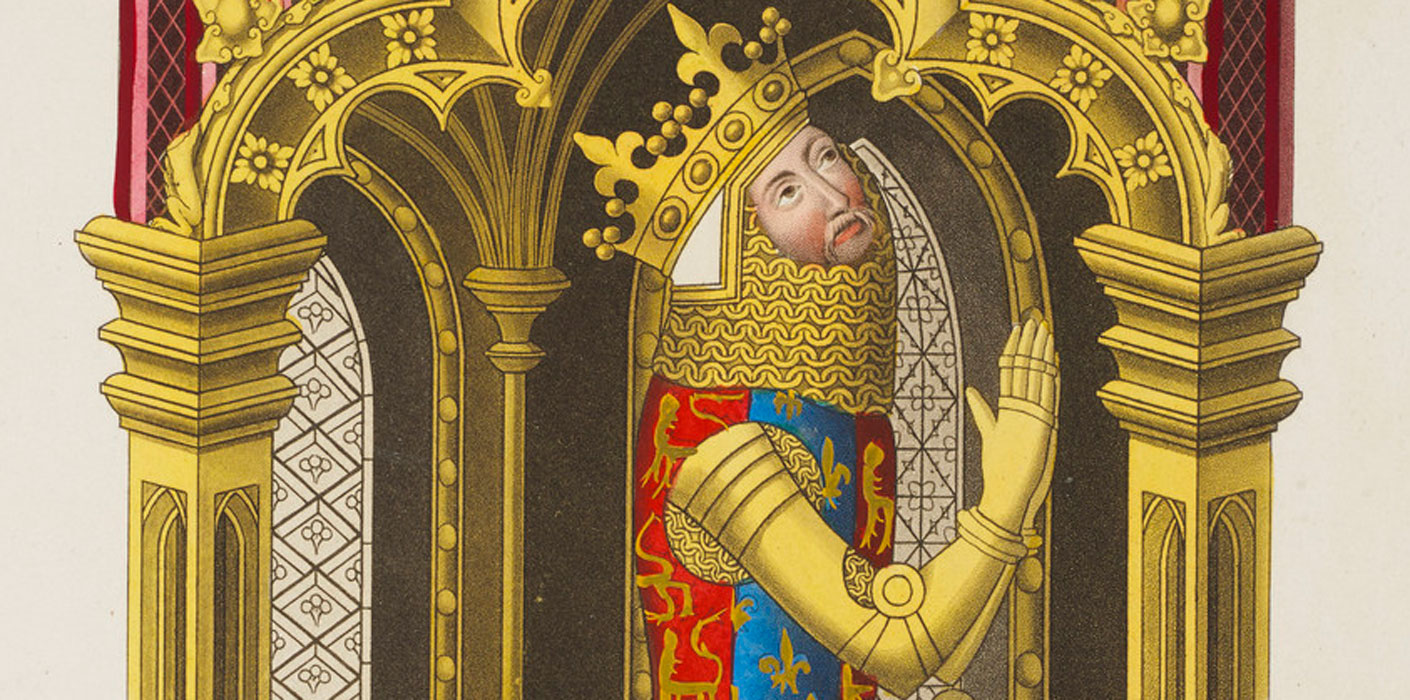
King Edward III
The tomb effigy in Westminster Abbey

Image westminster-abbey.org

https://www.royal.uk/sites/default/files/images/encyclopaedia/rs559032_600403-lpr-1.jpg-edit_0.jpg

 King Edward III from the paintings in St Stephen's Chapel in the old Palace of Westminster and dated to the early 1360s

Image: royal.uk

He was succeeded by his grandson King Richard II.


Tuesday, 19 July 2016

Coronation of King George IV


Thursday July 19th 1821 witnessed the Coronation of King George IV at Westminster. This spectacular occasion 195 years ago outdid all previous such ceremonies, and was the last at which there were the ceremonies in Westminster Hall, the procession thence to the Abbey and the great banquet afterwards - those were all done away with by King William IV for his coronation in 1831.

https://upload.wikimedia.org/wikipedia/commons/e/ef/George_IV_1821_color.jpg

King George IV in his Coronation Robes
His new crown is at his side and he is wearing the collars of the Orders of the Golden Fleece, the Royal Guelphic Order, the Bath and the Garter

Portrait by Sir Thomas Lawrence

Image: Wikipedia/Royal Collection Trust


There are pictures and more information about the day at Coronation of George IV

Cast of George IV's crown

 A cast of the crown of King George IV
The frame of the crown can now be seen at the Tower of London
There is more about the crown at Coronation Crown of George IV
Image: Royal Collection Trust

Image result for George IV Coronation

The crown when set with diamonds

Image:jpnetuk.com


https://blogger.googleusercontent.com/img/b/R29vZ2xl/AVvXsEh61I6F1jxUPVH8zgZlvGsz5Bldrgz7h-9K5HnpRfscoglCVtzvMypE7fzooP5ULmaofVtNctzFB4ewy57sZXfy2jd8vJW8UdEFwXbOZ8TiNEcqS1eOcMM0H_ycqTS0npBFRCe2Cs_X_Txa/s1600/Coronation+Procession,+1821,+George+Scharf.jpg

 The Coronation Procession in 1821

Image:madamegilflurt.com

Amongst the spectators who witnessed the procession to and from the Abbey was the twenty year old John Henry Newman who left his impressions of the spectacle, and especially of the jewels in the regalia - you might, he thought, be able to counterfeit the coloured precious stones, but not the flash and sparkle of diamonds.

 http://assets3.parliament.uk/iv/main-large//ImageVault/Images/id_302/scope_0/ImageVaultHandler.aspx.jpg

 The Coronation Banquet in Westminster Hall
The King's Champion is entering the Hall on horseback to challenge any opponent of the King's title

Image: parliament.uk

Two of the chandeliers which were hanging in Westminster Hall that day are now here in Oxford, in a place Newman himself knew in those years, the Holywell Music Room.


http://conference-oxford.com/images/conference/venue/94/holywellmusicroom1of1__venue-room.jpg

The interior of the Holywell Music Room in Oxford

Image: conference-oxford.com 

Thursday, 9 June 2016

The medieval Palace of Westminster


Looking for pictures of Westminster abbey I found these two reconstructions of the medieval palace of Westminster and thought I would post them as well. Both attempt to show Westminster at the beginning of the sixteenth century.

https://s3.amazonaws.com/photos.geni.com/p13/b4/83/5a/26/5344483ea7852cc8/westminster2_original.jpg

Image: geni.com

https://s3.amazonaws.com/photos.geni.com/p13/81/85/97/1d/5344483ea7852ccb/old-palace-westminster_original.jpg

Image: geni.com


Oratory Pilgrimage to Westminster Abbey


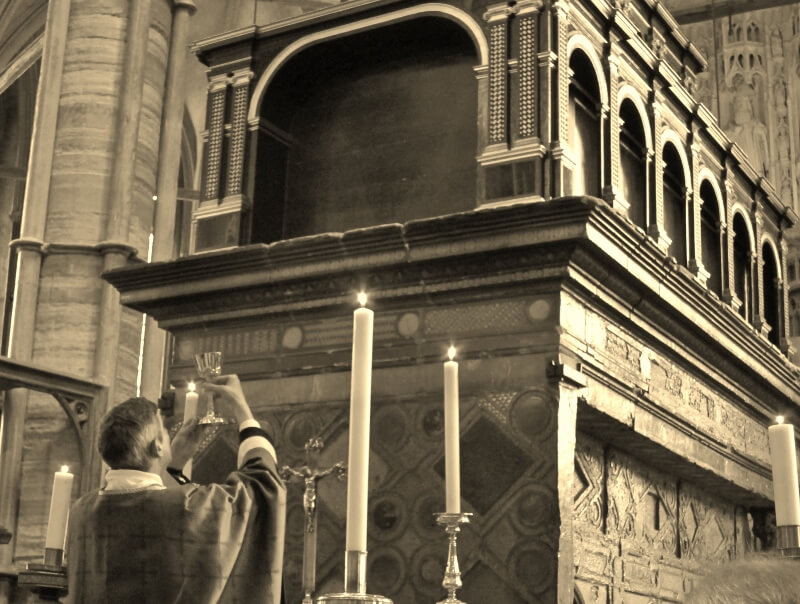
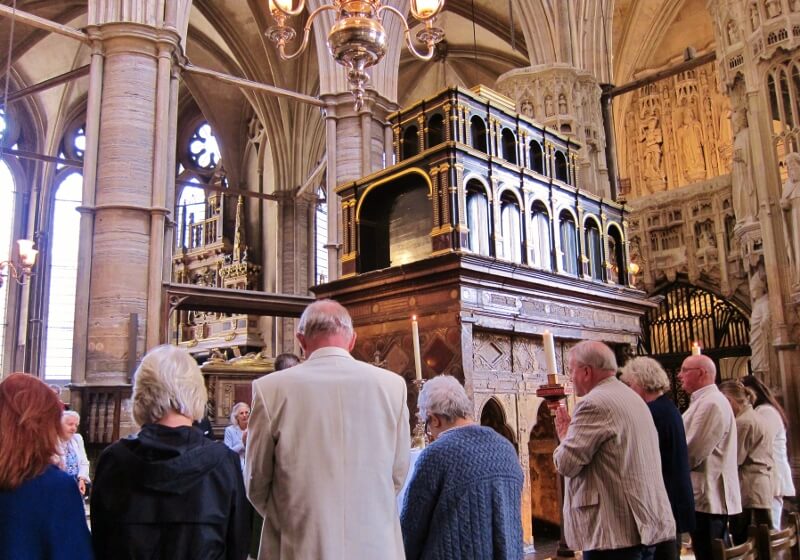
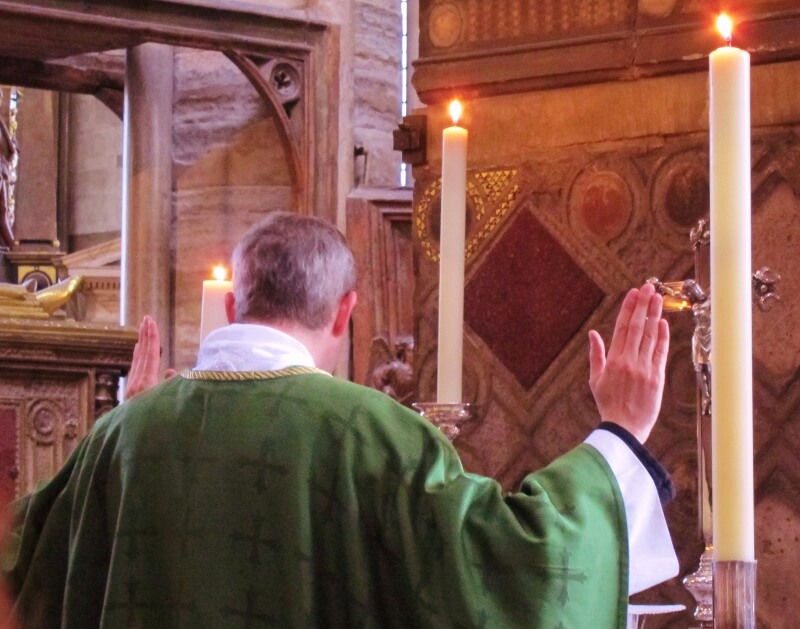
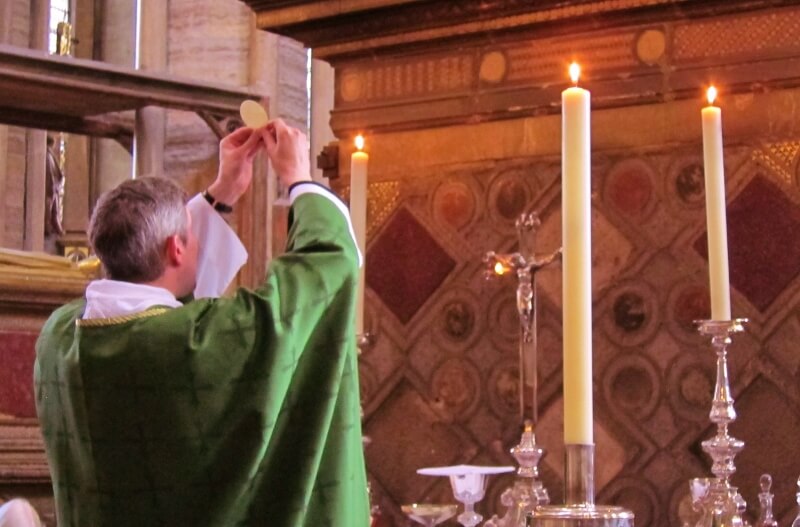
Yesterday I joined a group from the Oxford Oratory on a pilgrimage to Westminster Abbey. There we had the privilege of celebrating Mass at the tomb of St Edward the Confessor. Fr Daniel, the Provost was celebrant, and it was a remarkable experience kneeling surrounded by so many English monarchs - English Catholic monarchs - at the shrine of St Edward and so close to the site of the coronation ceremonies

IMG_1839 (800x604)


IMG_1836 (800x560)

I can be seen here centre right- when I knelt down I was at the side of the tomb of King Richard II who died in my home town at the castle and whose story influenced my choice of later medieval history as a particular academic interest. There were certainly souls to call to mind to pray for.

 IMG_1835 (800x629)


IMG_1834 (800x541)


IMG_1838 (800x527)

Having seen the thre-part series on the life of the abbey on television the other year and the work of the Dean to present the complex to the public I was interested to see how much the interior has improved in terms of access and visibility from previous visits twent odd years ago. Although the abbey was very busy the crowds flowed rather than stagnated and you were not sent round in on elong column the visitor has time to look and reflect on the vast number of things to see and appreciate. You get much more out of your visit I think than you used to and the whole building looks cleaner and better  kept - it did not necessarily do so in the late 1980s and early 1990s. If you have not been for awhile do go and look, and even if you do know the abbey well, go and look again - it is a constant revelation of past art and achievements.

We lunched in the excellent new restaurant anmd after time to look around the cloisters and Chapter House - again more accessible than previously - and, dodging a cloudburst, rejoined our coach in Broad Sanctuary. 

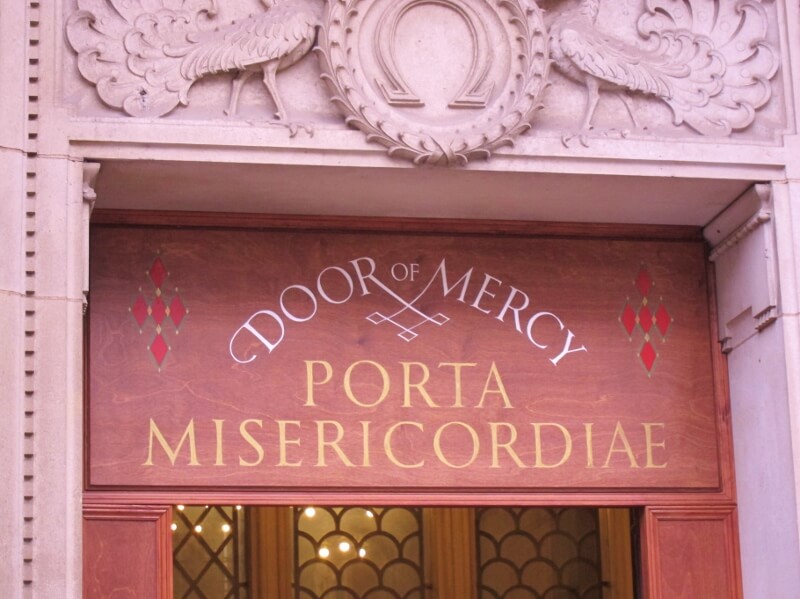
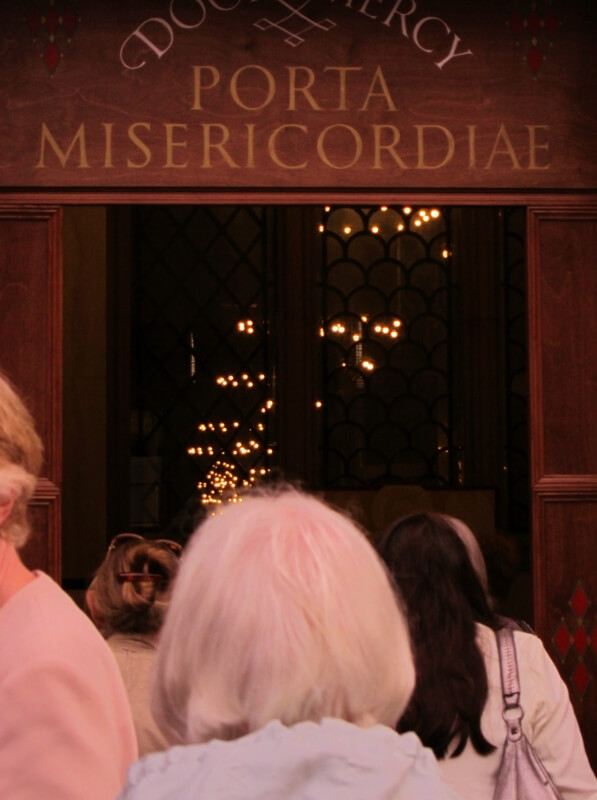
In the afternoon we went to Westminster Cathedral, where we were able to process through the Holy Jubilee Door of Mercy. If the calligraphy looks familiar, it is because, like our own Holy Door, it has been painted by Mrs Freddie Quartley, who is an Oratory parishioner:

IMG_1847 (800x599)


IMG_1852 (597x800)

Images: Oxford Oratory website
We concluded the afternoon by saying Vespers in the cathedral Lady Chapel.

This was a splendid day out both as apilgrimage and as an opportunity to see Westminster Abbey - there is so much of our national history there that it can at times almost overwhelm, yet still remains surprisingly intimate.


Tuesday, 5 January 2016

The Death of St Edward the Confessor


It was on this day 950 years ago in 1066 that King Edward the Confessor died.


King Edward on his deathbed and being prepared for burial

The Bayeux Tapestry

Image;englishhistoryauthors.blogspot.com


On his deathbed the King apparently nominated his brother-in-law Harold Godwinson as his heir, thus excluding both his closest blood relative Edgar the Atheling, grandson of his elder half-brother King Edmund II, and also the man who appeared to have been his chosen heir, Duke William II of Normandy. This was to cause problems...

He was buried in his newly consecrated abbey at Westminster


The King's body is carried to Westminster Abbey

Image: Wikimedia 

In the rebuilt abbey his shrine still survives in its place of honour behind the High Altar, surrounded by the tombs of later monarchs.


The Shrine of St Edward
The base is from King Henry III's rebuilding in 1269, the upper part a restoration by Queen Mary I

Image:volokh.com


Prof Frank Barlow's biography of the King unpicks the complexities of the reign for modern readers.

Whatever he achieved as King is ultimately less important than the facts that by design or accident he brought about the rule of the Norman Kings and all that was to entail and that he was to be revered  by later monarchs as an ideal exemplar of kingship, one whose laws were seen as fundamental to good government, whose regalia sanctified the wearer, one whose prayers they earnestly solicited.


The cult of St Edward

St Edward, between St Edmund and St John the Baptist, presenting King Richard Ii to the Virgin and Child
The Wilton Diptych c.1397

Image Wikimedia


Sunday, 25 October 2015

Agincourt 600


Today is the 600th anniversary of the battle of Agincourt.


Map of Henry's Route to Agincourt
 The English route to Agincourt
Each arrow represents a days travel

Image:aginc.net 

Jane Stemp Wickendon posted on the Medieval Religion discussion group King Henry V's pre-battle speech as re-written for him by William Shakeapeare almost two centuries later - still powerful and emotional stuff:


This day is called the feast of Crispian:
He that outlives this day, and comes safe home,
Will stand a tip-toe when the day is named,
And rouse him at the name of Crispian.
He that shall live this day, and see old age,
Will yearly on the vigil feast his neighbours,
And say 'To-morrow is Saint Crispian:'
Then will he strip his sleeve and show his scars.
And say 'These wounds I had on Crispin's day.'
Old men forget: yet all shall be forgot,
But he'll remember with advantages
What feats he did that day: then shall our names.
Familiar in his mouth as household words
Harry the king, Bedford and Exeter,
Warwick and Talbot, Salisbury and Gloucester,
Be in their flowing cups freshly remember'd.
This story shall the good man teach his son;
And Crispin Crispian shall ne'er go by,
From this day to the ending of the world,
But we in it shall be remember'd;
We few, we happy few, we band of brothers;
For he to-day that sheds his blood with me
Shall be my brother; be he ne'er so vile,
This day shall gentle his condition:
And gentlemen in England now a-bed
Shall think themselves accursed they were not here,
And hold their manhoods cheap whiles any speaks
That fought with us upon Saint Crispin's day.

John Dillon added as a more contemporary version Thomas Elmham's verse account of the battle (Liber metricus de Henrico V, vv. 485-580). As he said not exactly Shakespeare, of course. Herewith some selections:

CAPITULUM XXXVII. -De bello de Agincourt, in die Sanctorum Crispini et Crispiniani

Octobris mensis vicenus quintus habetur,
Anglos dans memores fervidus ille dies.
In feria sexta, Crispinus Crispiniano
Christi pila nuens nomine ferre potest.
Hostes in campo plures statuere cohortes,
Trusa quod his saevis arcubus ala foret.
Anterior fuerat Francorum turma pedestris,
In triplo superans Anglica rura viris.
Hinc equitum turmis acies sunt posteriores;
Sexaginta simul millia rure viri.
Ex Regis parte septem tunc millia vix sunt;
His unum bellum regia cura parat.

Henry arranges his troops and assigns the Duke of York to his station, then turns to the others about him:
Rex dixit reliquis, "Consortes, arma parate;
"Anglica jura quidem sunt referenda Deo;
"Edwardi Regis, Edwardi principis isto
"Jure notant memores praelia plura data.
"Cum paucis Anglis victoria multa notatur;
"Hoc nunquam potuit viribus esse suis.
"Anglia non planget me captum sive redemptum;
"Praesto paratus ero juris agone mori.
"Sancte Georgi! Sancte Georgi, miles! adesto;
"Anglis in jure, Sancta Maria, fave!
"Hac hora plures pro nobis corde precantur
"Anglorum justi : fraus tua, France!, ruet."

Near the end of Elmham's account we are told that some saw St. George on the field during the battle:

CAPITULUM XL. - Quod a quibusdam cernitur Sanctus Georgius in campo, armatus pro parte Anglorum.

Cernitur in campo sacer ille Georgius armis,
Anglorum parte, bella parare suis.
Protegit his Anglos victrix manus Altitonantis:
Non nobis, sed ei, gloria tota datur.

https://upload.wikimedia.org/wikipedia/commons/7/7f/Henry5.JPG

 King Henry V

Image: Wikimedia

Westminster Abbey is holding several events to commemorate the battle - including a special service on October 29th, the anniversary of the news of the King' s victory reached London, and day upon which he reached Calais - about which there are details at http://www.westminster-abbey.org/events/agincourt

I  have some more posts in mind about this anniversary, but for today I will add this comment that at Agincourt King Henry V and his band of brothers not only won a major and remarkable military victory but also, in that strange process which defines nations and communities, managed on that wet October day amidst the mud and blood, the pain and suffering, to touch the very soul of England. So we may well say " Cry God for Harry, England and St George"


Monday, 21 September 2015

St Matthew


Today is the feast of St Matthew Apostle and Evangelist. This is going to be a long post, but I have several good friends called Matthew so I am posting this with them in mind.

As with others of this type it is based on posts by contributors to the Medieval Religion discussion group. As is my wont I have opened and copied and pasted many of the images. Flickr does not allow me to do that, nor do some picture gallery collections - so it is worth clicking on the links. Those I have reproduced can often be seen in larger format by clicking on the appropriate link to the lower right in each case. This is a particularly rich and varied selection of depictions of St Matthew and in various different mediums, and illustrates the vitality of art and artists over almost a thousand years.


Gordon Plumb opened the batting with these images in glass of St Matthew:

Bourges, Cathédrale St Étienne, Bay 208, central figure:
https://www.flickr.com/photos/22274117@N08/15892900515

Oxford, Merton College Chapel, sVIII:
https://www.flickr.com/photos/22274117@N08/6404996633
and detail of Matthew:
https://www.flickr.com/photos/22274117@N08/6405001663

Stanford-on-Avon, St Nicholas, Northamptonshire, nIII, A1, c.1324-30:
https://www.flickr.com/photos/22274117@N08/3248334106

Greystoke, Cumbria, east window, 2d, St Matthew in prison from the 15thC. window by York glaziers telling the story of St Andrew including his journey to Wronden to rescue St Matthew from prison there:
https://www.flickr.com/photos/22274117@N08/3016449814

Lincoln Cathedral, sXXIX.1, figure on left, St Matthew, c.1230:
https://www.flickr.com/photos/22274117@N08/5458678395

Norbury, St Mary and St Barlok, Derbyshire east window, 2d-5d:
https://www.flickr.com/photos/22274117@N08/17202988512
and detail:
https://www.flickr.com/photos/22274117@N08/16584465633

Oxford, Trinity College, Old Library, fourth east window, 2b:
https://www.flickr.com/photos/22274117@N08/16584465633

Elsing, St Mary, Norfolk, sII, 1b-3b:
https://www.flickr.com/photos/22274117@N08/6119382253
and detail:
https://www.flickr.com/photos/22274117@N08/6119927618

Gresford, All Saints, Lady Chapel, east window A4:
https://www.flickr.com/photos/22274117@N08/15243242579

York Minster, Great East window, 9a, evangelist symbol of St Matthew:
https://www.flickr.com/photos/22274117@N08/8495136577

Attleborough, Assumption of the Blessed Virgin Mary, Norfolk, wI:
three evangelist symbols of St Matthew:
D2: https://www.flickr.com/photos/22274117@N08/3203829307
D3: https://www.flickr.com/photos/22274117@N08/3204679596
F4: https://www.flickr.com/photos/22274117@N08/32046839165

Orchardleigh, St Mary, Somerset, sII, 3a:
https://www.flickr.com/photos/22274117@N08/32046839164

Melbury Bubb, St Mary, Dorset, wI, B6 left-hand figure:
https://www.flickr.com/photos/22274117@N08/3480767394

Lincoln Cathedral, sII, 4a, the call of Matthew:
https://www.flickr.com/photos/22274117@N08/2258354521

Cartmel Priuory, Cumbria, east window, A4,angel symbol of St Matthew:
https://www.flickr.com/photos/22274117@N08/2893301352

Cartmel Priory, east window, A10:
https://www.flickr.com/photos/22274117@N08/2893315534

Bourges, Cathédrale St Étienne, Bay 37, 2nd from left:
https://www.flickr.com/photos/22274117@N08/4257389964

Chartres, St Père, Bay 219, lower right:
https://www.flickr.com/photos/22274117@N08/2842773067


Genevra Kornbluth added these images from her extensive photo library: http://www.kornbluthphoto.com/SaintMatthew.html

John Dillon then posted the following:

Further period-pertinent images of St. Matthew the Evangelist (NB: for convenience, I'm calling Matthew's tetramorphic image "his angel" throughout: for instances of its portrayal as an actual angel interacting with Matthew see items f, pp, ss, yy, and eee).

a) as depicted (second from top at right; above him, St. Andrew; below him, St. Paul) among the roundels of apostles framing the Theotokos and Christ Child in a sixth-century tapestry icon from Egypt in the Cleveland Museum of Art, Cleveland (OH):


Detail view:
http://tinyurl.com/ph59gr6

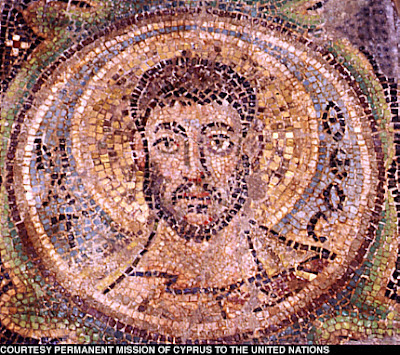
b) as depicted in a late sixth-century mosaic formerly in the apse of the church of the Panagia Kanakaria at Lythrankomi in Turkish-occupied northern Cyprus and now in the Byzantine Museum in that part of Nicosia under the jurisdiction of the Republic of Cyprus:

 https://blogger.googleusercontent.com/img/b/R29vZ2xl/AVvXsEhflWJS9yvtZOAOQYjJQcX8B1450AxKjRfcs1x2bYu2tRMRWXaNKXuqe-W3GKLllWYrbAGxZSq6CXgIE4qY_pTDOkd7F9KYXOCDM_xtxbuP3wLpBfFjV2oSpzdpkDfEWljUKO793_TFoFs/s1600/S.Matteo.jpg


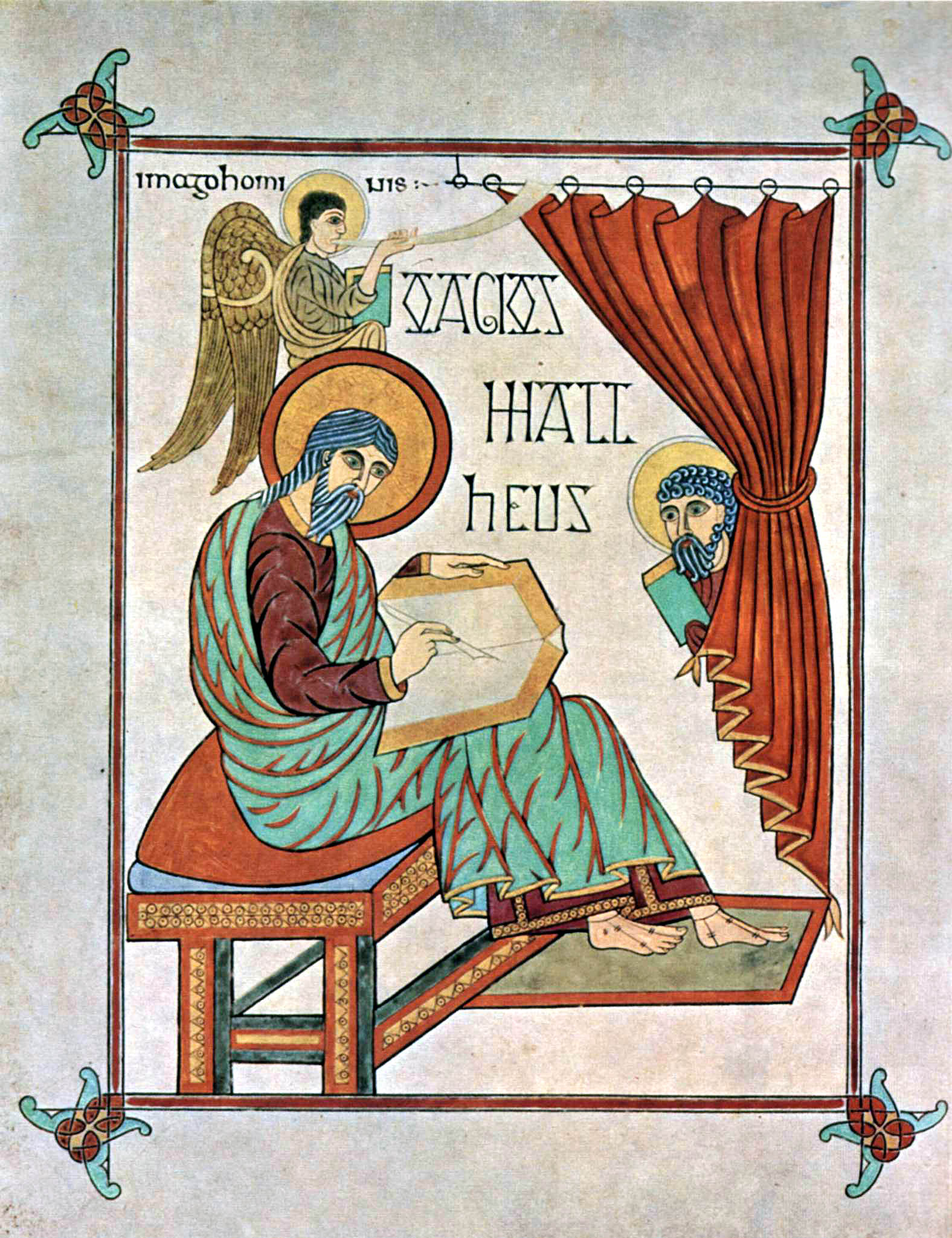
c) as depicted (with his angel) in a full-page illumination in the earlier eighth-century Lindisfarne Gospels (ca. 715-720; London, BL, MS Cotton Nero D. IV, fol. 25v):

 https://upload.wikimedia.org/wikipedia/commons/7/79/Meister_des_Book_of_Lindisfarne_001.jpg


d) as depicted (lower register; upper register, his angel) in the mid-eighth-century Gundohinus Gospels (Autun, Bibliothèque municipale, ms. 3, fol. 186v):

 http://www.enluminures.culture.fr/Wave/savimage/enlumine/irht7/IRHT_106900-p.jpg


e) as depicted (lower register; upper register, his angel) in the mid-eighth-century Stockholm Codex Aureus (a.k.a. Codex Aureus of Canterbury; Stockholm, Kungliga Biblioteket, MS A. 135, fol. 9v):

 https://upload.wikimedia.org/wikipedia/commons/6/69/CodexAureusCanterburyFolios9v10r.jpg


f) as depicted (with his angel) in a full-page illumination in the late eighth-century Godescalc Gospels (between 781 and 783; Paris, BnF, ms. Nouvelle acquisition latine 1203, fol. 1):


g) as depicted in a full-page illumination in the late eighth-or early ninth-century Coronation Gospels from Aachen (ca. 795-810; Vienna; Kunsthistorisches Museum, Weltliche Schatzkammer, Inv. Nr. XIII 18, fol. 15r):
http://tinyurl.com/pz8jqnz

 https://krizpots.files.wordpress.com/2013/09/st_matthew_coronation_gospels1355085830641.jpg


h) as depicted in a full-page illumination in the earlier ninth-century Ebbo Gospels (ca. 816-841; Épernay, Bibliothèque municipale, ms. 1, fol. 18v):
https://krizpots.files.wordpress.com/2013/09/ebbo.jpg

i) as depicted in a full-page illumination in a late ninth- or early tenth-century Gospels from Landévennec (Oxford, Bodleian Library, MS Auct. D. 2. 16, fol.28v):

 http://image.ox.ac.uk/images/bodleian/ms.auct.d.2.16/28v.jpg


j) as depicted in a full-page illumination in a later tenth- or earlier eleventh-century Gospel lectionary from Constantinople (c. 976-1025; St. Catherine [So. Sinai], Holy Monastery of the God-trodden Mount Sinai, cod. 204, fol. 8r):
http://www.icon-art.info/hires.php?lng=en&type=1&id=2464

k) as depicted in a full-page illumination in a later tenth- or earlier eleventh-century Gospels from Constantinople (c. 976-1025; Paris, BnF, ms. Coislin 20, fol. 10v):
http://tinyurl.com/p9g8utk

l) as depicted in the earlier eleventh-century mosaics (restored between 1953 and 1962) in the narthex of the church of the Theotokos in the monastery of Hosios Loukas near Distomo in Phokis:

 https://upload.wikimedia.org/wikipedia/commons/b/b9/Hosios_Loukas_%28narthex%29_-_East_wall%2C_1st_arch_%28S.Matthew%29_02.jpg


m) as depicted in a full-page illumination in an earlier eleventh-century Gospels from Constantinople (Paris, BnF, ms. Grec 64, fol. 9v):
http://tinyurl.com/25h3ats

n) as depicted in the mid-eleventh-century mosaics in the katholikon of the Nea Moni on Chios:
http://www.eikonografos.com/album/albums/uploads/nea_moni/10.jpg
Detail view:
http://tinyurl.com/nsl72z6

o) as portrayed in high relief on a later eleventh-century ivory plaque of the Four Evangelists of Rhenish origin in the Victoria and Albert Museum, London:

http://media.vam.ac.uk/media/thira/collection_images/2009CA/2009CA7150_jpg_l.jpg

The plaque as a whole:
http://collections.vam.ac.uk/item/O129592/plaque-unknown/

p) as depicted in a twelfth-century copy of the Gospel of Matthew with gloss (Châlons-en-Champagne, Bibliothèques de Châlons, Bibliothèque Pompidou, ms. 78 [86], fol. 1r):

 http://www.culture.gouv.fr/Wave/savimage/enlumine/irht7/IRHT_108122-p.jpg


q) as depicted in a full-page illumination an earlier twelfth-century Gospels from Agen or from the abbey of Moissac (Paris, BnF, ms. Latin 254, fol. 10r):

 Novum Testamentum.


r) as depicted (with his angel) in an earlier twelfth-century legendary from the abbey of Cîteaux (between 1101-1133; Dijon, Bibliothèque municipale, ms. 641, fol. 57r):

 http://www.enluminures.culture.fr/Wave/savimage/enlumine/irht6/IRHT_094812-p.jpg


s) as depicted by the Kokkinobaphos Master in a full-page illumination formerly part of an earlier twelfth-century Gospels from Constantinople (c. 1126-1150; Mt. Athos, Monastery of Great Lavra MS A44) and now in the Walters Art Gallery and Museum, Baltimore (fol. W.530.Er):
http://tinyurl.com/qyang7m

t) as depicted (at left; at right, St. John the Theologian) in the mid-twelfth-century apse mosaic in the left aisle of Trieste's basilica cattedrale di San Giusto martire:

 https://c2.staticflickr.com/4/3889/15164998215_ce7b0fd9d3_b.jpg


u) as depicted (upper register at center) in the mid-twelfth-century apse mosaics (completed in 1148) of the basilica cattedrale della Trasfigurazione in Cefalù:

 http://www.wga.hu/art/zgothic/mosaics/3cefalu/4cefalu.jpg


v) as portrayed (at right; at left, St. Thomas) on a later twelfth-century gilt and enameled copper plaque of Mosan origin (c. 1160) in the Cleveland Museum of Art, Cleveland (OH):


w) as portrayed in relief (at far right in this view, drinking from a cup) by Anselmo da Campione in his Last Supper panel on the later twelfth-century parapet (_pontile_; c. 1170-1180) in the cattedrale di San Geminiano in Modena:

 http://rubens.anu.edu.au/raid1/italy_december_2005_1/modena/duomo/interior/pontile/DSC00019.JPG


x) as depicted in the later twelfth-century Last Judgment fresco (betw. 1176 and 1200) in the church of St. George in Staraya Ladoga:
http://www.icon-art.info/hires.php?lng=en&type=11&id=1447

y) as portrayed in relief (at left; at centre, St. Thomas; at right, St. Peter) on the late twelfth-century enameled copper reliquary châsse (of Limousin origin) of Sts. Calminus and Namadia in the église abbatiale St.-Pierre et St.-Caprais in Mozac (Puy-de-Dôme):

 https://upload.wikimedia.org/wikipedia/commons/3/3d/Ch%C3%A2sse_Calmin_Mozac_les_ap%C3%B4tres_1.JPG


z) as portrayed (top row and the first two views in the following row; scenes of his legendary apostolate in Ethiopia) on a late twelfth-century capital found at Nazareth in 1908 and now mounted on a wall of the modern Church of the Annunciation there:
http://picasaweb.google.com/JuliannaLees/NazarethCapitals#

aa) as portrayed (at center; at right, St. John the Evangelist) in a late twelfth-century jamb statue on the Galluspforte (the north portal; ca. 1180-1190) of the Basler Münster:

 http://www.wga.hu/art/zgothic/1romanes/po-12c3/6s2_1167.jpg


bb) as portrayed in high relief on an earlier thirteenth-century enameled plaque (c. 1220-1230) from the main altar of the then priory church of St. Michael at Grandmont (Haute-Vienne) and now in the Musée du Louvre, Paris:

 http://cartelfr.louvre.fr/pub/fr/image/63519_95-001705.jpg


cc) as portrayed in a statue on the earlier thirteenth-century Angel Pillar (c. 1230) in the cathédrale Notre-Dame in Strasbourg:

https://blogger.googleusercontent.com/img/b/R29vZ2xl/AVvXsEg7lXTyAshvLukWgpkWtVG58eXHBkC51_xiWwsJNXTG0xnTSAenhR7lREfPQa0IyOaz5B85wUxydYFZhdEI7OUvoRUJ4SKL4pGd_HP11yaTBBt4LF93LSQ3CqwzbXlnUyX_Yv0cr7H7S8Ad/s1600/F4+Strasbourg+Cathedral.JPG


dd) as depicted in a later thirteenth-century fresco (between 1260 and 1263) in the nave of the church of the Holy Apostles in the Patriarchate of Peć at Peć in, depending on one's view of the matter, either the Republic of Kosovo or Serbia's province of Kosovo and Metohija:
http://tinyurl.com/2clkpom
Detail view:
http://tinyurl.com/2e687k5

ee) as portrayed (second from left) in a silver gilt statuette on the later thirteenth-century copper gilt châsse of St. Remaclus (completed betw. 1263 and 1268) in the église Saint-Sébastien in Stavelot:
http://tinyurl.com/o2u8rsz
Detail view (zoomable image):
http://balat.kikirpa.be/photo.php?path=KM3923&objnr=10074187&lang=en-GB&nr=1

ff) as depicted by Cimabue in a later thirteenth-century fresco (ca. 1277-1280) in the upper church of the basilica di San Francesco, Assisi (in a vault field that collapsed as a result of the earthquake of 1997; restoration completed, 2007):

 http://easyweb.easynet.co.uk/giorgio.vasari/cimabue/stmatt.jpg

Detail view:
http://www.wga.hu/art/c/cimabue/assisi/vault4.jpg

gg) as portrayed in a later thirteenth-century statue (ca. 1280) on a pillar in the inner choir of Köln's Hohe Domkirche Sankt Petrus und Maria:

 http://www.wga.hu/art/zgothic/gothic/4/03g_1350.jpg


hh) as depicted (at far left) by Duccio di Buoninsegna in his early fourteenth-century Maestà altarpiece (between 1308-1311) in the Museo del Opera del Duomo in Siena:
http://klp.pl/admin-malarstwo/images/d_duccio_duccio/d_duccio_duccio21.jpg

ii) as depicted in an earlier fourteenth-century fresco (c. 1310-1320), often attributed to Giotto di Bondone, in the lower church of the basilica di San Francesco, Assisi:

 http://www.christusrex.org/www1/francis/ABI-matteo-l.jpg


jj) as depicted by the workshop of Simone Martini in an early fourteenth-century panel painting (ca. 1317-1320) in the National Gallery of Art, Washington, DC:
http://www.nga.gov/content/ngaweb/Collection/art-object-page.41633.html

kk) as depicted (centre panel, at left in upper register) by Ugolino di Nerio in an earlier fourteenth-century panel painting (ca. 1325-1330), from his dismembered Santa Croce altarpiece, in the Gemäldegalerie, Berlin:

 http://www.wga.hu/art/u/ugolino/nerio/croce.jpg


ll) as depicted (martyrdom) in an earlier fourteenth-century French-language legendary of Parisian origin, with illuminations attributed to the Fauvel Master (ca. 1327; Paris, BnF, ms. Français 183, fol. 49r):
http://tinyurl.com/2fumpvy

mm) as depicted (at left) by Bernardo Daddi in an earlier fourteenth-century triptych of the BVM with saints (1328) in the Galleria degli Uffizi, Florence:

 http://www.wga.hu/art/d/daddi/mad_chil.jpg


nn) as depicted in a November calendar portrait in the earlier fourteenth-century frescoes (betw. 1335 and 1350) of the narthex in the church of the Holy Ascension at the Visoki Dečani monastery near Peć in, depending on one's view of the matter, either the Republic of Kosovo or Serbia's province of Kosovo and Metohija:
http://tinyurl.com/obejyr9

oo) as depicted (top centre; martyrdom ) in a mid-fourteenth-century copy (ca. 1355) of Ulrich of Lilienfeld's Concordantiae caritatis (Lilienfeld, Stiftsbibliothek, Cod. 151, fol. 214v):

 http://tarvos.imareal.oeaw.ac.at/server/images/7005000.JPG


pp) as depicted (with his angel) in a later fourteenth-century panel painting (betw. 1357 and 1367) by Theodoric of Prague and workshop in the Holy Cross Chapel, Karlštejn Castle (near Prague):

 https://upload.wikimedia.org/wikipedia/commons/6/68/Meister_Theoderich_von_Prag_006.jpg


qq) as depicted in the later fourteenth-century frescoes (1360s and 1370s; restored in 1968-1970) in the church of St. Demetrius in Marko's Monastery at Markova Sušica:

 https://upload.wikimedia.org/wikipedia/commons/0/09/Paintings_in_St._Demetrius_Church_%28Markova_Su%C5%A1ica%29_0290.JPG


rr) as depicted by Andrea Orcagna (M. as evangelist and as missionary in Ethiopia) in a later fourteenth-century triptych (ca. 1367; completed by Jacopo di Cione) in the Galleria degli Uffizi, Florence:

 http://www.wga.hu/art/o/orcagna/matthew.jpg


ss) as depicted (at far right, with his angel) by Spinello Aretino in a late fourteenth-century triptych of the BVM and saints (1391) in the Galleria dell'Accademia, Florence:

 https://upload.wikimedia.org/wikipedia/commons/9/90/Spinello_aretino%2C_trittico_della_madonna_in_trono_e_santi.jpg


tt) as portrayed in high relief (third from left) on the late fourteenth- or early fifteenth-century tomb of St. Wendelin in his basilica in Sankt Wendel:

 https://upload.wikimedia.org/wikipedia/commons/3/31/St.Wendel_Dom_13.JPG


uu) as depicted (bottom register, at far right) by Lorenzo Monaco in a panel painting, from his dismembered early fifteenth-century San Benedetto altarpiece (1307-1309), in the National Gallery, London (image greatly expandable):
http://tinyurl.com/obhzaxp

vv) as portrayed by Bernardo Ciuffagni in an early fifteenth-century statue (between 1410 and 1415) for the facade of the cathedral of Florence (statue now in the Museo dell'Opera del Duomo):

 https://upload.wikimedia.org/wikipedia/commons/1/1f/St_Matthew_Ciuffagni_OPA_Florence.jpg


ww) as depicted (driving off two dragons in Ethiopia) in the early fifteenth-century Châteauroux Breviary (ca. 1414; Châteauroux, Bibliothèque municipale, ms. 2, fol. 337v):

http://www.enluminures.culture.fr/Wave/savimage/enlumine/irht2/IRHT_054188-p.jpg


xx) as depicted in a full-page illumination in the earlier fifteenth-century Radoslav Gospel from Serbia (1428-1429; Saint Petersburg, National Library of Russia, ms. РНБ. F.I.591, fol. 1r):
http://www.icon-art.info/hires.php?lng=en&type=1&id=4827

yy) as portrayed in relief (with his angel) by Donatello in an earlier fifteenth-century terracotta roundel (betw. 1428 and 1445) in the old sacristy of Florence's basilica di San Lorenzo:
http://www.wga.hu/art/d/donatell/2_mature/sacristy/1sacri09.jpg

zz) as depicted (at left; at right, St. Francis of Assisi) by Giovanni di Paolo in an early fifteenth-century predella panel (ca. 1435) , from a dismembered altarpiece, in the Metropolitan Museum of Art, New York:

 Saints Matthew and Francis


aaa) as depicted in the Suffrages in the earlier fifteenth-century Hours of Catherine of Cleves (ca. 1440; New York, The Pierpont Morgan Library, ms. M.917, p. 231; image greatly expandable):
http://www.themorgan.org/collection/hours-of-catherine-of-cleves/88

bbb) as depicted in a full-page illumination in a mid-fifteenth-century Armenian-language Gospels (1456; Paris, BnF, ms. Arménien 18, fol. 28v):
http://tinyurl.com/23aqaud

ccc) as portrayed in a polychromed and gilt later fifteenth-century wooden statue from Brabant (ca. 1470) in the Metropolitan Museum of Art, New York:

 Saint Matthew


ddd) as depicted (at left; at right, St. Simon the Zealot) by Miguel Ximénez and workshop in a panel of his and Martín Bernad's late fifteenth-century altarpiece of the Holy Cross (completed, 1487) for the parish church of Blesa (Teruel) and now, after dismemberment, mostly in the Museo de Zaragoza:

https://blogger.googleusercontent.com/img/b/R29vZ2xl/AVvXsEg4qRW71HiMcuhbOWZbDxhd0ju1_vcLaPQ7xxeeGaciwzPXr83JJoJjSRpqMqQjsik343UJvgGier2-qt8TiCDsvSOBi-dru0tERcOxBF48iHe1u39nM8t1n61l4M6k4uQwPrqIPIsyvcit/s1600/blesa09.jpg


eee) as depicted (with his angel) in a late fifteenth-century breviary according to the Use of Besançon (before 1498; Besançon, Bibliothèque municipale, ms. 69, p. 772):

http://www.enluminures.culture.fr/Wave/savimage/enlumine/irht5/IRHT_083529-p.jpg


To all those wonderful and varied images I will add this additional one, from the statues in King Henry VII's Chapel at Westminster Abbey:

 http://www.westminster-abbey.org/__data/assets/thumbnail/0009/9594/32908.jpeg

The particular interest of this statue is that St Matthew is shown wearing spectacles - he is supposed to have weakened his eye-sight when he was working as a tax collector   

 Image: westminster-abbey.org