Once I was a clever boy learning the arts of Oxford... is a quotation from the verses written by Bishop Richard Fleming (c.1385-1431) for his tomb in Lincoln Cathedral. Fleming, the founder of Lincoln College in Oxford, is the subject of my research for a D. Phil., and, like me, a son of the West Riding. I have remarked in the past that I have a deeply meaningful on-going relationship with a dead fifteenth century bishop... it was Fleming who, in effect, enabled me to come to Oxford and to learn its arts, and for that I am immensely grateful.


Showing posts with label St Agnes. Show all posts

Thursday, 21 January 2016

St Agnes


Today is the feast of St Agnes, Virgin and Martyr.

Here are some of the more striking images of her from those posted by John Dillon on the Medieval Religion discussion group:

http://www.wga.hu/art/d/duccio/maesta/0main/maest_01c.jpg

St Agnes  depicted (bottom register, at far right) by Duccio di Buoninsegna in his early fourteenth-century Maestà (between 1308 and 1311) for the cathedral of Siena


Detail view  of  St Agnes:


http://www.wga.hu/art/d/duccio/maesta/0main/maest_06a.jpg


 http://www.oceansbridge.com/paintings/german/thumb/Simone_Martini_011_OBNP2009-Y05845.jpg

St Agnes at left; at right, St. Ambrose of Milan by Simone Martini in a predella panel of his earlier fourteenth-century Polyptych of Santa Caterina (commissioned, 1319) in the Museo nazionale di San Matteo in Pisa


St Agnes depicted in the earlier fourteenth-century East Window (ca. 1320) in the church of the former Cistercian abbey of Heiligkreuztal near Riedlingen (Lkr. Biberach) in Baden-Württemberg:

 Heiligkreuztal, Klosterkirche, Hl. Agnes

Detail view:

 http://www.heiligen.net/afb/01/21/01-21-0304-agnes-rome_1.jpg

https://upload.wikimedia.org/wikipedia/commons/1/19/Andrea_di_Bonaiuto._St._Agnes_and_St._Domitilla._1365._Galleria_dell%27Accademia%2C_Florence..jpg

St Agnes at left with at right, St. Domitilla by Andrea di Bonaiuto in a later fourteenth-century diptych (c. 1365-1370) in the Galleria dell'Accademia, Florence


 http://www.uni-muenster.de/imperia/md/images/religion_und_politik/aktuelles/2012/03_2012/news-reliquienstatuette-heilige-agnes-zoom.jpg

An earlier sixteenth-century silver and silver gilt reliquary statue (c. 1520-1525) in the treasury of the St.-Paulus-Dom in Münster

Friday, 24 January 2014

Saints of the Week


This week the liturgical calendar has been quite busy with saints days and I thought I would provide links to previous posts which touch on the lives of some of them.

Monday was the feast day of both St Fabian and of St Sebastian, depictions of both of whom I posted about in 2011 in St Fabian and St Sebastian.

Tuesday was the important feast of St Agnes, and that evening we had an interesting reflection from Fr Jerome at the meeting of the Brothers of the Oratory on the liturgical significance of her feast - she has proper antiphons for the Offices in both the Tridentine Breviary and the moderrn Divine Office, and it is the feast on which the lambs whose wool will be used for this year's pallia are blessed in Rome - and on the unique Christian concern for virginity and the consecrated lives of women as Sisters or enclosed Nuns. This is an ancient part of the Church's life, being clearly established by the time of St Antony in the later third century. Indeed it can be traced directly to the Virgin Mary's response to the Archangel at the Annunciation. The concept of St Agnes or other young women preferring the life of a spouse of Christ was incomprehensible to the Jews and the Romans, and indeed to much of the modern world, yet it has inspired much selfless and holy work over the centuries.

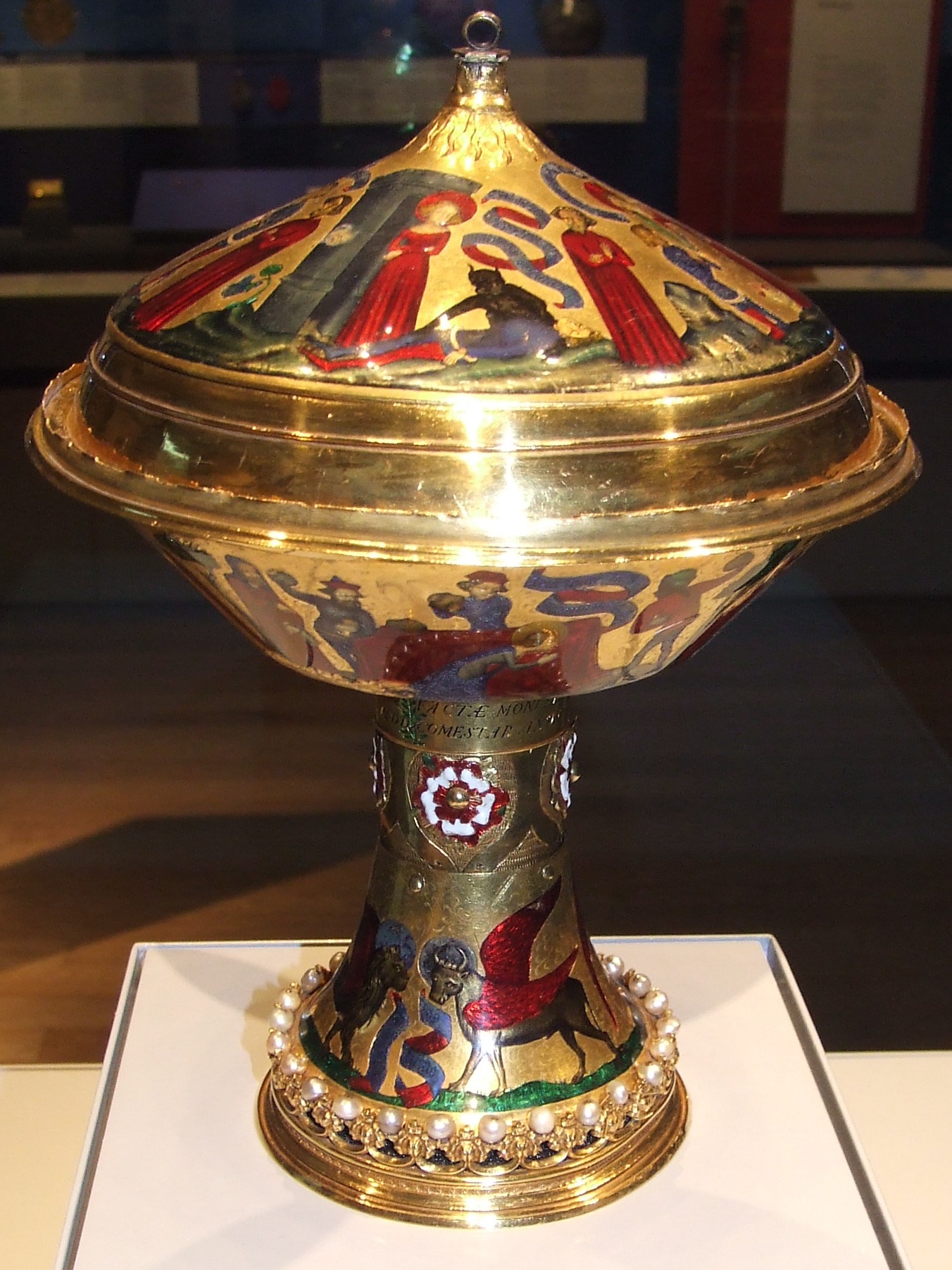
I have posted about depictions of her and the widespread cult of St Agnes in The Royal Gold Cup in 2012 and in St Agnes last year.

Wednesday was the feast of St Vincent of Saragossa, and I have posted about some of the superb late medieval Iberian images of him in St Vincent in 2011, and linked to it a post Another red pileus in 2012, and also in 2012 in Conferring the Diaconate and last year in St Vincent of Saragossa.

Yesterday was the feast day of the Oxford born Jesuit lay brother and constructor of priest holes St Nicholas Owen, who died after torture in the Tower of London in March 1606. My previous posts about him can be read at St Nicholas Owen from 2011 or in a slightly revised form at St Nicholas Owen from 2012.

Today is the feast of St Francis de Sales, erstwhile Oratorian, and later Bishop of Geneva. My account of my visit last July to his shrine church in Annecy and other places in the city connected with him can be read at Over the hills to Annecy and back.


Monday, 21 January 2013

St Agnes


It is no doubt right and just that the last Mass King Louis XVI attended, on the morning of the day in which he was to be judicially murdered, was that of a martyr, St Agnes.

St Agnes is an early Christian martyr to whom devotion, unlike some others, has survived.There is an on line account of her and her cult here. From it I learned that she is known in some contries as St Ines, but, of course, the pun on her name of Agnes/Agnus has led both to her traditional symbol of a lamb and to the tradition of the lambs whose wool is used to weave the pallia given by the Pope to Archbishops as a sign of their authority being blessed on this day at the church of St Agnes in Rome.

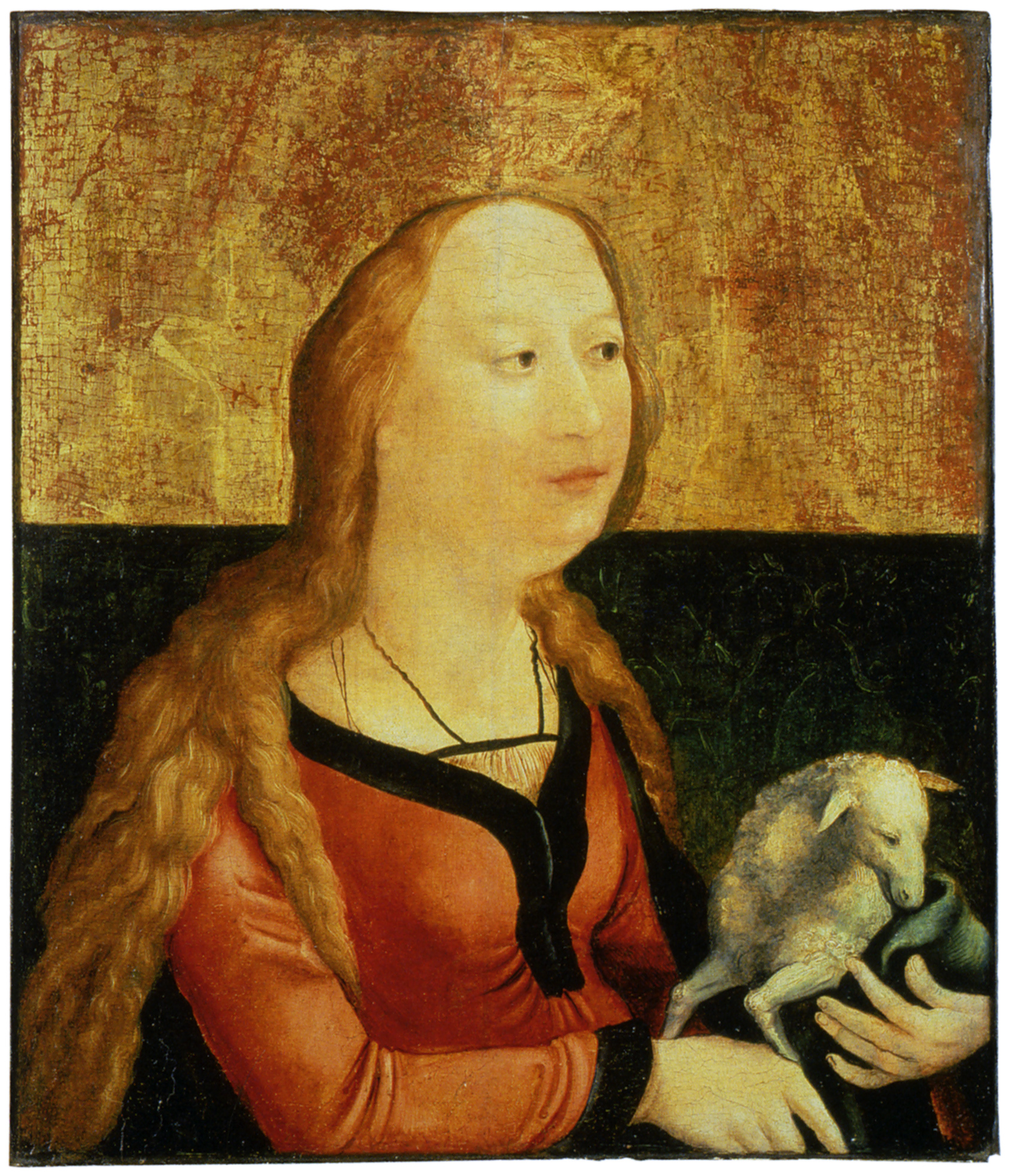
As apopular saint she has attracted the interest of many artists. Here are three different depictions of her, in different mediums from approximately the same era: 


photo

St Agnes
 Fifteenth century tracery glass in the East Window of Cartmel Priory Lancashire

Image: Gordon Plumb on Flickr


File:AgnesBurgosCathedral.jpg

Statue of St Agnes in sixteenth century polychrome

Retable in the Chapel of the High Constable, Burgos Cathedral

Image: Wikipedia


St Agnes by Matthias Grünewald circa 1500
Coburg Castle

Image: Wikipedia


Saturday, 21 January 2012

The Royal Gold Cup


As today is the feast of St Agnes it seems not inappropriate to draw attention to the Royal Gold Cup, which is now in the British Museum. The Cup is decorated with enamelled scenes which narrate the story of St Agnes. The cup is a rare and spectacular survival of late medieval French goldsmiths' work, and is of the highest quality. A detailed account of the cup, its dating and history as well as of its decoration can be read here.