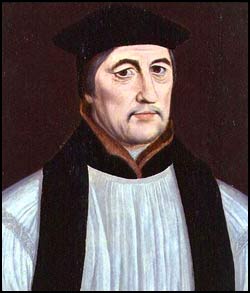
Once I was a clever boy learning the arts of Oxford... is a quotation from the verses written by Bishop Richard Fleming (c.1385-1431) for his tomb in Lincoln Cathedral. Fleming, the founder of Lincoln College in Oxford, is the subject of my research for a D. Phil., and, like me, a son of the West Riding. I have remarked in the past that I have a deeply meaningful on-going relationship with a dead fifteenth century bishop... it was Fleming who, in effect, enabled me to come to Oxford and to learn its arts, and for that I am immensely grateful.


Showing posts with label Conversion. Show all posts

Thursday, 31 March 2016

Anniversary


Today, March 31, is the eleventh anniversary of my reception into the Catholic Church, and as is my wont on this important personal date, I will repost my account  of the reasons that led to my decision

This is a piece I wrote in my early days of blogging about my reasons for so doing, and in the form I published it three years with some slight emendations and additions.
It was Thursday in the Octave of Easter 2005, and chosen because it enabled friends and relatives who would not have been able to attend at the Easter Vigil to be present and, in one case, to be my sponsor.

I took as my confirmation name Philip - not only the name of the founder of the Oratory and of an Apostle, but also my father's first name and one that I had always liked. So John Robert became John Robert Philip. I subsequently went to the not inconsiderable expense of adding the name by deed poll, so I can insist on officialdom recognising my spiritual journey.

As it happened, by being received when I was, I thereby became one of the very last Catholics to be received into the Church in the pontificate of Pope John Paul II - I feel I squeezed through the door of history in that respect. There are those converts who used to describe themselves as "John Paul II Catholics" or similar phrases. I am, by historic fact and by sympathy a "Benedict XVI Catholic", but, and it is a very important "but", I am a Catholic first - Popes inevitably come and go. That said I consider it an enormous good fortune for the Church and, for me as an individual member of it, to have had His Holiness in the Chair of Peter. His pontificate has been a great blessing for the whole church. Much of what we have already heard from Pope Francis indicates continuity on expressing the faith as his predecessor did, and in bringing a serious Christian awareness to the current social and economic ills of the world.

As I made my decision to seek reception I codified my ideas into nine categories or groups. St Edmund Campion had his Decem Rationes which he placed so provocatively in St Mary's Church in Oxford in 1581. Mine are more personal perhaps, but, in that they may interest others, here are my Novem Rationes of 2005:

1. I believed all that the Catholic Church believed - so why was I not in full communion with it? I read the Catechism through and found nothing from which to dissent within it.

2. In particular I accepted the claims of the Papacy and its necessity in order to maintain orthodoxy and unity.

3. As a historian I appreciated the Catholic case for the nature of the Church and the Papacy, and the fact of its historical continuity - Walter Ullman's point that the Papacy is the one institution that links the Apostolic age to the Atomic age reverberates in my mind.

4. The call to Unity - not only the principal of Ut unum sint but also the specific claims to expressing that unity with all other Catholics through the Holy See as described by the Fathers.

5. The Catholic Church was seen to act on issues contingent upon Christian belief - Life issues might be the most obvious, but there were others, and with an authentic response being made.

6. I realised that my historic sympathies were with Catholicism - which side would I have been on, or at least believed I would have been on or wanted to be on in say, the Reformation? Well it was clear. My heart lay with the Catholic cause.

7. The state of Anglicanism was not encouraging. For Traditionalist Anglo-Catholics the situation was one of increasing isolation, and the sense that a Third Province would not be granted.

8. Much as I loved my Anglican places of worship - Pusey House and St Thomas in Oxford - I felt that I was called to move on. I was at an age when I still could make a change, but that there was not time to delay. If this was the time, then so be it.

9. I thought that many of my Anglican friends were moving or would move into full communion with Rome. Those friendships, based and rooted in a shared spiritual life, were very important to my own spiritual development, and they were pointing all in the same direction.

Looking back from this point, seven years later, I have never had cause to regret my decision. There is no "seven year itch."

I still endorse those nine sets of ideas.

The last three invite some additional comments.

The Church of England has continued on its way, and has failed to have the generosity to provide for Traditionalist Anglo-Catholics. The issue of women bishops remains unresolved and even more divisive it would seem in the wake of alst november's failure to vote the matter through the General Synod.

Anglicanorum Coetibus has been issued - I pray it will be successful in extending the unity of the Church to others of like faith and mind outside its formal bounds. Since 2011 we have witnessed the establishment of the Ordinariate first in England and more recently in the USA. I have been able to help to support those joining it by acting as a pro-sponsor in two cases, or simply by turning up to support their Masses, and, of course, by praying for it.

Summorum Pontificum reasserted the right to have traditional forms of the liturgy and it has been followed by a strong and positive response, and that needs to be continued - as has been said what was sacred once is sacred now.

I am still on excellent terms with friends from Pusey House and St Thomas', and I rejoiced at Fr Hunwicke's appointment to the latter in 2007. It has been good to see all that is happening at both institutions for the Catholic cause. It was very good for my humility that they could manage and survive without me. I retain enormously happy memories of my time at both places and at the churches I worshipped at in Yorkshire before I came to Oxford.

Nonetheless I increasingly find it difficult to see why more people in the Anglo-Catholic tradition are not availing themselves of all - and it is so much - that is offered by the Ordinariate. It is all they have ever said they wanted or indeed hoped for - bar, possibly, taking their church buildings with them, and though I can sympathise to a great extent, but not to the exclusion of what ultimately matters.

As to my friends - well, I was the second of our group to make the move, and three more had followed by last year. In the last two years two more married couples, one with three children, from that set of friends have made that same move. Four of the men have either been ordained or are preparing for ordination.

Along the way I have made many other new friends amongst those converting, and I have been made very welcome in my new spiritual home. I am extremely lucky to have the Oratory and also SS Gregory and Augustine and Blackfriars as places in which to worship regularly here in Oxford.

A friend and I likened the process of conversion and reception not to swimming the Tiber, but to paddling across - when we reached the opposite bank we found friends waiting in the deck-chairs to hand one a towel to dry one's feet and then to hand you a missal or breviary to read as you sat down to watch who would be next to come over.

May St Philip Neri, Bl. John Henry Newman and all the saints continue to pray for me, and for those seeking their home in the Church.


For a bit more background see also my post Ten years ago from 2014.


Friday, 27 June 2014

Ten years ago


Ten years ago tonight the penny finally dropped that I needed to be received as a Catholic.

At the time I fully held Catholic views and was an active member of the congrgation - indeed the community - at Pusey House and was also churchwarden at St Thomas' here in Oxford. The previous week anumber of us had been on aholiday-pilgrimage to Normandy, staying at the abbey at Bec, and visting Jumieges,Caen, Honfleur, Lisieux and Rouen. Catholic culture wa sthus very much in my mind. We returned to Oxford on the evening of Friday June 25th. 

On the following Sunday with Pusey friends I attended, as was our wont, Vespers and Benediction at the Oxford Oratory and then three of us went off for supper at our usual Italian restaurant. We then went for another drink to the Eagle and Child (the Bird and Baby) on St Giles. As this convivial evening continued one of my companiosn asked the other, who was leaving Oxford in a couple on months time, when he was going to become a Catholic - that this friend would do so was our strong suspicion, but nothing had actually been said. The reply was that it would probably be months rather than years. I commented as to how this explained his choice for his next academic course, cliose to another Oratory. Then, and with the sens eof having an "out of body" experience I heard myself say "I don't know why we don't all go and become Catholics." As I said it, at 10.20 or thereabouts that evening in the pub, I, and my two friends, realised this was not a throw-away line it came from deep inside.

So what do you do in these circumstances? Well we did the obvious - the pub was about to close so we went back to the kitchen at Pusey house and talked and consumed whisky until about 1am.

The next morning I walked up and looked at the front of the Oxford Ortatory. Was this where I had to come? Well, it looked as if it was. Something I thought might happen about ten years hence - i.e. about now - had come to pass.

I kept these thoughts to myself and my two companions, thought and prayed through the summer, set to and read the Catechism through (on-line - which proved uncomfortable for the eyes, but spiritually valuable), and make plans to approach a priest at the Oratory. The way I collected my thoughts can be read in my post Nine years peace and full communion. The following March 31st I was received at the Oxford Oratory, my sponsor being the friend whose reply had led to my confession of intention, who had himself been received in the February.

Once set unequivocally on the path to Rome I did not look back. I had genuine concerns about being sure I was right and about the people and places I was leaving behind, and gave myself no small amount of anxiety and worry, but my hand had been set to the plough. I had to do it, and I did.

Many of my Pusey friends and others from St Thomas' have made the same journey since then, and doing so was right and proper for us all. However I do not know if they received the call to action sitting in a pub on a Sunday night...


Monday, 31 March 2014

Nine years peace and full communion


Nine years ago today I was received into full peace and communion with the Catholic Church in the Oxford Oratory. As is my habit on this significant personal anniversary I am re-posting my reasons for that decision and also some of my reflections on the subsequent years. I do not think I have anything to add to what I wrote last year, so to read something of my spiritual history - or to re-read it if you have done so before - follow the link to the post from twelve months ago Eight years in peace and full communion.

Sunday, 31 March 2013

Eight years in peace and full communion


Today is the eighth anniversary of my reception into full peace and communion with the Church, and I am following my practice from previous years and reproducing a piece I wrote in my early days of blogging about my reasons for so doing, and in the form I published it last year with some slight emendations and additions.

It was Thursday in the Octave of Easter 2005, and chosen because it enabled friends and relatives who would not have been able to attend at the Easter Vigil to be present and, in one case, to be my sponsor.

I took as my confirmation name Philip - not only the name of the founder of the Oratory and of an Apostle, but also my father's first name and one that I had always liked. So John Robert became John Robert Philip. I subsequently went to the not inconsiderable expense of adding the name by deed poll, so I can insist on officialdom recognising my spiritual journey.

As it happened, by being received when I was, I thereby became one of the very last Catholics to be received into the Church in the pontificate of Pope John Paul II - I feel I squeezed through the door of history in that respect. There are those converts who used to describe themselves as "John Paul II Catholics" or similar phrases. I am, by historic fact and by sympathy a "Benedict XVI Catholic", but, and it is a very important "but", I am a Catholic first - Popes inevitably come and go. That said I consider it an enormous good fortune for the Church and, for me as an individual member of it, to have had His Holiness in the Chair of Peter. His pontificate has been a great blessing for the whole church. Much of what we have already heard from Pope Francis indicates continuity on expressing the faith as his predecessor did, and in bringing a serious Christian awareness to the current social and economic ills of the world.

As I made my decision to seek reception I codified my ideas into nine categories or groups. St Edmund Campion had his Decem Rationes which he placed so provocatively in St Mary's Church in Oxford in 1581. Mine are more personal perhaps, but, in that they may interest others, here are my Novem Rationes of 2005:

1. I believed all that the Catholic Church believed - so why was I not in full communion with it? I read the Catechism through and found nothing from which to dissent within it.

2. In particular I accepted the claims of the Papacy and its necessity in order to maintain orthodoxy and unity.

3. As a historian I appreciated the Catholic case for the nature of the Church and the Papacy, and the fact of its historical continuity - Walter Ullman's point that the Papacy is the one institution that links the Apostolic age to the Atomic age reverberates in my mind.

4. The call to Unity - not only the principal of Ut unum sint but also the specific claims to expressing that unity with all other Catholics through the Holy See as described by the Fathers.

5. The Catholic Church was seen to act on issues contingent upon Christian belief - Life issues might be the most obvious, but there were others, and with an authentic response being made.

6. I realised that my historic sympathies were with Catholicism - which side would I have been on, or at least believed I would have been on or wanted to be on in say, the Reformation? Well it was clear. My heart lay with the Catholic cause.

7. The state of Anglicanism was not encouraging. For Traditionalist Anglo-Catholics the situation was one of increasing isolation, and the sense that a Third Province would not be granted.

8. Much as I loved my Anglican places of worship - Pusey House and St Thomas in Oxford - I felt that I was called to move on. I was at an age when I still could make a change, but that there was not time to delay. If this was the time, then so be it.

9. I thought that many of my Anglican friends were moving or would move into full communion with Rome. Those friendships, based and rooted in a shared spiritual life, were very important to my own spiritual development, and they were pointing all in the same direction.

Looking back from this point, seven years later, I have never had cause to regret my decision. There is no "seven year itch."

I still endorse those nine sets of ideas.

The last three invite some additional comments.

The Church of England has continued on its way, and has failed to have the generosity to provide for Traditionalist Anglo-Catholics. The issue of women bishops remains unresolved and even more divisive it would seem in the wake of alst november's failure to vote the matter through the General Synod.

Anglicanorum Coetibus has been issued - I pray it will be successful in extending the unity of the Church to others of like faith and mind outside its formal bounds. Since 2011 we have witnessed the establishment of the Ordinariate first in England and more recently in the USA. I have been able to help to support those joining it by acting as a pro-sponsor in two cases, or simply by turning up to support their Masses, and, of course, by praying for it.

Summorum Pontificum reasserted the right to have traditional forms of the liturgy and it has been followed by a strong and positive response, and that needs to be continued - as has been said what was sacred once is sacred now.

I am still on excellent terms with friends from Pusey House and St Thomas', and I rejoiced at Fr Hunwicke's appointment to the latter in 2007. It has been good to see all that is happening at both institutions for the Catholic cause. It was very good for my humility that they could manage and survive without me. I retain enormously happy memories of my time at both places and at the churches I worshipped at in Yorkshire before I came to Oxford.

Nonetheless I increasingly find it difficult to see why more people in the Anglo-Catholic tradition are not availing themselves of all - and it is so much - that is offered by the Ordinariate. It is all they have ever said they wanted or indeed hoped for - bar, possibly, taking their church buildings with them, and though I can sympathise to a great extent, but not to the exclusion of what ultimately matters.

As to my friends - well, I was the second of our group to make the move, and three more had followed by last year. In the last two years two more married couples, one with three children, from that set of friends have made that same move. Four of the men have either been ordained or are preparing for ordination.

Along the way I have made many other new friends amongst those converting, and I have been made very welcome in my new spiritual home. I am extremely lucky to have the Oratory and also SS Gregory and Augustine and Blackfriars as places in which to worship regularly here in Oxford.

A friend and I likened the process of conversion and reception not to swimming the Tiber, but to paddling across - when we reached the opposite bank we found friends waiting in the deck-chairs to hand one a towel to dry one's feet and then to hand you a missal or breviary to read as you sat down to watch who would be next to come over.

May St Philip Neri, Bl. John Henry Newman and all the saints continue to pray for me, and for those seeking their home in the Church.


Saturday, 31 March 2012

Seven years on


Today is the seventh anniversary of my reception into the Church at the Oxford Oratory.

I am adapting and editing the piece I wrote a year ago about the sixth anniversary, itself a reissue with a few emendations and additions, of the previous year's post.

It was Thursday in the Octave of Easter 2005 , and chosen because it enabled friends and relatives who would not have been able to attend at the Easter Vigil to be present and, in one case, to be my sponsor.

I took as my confirmation name Philip - not only the name of the founder of the Oratory and of an Apostle, but also my father's first name and one that I had always liked. So John Robert became John Robert Philip. I subsequently went to the expense of adding the name by deed poll, so I can insist on officialdom recognising my spiritual journey.

As it happened, by being received when I was, I thereby became one of the very last Catholics to be received into the Church in the pontificate of Pope John Paul II - I feel I squeezed through the door of history in that respect. There are those converts who used to describe themselves as "John Paul II Catholics" or similar phrases. I am, by historic fact and by sympathy a "Benedict XVI Catholic", but, and it is a very important "but", I am a Catholic first - Popes inevitably come and go. That said I consider it an enormous good fortune for the Church and, for me as an individual member of it, to have His Holiness in the Chair of Peter. His pontificate is a great blessing for the whole church and may it long continue, ad multos annos.

As I made my decision to seek reception I codified my ideas into nine categories or groups. St Edmund Campion had his Decem Rationes which he placed so provocatively in St Mary's Church in Oxford in 1581. Mine are more personal perhaps, but, in that they may interest others, here are my Novem Rationes of 2005:

1. I believed all that the Catholic Church believed - so why was I not in full communion with it? I read the Catechism through and found nothing from which to dissent within it.

2. In particular I accepted the claims of the Papacy and its necessity in order to maintain orthodoxy and unity.

3. As a historian I appreciated the Catholic case for the nature of the Church and the Papacy, and the fact of its historical continuity - Walter Ullman's point that the Papacy is the one institution that links the Apostolic age to the Atomic age reverberates in my mind.

4. The call to Unity - not only the principal of Ut unum sint but also the specific claims to expressing that unity with all other Catholics through the Holy See as described by the Fathers.

5. The Catholic Church was seen to act on issues contingent upon Christian belief - Life issues might be the most obvious, but there were others, and with an authentic response being made.

6. I realised that my historic sympathies were with Catholicism - which side would I have been on, or at least believed I would have been on or wanted to be on in say, the Reformation? Well it was clear. My heart lay with the Catholic cause.

7. The state of Anglicanism was not encouraging. For Traditionalist Anglo-Catholics the situation was one of increasing isolation, and the sense that a Third Province would not be granted.

8. Much as I loved my Anglican places of worship - Pusey House and St Thomas in Oxford - I felt that I was called to move on. I was at an age when I still could make a change, but that there was not time to delay. If this was the time, then so be it.

9. I thought that many of my Anglican friends were moving or would move into full communion with Rome. Those friendships, based and rooted in a shared spiritual life, were very important to my own spiritual development, and they were pointing all in the same direction.

Looking back from this point, seven years later, I have never had cause to regret my decision. There is no "seven year itch."

I still endorse those nine sets of ideas.

The last three invite some additional comments.

The Church of England has continued on its way, and has failed to have the generosity to provide for Traditionalist Anglo-Catholics. Anglicanorum Coetibus has been issued - I pray it will be successful in extending the unity of the Church to others of like faith and mind outside its formal bounds. Since 2011 we have witnessed the establishment of the Ordinariate first in England and more recently in the USA. I have been able to help to support those joining it by acting asa pro-sponsor in two cases, or simply by turning up to support their Masses, and, of course, by praying for it.

I am still on excellent terms with friends from Pusey House and St Thomas', and I rejoiced at Fr Hunwicke's appointment to the latter in 2007. It has been good to see all that is happening at both institutions for the Catholic cause. It was very good for my humility that they could manage and survive without me. I retain enormously happy memories of my time at both places and at the churches I worshipped at in Yorkshire before I came to Oxford.

Nonetheless I increasingly find it difficult to see why more people in the Anglo-Catholic tradition are not availing themselves of all - and it is so much - that is offered by the Ordinariate. It is all they have ever said they wanted or indeed hoped for - bar, possibly, taking their church buildings with them, and though I can sympathise to a great extent, but not to the exclusion of what ultimately matters.

As to my friends - well I was the second of our group to make the move, and three more had followed by last year. In the last two years two more married couples, one with three children, from that set of friends have made that same move. Both husbands are now preparing for ordination.

Along the way I have made other new friends amongst those converting, and I have been made very welcome in my new spiritual home. I am extremely lucky to have the Oratory and also SS Gregory and Augustine and Blackfriars as places in which to worship regularly here in Oxford.

A friend and I likened the process of conversion and reception not to swimming the Tiber, but to paddling across - when we reached the opposite bank we found friends waiting in the deck-chairs to hand one a towel to dry one's feet and then to hand you a missal or breviary to read as you sat down to watch who would be next to come over.

May St Philip Neri, Bl. John Henry Newman and all the saints continue to pray for me, and for those seeking their home in the Church.


Saturday, 11 June 2011

Dinner with Bishop Stephen Gardiner


Well, when I say dinner with Bishop Gardiner I mean that on Friday evening I was entertained to dinner here in Oxford by mutual friends to meet Dr Glyn Redworth, of Manchester University and author of, amongst other works, In Defence of the Church Catholic: The Life of Stephen Gardiner which was published in 1990 by Blackwells. Unfortunately it is now out of print, but is immensely well worth reading if you can find a copy. Not only is it a wonderful biography and full of insights into the life and times of the Bishop, but for me it is important as if helped me in my process of conversion to find full peace and communion as a Catholic. Yes, Bishop Stephen Gardiner, through his amanuensis Dr Redworth, helped me to become a Catholic.

Portrait of Stephen Gardinerat Corpus Christi College, Oxford.
Bishop Stephen Gardiner

Image from Luminarium
http://www.luminarium.org/encyclopedia/gardinerallegory.jpg

Anti-Catholic satire depicting Bishop Stephen Gardiner 1556

Image from Luminarium


I read the biography in the early part of 2004, and doing so as an example of an episcopal biography of the type I was (and am) attempting to write of Bishop Richard Fleming. Hitherto I had accepted the text-book view of Gardiner as the arch-conservative Henrician bishop of the 1540s, and admired him as a (proto) Anglo-Catholic who ebentually returned to the Roman fold. Nonetheless his seeming acceptance of the Henrician church settlement legitimised to some extent its Anglo-Catholic credentials

Dr Redworth provided a remarkable breath of fresh air. Gardiner emerges first of all as the humanist scholar he undoubtedly was, but not as the steriotypical reactionary of usual versions, but rather the very reluctant man who felt compelled through the 1530s and 1540s under King Henry VIII to go along with changes he did not really agree with. by 1548 he realised he could go no further and making his position clear ended up in the Tower of London and was deprived of his bishopric. Restored by Queen Mary I he accepted reunion with the Holy See as the only guarentee of the Catholic faith, and said so in his great sermon preached at Paul's Cross in the days after the reconciliation on St Andrew's day in 1554. This is not "Wily Winchester" or the arch-conservative of so many accounts, rather it is, to use modern phraseology, Gardiner the frightened conservative, or even, the dodgy liberal.

The sense of a historic Anglo-Catholic patrimony being conveyed by him was eroded. The career of Gardiner did not legitimise the Henrician experiment, rather, it showed its weakness and idiosyncracy.

This really proved a revelation to me, even if it did not lead to immediate submission. However I am sure it was working away in my mind until the evening a few months later when I realised, and said, that for me the future was with the One, Holy, Catholic and Roman Church.

As it happened we did not get round to really talking about this last night, but the conversation ranged wide and deep over history and literature - notably The Forsyte Saga - and the whole evening was most enjoyable and convivial. Maybe on a future occasion I can recount this story to Dr Redworth. Meanwhile I feel a renewed wish to read other of his books, and would urge anyone interested in the English reformation and the origins of Anglicanism to read his life of Bishop Gardiner.

Thursday, 31 March 2011

Six years on


Today is the sixth anniversary of my reception into the Church at the Oxford Oratory.

I am reposting the piece I wrote a year ago about the anniversary, with a few emendations and additions.

It was Thursday in the Octave of Easter, and chosen because it enabled friends and relatives who would not have been able to attend at the Easter Vigil to be present and, in one case, to be my sponsor.

I took as my confirmation name Philip - not only the name of the founder of the Oratory and of an Apostle, but also my father's first name and one that I had always liked. So John Robert became John Robert Philip. I subsequently went to the expense of adding the name by deed poll, so I can insist on officialdom recognising my spiritual journey.

As it happened, by being received when I was, I thereby became one of the last Catholics to be received into the Church in the pontificate of Pope John Paul II - I feel I squeezed through the door of history in that respect.

As I made my decision to seek reception I codified my ideas into nine categories or groups. St Edmund Campion had his Decem Rationes which he placed so provocatively in St Mary's Church in Oxford in 1581. Mine are more personal perhaps, but, in that they may interest others, here are my Novem Rationes of 2005:

1. I believed all that the Catholic Church believed - so why was I not in full communion with it? I read the Catechism through and found nothing from which to dissent within it.

2. In particular I accepted the claims of the Papacy and its necessity in order to maintain orthodoxy and unity.

3. As a historian I appreciated the Catholic case for the nature of the Church and the Papacy, and the fact of its historical continuity - Walter Ullman's point that the Papacy is the one institution that links the Apostolic age to the Atomic age reverberates in my mind.

4. The call to Unity - not only the principal of Ut unum sint but also the specific claims to expressing that unity with all other Catholics through the Holy See as described by the Fathers.

5. The Catholic Church was seen to act on issues contingent upon Christian belief - Life issues might be the most obvious, but there were others, and with an authentic response being made.

6. I realised that my historic sympathies were with Catholicism - which side would I have been on, or at least believed I would have been on or wanted to be on in say, the Reformation? Well it was clear. My heart lay with the Catholic cause.

7. The state of Anglicanism was not encouraging. For Traditionalist Anglo-Catholics the situation was one of increasing isolation, and the sense that a Third Province would not be granted.

8. Much as I loved my Anglican places of worship - Pusey House and St Thomas in Oxford - I felt that I was called to move on. I was at an age when I still could make a change, but that there was not time to delay. If this was the time, then so be it.

9. I thought that many of my Anglican friends were moving or would move into full communion with Rome. Those friendships, based and rooted in a shared spiritual life, were very important to my own spiritual development, and they were pointing all in the same direction.

Looking back six years later I have never had cause to regret my decision.

I still endorse those nine sets of ideas.

The last three invite some additional comments.

The Church of England has continued on its way, and has failed to have the generosity to provide for Traditionalist Anglo-Catholics. Anglicanorum Coetibus has been issued - I pray it will be successful in extending the unity of the Church to others of like faith and mind outside its formal bounds. Now in 2011 we are witnessing the Ordinariate being established, and I can help to support those joining it

I am still on excellent terms with friends from Pusey House and St Thomas', and I rejoiced at Fr Hunwicke's appointment to the latter in 2007. It has been good to see all that is happening at both institutions for the Catholic cause. It was very good for my humility that they could manage and survive without me. I retain enormously happy memories of my time at both places and at the churches I worshipped at in Yorkshire before I came to Oxford.

As to my friends - well I was the second of our group to make the move, and three more had followed by last year. In the last twelve months two more married couples, one with three children, from that set of friends have made that same move. Along the way I have made other new friends amongst those converting, and I have been made very welcome in my new spiritual home. I am extremely lucky to have the Oratory and also SS Gregory and Augustine as places in which to worship here in Oxford.

A friend and I likened the process not to swimming the Tiber, but to paddling across - when we reached the opposite bank we found friends waiting in the deck-chairs to hand one a towel to dry one's feet and then to hand you a missal or breviary to read as you sat down to watch who would be next to come over.

May St Philip Neri, Bl. John Henry Newman and all the saints continue to pray for me, and for those seeking their home in the Church.

Saturday, 3 July 2010

More thoughts on Canon Thomas Chamberlain

After I had posted my piece about my article on Canon Chamberlain yesterday it occurred to me that I really ought to say a little more about my sense of obligation to him and his ilk amongst the pioneers and sustainers of Anglo-Catholicism. When doing research on him I realised the extent of my admiration for this tough and determined man who set out to do what he believed to be right in his parish and achieved so much. In a sense I wanted to be battling alongside him in those far-off episodes of nineteenth century church history.

It was thanks to what he and others achieved up and down the country that I was able as an Anglican to grow into the Catholic faith. I owe a great deal not only to the likes of Chamberlain, and their successors, but also to faithful clergy who ministered in my own time and home area. The journey beginning at St Giles Pontefract and taking in en route St Thomas at Purston, St Mary at South Elmsall, St Cecilia Parson Cross and the Bilham group of parishes, and the shrine at Walsingham and the Glastonbury Pilgrimage, drew me on to Pusey House and St Thomas in Oxford. Without them I would not have so well placed to make the final transition to the fullness of that faith in full peace and communion with Rome. For all that I am immensely grateful.

Many other Anglo-Catholics have followed similar paths, and would, I am sure, agree as to the debts they too owe.

This is not just a personal matter, it has a wider significance. At the present time there is the real possibility and hope of other Anglo-Catholics making that final move. I appreciate their apprehension - above all perhaps over possibly losing their churches, as Valle Adurni highlighted last week - but as Ancient Richborough and others have indicated the risks of staying are ultimately worse. I am tempted to say that if I could do it, so can they.

Chamberlain may not have been a 'Romaniser', but then he was not faced with the threats to the integrity of orthodox belief and practice within Anglicanism which confront people today. The choices made by Chamberlain and others, led by Pusey were, in their own way, as difficult as those made by Newman and his companions. The former group chose to stay, in the hope of better things. For a while that hope seemed justified. It looks much less so now than a century or seventy odd years ago.

To cradle Catholics, who so often appear to know or understand little of the Anglo-Catholic expereince, I would say that beyond the charity of welcoming converts there is the deeper charity of making welcome people who think almost exactly as they do, and who have often been through journeys in faith that can augment the whole Church. There is a need to learn more about what Anglo-Catholics believe, and that it is not just 'dressing up' and 'playing at Church'. Those of us who have completed the crossing of the Tiber, and those paddling, wading or swimming across now, and those still tentatively putting a toe in the water have brought and can bring much to the life of the entire Body. It may be the 'Anglican Patrimony', it may just be ourselves, but it is something, and something that ultimately is called forth by God.

Thursday, 17 June 2010

Charles Waterton


The Lion And The Cardinal, always a wonderful source of visual images, had this rather splendid piece on Charles Waterton on June 9th, and I have ventured to copy and comment on it, as I have several reasons to be interested in this remarkable and endearing nineteenth century naturalist and pioneer concervationist.

First of all he was from Wakefield, my home area. Secondly I might have been born in what had been his home, Walton Hall on the outskirts of the city and which was used in the years before my birth as a maternity hospital as it was I was born in another hospital on the site of the battle of Wakefield - which may, conceivably, explain in some way my late-medieval interests.

Thirdly Waterton was descended from Robert Waterton (d.1425) and his second wife, Cicely, the sister of Bishop Richard Fleming, so he ties in with my thesis, however remotely - though I doubt if he will make it to more than a footnote.

Fourthly Waterton was a Catholic of recusant stock; his son, Edmund, wrote the earliest, or one of the earliest studies of English medieval devotion to Our Lady - a piece valuable in itself and a part of that process whereby historians have helped recover the Catholic life of pre-Reformation England.

Fifthly he played, I suspect, a small part in my conversion. Sometime after I came to Oxford I came across a copy of the modern biography of Waterton, and remember sitting in Oriel MCR reading about Waterton's funeral in 1865, and being struck by the way the Mass was conceived by Waterton and his family as a Thing of itself, something that stands in its own right as the act of propitiation and salvation. Though not a new idea to me as an Anglo-Catholic, I do recall the impact the way the concept was presented had on my mind, and I suspect confirmed and encouraged all those right instincts which eventually brought me to be in the same Communion as Charles Waterton.


Chelonian Research Institute:
The Victorian period was also a time of profound and cultivated eccentricity. For example, the English explorer Charles Waterton (1782-1865), a passionate aristocratic Catholic in a Protestant-dominated society, who sported a short crewcut in a society of Victorian hirsute extravagance, had his home in Yorkshire made into a museum with such exhibits as The English Reformation Zoologically Demonstrated, in which preserved reptiles were contorted into caricatures of famous Protestants. Waterton's idiosyncrasies were so profound and far-reaching as to border on actual insanity. But his was a fine madness - a creative and extraordinarily frolicsome spirit combined with genuine originality, true religious faith, a decidedly experimental approach to problem-solving, and a great capacity for affection, sympathy and passionate love. Perhaps it all had something to do with his ancestry - his documented ancestors included seven saints (Vladimir the Great; Anne of Russia; the Holy Martyrs Boris and Gleb; King Stephen of Hungary; Queen Margaret of Scotland; and Mathilde of Germany, not counting Sir Thomas More, executed in 1535, who was not canonized until 1935; nor Count Humbert III of Savoy, King Ferdinand III of Castile and Louis IX of France, whose relationships with Waterton hinge upon an alleged 15th-century marriage), and four historical individuals portrayed in the plays of Shakespeare.

Certainly, it seems that only England could have produced a Waterton. The Squire, as he was always called, set up a nature reserve, mainly for waterfowl, on his estate near Wakefield, and experimented extensively with jumping foxes to determine how high the walls should be to exclude these predators (the answer was nine feet). Having fallen off a ladder while climbing a tree when he was in his seventies, he concluded with his own peculiar logic that ladders were dangerous and he should thenceforth climb trees without them. And when his doctor told him to place his injured foot under running water, Waterton, on tour in America at the time, travelled to Niagara and stuck the limb in question under the famous falls, on the theory that, if one pill is good, two will be better.

And most touching of all was his marriage. Waterton was in the habit of travelling to Demerara (now part of Guyana) every few years, and it was on one of these trips that he attended the Baptism of a beautiful baby, the daughter of an Arawak princess (and fathered by an English colleague of his by the name of Charles Edmonstone). He fell in love with the infant, checked on her growth and progress in the course of periodic subsequent trips to Demerara, and finally, when she was seventeen, he took her to England and married her. The bride, despite her extreme youth, proved to be a dignified and respected lady of the manor, but tragically she died in childbirth just one year later. Waterton was so devastated that he actually slept on the floor every night for the rest of his life, with just a thin blanket and a wooden block for a pillow. His rationale was a serious one of self-penance; he felt responsible for her death from puerpural sepsis, attributing it to bacteria from dead specimens that he handled and kept in the house, and he earnestly wanted to earn the privilege of being re-united with her in Heaven. But his public statement about his new sleeping habits was, as ever, a joke. He explained that, at least when travelling, you never knew who had been the last user of a bed that was offered. While it could conceivably have been some lovely form divine like his late wife, it is just as likely to have been some horrid alderman... a rough-skinned, pimpled victim to turtle soup and Curacao (the liqueur, not the island).

Waterton's playful side inevitably intruded into his role as Museum Director, and he was responsible for producing not only the famous gallery of distorted Protestant reptiles, but also for a weird specimen, laboriously fashioned from the backside of a hirsute howler monkey into a somewhat humanoid countenance, that he dubbed The Nondescript. But more seriously, he developed a methodology for dry preservation and mounting of vertebrates that involved complete removal of the skeleton, muscles and viscera, stiffening and preservation of the integument with corrosive sublimate, and artistic replication and coloring of features likely to prove unstable if not so treated. The specimens are still in the Wakefield Museum, marvelously intact, and bearing mute testimony to the excellence of the Walton Technique.
Sally Shelton:
He abhorred scientific nomenclature, John James Audubon (whom he called a charlatan), Protestants, Hanoverians, Hanoverian Protestants, rats (the presence of which in England he blamed on the Hanoverian Protestants), and, late in life, Charles Darwin; he loved the natural world, birds, taxidermy, and practical jokes.
More information about Waterton from the Catholic Encyclopaedia is here, and about his books and biographies of him here, and here.


Taxidermic caricature of Martin Luther


The Nondescript


John Bull and the National Debt


Monday, 26 April 2010

Pusey House Conference


On Saturday morning and afternoon I attended the conference on Anglicanorum Coetibus organised by Pusey House.

The main theme was that of seeking to define the Anglican Patrimony that is both the heritage of Anglo-Catholicism and that which it might bring to the proposed Ordinariates.

There were four speakers - Prof Eamon Duffy, Canon Robin Ward, Fr Philip North and Fr David Ackerman- and the overlap of ideas and concepts opened up many of the issues involved. That there is more to be considered was made clear at the beginning and may well be addressed in another conference. In the nicest possible way one could say that many of the usual suspects were there in the audience. The mood was relaxed, serious, and, I think, positive.

There is an excellent summary by Bishop Edwin Barnes on his Ancient Richborough blog, and you can listen to the presentations and discussions - isn't the internet wonderful - and see pictures of the day on The Anglo Catholic blog.

In particular I would recommend listening to Professor Duffy. His presentation was a classic example of his scholarship, expressed with knowledge, precision and charity. Anyone interested in the history of the Church in England in the sixteenth and seventeenth centuries would find it insightful and intellectually stimulating. His point about the internalisation of revisionist insights into the history of the period as exemplified by the famous convert who attributed his conversion to reading The Stripping of the Altars - you will have to listen to find out who - is something of which I can give a similar example. In my own case it was not so much Prof. Duffy's work - I already had assimilated his points about the sack of our churches - but rather Glyn Redworth's In Defence of the Chuch Catholic which played a significant factor in my own move into full peace and communion. That, however, is something I shall perhaps write more about on another occasion.

The conference was organised with that stylish efficiency that is a hallmark of Pusey House, and we were offered the possibility of another one later in the year. If there is, and you are interested and have the chance to attend, I would strongly recommend it.

Wednesday, 21 April 2010

Anselmian reflections


Today is the feast day of St Anselm, Abbot of Bec 1078-1093, and then Archbishop of Canterbury until his death in 1109. His cult was established in England by Pope Alexander VI at the request of King Henry VII in 1497. His cult was extended to the Universal Church in 1690 following the "Glorious Revolution", and he was declared a Doctor of the Church at the request of the Stuart claimant King James III and VIII in 1720.


St Anselm wearing the pallium as Archbishop of Canterbury, and presumably flanked by monks of his cathedral. Illuminated initial from his "Monologion".
Manuscript by Hugo Pictor, Jumièges scriptorium, late 11th c.

Bibliothèque municipale de Rouen (ms 539)


I stayed at Bec in June 2004, on the eve of my realisation that I was being called into full communion with Rome. I am not sure how much the experience of staying in a thriving modern Benedictine community shaped that, but the whole visit to Normandy played a part in my pilgrimage of faith.

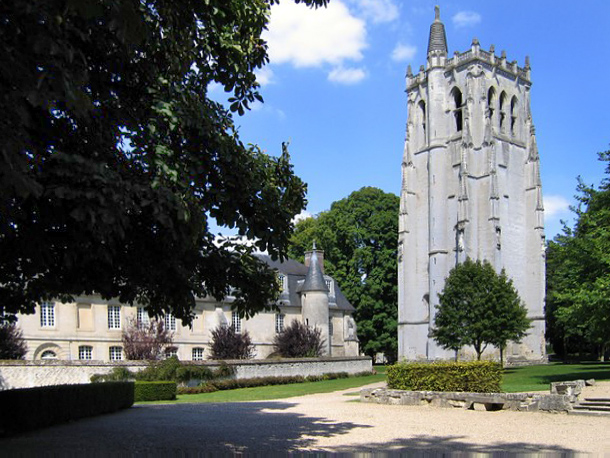
Bec is a beautiful place, although little survives from the age of Herlouin, Lanfranc and Amselm. The St Nicholas tower, a detached bell tower, in the photograph below dates from a late medieval restoration, and the building behind is the early sixteenth century Abbot's house. The foundations in the foreground are all that remain of the medieval church, and itself later than Anselm's time. That church blown up after the French Revolution by the military who occupied the abbey until the mid-twentieth century. The buildings I was staying in were from the age of Louis XIV and Louis XV.

Fichier:La Tour Saint-Nicolas.jpg

Recently I have been reading Warren Hollister's life of Henry I - more on that in a day or two - but what struck me was that Anselm, with two periods of exile as a consequence of his clashes with William II and then with Henry I over investiture issues,was, for his Italian origins and Norman formation, very English in his ecclesiology.

Having been present when the Pope denounced lay investiture in 1099 he resolutely supported the papal line, but his main objectives were less advancing the rise of papal monarchical power than of maintaining and extending the claims of the see of Canterbury to primatial authority over the whole of Britain. Within that model, and whilst respecting papal claims he sought a close co-operation of Church and Crown as in the late Anglo-Saxon system, and did this by a courteous dialogue with King Henry.

This raised an interesting idea - still only partially formulated in my head, but worth raising I think - that here we have a leader of the English church, pro-papal, but also very insular. St Anselm has often been held up as a role model for Archbishops of Canterbury. I do not want to steal Fr Hunwicke's thunder as to the Anglican patrimony, but could Anselm be seen as a spiritual patron for arrangements under Anglicanorum Coetibus I wonder?

Wednesday, 31 March 2010

Five Years On


Today is the fifth anniversary of my reception into the Church at the Oxford Oratory. It was Thursday in the Octave of Easter, and chosen because it enabled friends and relatives who would not have been able to attend at the Easter Vigil to be present and, in one case, to be my sponsor.
I took as my confirmation name Philip - not only the name of the founder of the Oratory and of an Apostle, but also my father's first name and one that I had always liked. So John Robert became John Robert Philip. I subsequently went to the expense of adding the name by deed poll, so I can insist on officialdom recognising my spiritual journey.
As it happened, by being received when I was, I thereby became one of the last Catholics to be received into the Church in the pontificate of John Paul II - I feel I squeezed through the door of history in that respect.
As I made my decision to seek reception I codified my ideas into nine categories or groups. St Edmund Campion had his Decem Rationes which he placed so provocatively in St Mary's Church in Oxford in 1581. Mine are more personal perhaps, but, in that they may interest others, here are my Novem Rationes of 2005:

1. I believed all that the Catholic Church believed - so why was I not in full communion with it ? I read the Catechism through and found nothing from which to dissent.

2. In particular I accepted the claims of the Papacy and its necessity in order to maintain orthodoxy and unity.

3. As a historian I appreciated the Catholic case for the nature of the Church and the Papacy, and the fact of its historical continuity - Walter Ullman's point that the Papacy is the one institution that links the Apostolic age to the Atomic age reverberates in my mind.

4. The call to Unity - not only the principal of Ut unum sint but also the specific claims to expressing that unity with all other Catholics through the Holy See as described by the Fathers.

5. The Catholic Church was seen to act on issues contingent upon Christian belief - Life issues might be the most obvious, but there were others, and with an authentic response being made.

6. I realised that my historic sympathies were with Catholicism - which side would I have been on, or at least believed I would have been on or wanted to be on in say, the Reformation- well it was clear. My heart lay with the Catholic cause.

7. The state of Anglicanism was not encouraging. For Traditionalist Anglo-Catholics the situation was one of increasing isolation, and the sense that a Third Province would not be granted.

8. Much as I loved my Anglican places of worship - Pusey House and St Thomas in Oxford - I felt that I was called to move on. I was at an age when I still could make a change, but that there was not time to delay. If this was the time, then so be it.

9. I thought that many of my Anglican friends were moving or would move into full communion with Rome. Those friendships, based and rooted in a shared spiritual life, were very important to my own spiritual development, and they were pointing all in the same direction.

Looking back five years later I have never had cause to regret my decision.

I still endorse those nine sets of ideas.

The last three invite some additional comments.

The Church of England has continued on its way, and has failed to have the generosity to provide for Traditionalist Anglo-Catholics. Anglicanorum Coetibus has been issued - I pray it will be successful in extending the unity of the Church to others of like faith and mind outside its formal bounds.

I am still on excellent terms with friends form Pusey House and St Thomas', and I rejoiced at Fr Hunwicke's appointment to the latter in 2007. It is good to see all that is happening at both institutions for the Catholic cause. It was very good for my humility that they could manage and survive without me. I retain enormously happy memories of my time at both places and at the churches I worshipped at in Yorkshire before I came to Oxford.

As to my friends - well I was the second of our group to make the move, and three more have followed. Along the way I have made other new friends amongst those converting, and I have been made very welcome in my new spiritual home.

A friend and I likened the process not to swimming the Tiber, but to paddling across - when we reached the opposite bank we found friends waiting in the deck-chairs to hand one a towel to dry one's feet and then to hand you a missal or breviary to read as you sat down to watch who would be next to come over.