Once I was a clever boy learning the arts of Oxford... is a quotation from the verses written by Bishop Richard Fleming (c.1385-1431) for his tomb in Lincoln Cathedral. Fleming, the founder of Lincoln College in Oxford, is the subject of my research for a D. Phil., and, like me, a son of the West Riding. I have remarked in the past that I have a deeply meaningful on-going relationship with a dead fifteenth century bishop... it was Fleming who, in effect, enabled me to come to Oxford and to learn its arts, and for that I am immensely grateful.


Showing posts with label 1554 Reconciliation. Show all posts

Friday, 30 November 2012

St Andrew's Day 1554


It was on St Andrew's Day in 1554 that England was formally absolved from schism and received back as a kingdom into the bosom of the Catholic Church.

Led by King Philip and Queen Mary the Lords and Commons knelt before the Papal Legate, Cardinal Reginald Pole and besought absolution which was granted by the Legate in the name of Pope Julius III.

For the Queen this must have been one of the happiest days of her life, the vindication of all she had hoped and no doubt prayed for for a quarter of a century.
St Andrew's day was appointed as aperpetual celebration of the reconciliation, but that can have last happened in 1558, just after the Queen's death.

As I have written before it was reading about the part played in this process by Bishop Stephen Gardiner in Glyn Redworth's superb biography of him,  In Defence of the Church Catholic that removed on eof the last props of my Anglo-Catholic position and influenced, indirectly my own path to Rome in 2005. In particular there is the text of the great sermon preached by Gardiner at Paul's Cross on the Sunday following the reconciliation - it is very well worth reading.

Which brings us neatly up to date. In the 1980s there did appear to be apossibility of some form of organic reunion of the Anglican Church with Rome - remember ARCIC in 1982. That may well have been afudge in advanc eof the papal visit of that year, but there was, not so long ago, a real hope of such an outcome. Now we know better, as is indicated in this post from Fr Tim Finigan  Goal of corporate reunion no longer realistically exists.

The way to unity now lies clearly with individual reconcilition either through the Ordinariate or as a traditional convert. But think what might have been in the 1550s or even in our own times!

Saturday, 11 June 2011

Dinner with Bishop Stephen Gardiner


Well, when I say dinner with Bishop Gardiner I mean that on Friday evening I was entertained to dinner here in Oxford by mutual friends to meet Dr Glyn Redworth, of Manchester University and author of, amongst other works, In Defence of the Church Catholic: The Life of Stephen Gardiner which was published in 1990 by Blackwells. Unfortunately it is now out of print, but is immensely well worth reading if you can find a copy. Not only is it a wonderful biography and full of insights into the life and times of the Bishop, but for me it is important as if helped me in my process of conversion to find full peace and communion as a Catholic. Yes, Bishop Stephen Gardiner, through his amanuensis Dr Redworth, helped me to become a Catholic.

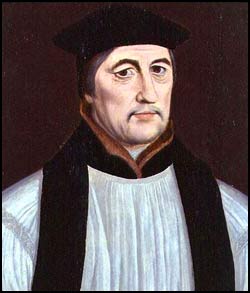
Portrait of Stephen Gardinerat Corpus Christi College, Oxford.
Bishop Stephen Gardiner

Image from Luminarium
http://www.luminarium.org/encyclopedia/gardinerallegory.jpg

Anti-Catholic satire depicting Bishop Stephen Gardiner 1556

Image from Luminarium


I read the biography in the early part of 2004, and doing so as an example of an episcopal biography of the type I was (and am) attempting to write of Bishop Richard Fleming. Hitherto I had accepted the text-book view of Gardiner as the arch-conservative Henrician bishop of the 1540s, and admired him as a (proto) Anglo-Catholic who ebentually returned to the Roman fold. Nonetheless his seeming acceptance of the Henrician church settlement legitimised to some extent its Anglo-Catholic credentials

Dr Redworth provided a remarkable breath of fresh air. Gardiner emerges first of all as the humanist scholar he undoubtedly was, but not as the steriotypical reactionary of usual versions, but rather the very reluctant man who felt compelled through the 1530s and 1540s under King Henry VIII to go along with changes he did not really agree with. by 1548 he realised he could go no further and making his position clear ended up in the Tower of London and was deprived of his bishopric. Restored by Queen Mary I he accepted reunion with the Holy See as the only guarentee of the Catholic faith, and said so in his great sermon preached at Paul's Cross in the days after the reconciliation on St Andrew's day in 1554. This is not "Wily Winchester" or the arch-conservative of so many accounts, rather it is, to use modern phraseology, Gardiner the frightened conservative, or even, the dodgy liberal.

The sense of a historic Anglo-Catholic patrimony being conveyed by him was eroded. The career of Gardiner did not legitimise the Henrician experiment, rather, it showed its weakness and idiosyncracy.

This really proved a revelation to me, even if it did not lead to immediate submission. However I am sure it was working away in my mind until the evening a few months later when I realised, and said, that for me the future was with the One, Holy, Catholic and Roman Church.

As it happened we did not get round to really talking about this last night, but the conversation ranged wide and deep over history and literature - notably The Forsyte Saga - and the whole evening was most enjoyable and convivial. Maybe on a future occasion I can recount this story to Dr Redworth. Meanwhile I feel a renewed wish to read other of his books, and would urge anyone interested in the English reformation and the origins of Anglicanism to read his life of Bishop Gardiner.

Tuesday, 30 November 2010

St Andrew's Day


Fr Hunwicke has two posts relevant to today - well worth reading with their comments, both about the reconciliation of England to the Church in 1554, and of the diocese of Durham in 1569, and about the possible options for the Ordinariate liturgy. You can find them here and here.