Once I was a clever boy learning the arts of Oxford... is a quotation from the verses written by Bishop Richard Fleming (c.1385-1431) for his tomb in Lincoln Cathedral. Fleming, the founder of Lincoln College in Oxford, is the subject of my research for a D. Phil., and, like me, a son of the West Riding. I have remarked in the past that I have a deeply meaningful on-going relationship with a dead fifteenth century bishop... it was Fleming who, in effect, enabled me to come to Oxford and to learn its arts, and for that I am immensely grateful.


Showing posts with label Anglicanorum Coetibus. Show all posts

Friday, 27 June 2014

Why are they waiting?


Fr Hunwicke has an interesting post reflecting on those Anglicans who indicated they sought full communion with the Holy See, but who went very quiet and stayed put when Anglicanorum Coetibus actually appeared. It can be read at The Parting of Friends.

I m particularly interested by his seven diocesan bishops (Note the number - an Anglican phenomenon is such circumstances perhaps?) plus two others whi secretly indicated their desire for reconciliation. Whilst I appreciate Fr John's concern that those who do eventually join the Roman obedience should be made welcome with no public remarks of "What took you so long?" and the like, I am intrigued by these episcopal aspirants. Maybe Fr HUnwicke should name and shame them if they do not make the move after next month's General Synod vote on Women Bishops.

I can understand why people may have waited in the past. There were, or are, often good reasons - responsibility for a parish or church be you cleric or lay, the need for econonmic security for clergy and their families and such like. Some may wonder why I waited as long as I did. My answer is that I went when I was called to do so. I would add that having received the call I did move, but more on that in the next post.


Monday, 31 March 2014

Nine years peace and full communion


Nine years ago today I was received into full peace and communion with the Catholic Church in the Oxford Oratory. As is my habit on this significant personal anniversary I am re-posting my reasons for that decision and also some of my reflections on the subsequent years. I do not think I have anything to add to what I wrote last year, so to read something of my spiritual history - or to re-read it if you have done so before - follow the link to the post from twelve months ago Eight years in peace and full communion.

Sunday, 31 March 2013

Eight years in peace and full communion


Today is the eighth anniversary of my reception into full peace and communion with the Church, and I am following my practice from previous years and reproducing a piece I wrote in my early days of blogging about my reasons for so doing, and in the form I published it last year with some slight emendations and additions.

It was Thursday in the Octave of Easter 2005, and chosen because it enabled friends and relatives who would not have been able to attend at the Easter Vigil to be present and, in one case, to be my sponsor.

I took as my confirmation name Philip - not only the name of the founder of the Oratory and of an Apostle, but also my father's first name and one that I had always liked. So John Robert became John Robert Philip. I subsequently went to the not inconsiderable expense of adding the name by deed poll, so I can insist on officialdom recognising my spiritual journey.

As it happened, by being received when I was, I thereby became one of the very last Catholics to be received into the Church in the pontificate of Pope John Paul II - I feel I squeezed through the door of history in that respect. There are those converts who used to describe themselves as "John Paul II Catholics" or similar phrases. I am, by historic fact and by sympathy a "Benedict XVI Catholic", but, and it is a very important "but", I am a Catholic first - Popes inevitably come and go. That said I consider it an enormous good fortune for the Church and, for me as an individual member of it, to have had His Holiness in the Chair of Peter. His pontificate has been a great blessing for the whole church. Much of what we have already heard from Pope Francis indicates continuity on expressing the faith as his predecessor did, and in bringing a serious Christian awareness to the current social and economic ills of the world.

As I made my decision to seek reception I codified my ideas into nine categories or groups. St Edmund Campion had his Decem Rationes which he placed so provocatively in St Mary's Church in Oxford in 1581. Mine are more personal perhaps, but, in that they may interest others, here are my Novem Rationes of 2005:

1. I believed all that the Catholic Church believed - so why was I not in full communion with it? I read the Catechism through and found nothing from which to dissent within it.

2. In particular I accepted the claims of the Papacy and its necessity in order to maintain orthodoxy and unity.

3. As a historian I appreciated the Catholic case for the nature of the Church and the Papacy, and the fact of its historical continuity - Walter Ullman's point that the Papacy is the one institution that links the Apostolic age to the Atomic age reverberates in my mind.

4. The call to Unity - not only the principal of Ut unum sint but also the specific claims to expressing that unity with all other Catholics through the Holy See as described by the Fathers.

5. The Catholic Church was seen to act on issues contingent upon Christian belief - Life issues might be the most obvious, but there were others, and with an authentic response being made.

6. I realised that my historic sympathies were with Catholicism - which side would I have been on, or at least believed I would have been on or wanted to be on in say, the Reformation? Well it was clear. My heart lay with the Catholic cause.

7. The state of Anglicanism was not encouraging. For Traditionalist Anglo-Catholics the situation was one of increasing isolation, and the sense that a Third Province would not be granted.

8. Much as I loved my Anglican places of worship - Pusey House and St Thomas in Oxford - I felt that I was called to move on. I was at an age when I still could make a change, but that there was not time to delay. If this was the time, then so be it.

9. I thought that many of my Anglican friends were moving or would move into full communion with Rome. Those friendships, based and rooted in a shared spiritual life, were very important to my own spiritual development, and they were pointing all in the same direction.

Looking back from this point, seven years later, I have never had cause to regret my decision. There is no "seven year itch."

I still endorse those nine sets of ideas.

The last three invite some additional comments.

The Church of England has continued on its way, and has failed to have the generosity to provide for Traditionalist Anglo-Catholics. The issue of women bishops remains unresolved and even more divisive it would seem in the wake of alst november's failure to vote the matter through the General Synod.

Anglicanorum Coetibus has been issued - I pray it will be successful in extending the unity of the Church to others of like faith and mind outside its formal bounds. Since 2011 we have witnessed the establishment of the Ordinariate first in England and more recently in the USA. I have been able to help to support those joining it by acting as a pro-sponsor in two cases, or simply by turning up to support their Masses, and, of course, by praying for it.

Summorum Pontificum reasserted the right to have traditional forms of the liturgy and it has been followed by a strong and positive response, and that needs to be continued - as has been said what was sacred once is sacred now.

I am still on excellent terms with friends from Pusey House and St Thomas', and I rejoiced at Fr Hunwicke's appointment to the latter in 2007. It has been good to see all that is happening at both institutions for the Catholic cause. It was very good for my humility that they could manage and survive without me. I retain enormously happy memories of my time at both places and at the churches I worshipped at in Yorkshire before I came to Oxford.

Nonetheless I increasingly find it difficult to see why more people in the Anglo-Catholic tradition are not availing themselves of all - and it is so much - that is offered by the Ordinariate. It is all they have ever said they wanted or indeed hoped for - bar, possibly, taking their church buildings with them, and though I can sympathise to a great extent, but not to the exclusion of what ultimately matters.

As to my friends - well, I was the second of our group to make the move, and three more had followed by last year. In the last two years two more married couples, one with three children, from that set of friends have made that same move. Four of the men have either been ordained or are preparing for ordination.

Along the way I have made many other new friends amongst those converting, and I have been made very welcome in my new spiritual home. I am extremely lucky to have the Oratory and also SS Gregory and Augustine and Blackfriars as places in which to worship regularly here in Oxford.

A friend and I likened the process of conversion and reception not to swimming the Tiber, but to paddling across - when we reached the opposite bank we found friends waiting in the deck-chairs to hand one a towel to dry one's feet and then to hand you a missal or breviary to read as you sat down to watch who would be next to come over.

May St Philip Neri, Bl. John Henry Newman and all the saints continue to pray for me, and for those seeking their home in the Church.


Saturday, 31 March 2012

Seven years on


Today is the seventh anniversary of my reception into the Church at the Oxford Oratory.

I am adapting and editing the piece I wrote a year ago about the sixth anniversary, itself a reissue with a few emendations and additions, of the previous year's post.

It was Thursday in the Octave of Easter 2005 , and chosen because it enabled friends and relatives who would not have been able to attend at the Easter Vigil to be present and, in one case, to be my sponsor.

I took as my confirmation name Philip - not only the name of the founder of the Oratory and of an Apostle, but also my father's first name and one that I had always liked. So John Robert became John Robert Philip. I subsequently went to the expense of adding the name by deed poll, so I can insist on officialdom recognising my spiritual journey.

As it happened, by being received when I was, I thereby became one of the very last Catholics to be received into the Church in the pontificate of Pope John Paul II - I feel I squeezed through the door of history in that respect. There are those converts who used to describe themselves as "John Paul II Catholics" or similar phrases. I am, by historic fact and by sympathy a "Benedict XVI Catholic", but, and it is a very important "but", I am a Catholic first - Popes inevitably come and go. That said I consider it an enormous good fortune for the Church and, for me as an individual member of it, to have His Holiness in the Chair of Peter. His pontificate is a great blessing for the whole church and may it long continue, ad multos annos.

As I made my decision to seek reception I codified my ideas into nine categories or groups. St Edmund Campion had his Decem Rationes which he placed so provocatively in St Mary's Church in Oxford in 1581. Mine are more personal perhaps, but, in that they may interest others, here are my Novem Rationes of 2005:

1. I believed all that the Catholic Church believed - so why was I not in full communion with it? I read the Catechism through and found nothing from which to dissent within it.

2. In particular I accepted the claims of the Papacy and its necessity in order to maintain orthodoxy and unity.

3. As a historian I appreciated the Catholic case for the nature of the Church and the Papacy, and the fact of its historical continuity - Walter Ullman's point that the Papacy is the one institution that links the Apostolic age to the Atomic age reverberates in my mind.

4. The call to Unity - not only the principal of Ut unum sint but also the specific claims to expressing that unity with all other Catholics through the Holy See as described by the Fathers.

5. The Catholic Church was seen to act on issues contingent upon Christian belief - Life issues might be the most obvious, but there were others, and with an authentic response being made.

6. I realised that my historic sympathies were with Catholicism - which side would I have been on, or at least believed I would have been on or wanted to be on in say, the Reformation? Well it was clear. My heart lay with the Catholic cause.

7. The state of Anglicanism was not encouraging. For Traditionalist Anglo-Catholics the situation was one of increasing isolation, and the sense that a Third Province would not be granted.

8. Much as I loved my Anglican places of worship - Pusey House and St Thomas in Oxford - I felt that I was called to move on. I was at an age when I still could make a change, but that there was not time to delay. If this was the time, then so be it.

9. I thought that many of my Anglican friends were moving or would move into full communion with Rome. Those friendships, based and rooted in a shared spiritual life, were very important to my own spiritual development, and they were pointing all in the same direction.

Looking back from this point, seven years later, I have never had cause to regret my decision. There is no "seven year itch."

I still endorse those nine sets of ideas.

The last three invite some additional comments.

The Church of England has continued on its way, and has failed to have the generosity to provide for Traditionalist Anglo-Catholics. Anglicanorum Coetibus has been issued - I pray it will be successful in extending the unity of the Church to others of like faith and mind outside its formal bounds. Since 2011 we have witnessed the establishment of the Ordinariate first in England and more recently in the USA. I have been able to help to support those joining it by acting asa pro-sponsor in two cases, or simply by turning up to support their Masses, and, of course, by praying for it.

I am still on excellent terms with friends from Pusey House and St Thomas', and I rejoiced at Fr Hunwicke's appointment to the latter in 2007. It has been good to see all that is happening at both institutions for the Catholic cause. It was very good for my humility that they could manage and survive without me. I retain enormously happy memories of my time at both places and at the churches I worshipped at in Yorkshire before I came to Oxford.

Nonetheless I increasingly find it difficult to see why more people in the Anglo-Catholic tradition are not availing themselves of all - and it is so much - that is offered by the Ordinariate. It is all they have ever said they wanted or indeed hoped for - bar, possibly, taking their church buildings with them, and though I can sympathise to a great extent, but not to the exclusion of what ultimately matters.

As to my friends - well I was the second of our group to make the move, and three more had followed by last year. In the last two years two more married couples, one with three children, from that set of friends have made that same move. Both husbands are now preparing for ordination.

Along the way I have made other new friends amongst those converting, and I have been made very welcome in my new spiritual home. I am extremely lucky to have the Oratory and also SS Gregory and Augustine and Blackfriars as places in which to worship regularly here in Oxford.

A friend and I likened the process of conversion and reception not to swimming the Tiber, but to paddling across - when we reached the opposite bank we found friends waiting in the deck-chairs to hand one a towel to dry one's feet and then to hand you a missal or breviary to read as you sat down to watch who would be next to come over.

May St Philip Neri, Bl. John Henry Newman and all the saints continue to pray for me, and for those seeking their home in the Church.


Monday, 19 September 2011

A Gospel insight


I was struck over the weekend by the appositeness of the Sunday Gospel, the parable of the labourers in the vineyard, to the situation facing Anglo-Catholics in respect of the Ordinariate.

It seems to me that the offer of working in the Lord's vineyard really has come to those who have been waiting around until the eleventh hour. The offer is there, and the promise the same as made to all other toilers therein. This really is the time to accept the offer, and enter in. There is precious little comfort out in the market place waiting for something or someone else to come along with a better offer - indeed the offer is on parity with that made to all others whom the Lord calls. There is no one else who can offer so much and so freely. There is no other offer.

For those already within the vineyard there is the reminder that we all enter with the same expectation, there is no higher reward on offer, so there should not be resentment at latecomers - just be gratefull they are there at last - nor hopes of preferential treatment on the basis of long service - preferential treatment comes for those who excell not by length of service but quality.

Friday, 27 May 2011

What would St Augustine say?


Today, according to the modern calendar, is the feast of St Augustine of Canterbury . He died on May 26th 605.


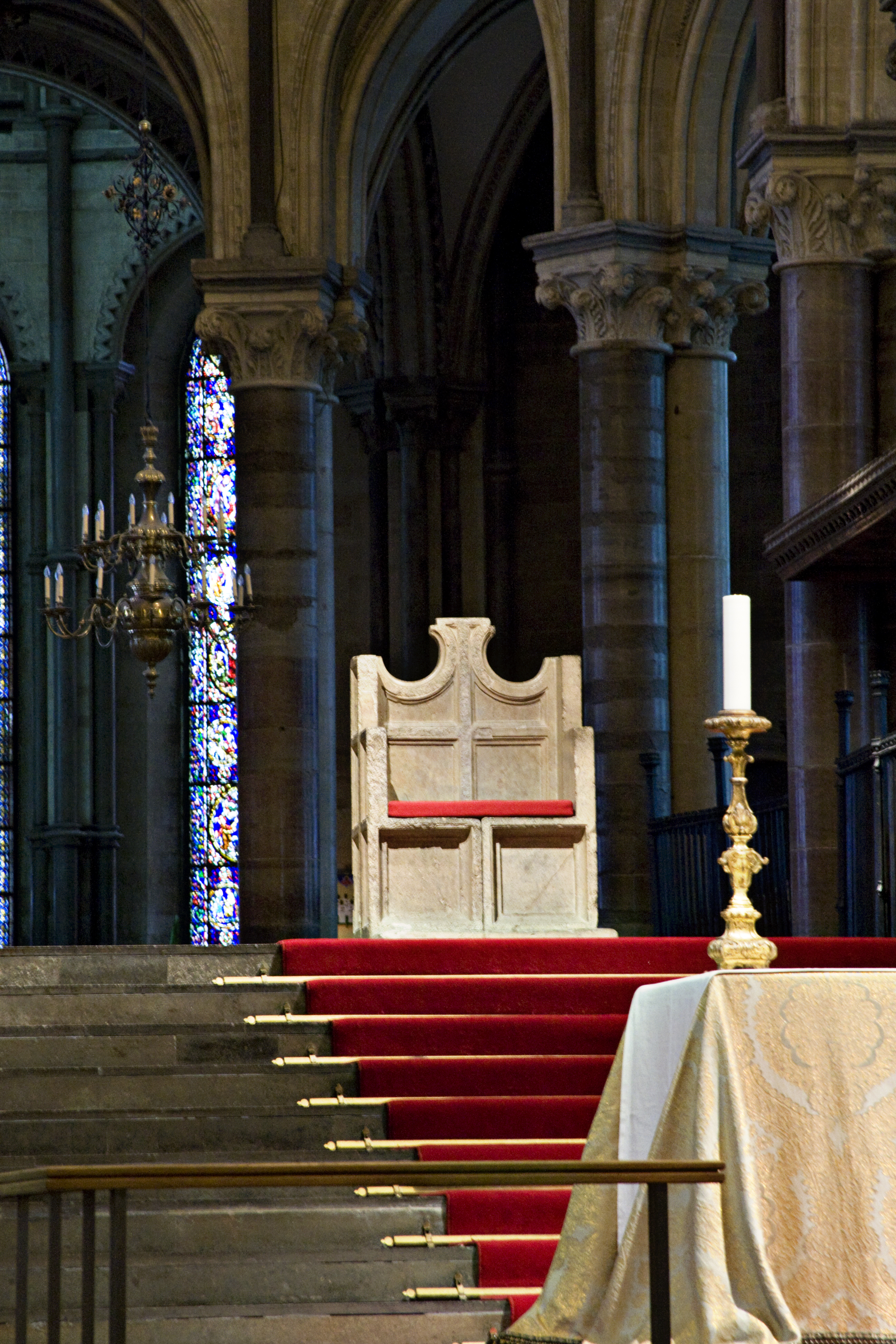
The throne of St Augustine in Canterbury Cathedral

I am tempted to ask the rhetorical question as to what St Augustine would have said about the Ordinariate. Well, the answer is, I think, clear. More particularly I raise the point because of the story of St Augustine's meeting with the British bishops. In adavnce they decided that they would respond positively to what Augustine said if he stood up to receive them, negatively if he did not. Augustine remained seated, and dialogue did not happen. The British bishops, whose community had been formed in large part by reaction to pagan Anglo-Saxons invadors, whom they appear not to have tried to convert, left and headed back to the ever more remote west.

Fourteen centuries later Rome has again made advances to the British clergy of their day, and, metaphorically at least, has stood up to be welcoming. Notwithstanding that I fear that too many clergy and laity may be making the same mistake as those British bishops they sometimes invoke as their patrimony, and not responding positively.

Pre-Augustinian British Christianity was Roman in orgin, and here was a man with a message sent from Rome. Pre-Reformation, pre-Laudian, pre-Tractarian and pre- Ordinariate English and British Christianity was and is Roman in origin, and here are men with a message sent from Rome. Are not the inevitable inferences to be drawn?


Thursday, 31 March 2011

Six years on


Today is the sixth anniversary of my reception into the Church at the Oxford Oratory.

I am reposting the piece I wrote a year ago about the anniversary, with a few emendations and additions.

It was Thursday in the Octave of Easter, and chosen because it enabled friends and relatives who would not have been able to attend at the Easter Vigil to be present and, in one case, to be my sponsor.

I took as my confirmation name Philip - not only the name of the founder of the Oratory and of an Apostle, but also my father's first name and one that I had always liked. So John Robert became John Robert Philip. I subsequently went to the expense of adding the name by deed poll, so I can insist on officialdom recognising my spiritual journey.

As it happened, by being received when I was, I thereby became one of the last Catholics to be received into the Church in the pontificate of Pope John Paul II - I feel I squeezed through the door of history in that respect.

As I made my decision to seek reception I codified my ideas into nine categories or groups. St Edmund Campion had his Decem Rationes which he placed so provocatively in St Mary's Church in Oxford in 1581. Mine are more personal perhaps, but, in that they may interest others, here are my Novem Rationes of 2005:

1. I believed all that the Catholic Church believed - so why was I not in full communion with it? I read the Catechism through and found nothing from which to dissent within it.

2. In particular I accepted the claims of the Papacy and its necessity in order to maintain orthodoxy and unity.

3. As a historian I appreciated the Catholic case for the nature of the Church and the Papacy, and the fact of its historical continuity - Walter Ullman's point that the Papacy is the one institution that links the Apostolic age to the Atomic age reverberates in my mind.

4. The call to Unity - not only the principal of Ut unum sint but also the specific claims to expressing that unity with all other Catholics through the Holy See as described by the Fathers.

5. The Catholic Church was seen to act on issues contingent upon Christian belief - Life issues might be the most obvious, but there were others, and with an authentic response being made.

6. I realised that my historic sympathies were with Catholicism - which side would I have been on, or at least believed I would have been on or wanted to be on in say, the Reformation? Well it was clear. My heart lay with the Catholic cause.

7. The state of Anglicanism was not encouraging. For Traditionalist Anglo-Catholics the situation was one of increasing isolation, and the sense that a Third Province would not be granted.

8. Much as I loved my Anglican places of worship - Pusey House and St Thomas in Oxford - I felt that I was called to move on. I was at an age when I still could make a change, but that there was not time to delay. If this was the time, then so be it.

9. I thought that many of my Anglican friends were moving or would move into full communion with Rome. Those friendships, based and rooted in a shared spiritual life, were very important to my own spiritual development, and they were pointing all in the same direction.

Looking back six years later I have never had cause to regret my decision.

I still endorse those nine sets of ideas.

The last three invite some additional comments.

The Church of England has continued on its way, and has failed to have the generosity to provide for Traditionalist Anglo-Catholics. Anglicanorum Coetibus has been issued - I pray it will be successful in extending the unity of the Church to others of like faith and mind outside its formal bounds. Now in 2011 we are witnessing the Ordinariate being established, and I can help to support those joining it

I am still on excellent terms with friends from Pusey House and St Thomas', and I rejoiced at Fr Hunwicke's appointment to the latter in 2007. It has been good to see all that is happening at both institutions for the Catholic cause. It was very good for my humility that they could manage and survive without me. I retain enormously happy memories of my time at both places and at the churches I worshipped at in Yorkshire before I came to Oxford.

As to my friends - well I was the second of our group to make the move, and three more had followed by last year. In the last twelve months two more married couples, one with three children, from that set of friends have made that same move. Along the way I have made other new friends amongst those converting, and I have been made very welcome in my new spiritual home. I am extremely lucky to have the Oratory and also SS Gregory and Augustine as places in which to worship here in Oxford.

A friend and I likened the process not to swimming the Tiber, but to paddling across - when we reached the opposite bank we found friends waiting in the deck-chairs to hand one a towel to dry one's feet and then to hand you a missal or breviary to read as you sat down to watch who would be next to come over.

May St Philip Neri, Bl. John Henry Newman and all the saints continue to pray for me, and for those seeking their home in the Church.

Friday, 14 January 2011

Three new Deacons


There is an account of the diaconal ordinations yesterday of Andrew Burnham, Keith Newton and John Broadhurst at Allen Hall yesterday and written by James Bradley, together with links to his photographs of the event which can be read here.

As James says we must pray very hard for these three men as they prepare both for their priestly ordination tomorrow and for the work they are called to for the Ordimariate in the wider unity of the Catholic Church.

May Our Lady of Walsingham pray for them and for the Ordinariate.

Thursday, 13 January 2011

The Ordinariate


Today the three former Anglican bishops of Ebbsfleet, Richborough and Fulham will receive the diaconate at the chapel of Allen Hall, preparatory to their priestly ordination on Saturday. They, and those who will follow them, are in very much in my prayers. The decree establishing the Ordinariate in England and Wales is expected imminently. In other words, the Ordinariate has arrived.

For up to date information look at the website of the Friends of the Ordinariate and the new Ordinariate Portal, as well as the more personal reflection on Ancient Richborough. Fr Blake in Brighton has a typically entertaining and positive post here about these new developments.

I have enormous human sympathy for those Anglican clergy who feel that for family and practical reasons they cannot enter the Ordinariate at present. One example is a friend of mine who wrote just before Christmas that he remained an Anglican trying to practise and promote the Catholic faith within a Church of England that he described as "crazy." He said he would love to join the Ordinariate, and that his heart is with the Pope, but very real questions about housing and finance, with a wife and two teenage children to support, make it impracticable. I commend him and his ilk to the prayers of all who wish the Ordinariate and their genuine, if separated, brethren well.

However I have rather less sympathy for those who have talked long and hard about the Third Province or now of the Ordinariate, yet who now seem reluctant to move into it when it is being established, and who would be in a position so to do. Of course there would be adjustments, sometimes painful, to be made, but skills of all sorts are transferable. The Ordinariate appears to offer all, if not more, that has been sought for over the years. The Papal initiative exceeds whatever might have been imagined, and is indeed from Peter's successor himself.

Yet now some seem to be talking in terms of "Let's see what happens" or "In a couple of years" or, as a layman put it, "Well we've four years to decide".

Frankly, if I was on the poop deck of the Titanic I would not wait to see if a better lifeboat will come along later than the only one in sight.

Some of these clergy are not, I suspect, constrained by family or finances, yet run the real risk of leaving it, not too late, but so late that their position when they do decide to join is compromised - "What took you so long?" will be the reaction of not a few.

I rather fear that for some the allurements of Establishment remain - somewhat ironically given the tendency of the General Synod and its dominant group to question that as well as everything else (except their own opinions). Some Anglican clergy appear to run the risk of falling into the tempting trap it offers. I am reminded of Bl. John Henry Newman's verse from one of his hymns to St Philip Neri which speaks of

"...when the world allures us
Cries her false wares and opes her magic coffers"

and how St Philip

"Points to a better city, and secures us
With richer offers."

For St Philip read the Pope and the Ordinariate.


Friday, 19 November 2010

Statement on establishing the Ordinariate


Press release

Issued by the Catholic Communications Network

Implementation of the Apostolic Constitution Anglicanorum Coetibus


The Establishment of a Personal Ordinariate in England and Wales

Much has been achieved over many years as a result of the dialogue and the fruitful ecumenical relations which have developed between the Catholic Church and the Anglican Communion. Obedient to the prayer of the Lord Jesus Christ to His Heavenly Father, the unity of the Church remains a constant desire in the vision and life of Anglicans and Catholics. The prayer for Christian Unity is the prayer for the gift of full communion with each other. We must never tire of praying and working for this goal.

During his visit to the United Kingdom in September, His Holiness Pope Benedict XVI was therefore keen to stress that the Apostolic Constitution Anglicanorum Coetibus: "...should be seen as a prophetic gesture that can contribute positively to the developing relations between Anglicans and Catholics. It helps us to set our sights on the ultimate goal of all ecumenical activity: the restoration of full ecclesial communion in the context of which the mutual exchange of gifts from our respective spiritual patrimonies serves as an enrichment to us all."i

It is now just over one year since the Apostolic Constitution was published. The Pope's initiative provided for the establishment of personal Ordinariates as one of the ways in which members of the Anglican tradition may seek to enter into full communion with the Catholic Church. As the Holy Father stated at that time, he was responding to petitions received "repeatedly and insistently"ii by him from groups of Anglicans wishing "to be received into full communion individually as well as corporately."iii Since then, it has become clear that a number of Anglican clergy and their faithful do indeed wish to bring their desire for full ecclesial communion with the Catholic Church to realisation within an Ordinariate structure.

In collaboration with the Congregation for the Doctrine of the Faith (CDF) in Rome, the Bishops of England and Wales have been preparing for the establishment of an Ordinariate early in January 2011. Although there may be practical difficulties in the months ahead, the Bishops are working to address these at a national and local level.

Five Anglican Bishops who currently intend to enter the Ordinariate have already announced their decision to resign from pastoral ministry in the Church of England with effect from 31 December 2010. They will enter into full communion with the Catholic Church early in January 2011. During the same month, it is expected that the Decree establishing the Ordinariate will be issued and the name of the Ordinary to be appointed announced. Soon afterwards, those non-retired former Anglican Bishops whose petitions to be ordained are accepted by the CDF, will be ordained to the Catholic Diaconate and Priesthood for service in the Ordinariate.

It is expected that the retired former Anglican Bishops whose petitions to be ordained are accepted by the CDF, will be ordained to the Catholic Diaconate and Priesthood prior to Lent. This will enable them, together with the Ordinary and the other former Anglican Bishops, to assist with the preparation and reception of former Anglican clergy and their faithful into full communion with the Catholic Church during Holy Week.

Before the beginning of Lent, those Anglican clergy with groups of faithful who have decided to enter the Ordinariate will then begin a period of intense formation for ordination as Catholic priests.

At the beginning of Lent, the groups of faithful together with their pastors will be enrolled as candidates for the Ordinariate. Then, at a date to be agreed between the Ordinary and the local diocesan Bishop, they will be received into the Catholic Church and confirmed. This will probably take place either during Holy Week, at the Mass of the Lord's Supper on Holy Thursday or during the Easter Vigil. The period of formation for the faithful and their pastors will continue to Pentecost. Until then, these communities will be cared for sacramentally by local clergy as arranged by the diocesan Bishop and the Ordinary.

Around Pentecost, those former Anglican priests whose petitions for ordination have been accepted by the CDF will be ordained to the Catholic Priesthood. Ordination to the Diaconate will precede this at some point during Eastertide. Formation in Catholic theology and pastoral practice will continue for an appropriate amount of time after ordination.

In responding generously and offering a warm welcome to those seeking full ecclesial communion with the Catholic Church within the Ordinariate, the Bishops know that the clergy and faithful who are on that journey of faith will bring their own spiritual treasures which will further enrich the spiritual life of the Catholic Church in England and Wales. The Bishops will do all they can to ensure that there is effective and close collaboration with the Ordinariate both at diocesan and parish levels.

Finally, with the blessings and encouragement they have received from Pope Benedict's recent Visit, the Catholic Bishops of England and Wales are resolved to continue their dialogue with other Christian Churches and Ecclesial Communities on that journey towards the communion in faith and the fullness of unity for which Christ prayed.

Footnotes

i Oscott College, 19 September 2010
ii Apostolic Constitution 'Anglicanorum Coetibus', 4 November 2009
iii ibid

Tuesday, 16 November 2010

The Five Bishops and the Ordinariate

A friend has forwarded to me an expanded, online, version of an article by Professor Diarmuid MacCulloch about the Five Bishops (as I write that I wonder if they will be remembered like the Seven Bishops of 1688) and the Ordinariate from The Times of last week. You can read it here.

My reaction is, I think, to quote the immortal words of Mandy Rice-Davies "Well he would say that would n't he? "

I would merely add to that the point that if that is how their fellow Anglicans view Anglo-Catholics you can hardly blame the latter for seeking the full ecclesial unity that their position is predicated upon. The problem surely is for those who want to stay in a communion where they are not wanted.

Fortunately many, on both banks of the Tiber are praying for the success of the Ordinariate and those planning to avail themselves of it.

Monday, 8 November 2010

Anglican Bishops and the Ordinariate

I have just received this statement from the Friends of the Ordinariate:

Like many in the catholic tradition of Anglicanism, we have followed the dialogue between Anglicans and Catholics, the ARCIC process, with prayer and longing. We have been dismayed, over the last thirty years, to see Anglicans and Catholics move further apart on some of the issues of the day, and particularly we have been distressed by developments in Faith and Order in Anglicanism which we believe to be incompatible with the historic vocation of Anglicanism and the tradition of the Church for nearly two thousand years.
The Apostolic Constitution, Anglicanorum cœtibus, given in Rome on 4th November 2009, was a response to Anglicans seeking unity with the Holy See. With the Ordinariates, canonical structures are being established through which we will bring our own experience of Christian discipleship into full communion with the Catholic Church throughout the world and throughout the ages. This is both a generous response to various approaches to the Holy See for help and a bold, new ecumenical instrument in the search for the unity of Christians, the unity for which Christ himself prayed before his Passion and Death. It is a unity, we believe, which is possible only in eucharistic communion with the successor of St Peter.
As bishops, we have even-handedly cared for those who have shared our understanding and those who have taken a different view. We have now reached the point, however, where we must formally declare our position and invite others who share it to join us on our journey. We shall be ceasing, therefore, from public episcopal ministry forthwith, resigning from our pastoral responsibilities in the Church of England with effect from 31st December 2010, and seeking to join an Ordinariate once one is created.
We remain very grateful for all that the Church of England has meant for us and given to us all these years and we hope to maintain close and warm relationships, praying and working together for the coming of God’s Kingdom.
We are deeply appreciative of the support we have received at this difficult time from a whole variety of people: archbishops and bishops, clergy and laity, Anglican and Catholics, those who agree with our views and those who passionately disagree, those who have encouraged us in this step and those who have urged us not to take this step.
The Right Revd Andrew Burnham
The Right Revd Keith Newton
The Right Revd John Broadhurst
The Right Revd Edwin Barnes
The Right Revd David Silk
Robert Macneil

Saturday, 21 August 2010

Thoughts on the Ordinariate

I have had several conversations in recent weeks with various friends about the proposed Ordinariate, and it occurs to me that this might be an appropriate time to draw the various strands together.

The July meeting of the General Synod made it quite clear that there was going to be no provision made for traditionalist Anglo-Catholics, now or, let's face it, in the future. As Ancient Richborough has argued this really is the end of the road. I understand there will be meetings of Ebbsfleet and Richborough clergy in September to discuss the way forward. It is reasonable to get the holiday season out of the way and have time to reflect. However, what is there to reflect upon? There are two options - stay with the Church of England (and all that implies in 2010 and for the future) or look elsewhere - and that in reality means Rome, with Anglicanorum Coetibus already issued. Simple.

One can respect individuals needing to take time to pray and reflect, and also to make practical decisions. I sympathize with the wish to retain one's habitual place or worship - that is a real wrench in prospect for some. Nonetheless the fundamental choice is clear - clinging on, as an ever declining group, unloved and unwanted by so many of their fellow Anglicans, hoping against hope that there will be a new Oxford Movement - yes, I have heard that argued in recent months - or entering into union with the Catholic Church, reuniting with that body from which the Ecclesia Anglicana was severed, along with not a few human heads, and, to borrow a phrase, going Forward in Faith.

Yet, almost a year after Anglicanorum Coetibus was announced and then published, and allowing for Synod meetings and all the necessary practical discussions, things seem not to be moving very far. That is not to say discussons and planning may well not be happening - I assume, and hope, they are - but that is not the public perception. The process appears to be losing momentum. Thus,whilst individual parishes are looking to their future, the larger scheme, in England at least, seems uncertain.

Thus one Anglican friend tells me that his church is considering the option of Rome or Cconstantinople - Benedict or Bartholomew - well, yes, fine, but for one parish to be playing hard to get with the greatest sees of Christendom does seem a little bit presumptious. He added "Well, we've four years." True - unless you are run down crossing the road.

So there we have a version of ecclesiastical politics. Trouble is, this is not negotiating your way through a prospective "hung parliament" or "hung synod" - yes, I know some of you are saying would that it were. This is about Truth, it is about the Faith. If it is about a political compromise we have have not moved on from the mid-Tudor polity, but it may be bit less bloody.

Meanwhile individuals are making the move across the Tiber, or are making their plans to, regardless of the Ordinariate. Some need or are anxious to fufill contractual or moral obligations before they go, but go they will. As a fellow convert I am delighted for them, and believe they will be not only valuable additions to the Church, but will find a safe haven therein.

Looking back at the Anglican shore I am somewhat surprised by evidence of more than one Anglican clergyman who would identify themselves as being in the Anglo-Catholic tradition showing elements of hostility to the forthcoming Papal visit and beatification of John Henry Newman -it smacks of the "Papal Aggression" agitation of 1850.

So we wait for the Ordinariate to come into being, but when - will it be September? October? 2011? It seems such a missed opportunity not to have had it at least with some members when the Pope will be here. Yes, there are practical issues to resolve, but that can take till Kingdom come, and this is about the Kingdom.

Church politics four centuries ago got the Church in England into this mess, and more politics will not solve it. The Pope, as even the dreadful Ruth Gledhill can see, has made an offer that cuts through centuries of accumulated practice and prejudice, and not only is it an offer of historic significance, it is also the best one on offer now, or in the future. Seeing if the Synod will offer something better is not only daft, it is ungracious. Looking elsewhere is the path to separatism or eccentricity. Remember the fate of the Non-Jurors? How many Non-Juror churches do you know?

Cradle Catholic friends are bemused and somewhat irritated by this lack of response. They can accept the need to make plans for a move, but cannot see why, when such an offer is made, and it is what so many have said they have wanted, that there is not a more enthusiastic public response. They also feel some of their worst fears about Anglo-Catholics and Anglicanism are being justified when the impression is being created that Anglo-Catholics are playing one bidder off against another, and not realising that they may be less well placed so to do and more in need of a helping hand - and that is what Anglicanorun Coetibus is. I stress to such Catholic friends that those who want to avail themselves of the provisions the Pope has offered are very much "full Faith" and that they can add very considerably to the life of the Universal Church. However I do increasingly understand what they think, and begin to think it myself. If not now, when?

Friday, 6 August 2010

Anglican Patrimony

Today's post from the New Liturgical Movement reproduces an article from The Anglo Catholic which deals with points I have commented on recently in Anglo-Papalist style and Michael Yelton books, that is the potential of the Ordinariates to realise the dream of Anglo-Papalists and effect reunion, and the amongst the central issues, that of liturgical life. The article, by Br Stephen Treat O.Cist., addresses the question as to what is the Anglican patrimony and how it relates to that of its elder sister, and is very well worth reading. It can be found here. I have inserted the link to The Anglo Catholic as that has more comments than the NLM version does at present.

Plain speaking from Ancient Richborough

There is a typically lucid and forceful reply from Ancient Richborough on his blog to the statement from fifteen Anglican bishops who see themselves as being in the Catholic tradition of the Church of England in the wake of the General Synod meeting. It can be read here.

He makes the issues clear, and states a confidant case for realising that, in a well known phrase, "It's all up." I hope and pray that his wisdom will be appreciated and followed by those directly affected.

Monday, 2 August 2010

Michael Yelton books

An additional benefit of staying with my friends in Norfolk was being shown books they had but which I had not so far seen. Notable amongst these were two recent books by Michael Yelton - Anglo-Papalism and his biography of Alfred Hope Patten, the restorer of the Shrine at Walsingham, both published by Canterbury Press.

I had read a complimentary review of Anglo-Papalism, but the reviewer's emphasis on the book was perhaps different from that which I would take. From skimming through both books I think they look both interesting and entertaining - Anglo-Papalism has never lacked colourful characters.

One point made by Yelton struck me as topical - he concentrates on the period down to 1960 in Anglo-Papalism, and his life of Fr Hope Patten closes with his death in 1958, with notes as to the later lives of his collaborators. However he contrasts the unrealised vision c.1920 of the Anglo-Papalists of taking a substantial body of Anglicans into union with Rome with the fact that the result of their endeavours has not been that but, at Walsingham, and through Walsingham, a much wider dissemination of Marian devotion in the Church of England and Anglicanism as a whole.

That point is true, but we may now be on the brink of actually seeing some clergy and parishes actually fulfilling the vision under the terms of Anglicanorum coetibus and through the proposed Ordinariates. The "vision glorious" may yet be realised, more than half a century to a century late, but it may still happen, just as there is a revival of those very things in liturgical matters which marked out the pre-Vatican II Anglo-Catholics, and to which so many of them clung so tenaciously. For many others that vision, presented in word and act, has led them to individual union with Rome. The Anglo-Papalists and the restorers of Walsingham - who thus spurred on an unresponding Catholic hierarchy to do something there and restore the Slipper Chapel - have, in their own, delightfully individual, way yielded a rich harvest. We should remember them with gratitude, and pray that we may all rejoice together upon another shore.

Sunday, 18 July 2010

Anglican loyalties

Having written something about the issues facing Anglo-Catholics considering accepting Anglicanorum coetibus or making individual moves to cross the Tiber it occurred to me that another factor which weighs heavily with some is the notion that by doing so they are being disloyal to The Queen.

This idea is not uncommon. It ignores the historical facts of life in pre-Reformation England, and the loyal service of Catholics to the crown ever since. Some of the most ardent monarchists I know, both in devotion to the principle and the person of the monarch are Catholics. I venture to suggest that there are few people who could or do exceed me in devotion to the monarchy, and to the monarchical principle. I was much offended by an Anglican ordinand friend who accused me of disloyalty to The Queen by becoming a Catholic - and he is someone who professes, on occasion, to be a Jacobite.

Some of my Catholic friends do claim to be Jacobites, but I do not think they are likely to start an uprising to put King Francis I,II and III on the throne.*

Nonetheless the notion of disloyalty is around. It should be discounted. If the Earl Marshal can be the premier Catholic subject of the Crown, why cannot others also be perceived as loyal subjects?

I recently heard that one person I know who was much concerned as a committee member of an organisation which was considering taking advantage of Anglicanorum coetibus. His prime concern was not to be disloyal to The Queen. Fine - but he is an American citizen, with strong links to the Democratic party in the rebel colonies. Surely if that issue of loyalty concerns him he should take the oath of alliegance and get a British or Canadian passport.


* I of Bavaria, II of England and Ireland, III of Scots. For more details see, for example, here, which also gives some other claimants, notably HRH The Infanta Alicia, Duchess of Calabria, presumably therefore to her supporters Queen Alicia I.

Saturday, 26 June 2010

Valle Adurni on Anglican difficulties

Fr Finnegan at Valle Adurni has had several reflective and sympathetic articles on his blog this week about the issues facing Anglo-Catholics and Anglicans less likely to make the transit of the Tiber. He looks at the issue of taking one's church with one - he is not optimistic , at Anglican priestly formation - commented on by Fr Hunwicke, and at the decline in traditional Anglo-Catholic parishes - all of us former Anglicans have witnessed that. These are pieces well worth looking at, and have been picked up by some of the other blogs.

He stresses the need for the prayers and charity of Catholics who want to see those who believe as they do gathered into full communion.

Thursday, 24 June 2010

Ordinariates(s) continued

Following on from my piece about responses to plans for provision for Anglo-Catholics within the Church of England as opposed to the Ordinariate offered by the Pope the former Bishop of Richborough has commented further in this post The points he makes should certainly be considered by those directly affected, and tested against what the General Synod might offer. The proposals look like an Archiepiscopal response produced in something of a panic. If they has wanted to offer this as an active, positive, option they should have done so at the shambles they helped create at the York Synod two years ago. Now it looks like a spoiling move to attempt to mollify opposition without giving anything of substance - the "Third Province" - and to prevent some of those who might be tempted to move to the Ordinariate from doing so, but so as not to upset those anxious to create female "bishops".

It all looks too 'political' - the type of playing politics which led to the whole mess in the first place. That is not the way to do the Will of God, even in the Church of England - although the General Synod exists for that very political purpose. It really is decision time for Anglo-Catholics - they and their friends need courage and streadfastness at this time.

Wednesday, 19 May 2010

St Dunstan


Today is the feast of St Dunstan, Abbot of Glastonbury and Archbishop of Canterbury, who died on this day in 988. He was one of the dominant figures of the tenth century and the alliance of the Englsih Crown with the Catholic Church that created a vibrant and fertile tradition in both the ecclesial and secular world. Not least amongst his achievements is the creation of the ordo for the coronation of King Edgar at Bath in 973, usually regarded as the basis of all subsequent English Coronation rites down to that of the present Queen in 1953. 


A self-portrait of St Dunstan. 
Detail from the Glastonbury Classbook.
The MS is in the Bodleian Library.
There is a biography of him here . 
In 1988, back in my Anglo-Catholic days, I was able to attend part of the milleniary celebrations of St Dunstan at Glastonbury. The high point was the visit of Archbishop Runcie to celebrate at the Pilgrimage in honour of his great predecessor, and it was a suitably splendid occasion, with a sense of history. 
Which links me to a point raised by Fr Hunwicke on his blog, as to how St Dunstan fits with the concept of an Anglican patrimony that can be exercised under Anglicanorum coetibus. The fine tuning of that point I will leave to others, indeed those qualified to comment from their own personal experience - I am neither in orders, nor married - but St Dunstan is unquestionably part of the wider patrimony of Catholic and Anglo-Catholic England, and that fact cannot be ignored. St Dunstan typifies that partnership of Church and Crown that underlay the tenth century English achievement, and that of subsequent centuries. It was not infrequently a tense relationship, and it had one or two spectacular explosions, but until Henry VIII seized power over the Church it served both parties and the realm well. If the Anglo-Catholic claim to continuity, and indeed a patrimony, anterior to 1533 is to be made it clearly must include St Dunstan, and thereby all that is indicated by that. In such a situation, and with all respect clerical marriage is an adiaphora. St Dunstan may not have liked it, but it took another couple of centuries to deal with the issue. In the wider cause of the unity of Christ's church it can be assimilated and resolved - it should not be a stumbling block.