Yesterday's
Daily Telegraph had an exclusive interview with the author and extract from the latest book on the Shroud of Turin. Thomas de Wesselow's
The Sign is the work of a Cambridge art historian and is just about to hit the bookshelves in time for Easter. The article in the
Telegraph, with links, can be read
here.
The speculation about the Holy Shroud is endless, and it is a remarkably inviting topic for the faithful, and not a few sceptics, to think and write about. From all I have read and seen on programmes I accept it as what it appears to be - to do otherwise seems very difficult. The carbon-dating which assigned it to the thirteenth century has been disputed so effectively that one should not worry about that. If it is a forgery, then it is still one of the most remarkable objects in the world, as no-one can explain how it was created with the technical skills available.
Of course, if it really is what it purports to be (and what is absolute proof to satisy everybody?) then it is even more remarkable. As I wrote above I have no problems believing that. The problem then is what does that mean for me or for others, because if in the modern age we do indeed have a proof of the unique and supernatural truth of the Resurrection over and beyond the call to faith, well we really do have to sit up and pay attention. A lot of attention. This is life-changing.This is serious. Really serious.

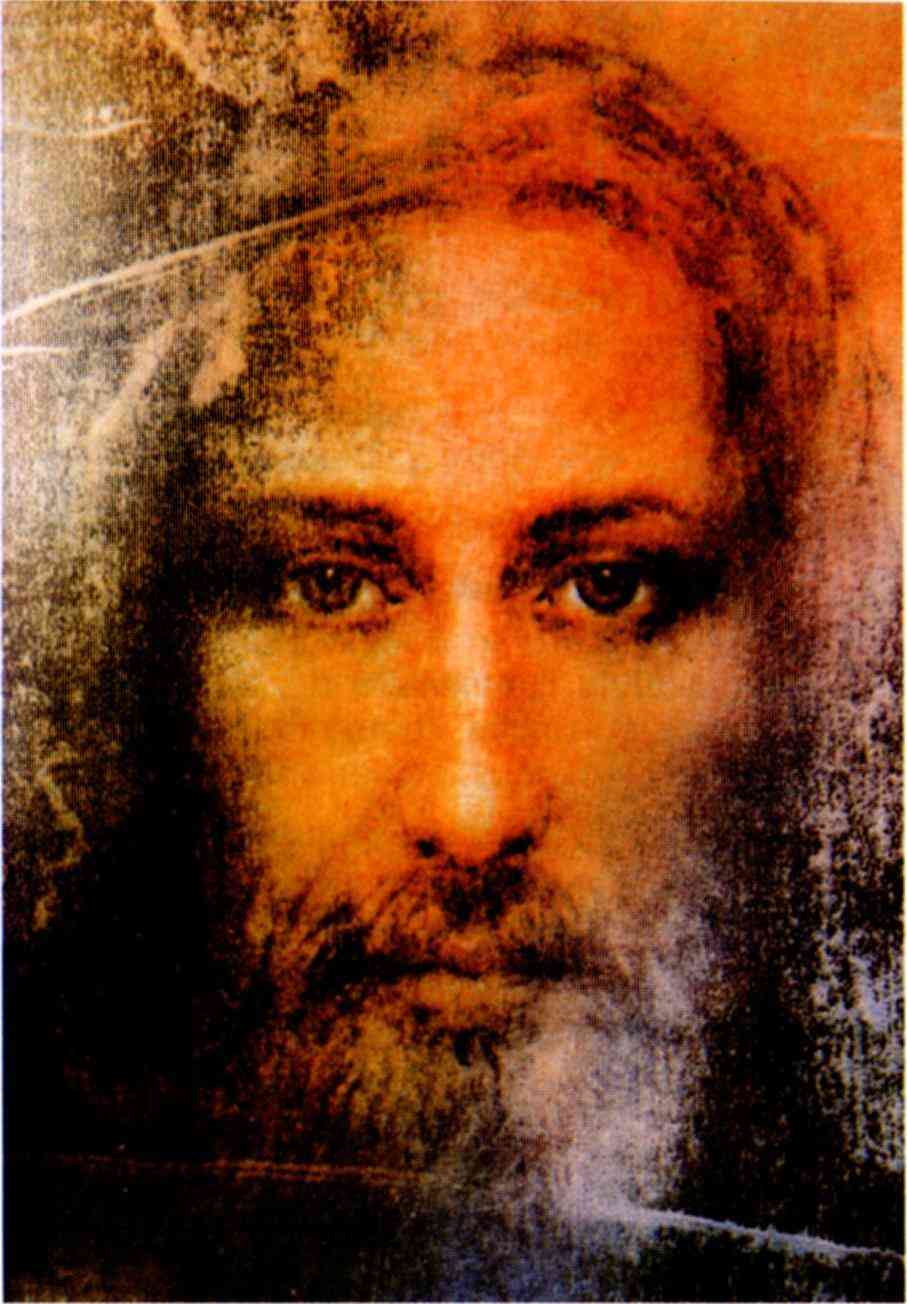
The face on the Shroud
Image:liturgy.co.nz Which brings me back to Thomas de Wesselow and his book. As reported in the article he is fully convinced of the authenticity of the Shroud of Turin as the Shroud of Christ. He apparently follows Ian Wilson's excellent books on the topic, and is unafraid to commit himself to belief in the first century origin of the relic and that it is the burial cloth of Jesus.
Then, however, he seems to lose his nerve - the Resurrection appearances are not for de Wesselow what they are reported to be, in the Gospels, but rather the awed response of the Apostolic community to the Shroud itself - and presumably the Shroud did not eat broiled fish, walk on the road to Emmaus or appear on the Galilean shoreline. First century people were, he considers, so unused to images and so struck by the cloth that they projected physical resurrection onto an artifact. All this eighteen hundred and more years before the 1898 photographs revealed the details with which we, today, are so familiar.
His view seems to me considerably less credible than accepting that the seemingly impossible has indeed happened and betrays a modern sensibility that lacks sense. It may well be an interesting book, and positive about the Holy Shroud, but it appear to leave the central question not unanswered so much as unaddressed.
One cannot argue others into belief by using the evidence for the Shroud as "proof" - that is not how God or how faith works. We can never be 100% certain that this is the burial cloth of Jesus of Nazareth, however much we genuinely and seriously believe this is what the Turin relic is - there is always the possibility that someone else died a similar death (?) , that their burial cloth was reverently preserved (?) or that someone else, somehow - but we don't yet have any idea of how - impressed the outline of their body on a piece of linen (?) - but we may believe, we can believe, and probably we should believe, that this piece of fabric links us to those unparalleled events recorded in the writings of contemporaries or near contemporaries.
An artist's reconstruction of the face on the Shroud
Image:religiousstudiesblog