Once I was a clever boy learning the arts of Oxford... is a quotation from the verses written by Bishop Richard Fleming (c.1385-1431) for his tomb in Lincoln Cathedral. Fleming, the founder of Lincoln College in Oxford, is the subject of my research for a D. Phil., and, like me, a son of the West Riding. I have remarked in the past that I have a deeply meaningful on-going relationship with a dead fifteenth century bishop... it was Fleming who, in effect, enabled me to come to Oxford and to learn its arts, and for that I am immensely grateful.


Showing posts with label Spanish Civil War martyrs. Show all posts

Monday, 18 July 2016

Spanish Civil War


Today is the 80th anniversary of the commencement of the Spanish Civil War in 1936.

One of the causes of the Nationalist uprising was the persecution of the Church after 1931. Tragically the Army rising led to even more atrocities against the clergy and faithful, especially in the north-east of the country.


Republican militia men desecrating a Madrid church in 1936

Image: es.wikipedia

For some background information on this terrible period in the history of the church in Spain see the following Wikipedia articles Red Terror (Spain), Martyrs of the Spanish Civil War and Catholicism in the Second Spanish Republic

New Catholic at RORATE CÆLI has a post about it at The Passion of Spain - 80th Anniversary
and there is an account of the terrible persecution the Church suffered at the hands of the Republicans at The Martyrs of the Spanish Civil War and the Repercussions ...

The message sent to the Spanish faithful by Pope Pius XII on April 14 1939 at the conclusion of the war can be read on Mundabor's blog at Pope Pius XII's Message After the Victory In Spain


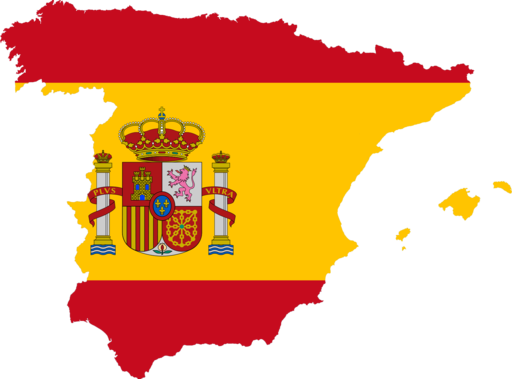
https://zenit.org/wp-content/uploads/2016/03/512px-Spain-flag-map-plus-ultra.png

  Image: Zenit

In addition to the issues surrounding the Church one can be thankful for the achievement of the Nationalist coalition ( for such it was ) in delivering and restoring the country's secular institutions - above all the monarchy, heritage and long-term freedom.


Thursday, 31 March 2016

Writing to the Oxford Times


Here is Oxford there is currently a proposal to erect a monument, consisting of a clenched fist holding a star, as a memorial to Oxfordshire volunteers in the International Brigade in the Spanish Civil War of 1936-39. The proposed site is close to the War Memorial on St Giles in the city centre. This is close to a number of Catholic churches and houses of study. Given the terrible persecution of the Church by the Second Spanish Republic this is, to say the least, insensitive to Catholics. Placing it close to the memorial to British war dead from the two World Wars is also highly contentious.

In response to a letter in The Oxford Times I was moved to write as follows to that journal:

Dear Sir,

Colin Carritt's vicious attack on the Catholic Church in Spain (letters 10th March) reads like a rant by an old-fashioned Orangeman. He suggests the Church brought persecution on herself because of her opposition to Soviet-inspired regimes. Does he really think that it is acceptable to commit slaughter simply because someone has an opposing political view? Certainly that is what the governments of the Soviet Union and Mexico thought - and these two blood-stained states were the only ones to support the Republicans in the Spanish Civil War.

What does Mr Carritt think the Church did to merit the horrific desecration of church buildings, and the wholesale killing of priests and religious? Was it clothing the poor, running orphanages, hospitals and schools and feeding the hungry that justified crucifying priests and seminarians? Was it running workers' cooperatives in his diocese that made the Oratorian bishop of Lerida, Blessed Salvio Huix, so offensive that he had to be shot through the hand, while he carried on absolving the twenty other of his diocesan priests who were martyred with him? Another 250 priests were killed merely for being clergy in his diocese alone. Was it for being a catechist for his fellow gypsies that required another victim to swallow his rosary before he was shot?

As early as 1933 Pope Pius XI wrote an encyclical imploring the Spanish Republic to rethink its harsh laws outlawing religious education, confiscating sacred objects, banning religious processions, and forbidding prayers in cemeteries. If this Pope, whose anti-fascist and anti-Nazi credentials are second to none, saw through the bogus claims of the Spanish Republic to be liberal and democratic, why cannot Mr Carritt bring himself to deplore its actions? Why does he have to blame the Church for being attacked?

Mr Carritt and his friends might possibly be able to make a better case for the memorial to the International Brigades if they were first to accept the historic reality and condemn the brutality committed by the Republican side. Nobody doubts that the Nationalists killed many of their fellow Spaniards in circumstances that were also horrific. Such was, and tragically remains,the nature of civil wars. We should deplore all of these killings without reservation, and, indeed, condemn them.

However we do not need Oxford to have a one-sided memorial that perpetuates the terrible hatreds of the 1930s. In contrast Spain itself has successfully pursued national reconciliation since 1975 by eschewing past hatreds and looking to shared values and the future.

Yours faithfully,
John Whitehead


Republican militia men desecrating a Madrid church in 1936

Image: es.wikipedia

I was contacted by the The Oxford Times to say that they have a 300 word limit for letters, so out came the online equivalent of the the blue pencil to produce:

Dear Sir,

Colin Carritt's attack on the Catholic Church in Spain (letters 10th March) is bizarre. He suggests the Church brought persecution on herself because of her opposition to the Republican regime. Does he really think that it is acceptable to slaughter those who hold opposing political views?

What does Mr Carritt think merited the horrific desecration of church buildings, and the wholesale killing of priests and religious? Was it clothing the poor, running orphanages, hospitals and schools and feeding the hungry that justified crucifying priests and seminarians? Was it running workers' cooperatives in his diocese that made Bishop Salvio Huix of Lerida so offensive that he was shot after absolving twenty of his priests who were martyred with him? 270 priests were killed merely for being clergy in his diocese alone. Was it for being a catechist for his fellow gypsies that required another victim to swallow his rosary before he was shot?

As early as 1933 Pope Pius XI wrote an encyclical imploring the Spanish Republic to rethink its laws outlawing religious education, confiscating sacred objects, banning religious processions, and forbidding prayers in cemeteries. That Pope, whose anti-fascist and anti-Nazi credentials are second to none, saw through the bogus claims of the Spanish Republic to be liberal and democratic, but Mr Carritt cannot bring himself to deplore its crimes.

Mr Carritt and others should accept the historic reality and condemn the brutality committed by the Republicans. Both they and the Nationalists killed many of their fellow Spaniards in dreadful circumstances. We should deplore all of these killings without reservation.

Oxford does not need to have a memorial perpetuating the terrible hatreds of the 1930s. In contrast Spain itself has successfully pursued national reconciliation since 1975, eschewing past hatreds and looking to a shared future.

Yours faithfully,
John Whitehead

This letter, together with some others making similar points, appeared in today's Oxford Times.

https://zenit.org/wp-content/uploads/2016/03/512px-Spain-flag-map-plus-ultra.png 

Image:Zenit 


For some background information on this terrible period in the history of the church in Spain see the following Wikipedia articles Red Terror (Spain), Martyrs of the Spanish Civil War and Catholicism in the Second Spanish Republic


Addendum April 25th:
I heard today that Oxford City Council, whilst accepting the case in principle for the memorial, have acepted the points made by many of us as to its unsuitability on St Giles. The City Council therefore has suggested a site on the other side of the city centre at the foot of Headington Hill. 


Friday, 18 October 2013

The Spanish Martyrs


The Oxford Oratory pilgrims to the beatification of Bl. Salvio Huix-Miralpeix in Tarragona at the weekend have returned from what was clearly an enjoyable visit to the ceremony and to other Catalan cities and religious sites. There is an illustrated report from the Oratory website at  Oxford Oratory Pilgrimage to Catalonia and it also has  The Holy Father's Message for the Beatification of the Spanish Martyrs of the Twentieth Century.

Stephanie Mann on her blog Supremacy and Survival has a post Martyrs are Controversial: The 522 Martyrs of the Spanish Civil War about the beatification of these 522 martyrs. She also has quotations  about the controversy this has caused in the minds of those who consider this is either opening old wounds, or from those who are critical of the Spanish Church per se or because the Church supported the Nationalists in the Civil War. Given the persecution to which the Church had been subjected after 1931 that was hardly surprising. It was, of course, the Nationalist rising in July 1936 that gave the excuse for the vicious attacks on the Church, particularly in Catalonia, and led to many of the worst Republican atrocities against those considered in any way likely to be supporters of the Nationalist cause. These dreadful events, as chronicled in Luis Bolin's Spain:the Vital Years or in C.E Lucas Phillips' The Spanish Pimpernel , are only too easily and conveniently ignored by those who go weak at the knees at Orwell's Homage to Catalonia - I recall my amazement when I looked at it to find that the wicked "right wingers" were not the Nationalist forces but the hardline orthodox party Communists...

Whatever convicted Republicans may have suffered after 1939 under the Caudillo's rule, it really is unreasonable to moan about the events after 1939 to distract from the appalling crimes committed by the Republicans, whether officially or by spontaneous acts of hatred and revenge in the summer of 1936. Basically the Leftist have always been bad losers over the Spanish Civil War - for once they were defeated. As afriend and I were reflecting yesterday, what would have been the situation for Europe have been had Spain been ruled by a Stalinist regime in the world after 1945.

Here, for the record, from the blog Mundabor, is Pope Pius XII’s Message After the Victory In Spain.

Monday, 14 October 2013

Bl. Salvio Huix-Mirelpeix, Oratorian, Bishop and Martyr


Yesterday in Tarragona there occurred the Beatification of 522 martyrs from the Spanish Civil War, amongst whom was the Oratorian Bl. Salvio Huix-Miralpeix, Bishop of Llerida (Lérida), who was martyred along with many of his priests by the Republicans in the Spanish Civil War on August 5th 1936. He is the first Oratorian martyr to be beatified.

Bl. Salvio was amember of the Oratory at Vich before becoming Bishop of Ibiza in 1928, and was transalted to Llerida  eighteen months before his murder. There is a life of him on the website of the Manchester Oratory, which can be read here. The Oxford Oratory website has an article about him, and about another Oratorian, Fr Mas, who was also a victim of the anti-clericals and whose cause is being carried forward. It can be read here.


http://www.beatificacion2013.com/images/martires/SalvioHuix/SalvioHuix.jpg

Bl.Salvio Huix-Miralpeix

Image:beatificacion2013.com
  

A group of pilgrims from Oxford, led by Fr Dominic and Fr Richard, have gone to attend the ceremonies of Beatification and to visit pilgrimage sites in Catalonia, and the Oxford Oratory will have a Mass of thanksgiving for the Beatification at 11am on Sunday October 27th.

Until the beatifications of recent years the many Catholic victims of the Red Tetror in Spain before and during the Civil War have tended to be ignored by the outside world. The terrible events of those years have been ignored by many who really should no better. Having read something of the hsitory of the period I find it really shocking to read, for example, Anglican clergy who write of the 'legitimacy' of the Second Spanish Republic.

May Bl. Salvio and his companions continue to pray for the Church in Spain and for persecuted Christians everywhere.

Wednesday, 9 November 2011

Martyrs of the Spanish Civil War


I was struck by an article on Zenit.org today about the forthcoming beatification of more martyrs from the Spanish Civil War. There is a background article about the Red Terror here and about other martyrs from the conflict here.

A relative of one of the soon to be beatified martyrs is quoted making the point about the need to achieve reconciliation in a country that has been riven by civil war, but I think it is also right to say that the story of these and other martyrs and victims of the Spanish war should be recalled next time, or any time, you hear or read some sanctimonious liberal or leftist praising the frankly abominable Second Spanish Republic.

Here is the piece from Zenit:

Martyrs of the Spanish Civil War

By Nieves San Martin

MADRID, Spain, NOV. 8, 2011 .- Twenty-two Missionary Oblates of Mary Immaculate will be beatified in Madrid this December. They lost their lives in 1936 during the Spanish Civil War.

The Oblates carried out their ministry as chaplains to three communities of nuns and collaborated in the neighborhood parishes.

The young students taught catechism in neighborhood parishes and the Oblate Choir solemnized the liturgical celebrations. This religious activity began to annoy the revolutionary committees of the neighborhood.

The Oblates community was not intimidated, however. They took prudent measures and committed themselves not to respond to insults, continuing with their program of spiritual and intellectual formation, as well as the various pastoral activities with students.

On July 20, 1936, churches and convents were again set on fire, especially in Madrid. The militiamen of Pozuelo assaulted a chapel of the Estacion neighborhood, flung images and vestments onto the street and burnt them. Then they set the chapel and parish on fire.

On July 22, armed militiamen assaulted the monastery and detained 38 religious, putting them under guard. After searching the house for weapons, they only found religious paintings, images, crucifixes, rosaries and sacred vestments. They threw everything from the upper floors to the ground floor through the stairwell and burnt it all on the street.

On the 24th, the first executions took place. There were no interrogations, trials or defense. Seven religious were the first to be called and sentenced: Juan Antonio Pérez Mayo, 29, priest and professor; and students Manuel Gutiérrez Martín, 23, sub-deacon; Cecilio Vega Domínguez, 23, sub-deacon; Juan Pedro Cotillo Fernández, 22; Pascual Aláez Medina, 19; Francisco Polvorinos Gómez, 26; Justo González Lorente, 21. They were put into two cars and taken to their martyrdom.

The rest of the religious remained imprisoned in the monastery and spent the time in prayer, preparing to die well.

Someone, probably the mayor of Pozuelo, communicated to Madrid the risk the others were in and that same day, July 24, a guard truck arrived with orders to take the religious to the general security office. The following day, after completing certain transactions, they were unexpectedly set free.

They sought refuge in private homes. The provincial did his utmost to encourage them and to take Communion to them. However, in the month of October, by a search and capture order, they were detained and taken to prison.

There they endured a slow martyrdom of hunger, cold, terror and threats. There are testimonies from survivors of the way they accepted that difficult situation with heroic patience, foreseeing the possibility of martyrdom. Charity and a climate of silent prayer reigned among them. For the majority of them, the end of their Calvary came in November.

On the 7th, Father José Vega Riaño, 32, priest and formator, and student Serviliano Riaño Herrero were shot. On being called by the executioners, the latter went to the cell of Father M. Martín and asked for sacramental absolution through the spyhole.

Twenty days later, it was the turn of the 13 others. The procedure was the same for all. There were no accusations, trials or defense. Only the proclamation of their names over loudspeakers: Francisco Esteban Lacal, 48, provincial superior; Vicente Blanco Guadilla, local superior, 54; Gregorio Escobar García, 24, newly ordained priest; and the student brothers: Juan José Caballero Rodríguez, 24, sub-deacon; Publio Rodríguez Moslares, 24; Justo Gil Pardo, 26; José Guerra Andrés, 22; Daniel Gómez Lucas, 20; Justo Fernández González, 18; Clemente Rodríguez Tejerina, 18; coadjutor brothers Ángel Francisco Bocos Hernández, 53; Marcelino Sánchez Fernández, 26 and Eleuterio Pardo Villarroel, 21.

It is known that on Nov. 29, 1936, they were taken from prison to Paracuellos de Jarama where they were executed. A student who was traveling in another truck, tied elbow to elbow with Father Delfin Monje, both of whom were mysteriously reprieved near the place of execution, said to his companion: "Father, give me general absolution and pray the Act of Contrition, as our end is coming. Eighteen years later, the priest lamented: 'What a pity I didn't die then. I will never be so well prepared!'"

The newly ordained priest Gregorio Escobar had written his family: "I have always been extremely moved by the accounts of martyrdom that have always existed in the Church, and on reading them I have always been overtaken by a secret desire to run to the same fate as theirs. That would be the best priesthood to which all of us Christians could aspire: each one to offer his own body and blood in holocaust for the faith. What happiness it would be to die a martyr!"

All died professing the faith and forgiving their executioners and, despite the psychological tortures during their cruel captivity, no one apostatized, or failed in the faith, or lamented having embraced the religious vocation.

Last July, Benedict XVI confirmed the date of the beatification.

Gregorio Escobar Barbarin, a nephew of the young newly ordained priest killed at 24, who bears his name, and is the only relative of the martyr who is still in Estella, Navarre, said on Tuesday to Diario de Navarre: "Moments like this are the occasion we all have to walk toward reconciliation."

Escobar Barbarin, who was town councilor in the Municipality of Estella between 1999 and 2003, said he believes it is necessary to learn from history. "Gregorio and his companions gave their lives generously in correspondence to their faith. Their young hearts longed only to give help and consolation to those who needed it. However, they were taken as sheep to the slaughter amid a chaos of hatred and confusion."


Monday, 18 July 2011

Spain 1936


Today is the seventy-fifth anniversary of the outbreak of the Spanish Civil War with the army rising against the second republic.

There is a very good article on Rorate Coeli The Passion of Spain -75 years which I recommend.

Civil wars are terrible things, and the Spanish war of 1936-9 particularly dreadful. Nonetheless the fact that it occured reflects the tensions within Spain at the time. What took place was a battle not merely for power - Spanish nineteenth century history is strewn with such episodes - but of two wholly opposed world views. The horrific violence unleashed against the Church and any imagined supporters of the traditional Spain in the wake of the army's move illustrates what they were acting against - for many on the left this was the opportunity to create a new world order, with Spain as the laboratory. After five years of radical change and turmoil the Nationalists may have finally precipitated the conflict, but the actions in the name of the republic which ensued were post factum validation for the actions of the army and its supporters

My sympathies have always been entirely with the Nationalists - my ideas were formed as a schoolboy reading Luis Bolin Spain:The Vital Years (Bolin arranged the aircraft to fly General Franco from the Canaries to Spanish Morrocco) and C.E.Lucas Phillips The Spanish Pimpernel. I have never had sympathy for the International Left and the "poor little rich kids" like John Cornford and Esmond Romilly (and his girlfriend Jessica Mitford) who decided to visit left-wing revolution in its nastiest form on Catholic, traditional Spain. I once tried to read some of Orwell's Homage to Catalonia, and was bemused to find that the hated "right wingers" were the official Communists...

Speaking of the regions of Spain it is interesting to reflect that the geographical division in the country during the war was essentially, though by no means exactly, that between Castille and Leon, on the Nationalist side, and republican control in Aragon, and the north-east. Similarly the Basque nationalism sponsored by the republic reflected ancient traditions of autonomy, and conflicted with the Catholic, and indeed Carlist, traditions of the north of the country. To understand the background to the conflict means stretching deep into the past of the country.

Paul Preston in his definitely left-leaning, but very readable, set of pen portraits of major players in the Civil War and the years that followed that comprises Blood of Spain discusses the existence of a "Third Spain" - raising the question as to whether the conflict was necessary? I suspect the answer lies in what happened in 1931 - the unexpected revolution which overthrew the monarchy and the traditional order in Spain led to a polarisation within an already essentially turbulent political order. By 1936 the alternatives were clear, the possibility of conciliation gone with the absence of an institution or institutions which could hold or bind the totality together. The events of 1931 were only resolved with the restoration of 1975.

Monday, 27 June 2011

Oratorian Martyr


From today's posting on the Oxford Oratory website:

FIRST ORATORIAN BEATIFIED MARTYR

1309189707.jpg

The Congregation for the Causes of Saints today promulgated the Decree of Martyrdom for the Venerable Savio Huix Miralpeix, Bishop of Lérida and formerly of the Oratory of Vic, Catalonia, a martyr of the Spanish Civil War. A date can now be set for his beatification.

The Servant of God, Savio Huix Miralpeix, was born on 22nd December 1877 in Santa Margarita de Vellors in the Diocese of Vic in Catalonia, into a family for whom faith in God and love for the Church were an irrevocable inheritance.

He was ordained priest on 19th September 1903 and four years later entered the Congregation of the Oratory of Vic where for twenty years he gave himself over to an intense ministry of study, preaching and writing, catechising, teaching in the diocesan seminary and promoting associations for Catholic women.

He was the Provost of Vic when, in 1927, he was named Bishop of Ibiza. There he gave an extraordinary stimulus to religious life. Translated to Lérida on 29th January 1935 he continued his zealous apostolic work until 21st July 1936 when Republican forces broke into the Episcopal palace and Mgr Miralpeix, reluctantly and in order to safeguard his associates, took refuge with friends.

Seeing the dangers to which his helpers were exposed, on the night of 23rd he left his hideout and presented himself to the police, revealing his true identity. He was imprisoned at once, together with other prisoners with whom he shared both sufferings and also the joy of secret prayers and Masses, right up to the last moving Holy Communion which proved to be their Viaticum.

At 4.30 on the morning of 5th August they were all of them taken to the local cemetery and shot. The bishop asked that he might be the last to be killed so as to give absolution and comfort to his companions in martyrdom. Before his arrest he entrusted his pectoral cross to a friend, asking him to take it to the Holy Father, for whom he was offering his life and assuring him of his loyalty.