Once I was a clever boy learning the arts of Oxford... is a quotation from the verses written by Bishop Richard Fleming (c.1385-1431) for his tomb in Lincoln Cathedral. Fleming, the founder of Lincoln College in Oxford, is the subject of my research for a D. Phil., and, like me, a son of the West Riding. I have remarked in the past that I have a deeply meaningful on-going relationship with a dead fifteenth century bishop... it was Fleming who, in effect, enabled me to come to Oxford and to learn its arts, and for that I am immensely grateful.


Showing posts with label Sir Anthony van Dyke. Show all posts

Thursday, 1 May 2014

Van Dyke self-portrait secured for NPG


Van Dyck's self-portrait 

Van Dyck painted the self-portrait shortly before his death in 1641

Image: BBC 

I was very pleased to read on the BBC News website today that the self-portrait by Sir Antony van Dyke that was at risk of leaving the country has been saved for the National Portrait Gallery. It is one of only three self-portaits by the artist ,and the last he produced, only a few months before his death in 1641, when the world of the court of King Charles I, which he had immortalised, and maybe idealised, crumbled at the outbreak of the Civil War.
Quite apart from its historic interest it is a lovely painting, and rather haunting in its quality. 

Tuesday, 11 October 2011

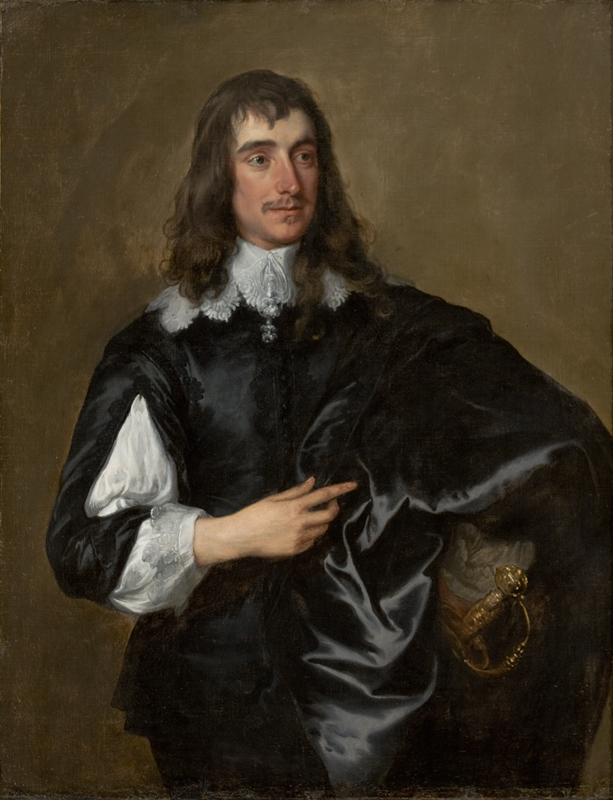
Bl. William Howard Viscount Stafford


Today is the feast day in this diocese of Bl. William Howard, Viscount Stafford (1612-80) who died a martyr's death on Tower Hill as a result of the Popish Plot.

The Oxford DNB life can be read here and there is another account here.

If I have put the link in correctly there should be an article about his death here by my friend Anne Barbeau Gardiner.

This portrait shows him as a young man, just after he obtained the Stafford peerage by his marriage.

File:Vandyck - willianhoward01.jpg

Lord Stafford by Sir Anthony Van Dyke
1638-40
Sao Paulo Museum of Art

Image:Wikipedia

I understand that the upper part of the altar in the private house chapel - and thus not accessible to the public - at the Oxford Oratory comes from Viscount Stafford's chapel.