Once I was a clever boy learning the arts of Oxford... is a quotation from the verses written by Bishop Richard Fleming (c.1385-1431) for his tomb in Lincoln Cathedral. Fleming, the founder of Lincoln College in Oxford, is the subject of my research for a D. Phil., and, like me, a son of the West Riding. I have remarked in the past that I have a deeply meaningful on-going relationship with a dead fifteenth century bishop... it was Fleming who, in effect, enabled me to come to Oxford and to learn its arts, and for that I am immensely grateful.


Showing posts with label Order of Malta. Show all posts

Friday, 28 April 2017

Order of Malta - Electing a new Grand Master


The Special Correspondent has forwarded this post from the blog Chivalry and Honour Turcopilier about tomorrow's election of a new Grand Master or Lieutenant of the Grand Master of the Order of Malta. I have copied and pasted it verbatim.


The Arms of the Sovereign Military Hospitaller Order of St John of Jerusalem of Rhodes and of Malta 

Image: Wikipedia

The Order of Malta - The Council Complete of State and the Election on 29 April

The events of the past five months that ultimately led to the resignation of the Grand Master have led to considerable dissension among members of the Order and concerns at the reported breaches of the Constitution of the Order. These events were unprecedented in the modern history of the Order, indeed the last occasion on which a Grand Master resigned was when Fra Ferdinand von Hompesch, after the islands of Malta and Gozo were surrendered to the French, abdicated as Grand Master on 6 July 1799.

The Grand Master’s resignation was offered to and accepted by the Sovereign Council of the Order on 28 January 2017. Meanwhile the Grand Chancellor, Baron Albrecht von Boeselager, was reinstated in his office. The Grand Commander automatically became Lieutenant ad interim, and duly called for a meeting of the Council Complete of State to elect a new Grand Master or Lieutenant of the Grand Master.

The work of the Order in the service of the Poor and Sick continues however, and this remains the principle focus of its members, while retaining the traditional structures which link it to its former role as both a hospitaller and a military body, dedicated to the Catholic faith. For the Order to succeed in its mission it must be united in loyalty to the next Head of the Order and its sovereignty must be protected.

The Grand Master is elected for life by then from among the Professed Knights with at least ten years in perpetual vows if they are younger than fifty years of age; in the case of Professed Knights who are older, but who have been members of the Order for at least ten years, three years in perpetual vows are sufficient. There are provisions for the resignation of the Grand Master in the Constitution - following such resignation he becomes Bailiff Grand Prior, subject in that capacity only to the authority of the Head of the Order.

The Grand Master and the Lieutenant of the Grand Master must have the nobiliary requisites prescribed for the category of Knights of Honour and Devotion. These requisites differ according to the National Association of which the candidate was admitted. This reduces the number of potential candidates for either office to just four professed knights.

The Council Complete of State elects the Grand Master or the Lieutenant of the Grand Master.

Those who will be entitled to vote are:

a) the Lieutenant ad interim;

b) the members of the Sovereign Council;

c) the Prelate ;

d) the (Grand) Priors or, in the event of vacancy, their permanent substitutes (Procurators, Vicars,

Lieutenants);

e) the Professed Bailiffs ;

f) two Professed Knights delegated by each Priory ;

g) a Professed Knight and a Knight in Obedience delegated by the Knights in gremio religionis;

h) five Regents of the Sub-priories, in accordance with the Code;

i) fifteen representatives of the Associations, in accordance with the Code.

The Grand Master’s election requires a majority plus one of those present entitled to vote.

The members of the First Class taking part in the Council Complete of State have the right to propose three candidates. In the event that such a list is not presented within the first day of the meetings of the Council Complete of State or if a candidate is not elected from among the proposed list within the first three ballots, the members of the Council Complete of State have freedom of choice in successive ballots.

After the fifth undecided ballot, the Council Complete of State decides, with the same majority, whether to proceed to the election of a Lieutenant of the Grand Master for a maximum period of one year. In the event of a negative result the balloting to elect the Grand Master resumes. In the event of a positive result the Lieutenant of the Grand Master is elected by means of a runoff ballot between the two candidates who received the largest number of votes in the fifth ballot. The candidate in the runoff ballot who receives the larger number of votes prevails. Should there be only one candidate, a majority vote of those present is required.

If elected, the Lieutenant of the Grand Master must reconvene the Council Complete of State before the end of his mandate (which cannot be greater than one year from his election). Immediately following the election, the Pope must be informed of the name of the new Head of the Order.

The Grand Master then makes the following solemn oath: “By this most Holy Wood of the Cross and by God’s Holy Gospels, I, N.N., do solemnly promise and swear to observe the Constitution, the Code, the Rule and the laudable customs of our Order and to administer the affairs of the Order conscientiously. So help me God, and if I do otherwise, may it be to the risk of my soul.”

It is anticipated that whoever is elected the new Head of the Order, whether a Grand Master or a Lieutenant, will call an Extraordinary Chapter-General. This will elect the members of the Sovereign Council, composed of the Great Officers of the Order (Grand Commander, Grand Chancellor, Grand Hospitaller and Receiver of the Common Treasure) and the six councillors. It will also elect the members of the Government Council, which consists of six Councillors from different geographic areas elected from members of any of the three Classes of the Order.


The history of the order, it constitution and an account of the recent disputes within it and between it and the Holy See can be found at Sovereign_Military_Order_of_Malta


Image result for Grand master Order of malta Arms

The Arms of the previous Prince and Grand Master, Fra' Matthew Festing

 Image:Pinterest

Monday, 1 June 2015

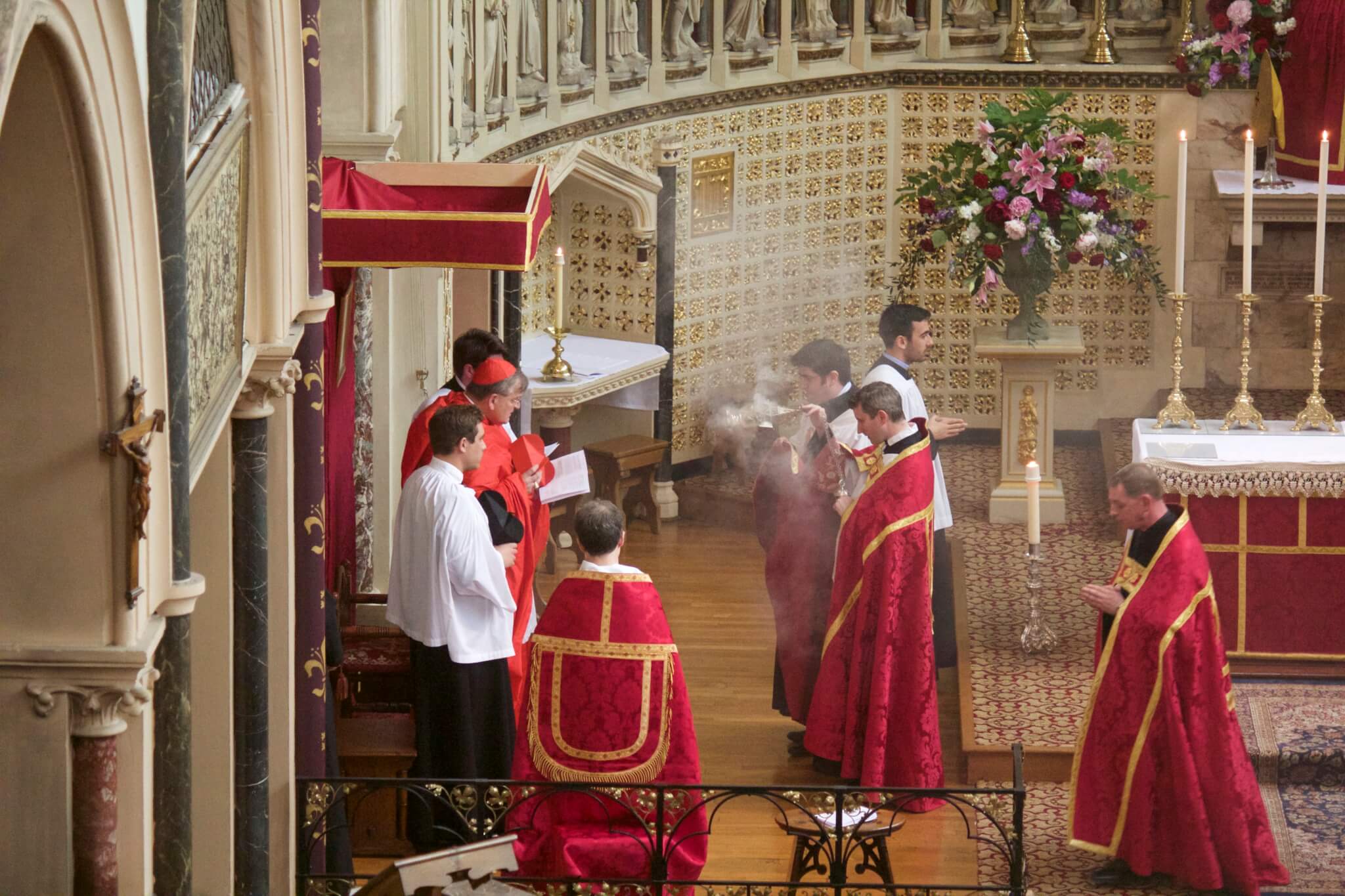
Solemn Vespers for the Order of Malta with Cardinal Burke


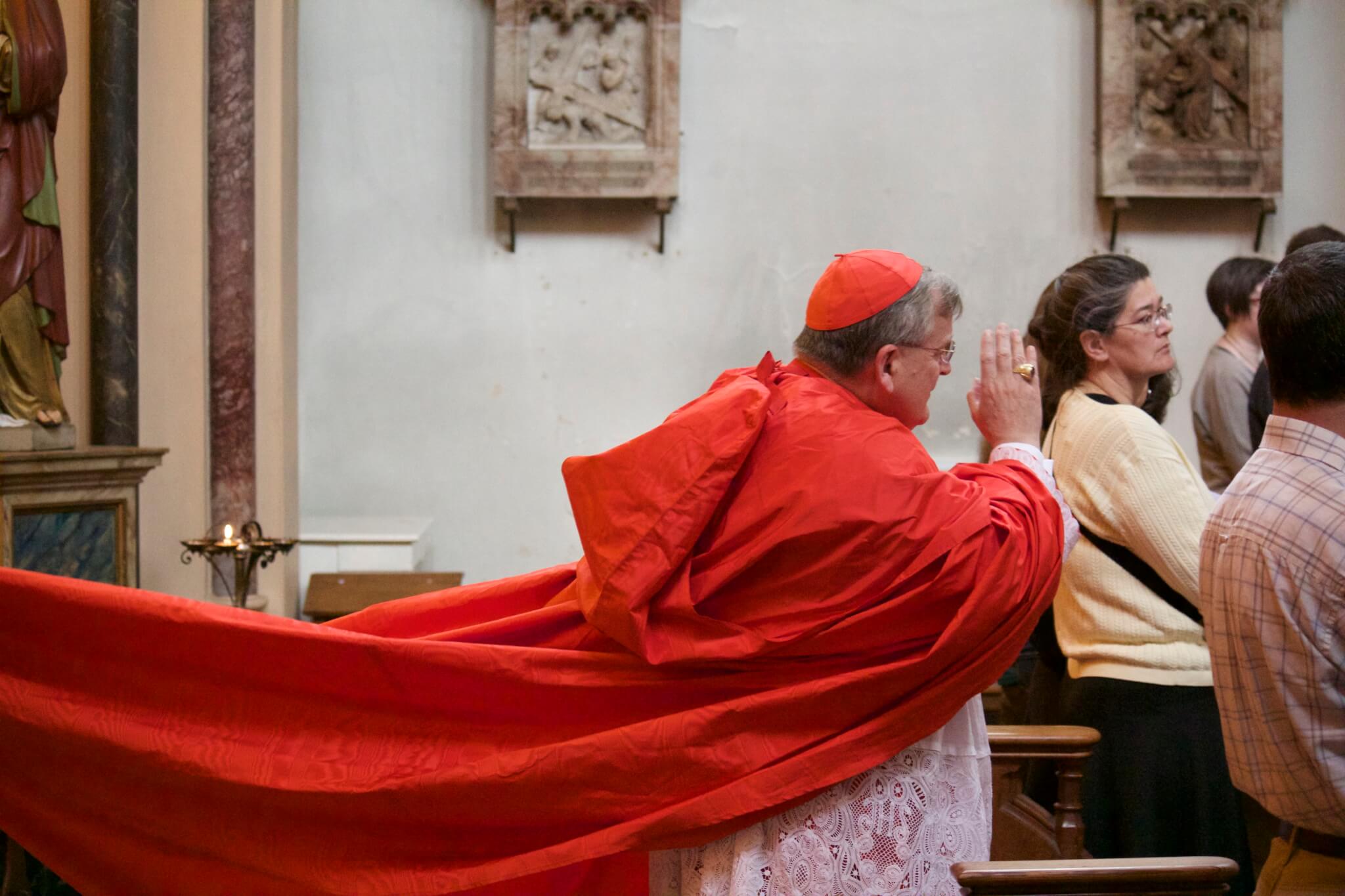
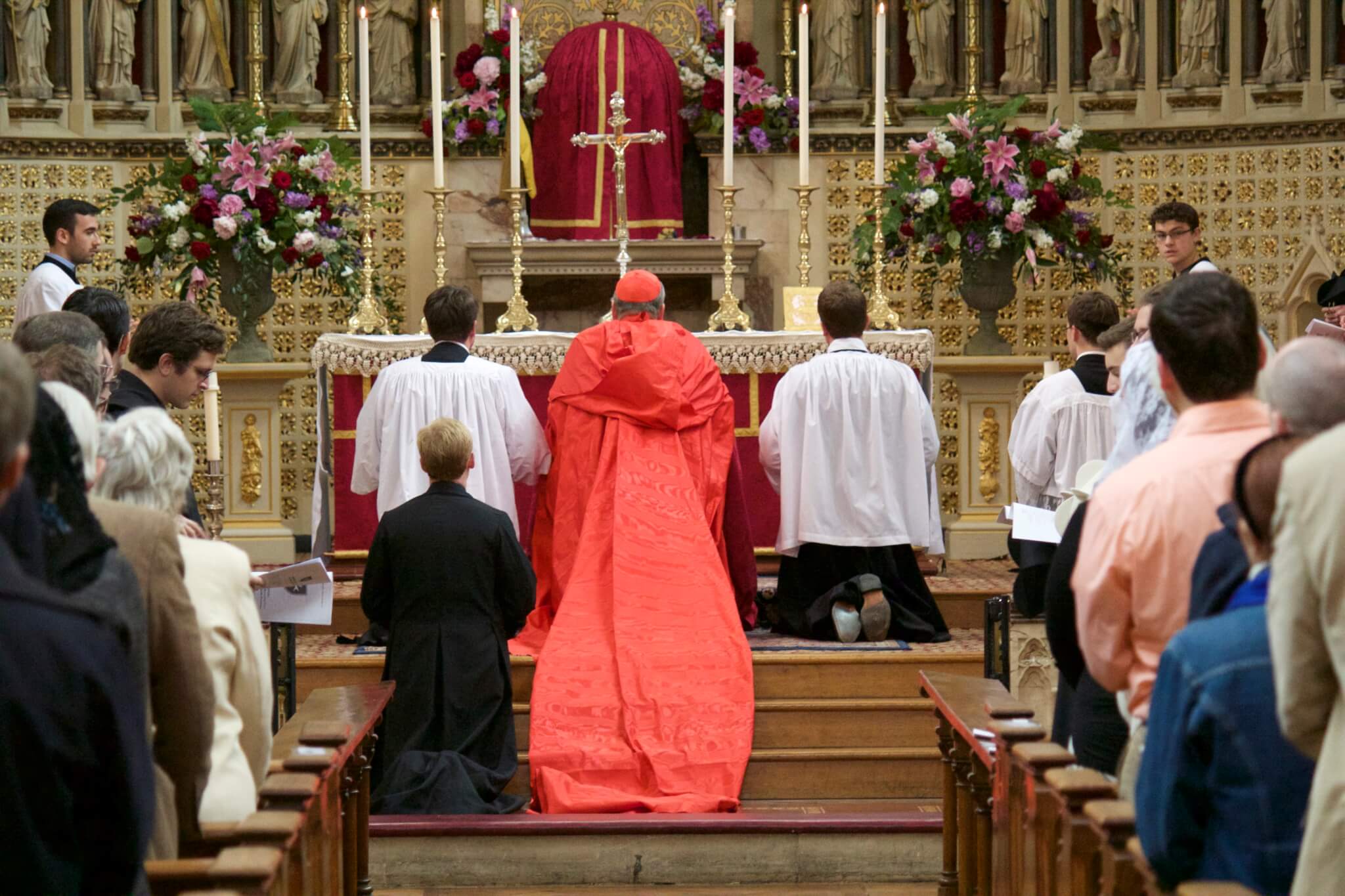
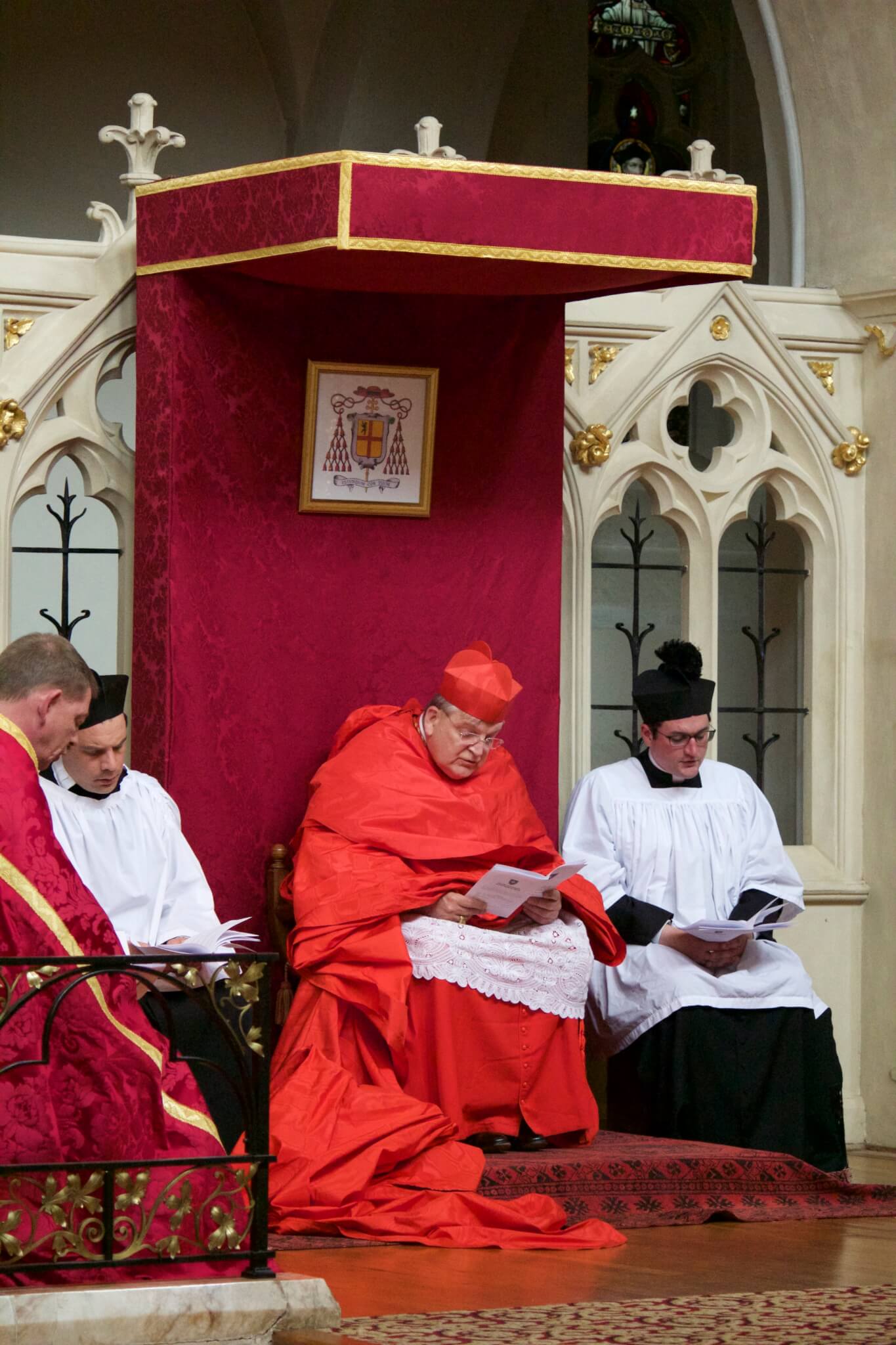
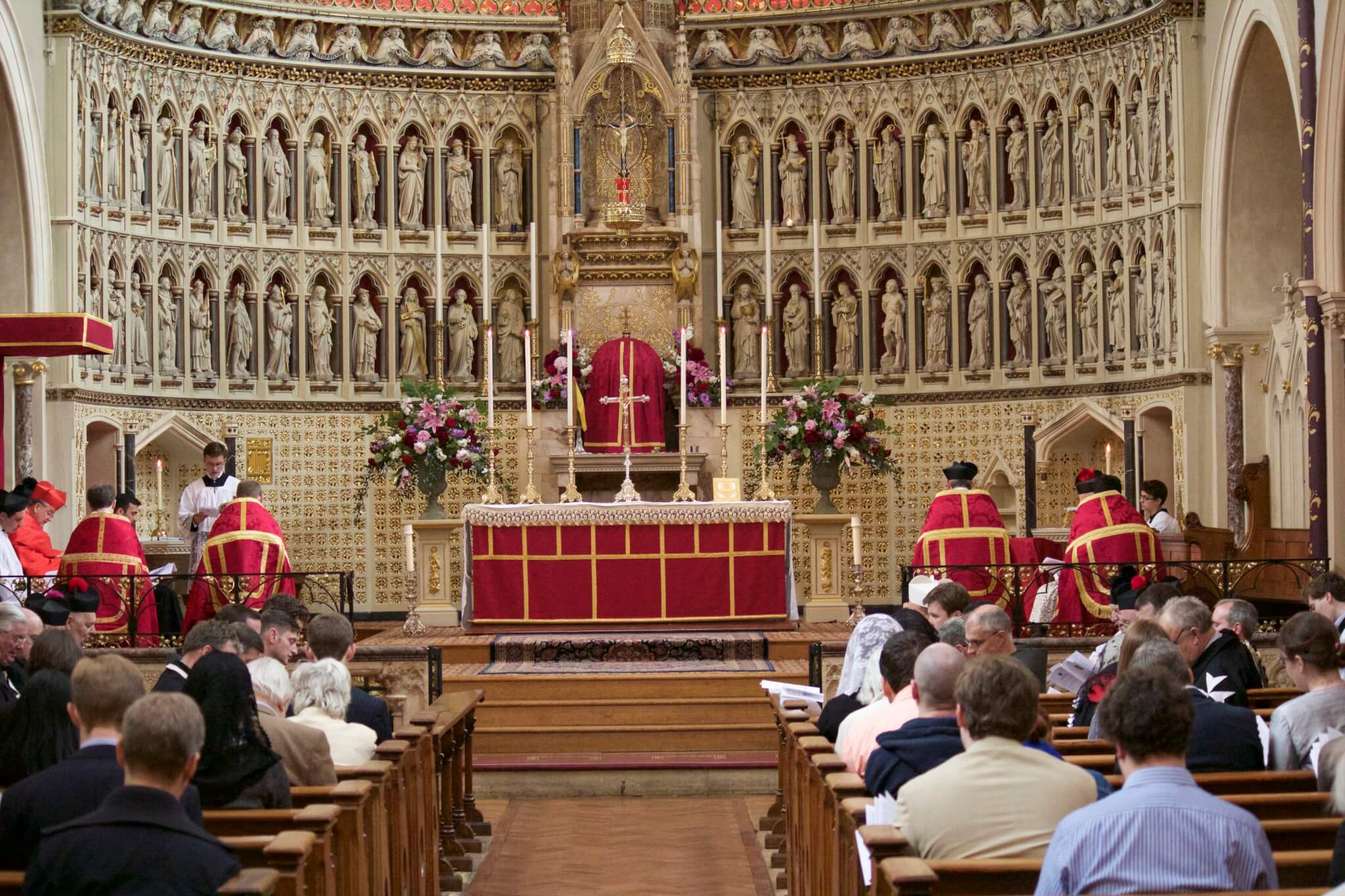
Last Wednesday, His Eminence Raymond Leo Cardinal Burke, Patronus of the Sovereign Military Order of Malta, was present for Vespers in the Oxford Oratory church for the Order. 

IMG_2648

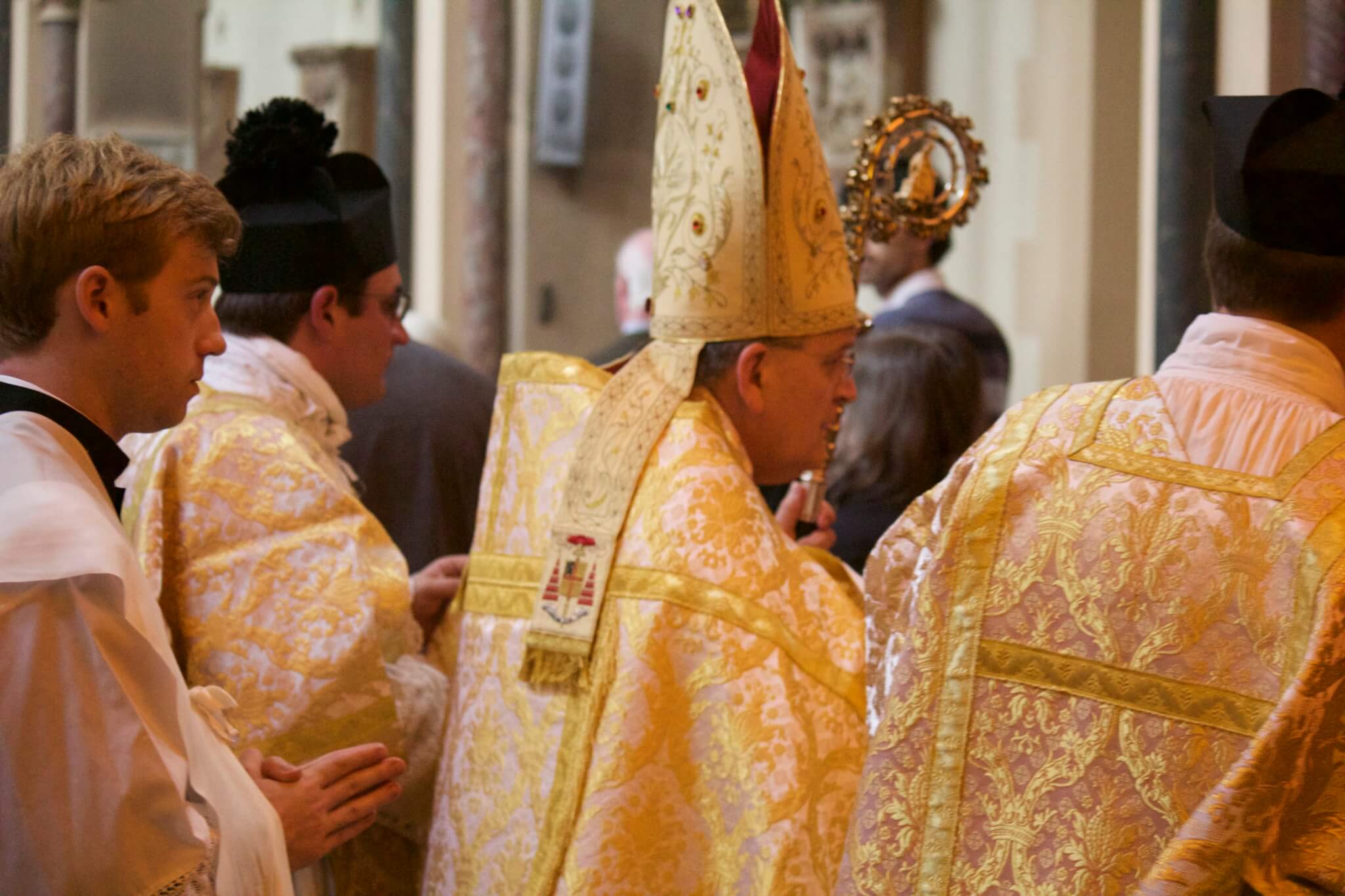
His Eminence entered the church wearing his cappa magna over his choir dress.

IMG_2657

His Eminence had earlier in the day met members of the Companions of the Order of Malta, who do wonderful work in Oxford with their homeless Shower Project, soup runs, visiting the sick and elderly and other corporal works of mercy. Cardinal Burke was greatly impressed by the Companions and warmly encouraged them in the twofold ministry of the Order of Malta: the care of the poor and the defence of the Faith.

IMG_2669

The Vespers was that of the Octave of Pentecost, and the four coped cantors were an Oratorian, a Jesuit, a Benedictine and a Dominican - which sounds like the beginning of a joke about going into a bar, but here is a manifestation of the rich variety of Catholic life in this city. 

IMG_2670


IMG_2691

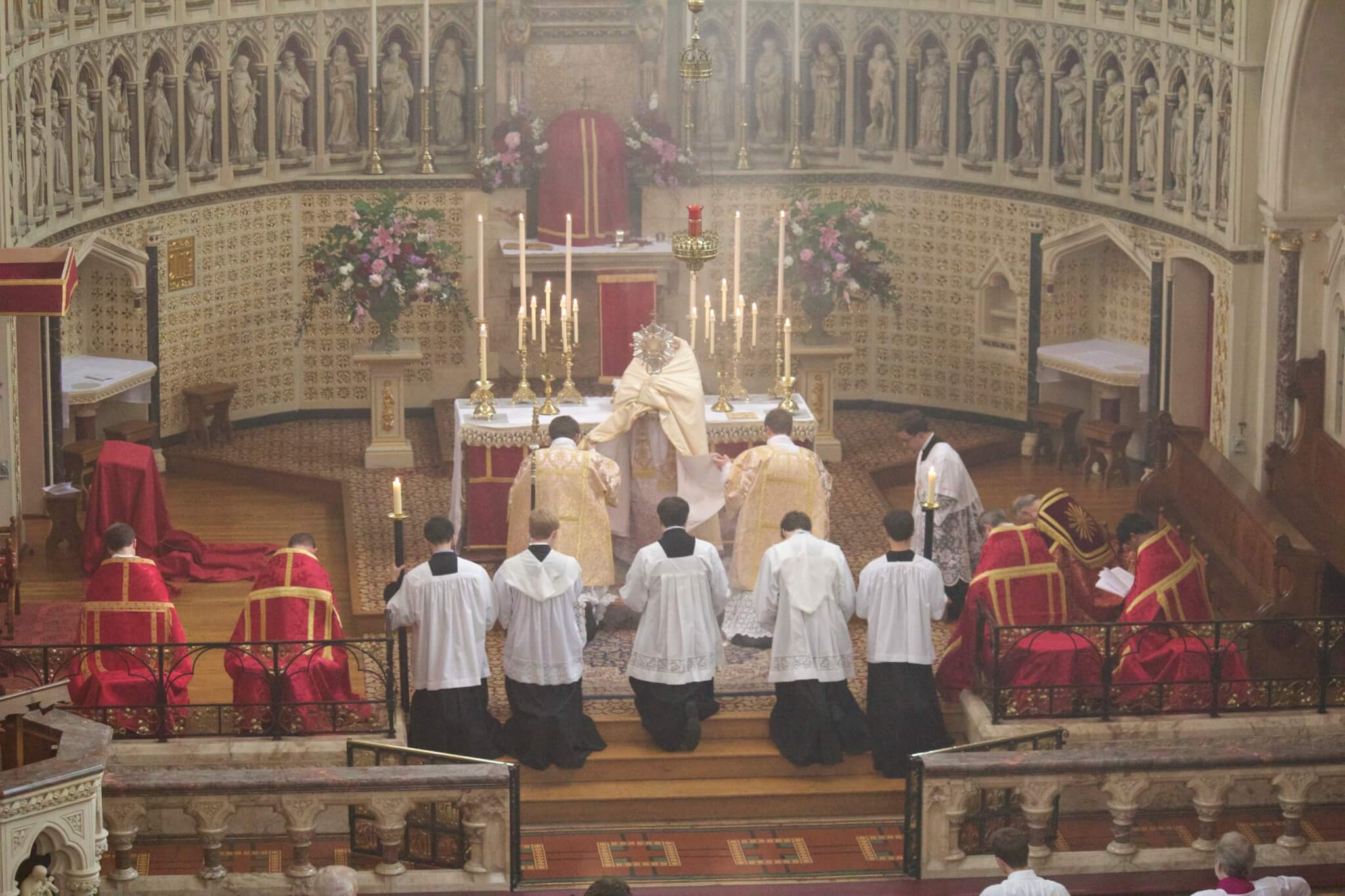
After Vespers, the Cardinal gave Benediction of the Blessed Sacrament, before going on to deliver a lecture at the University Chaplaincy on "The Legacy of Pope Benedict XVI".
 
IMG_2718


 IMG_2721

Text and Images: Oxford oratory/Photographs courtesy of the Oxford Companions of the Order of Malta.


Wednesday, 3 December 2014

Insignia of the Order of Malta


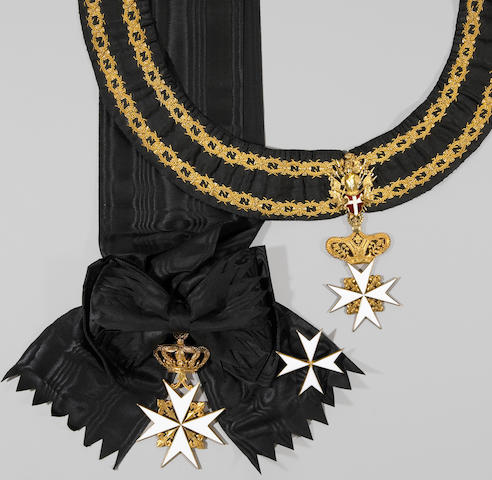
A friend, who frequently sends me such useful and interesting links, has sent me this photograph from a Bonhams auction catalogue from 2006 of some insignia of the Order of Malta which was due to be auctioned.

A set of insignia of a Bailiff Grand Cross of the Sovereign Military Order of Malta

A set of insignia of a Bailiff Grand Cross of the Sovereign Military Order of Malta


This insignia of a Bailiff Grand Cross of the Sovereign Military Order of Malta comprises: 
1) Neck badge in gilt and enamels, on silk necklet with gold embroidery, of exceptional workmanship, with associated miniature; 
2) Sash badge in silver gilt, single-sided enamel, 925 silver mark on reverse of suspension, with full length black sash; 
3) Profess Cross, silver gilt and enamels, pinback, marked 925 on reverse. 

All contained in red leatherette cases with maker's stamp of Cravanzola/Gardino of Rome on interior lids. 

The sash badge and profess cross are later manufacture than the neck badge, consistent with the progress of a single recipient through the ranks.

Condition: All extremely fine, (1) with old professional enamel repair on trophy of arms.

This combination of badges represents the rank of Bailiff Grand Cross of Honour and of Devotion with Profess Cross ad honorem. At present [2006] there are only two living holders of this rank: His Imperial and Royal Highness Archduke Otto von Habsburg-Lothringen as Head of the Austrian Imperial Family and His Majesty King Juan Carlos I of Spain.

My friend adds that what Bonham’s calls the ‘profess cross ad honorem’ is better understood when translated as ‘Honorary cross of profession’. Within the Order with its complex series of grades it is the cross worn by the professed, celibate, Knights of Justice, which can be awarded to Knights of Grace as an exceptionally rare honour. Honour and Devotion is the class with strict noble proofs, and he thinks that of the non-professed Knights only those of Honour and Devotion can be made Bailiffs.


Thursday, 27 February 2014

Mass at Merton with the Order of Malta


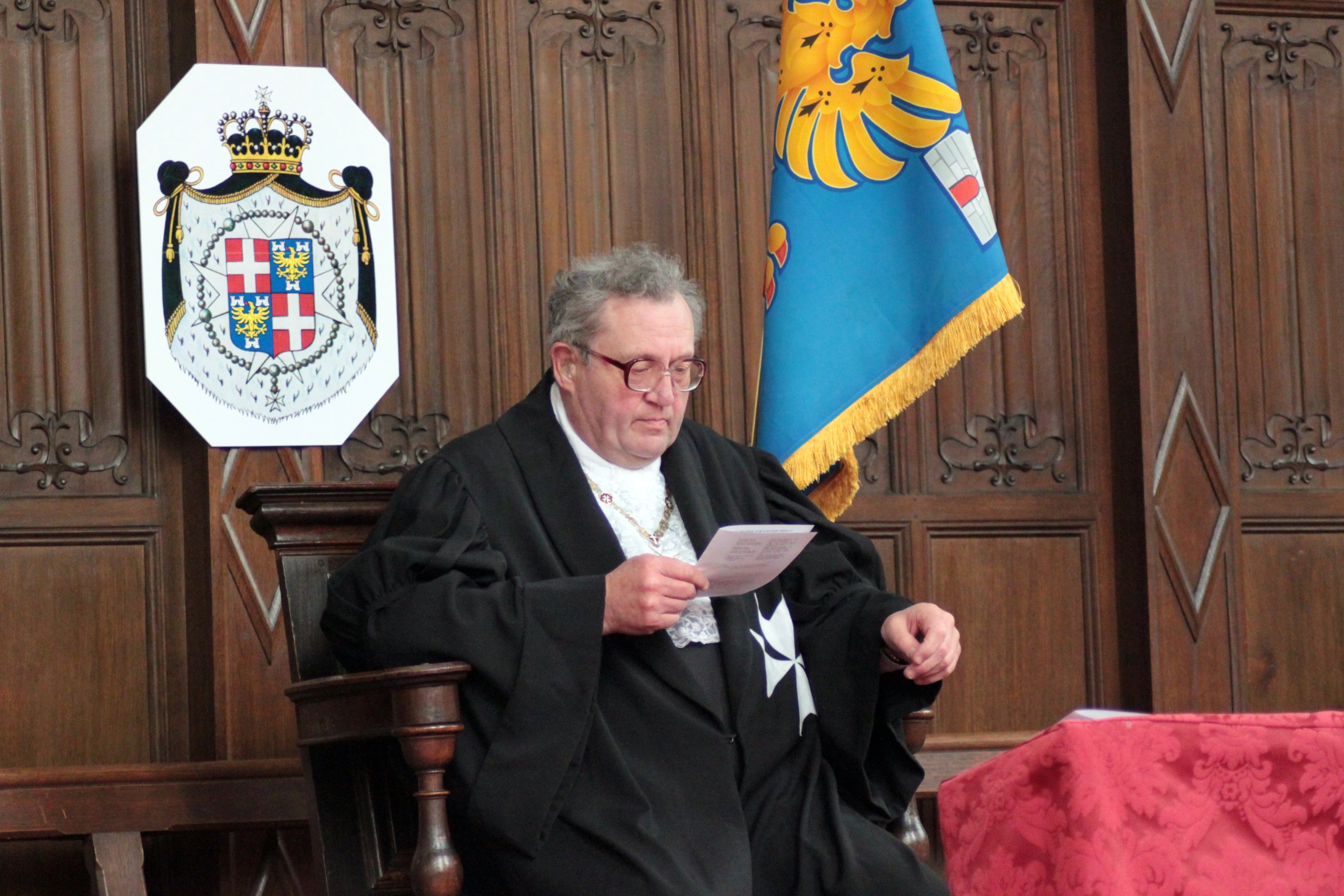
Earlier this afternoon I attended a celebration of Mass in the Extraordinary Form in the glorious setting of the chapel of Merton College. The Mass was attended by HMEH the Prince and Grand Master of the Sovereign Military Hospitaller Order of St John of Jerusalem, of Rhodes and of Malta, Fra' Matthew Festing. The Grand Master is visiting Oxford for a couple of days and is due to address the University Catholic group the Newman Society this evening about the function of the Order in the presert day under the title of Charity in the 21st Century. There is a biography of the Grand Master here.

The Mass was a Missa cantata for the feast of the Passionist St Gabriel of the Sorrows of Maryand was celebrated by Fr John Osman from Dorchester, a chaplain of the Order. This was a rather low-key affair - Fra' Matthew and the other Knights present were in ordinary day dress rather than their habits. Given that it was mid-afternoon on a weekday there was a good congregation - many of them young men who have become Companions of the Order and assist in its extensive care work.

When we arrived we were given prayer cards for the cause of the late Grand Master Fra' Andrew Bertie, of whom there is a biography here.

File:Grand Master Matthew Festing 20100409.jpg

The Grand Master on  previous visit to Merton in 2010

Image;Wikimedia

Thinking about the Sovereign Order it occurred to me that given the variety of options raised in the 1950s and early 60s as to the future of the island of Malta in terms of independence or integration into the UK befoe it became an independent Commonwealth nation in 1965 it might not have been such bad idea to have retuned tit to the Knights. They form a sovereign body - complete with an airforce at one point - , they had ruled the island from the time of the Emperor Charles V and Malta is a notably Catholic place. A missed opportunity?

Saturday, 6 July 2013

Solemn profession of a Knight of Malta


Earlier today I attended the Solemn Profession at the Oxford Oratory of Fra' Julian Chadwick as a Knight of the Sovereign Military Hospitaller Order of St John of Jerusalem, of Rhodes and of Malta. This was a most impressive occasion, and I had not attended a similar event previously. The church filled up with friends and acquaintances of Fra' Julian, whom I have known since 2004, before teh processional entrance of Dames of the Order, clergy associated with it, Knights of Grace in their various classes and Knights of Justice of both simple and solemn profession - two of simple professiopn were to renew their vows as part of the assembly.

Presiding from a canopied throne over these ceremonies was HMEH the Prince and Grand Master,  Fra' Matthew Festing.

Given that this year is the 900th anniversary of the bull of  Pope Pascal II in 1113 which formally established the Order, which had originatedin 1048, this was a very suitable way to mark that anniversary here in Oxford as well as to witness Fra' Julian's Solemn Profession.

The whole ceremony was in the context of the celebration of an Extraordinary Form Mass of the Holy Cross - very suitable for a former Chairman of the Latin Mass Society.

The Profession was in two stages - the taking of oaths and the giving of the sword,and indeed its symbolic brandishing three times in symbolic defence of the Faith and Church, at the offertory, the clothing after communion. I was told afterwards that the form is fifteenth century at least, although I thought the English translation sounded a little self-conciously arcane, rather as if it were nineteenth century in the spirit of the middle ages. Nonetheless it witnessed to a spiritualisation of the vows of medieval knighthood in the service of Christ and the Poor.

Following the Profession and the Mass and Communion there was then the clothing with the traditional black mantle with its badge of the eight pointed white cross- emblematic of the Beatitudes - over Fra' Julian's red uniform, which was covered with a red tabard with a white cross, the arms of the Order. He then received his Stola, worn over the shoulder, with its emblems of the Passion, and which is the distinctive item of a solemnly professed Knight. The significanc eof each emblem was poined out to him and how he should lead his own life accordingly.

Following the ceremonial in church there was a reception at St Cross college in warm sunshine, and an opportunity to catch up with old friends, of whom there were many present and to meet new contacts. 
In his brief speech the Grand Master said he thought the service the best conducted of the several Solemn Professions at which he had presided.

There is more about the events of the day in this blog post Congratulations to Fra Julian Chadwick


Friday, 1 April 2011

Knights of Malta


On Wednesday evening I attended a most interesting talk at the Oratory here in Oxford by Julian Chadwick about the history and present role of the Order of Malta, or to give it its proper title The Sovereign Military Hospitaller Order of St John of Jerusalem of Rhodes and of Malta.

Mr Chadwick is in Simple Profession as a Knight, and, dressed in his habit and equipped with modern computer technology, symbolised the way in which the Order combines its original monastic and hospitaller charism with modern methods so as to continue to serve Christ and the Church as well as the sick and the poor.

Amongst the points he made was that the Order, founded in 1099, is the oldest chivalric order in existence, predating those of the national and dynastic monarchies, such as the Garter, the Annunziata and the Golden Fleece, founded from the fourteenth century onwards.

In England the Grand Priory was restablished in 1993, having been in abeyance since 1559, although there had been English Knights of Malta throughout that period. The previous Grand Master and the present one were both born in England. The Order is growing in numbers in this country, and this appears to be a consequence of their fidelity to their traditions.

He also indicated the wide extent of their humanitarian work, and fact that the Sovereign status of the Order enables it to work where other groups might not be accepted and to be a means of directing aid rapidly to disaster areas.


A meeting of the Sovereign Council of the Order,
with the banners of the national langues displayed

I have added the English website of the Order of Malta to the side bar, and it provides a great deal of information about the history and current activities of the Order.