Once I was a clever boy learning the arts of Oxford... is a quotation from the verses written by Bishop Richard Fleming (c.1385-1431) for his tomb in Lincoln Cathedral. Fleming, the founder of Lincoln College in Oxford, is the subject of my research for a D. Phil., and, like me, a son of the West Riding. I have remarked in the past that I have a deeply meaningful on-going relationship with a dead fifteenth century bishop... it was Fleming who, in effect, enabled me to come to Oxford and to learn its arts, and for that I am immensely grateful.


Showing posts with label King Henry III. Show all posts

Wednesday, 12 February 2025

Magna Carta 1225

 
Yesterday was the eighth centenary of the reissue of Magna Carta and its accompanying text the Charter of the Forest in 1225 by King Henry III. It was these texts which became definitive, and they were the first enrolled as statutes of the realm in 1297. These were the texts which were customarily reissued by later medieval monarchs. Those few parts of the Great Charter which are still part of the law of the land, notably clause 29 ( clause 39 in the 1215 version ) derive their legal force from this1225 revised reissue.
 
The National Archives have issued a translation of the 1225 text on their website. This can be seen at Magna Carta, 1225

In Oxford the Bodleian Library is holding an exhibition until April of their copies of the various versions. This is in the Weston Library on Broad Street. This exhibition is described at Magna Carta 1225

Durham Cathedral Library has original copies of several of the versions of the texts of Magna Carta, including the unique copy of the 1216 reissue, and they will be on display in an exhibition this forthcoming summer and autumn. They are described and illustrated at Magna Carta and the Charter of the Forest - Durham Cathedral

In recent years there has been considerable debate as to whether the Magna Carta of 1215 should be viewed as a great constitutional document or as a peace settlement that rapidly 
failed. To that I am always inclined to give the answer that it was both, not polarised alternatives. The same argument can be made about the 1216, 1217, and 1225 reissues and redactions as the government of the young King Henry III sought to establish his rule and a new or restored relationship with the baronage.
Reissuing the charters was a pledge of a new way of conducting the business of government, and turned what had been an unwilling concession into a constitutional resource in the royal hand.

At the same time an indication that things could easily go wrong can be seen in the young King’s response to difficulties in Chester as early as June 1225 and as described by the National Archives in Magna Carta exploited, 1225

As King Henry III was to discover as monarch reissuing Magna Carta did not necessarily lead to a tranquil reign.


Wednesday, 2 October 2024

The Chapel of the Guardian Angels in Winchester Cathedral


Today is the Feast of the Guardian Angels.

In 2020 I posted the Breviary Mattins readings from St Bernard of Clairvaux, together with a picture of the thirteenth century vault painting in the chapel dedicated to the Guardian Angels in the retrochoir of the cathedral at Winchester. This can be seen at St Bernard on the Guardian Angels
 
I had previously posted about the vault paintings in 2012 in a piece which can be seen at Guardian Angels at Winchester

This draws attention to the similar scheme which can be seen extending over the vault of the choir and eastern transepts of Salisbury Cathedral and which must be from the same period. I am not sure how extensively that scheme has been restored. In the south transept of Lincoln Cathedral is a restored vault decoration of foliage which must be in origin also of that period and probably part of a much more extensive scheme. The idea a blue ground with stars, which is part of the Winchester arrangement, became very popular and was a feature of the fourteenth century Lady Chapel at Ely and the nave and choir vaults of York Minster from that same century. Remains of a similar starry vault can be seen in the chapel at Rycote in Oxfordshire. Such schemes survive on the continent.


File:Winchester Cathedral Guardian Angels Chapel (5697546854).jpg

The vault of the Chapel of the Guardian Angels in Winchester Cathedral
Image: Wikimedia


I have now found a more detailed online account of the paintings, and their relationship to the court painters of King Henry III, with his close connections with the cathedral and city, an article which can be seen here


A further insight into the later medieval appearance of the interior of the chapel - and of the ruthlessness of sixteenth century iconoclast “reformers” - can be obtained from an article in the Hampshire Field Club and Archaeological Society from 1990 which discusses and identifies figures from the reredos of the chapel. It can be seen online here 


May the Guardian Angels ever defend us


Tuesday, 4 August 2015

Battle of Evesham 1265


Today is the 750th anniversary of the battle of Evesham in 1265, when the Royaloist troops led by the Lord Edward, later King Edward I, defeated the baronial army led by Simon de Montfort, who had ruled the realm since the battle of Lewes the previous year - there is an account of that battle at Battle of Lewes - and had kept King Henry III, who was his brother-in-law, as a virtual prisoner. 

There is an online account of the background and to the fighting at Battle of Evesham.
There is also a picec from the Battlefields Trust about the battle at their site Battle of Evesham 
and the current commemorations and celebrations are covered at  Battle of Evesham: Home

 Image: eveshamtown.co.uk 


At the website of the National Archives the post Battle of Evesham, 1265 - The National Archives has an account of the battle, and the death of Simon de Montfort in an extract taken from the chronicle attributed to Arnald FitzThedmar

 King Henry III

Image:fameimages.com

Simon Leicester.jpg

 Simon de Montfort, Earl of Leicester
A drawing of a window at Chartres Cathedral

Image: Wikipedia

There is an online biography of Earl Simon at  Simon de Montfort, 6th Earl of Leicester, and there is the excellent and comprehensive biography by Dr John Maddicott.

My sympathies are with King Henry III and his cause - as I have opined before I think that for the King Earl Simon turned out to be the Brother-in-Law-from-Hell.

For some time after his death there appears to have been at the Earl's burial place (or such of him as was buried at Evesham) in the abbey church a cult of sorts - which clearly did not attract the favour of the King.

File:De montfort evesham.jpg

 The modern memorial to Earl Simon on the site of Evesham Abbey.
This was unveiled and dedicated in 1965

Image: Wikimedia

Despite the major defeat of the baronial party at Evesham agroup held out at Kenilworth against a Royalist siege until the settlement known as the Dictum of Kenilworth in 1267. It was with theassignment of the Leicester estates to King Henry's younger son, Edmund, Earl of Lancaster , that there began that agglomeration of lands which was to create the fourteenth century Earldom and Duchy of Lancaster, which since 1399 has been held by the Sovereign.


Tuesday, 20 January 2015

750 years of the House of Commons


Today is being celebrated as the 750th anniversary of the first meeting of an English parliament that included the Commons - Parliaments had already met earlier in the reign of King Henry III, but had been more like the later Great Councils, consisting of the nobles alone gathered around the monarch to give advice and consent. 

The 1265 Parliament was essentially called by Simon de Montfort, Earl ofc Leicester and brother-in-law to the King, who had been in his power since the Battle of Lewes the previous year. Earl Simon may well have thought having representitives of the knights of the shire and the towns would strngthen his regime, which was to collapse at the Battle of Evesham in August 1265. However the idea was not new - that noted constitional innovator and reformer King John had had a similar plan in 1212, even if the assenbley never actually met.

Most meetings of the Commons were in the Chapter House of Westminster Abbey until the mid-sixteenth century,when the Commons were given the Chapel of St Stephen in the palace of Westminster for their meetings in 1547. 

This had an effect on how the House worked. In the Anonimalle Chronicle of St Mary's Abbey York is a detailed insider's account of what occurred during the Good Parliament of 1367. The Knights sat on the floor, the townsmen behind them along the wall. The member speaking addressed the assembly from the lectern. In other words, something rather like a continental Parliament today with a half-moon of seats, reflecting the political spectrum - hence the "left" and the "right". By moving into St Stephen's in the time of King Edward VI and occupying the choir stalls facing each other across the floor, and with the Speaker sitting where the altar had been, the modern adversarial arrangement came into being, favouring a two party system of Government and Opposition.


The Chapter House of Westminster Abbey
Some of the glass dates from Sir George Gilbert Scott's restoration 1866-72, which revealed medieval encaustic floor tiles in excellent condition. On the walls are early fifteenth century paintings, including a scene of the Last Judgement. 

Image:volokh.com

Friday, 16 November 2012

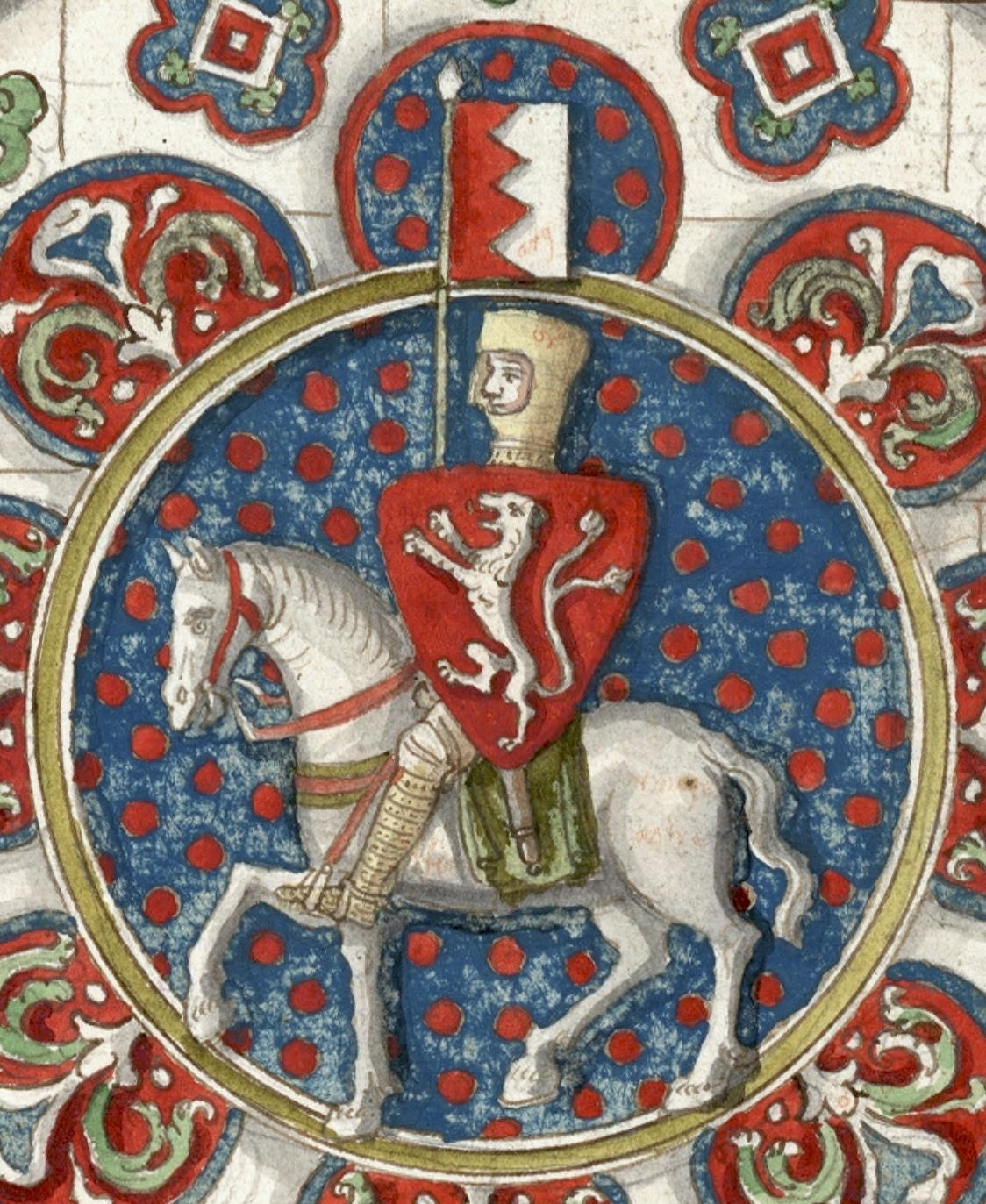
King Henry III


Today is the 740th anniversary of the death in 1272 of King Henry III, and the accession of his son King Edward I - who was on crusade at the time, and did not return to the country until 1274. That he was able to do that, less than a decade after the end of a civil war which revolved around the person of the King and his powers is testimony to the fundamental strengths of the institution of the medieval English monarchy, and the overalla chievement of King Henry III since his own accession as a boy, during a time of civil war fifty six years earlier.

King Henry lll

King Henry III

Image: myths.e2bn.org


An online account of the King and his reign can be read here.

There is an lengthy but really excellent and sympathetic life of the King by H.W. Ridgeway in the Oxford DNB which can be read here which is full of insight and understanding.

King Henry III is often presented as imperious and overly ambitious, prone to foreign-born favourites  and as a ruler whose failings led to the rise of Parliament. That view is the result of both contemporary chroniclers, such as Mathew Paris of St Albans, who were quick to identify the source of the kingdom's problems with the King and his court, and of later Whig historians, who following this line, saw in the thirteenth century the rise of Whig constitionalism - led by the foreign-born brother-in-law of the King, Simon de Montfort, the patriotic founder of Parliamentary liberty...

This view has never cut much ice with me - I have always sympathised with the King, and am inclined to see Earl Simon as  being for Henry the brother-in-law from Hell.

King Henry III's achievement was very considerable - inheriting the crown as a boy, with a French army occupying much of the country and much of the aristocracy alienated from his father's rule, and the Angevin system tottering, he was able, despite all the difficulties of his reign, to leave the institution peaceably to a son far away, who did not need to hurry home to secure his inheritance.

For all the errors he may have made during his reign the King had restablished the foundations of royal power, exercised his authority and influence, as Ridgeway argues in the article referred to above, in a conciliatory manner and given the monarchy a new mystique in the cult of St Edward and the rebuilding of Westminster Abbey. He was a great patron of the arts - not just at Westminster but in all his castles and palaces - often to the detriment of his finances. Apart from Westminster abbey itself little of this now survives - it has to be conjured up inthe mind from the pages of the History of the King's Works and other sources. A genuinely devout and pious ruler he enjoyed, as Ridgeway shows, a brief postumous cult as a potential saint at Westminster.

Westminster and its place in the life of the monarchy is very much his creation, and remains crucial to rhe English notion of Kingship. As King he gave the crown an Englishness it had not possessed since the Conquest - not least in naming his sons after the Anglo-Saxon royal saints Edward and Edmund. He himself sought, with limited success, to hold on to his possessions in France, and left his heart to be buried at Fontevrault. His nobility were less interested, and not until King Edward III was an English King able to enthuse his aristocracy for the French wars.

What also emerged from the reign, and came to fruition under the Edwards was the fact that a Parliament including not only the great magnates but also the representitives of the shires and towns - which was not invented by Simon de Montfort, but arguably, in principle if not in reality, by that arch-constitionalist King John half a century earlier - if well handled, was a means whereby the Crown could exercise more power as an institution than it could by itself.


The effigy of  King Henry III in Westminster Abbey

Image: thecultureconcept.com


Tuesday, 2 October 2012

Guardian Angels at Winchester


To mark today's feast of the Guardian Angels here is a picture of the lovely paintings on the vault of the Chapel of the Guardian Angels in Winchester Cathedral.

They date from circa 1240 and are the work of Master William, the King's painter. Not only do the paintings show the taste of of the monks of Winchester and of that discerning patron of the visual arts King Henry III, but they also indicate how the vault of a thirteenth century cathedral could or indeed should be decorated. 
There are remains of similar schemes in the choir and eastern transepts of Salisbury Cathedral, and there is a restored fragment in the south transept of Lincoln. A somewhat similar fourteenth century scheme survives at St Albans in the presbytery.


Winchester cathedral - guardian angels -- cathedral winchester uk church england lincoln u.k. north glass norwich gothic building
Image:photoree.com