I have lifted this from John Dillon's post on the Medieval Religion discussion group, with a few minor alterations and additions:
Today, October 10th, is the feast day of St. Gereon and companions, legendarily members of the Theban Legion who were not at Agaunus with St. Maurice but who voluntarily submitted to the Emperor Maximian in Köln (Cologne) and were executed there.
Some views of their church in Köln, the Basilika Sankt Gereon:
View from the west
View from the east
http://www.sacred-destinations.com/germany/cologne-st-gereon
https://de.wikipedia.org/wiki/St._Gereon
A virtual tour (use the links below the plan [at bottom of the page]):
http://www.stgereon.de/st-gereon-72.html
According to the late-eleventh or very early twelfth-century
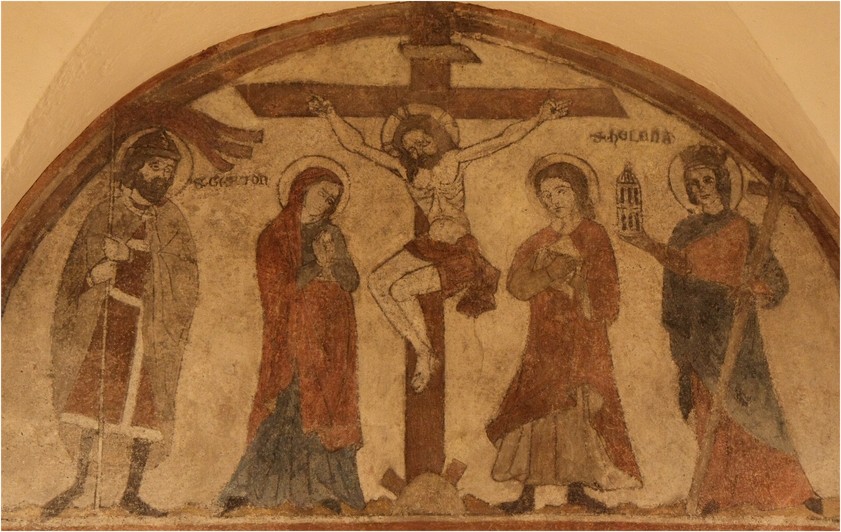
Vita sancti Annonis archiepiscopi Coloniensis, St. Helena had founded this church. Here is a view of an uncovered fresco from 1190/1191 over the entrance to the Confessio with Gereon at left and Helen at right (holding the earliest known representation of the church's polygonal nave, the Dekagon, completed in 1227):
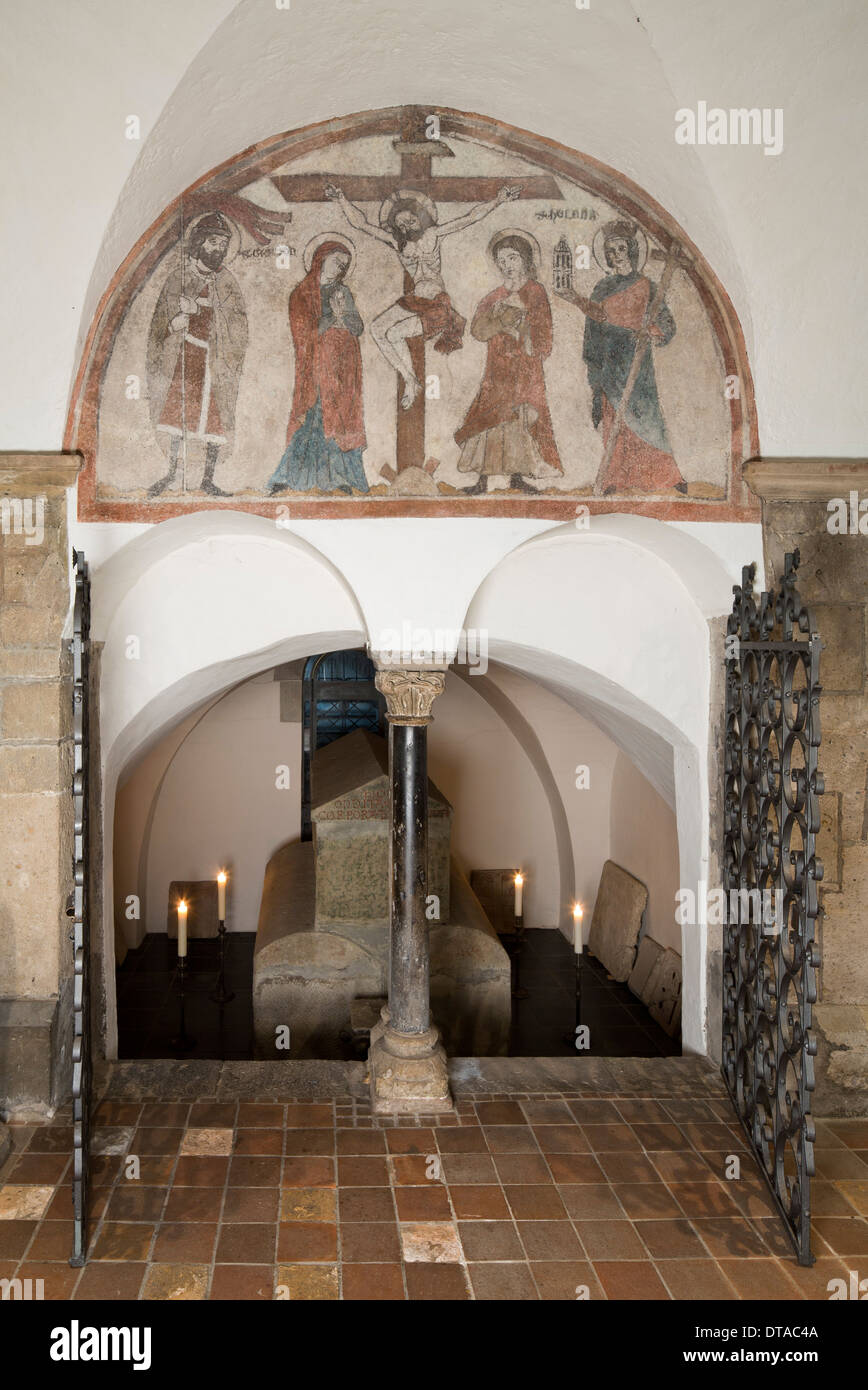
Context within the church (the sarcophagi contain skeletal remains unearthed in an Inventio in 1121 and proclaimed to be those of Gereon and some of his companions):
c8.alamy.com/comp/DTAC4A/kln-st-gereon-krypta-DTAC4A.jpg
Further period-pertinent images of Gereon and companions:
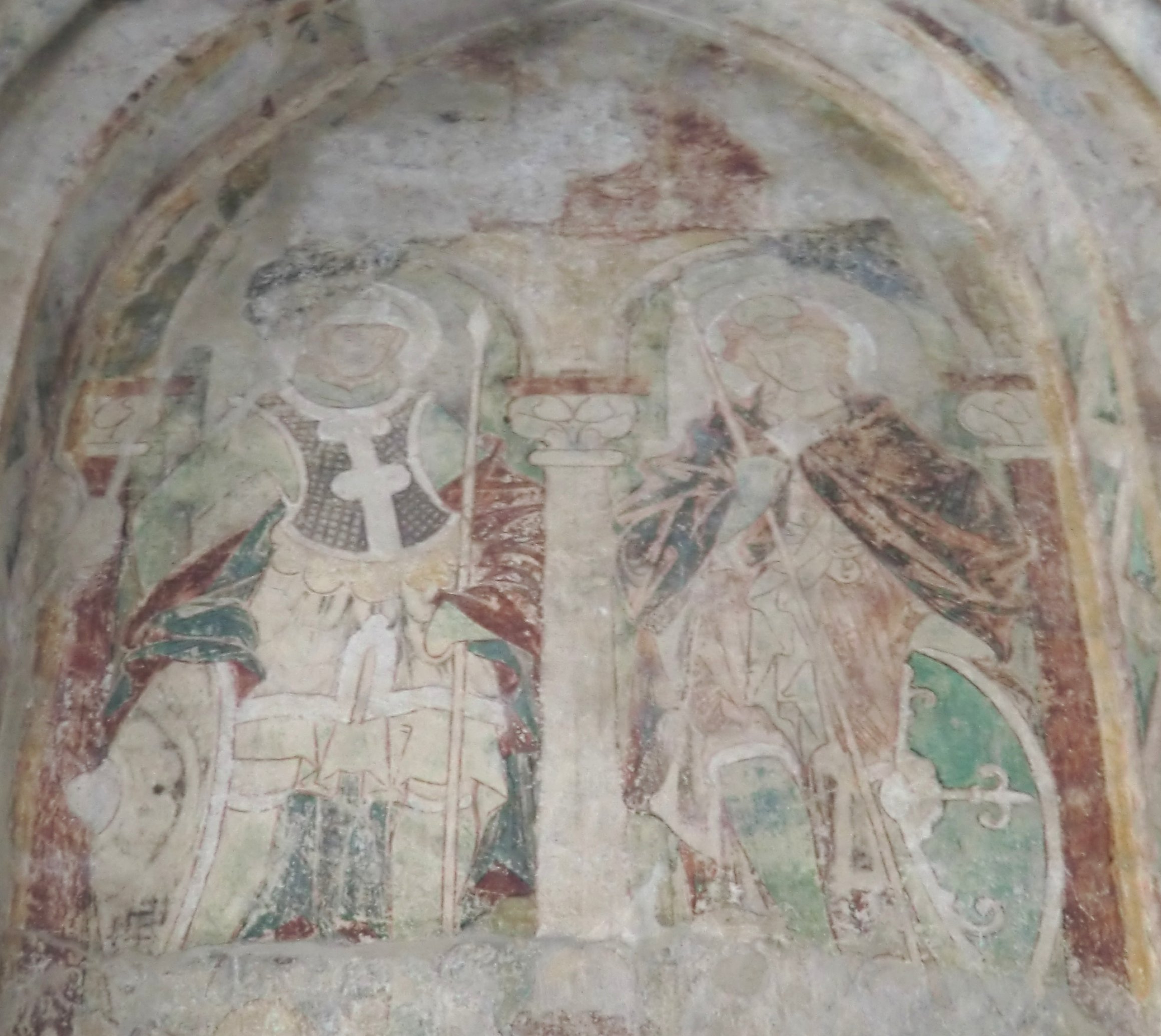
a) Gereon (at left?) and another martyr of the Theban Legion (Maurice? Gregory Maurus?) as depicted in a mid-thirteenth-century fresco in the baptismal chapel of Köln's Basilika Sankt Gereon:
The fresco in an early twentieth-century grayscale drawing:
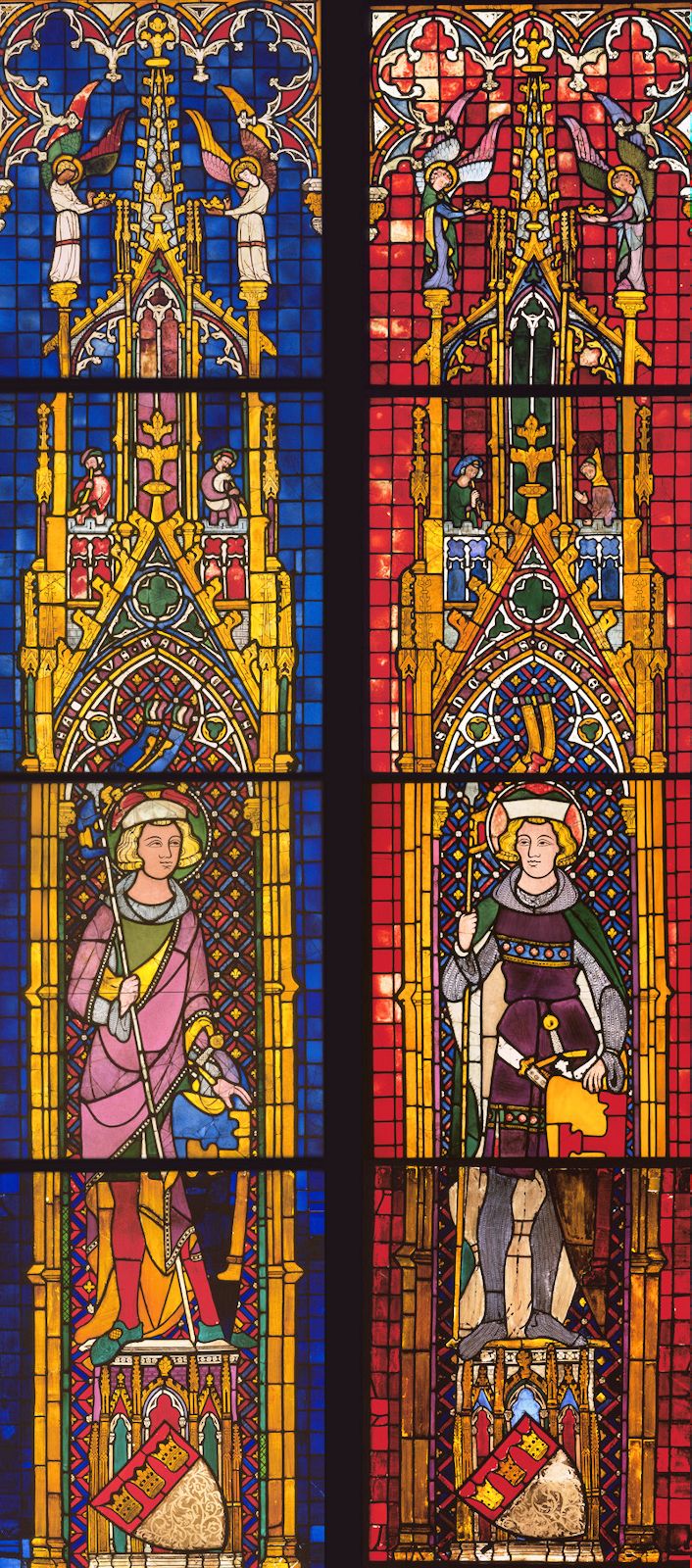
b) St Gereon and St Maurice as depicted in an earlier fourteenth-century glass window in Köln's Hohe Domkirche Sankt Peter und Maria:
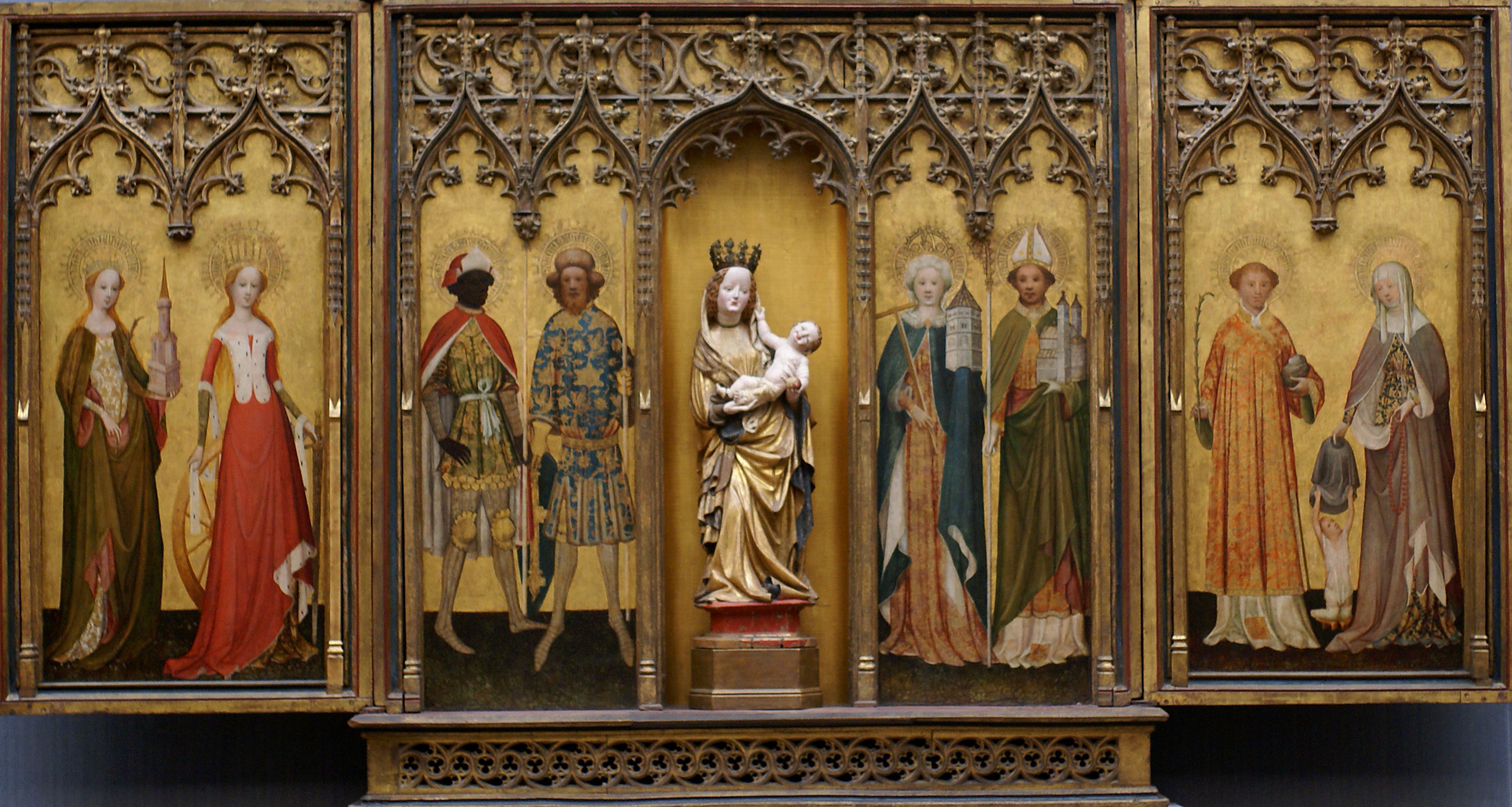
c) Gereon (second from left in central panel; at far left in the same panel, St. Gregory Maurus) as depicted in an earlier fifteenth-century altar of the BVM and saints of Köln (between 1410 and 1430) in the Gemäldegalerie, Berlin:
Detail view (Gregory Maurus and Gereon):
This altar was formerly in the church (since 1920 a basilica minor) of St. Gereon in Köln. The two figures on the other side of the central panel are St. Helen, holding a model of the Dekagon, and Köln's bishop St. Anno, holding a model of the church's choir and east end.
The Clever Boy wonders if the figure of St Gereon is a tribute to king/Emperor Sigismund in that the face and beard are nor dissimilar to images of Sigismund and the hat like that shown in virtually all images of the Luxembourg king and later Emperor.
d) Gereon and companions as depicted by Stefan Lochner in an earlier fifteenth-century panel painting (c. 1440) on his Dreikönigsaltar in the cathedral of Köln:
The altarpiece as a whole:
e) Gereon (second from left) and companions as depicted by the Master of the Assumption (Meister der Verherrlichung Mariae) in a later fifteenth-century panel painting (c. 1460) in the Germanisches Nationalmuseum, Nürnberg:
https://www.flickr.com/photos/roelipilami/14931956501/
https://www.flickr.com/photos/roelipilami/14935025195/
f) Gereon as depicted (second from left -- counting Christopher and his charge as one) by the Master of the Assumption (Meister der Verherrlichung Mariae) in a later fifteenth-century panel painting (c. 1480) in the Wallraf-Richartz Museum, Köln:
The other figures are St Peter vested as Pope and the Virgin Mary with St Anne and the Christ Child - added by the Clever Boy.
g) Gereon as portrayed (at right; at left St. Ursula; at centre, the martyrdom of St. Barbara) in a wing of an early sixteenth-century pendant (1504) in the form of a silver gilt and enamel triptych in the Museum of Fine Arts, Boston:
http://tinyurl.com/ol97y83
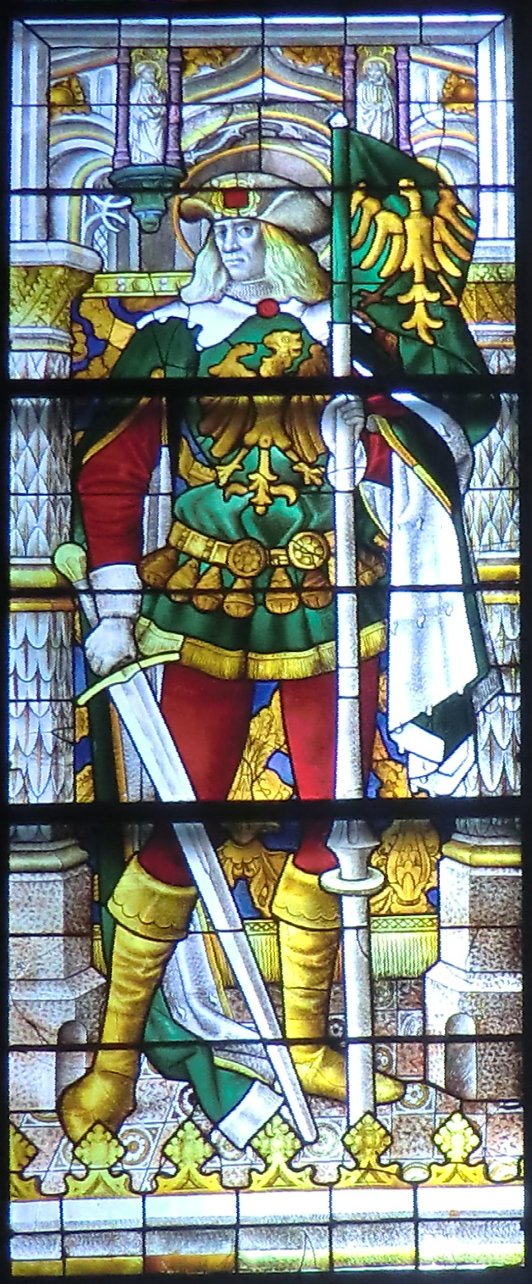
h) Gereon as depicted in a panel of the early sixteenth-century Typological Window of the Nativity (Typologisches Geburt Christi-Fenster; c. 1508) in Köln's Hohe Domkirche Sankt Peter und Maria:
1) according to the cathedral's website (German-language) - St Maurice:
2) according to heligenlexikon.de and to the cathedral's website (English-language) - St Gereon:
Neither site indicates the source for its identifications of the four saints in this register.
The window as a whole:
German-language text:
http://koelner-dom.de/index.php?id=17382
English-language text:
http://koelner-dom.de/index.php?id=17382&L=1
i) Gereon as depicted (at right; at left, St. Helena; at centre, St. Maternus of Köln) in an earlier sixteenth-century glass window panel (c. 1520-1530) in the church of St. Maria Lyskirchen in Köln: