Once I was a clever boy learning the arts of Oxford... is a quotation from the verses written by Bishop Richard Fleming (c.1385-1431) for his tomb in Lincoln Cathedral. Fleming, the founder of Lincoln College in Oxford, is the subject of my research for a D. Phil., and, like me, a son of the West Riding. I have remarked in the past that I have a deeply meaningful on-going relationship with a dead fifteenth century bishop... it was Fleming who, in effect, enabled me to come to Oxford and to learn its arts, and for that I am immensely grateful.


Showing posts with label St Alphege. Show all posts

Monday, 20 April 2015

St Alphege


A series of posts on the Medieval Religion discussion group marked the fact that yesterday, April 19th, was, or woulld have been had it not been Sunday, the feast of St Ællfheah or Alphege, born c.953 and martyred by the Danes at Greenwich in 1012. I have a previous post about him and his cult, written for the millennium of his martyrdom in 2012, atSt Alphege. There is an online account of his life and career here.

Matt Heinzelman posted as follows:
Ælfheah was the first Archbishop of Canterbury to die a violent death. A contemporary report tells that Thorkell the Tall attempted to save Ælfheah from the mob about to kill him by offering them everything he owned except for his ship, in exchange for Ælfheah's life; Thorkell's presence is not mentioned in the Anglo-Saxon Chronicle, however. Some sources record that the final blow, with the back of an axe, was delivered as an act of kindness by a Christian convert known as "Thrum."


Jane Stemp Wickendon posted:
This is the Peterborough chronicle variant on the Anglo-Saxon Chronicle:

"And in this year, between the Nativity of St Mary and Michaelmas they besieged Canterbury, and got inside through treachery, because Aelfmaer, whose life Archbishop Aelfheah had earlier saved, betrayed Canterbury to them. And there they seized the archbishop Aelfheah, and Aelfweard the king's reeve, and Abbot Leofwine, and Bishop Godwine - and they let Abbot Aelfmaer go free. And they seized all ordained people, both men and women, in there - and it is impossible for any man to say how much of the people that was - and afterwards were in the town as long as they wanted; and when they had thoroughly searched it, then they turned to the ships, and led the archbishop with them.

Then he who was earlier the head of the English race and of Christendom was a roped thing. There wretchedness might be seen where earlier was seen bliss, in that wretched town from where there first came to us Christendom and bliss before God and before the world.

And they kept the archbishop with them up until the time when they martyred him."


Rev. Gordon Plumb posted these images from the windows at Canterbury Cathedral, Nt IX, dedicated to the saint's life [For larger views click on the links at bottom right]:

photo

Three panels illustrating the martyrdom of St Alphege by the Danes. The ornament is extremely well preserved, and the figured panels are the best preserved of these series, with the upper one showing the siege of Canterbury being especially well preserved. The lower right panel of the Massacre by the Danes is heavily restored.

Detail of the Siege of Canterbury:

photo

A wonderful panel of c.1180, showing the siege of Canterbury in 1011 by the Danes. Eventually the city fell and seven months later the Danes killed Alphege the Archbishop when the ransom demanded was not paid.


Detail of Alphege being taken aboard a Danish ship:

photo

Detail of the martyrdom of St Alphege by the Danes:

photo

Thursday, 19 April 2012

St Alphege


Today is the millenium anniversary of the martyrdom at Greenwich by his Viking captors of St Alphege, Archbishop of Canterbury, in 1012. Probably known to his contemporaries as Ælfheah ( Ælfhēah, "elf-high") and also called Elphege, Alfege, or Godwine, he was, in modern terms, the victim of hostage taking, and has the slightly dubious distinction of being the first Archbishop of Canterbury to died a violent death - four others have followed him. His cult today is perhaps not what it was in the century and more following his death, but there appears to have been considerable interest in commemorating him this year.

The Oxford DNB life of him by Henrietta Leyser can be read here and there is another online biography here.

There is another account of him from the Catholic church of Our Lady and St Alphege in Bath here. That church is dedicated to him to recall his time as abbot of Bath before he received episcopal orders. The church is marking the anniversary with a Mass celebrated by ther Bishop of Clifton. It is the work of Sir Giles Gilbert Scott, and was begun in 1927, and the main part completed by 1929, and finally finished in 1960 - and was one of the architects own favourite works.

http://www.lms.org.uk/photo-files/st_alphege_bath

Our Lady and St Alphege Bath

Image: Our Lady and St Alphege/LMS

The church website is here, and there is a fine set of photographs of what appears to be avery fine church from the BBC Bristol website here.

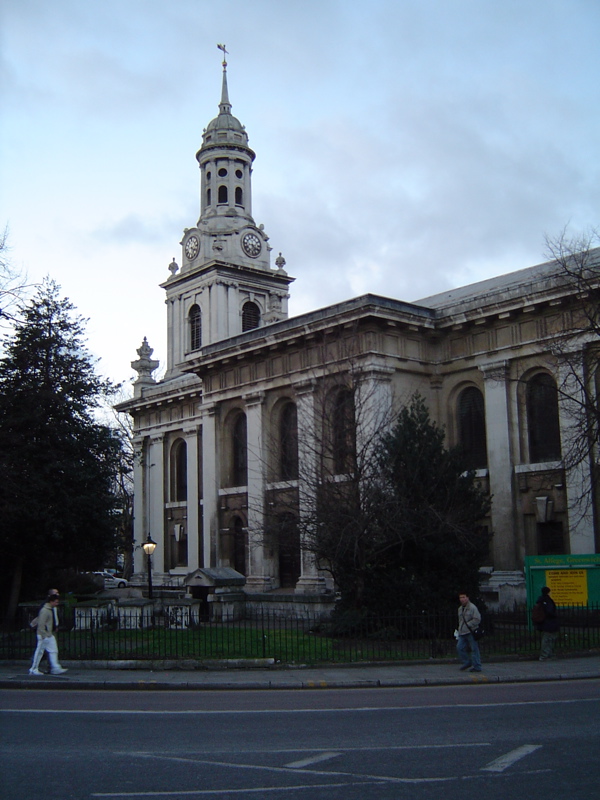
Amongst older churches dedicated to him probably the best known is that in Greenwich, traditionally said to be on the site of his martyrdom. The medieval church collapsed in 1710, and was peplaced between 1712 and 1714 by the present church, designed by Nicholas Hawksmoor; it was consecrated in 1718.


File:St Alfege.jpg

St Alphege's Greenwich

Image: Wikipedia

Amongst the other churches under his patronage are several in Kent, including one in Canterbury itself, which was declared redundant in 1982, and about which there is a comprehensive illustrated website here.

Further afield from his home area and the south-east there is the handsome medieval church of Solihull in the greater Birmingham area. There is an article about it here. There is a detailed guide to the church available online here. Probably its most famous incumbent was John Feckenham, the former monk of Evesham who went on to become the Marian Abbot of Westminster in the 1550s.


photo

St Alphege's in Solihull is a large cruciform building dating mainly from the late 13th and early 14th centuries. The chancel has the church's most unusual feature in the two-storied St Alphege Chapel, the chapel itself being upstairs with a vaulted crypt below.

Image: Aidan MacRae Thomson on Flickr