Once I was a clever boy learning the arts of Oxford... is a quotation from the verses written by Bishop Richard Fleming (c.1385-1431) for his tomb in Lincoln Cathedral. Fleming, the founder of Lincoln College in Oxford, is the subject of my research for a D. Phil., and, like me, a son of the West Riding. I have remarked in the past that I have a deeply meaningful on-going relationship with a dead fifteenth century bishop... it was Fleming who, in effect, enabled me to come to Oxford and to learn its arts, and for that I am immensely grateful.


Showing posts with label Remembrance Sunday. Show all posts

Monday, 10 November 2014

Remembrance Day at the Oxford Oratory


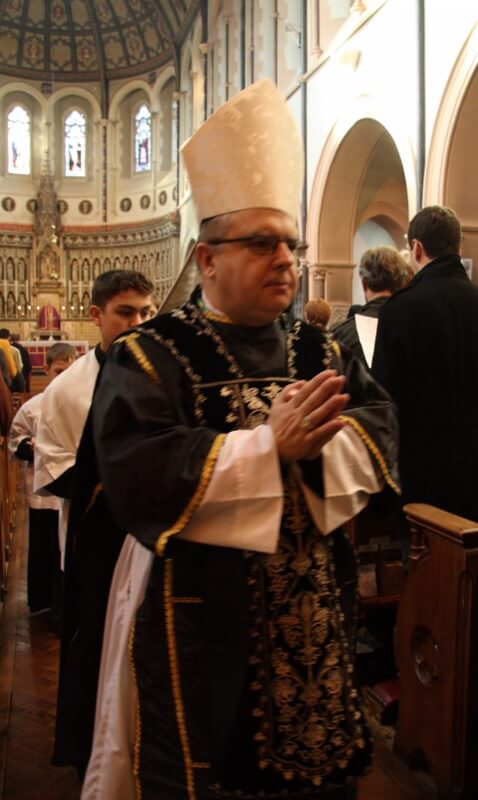
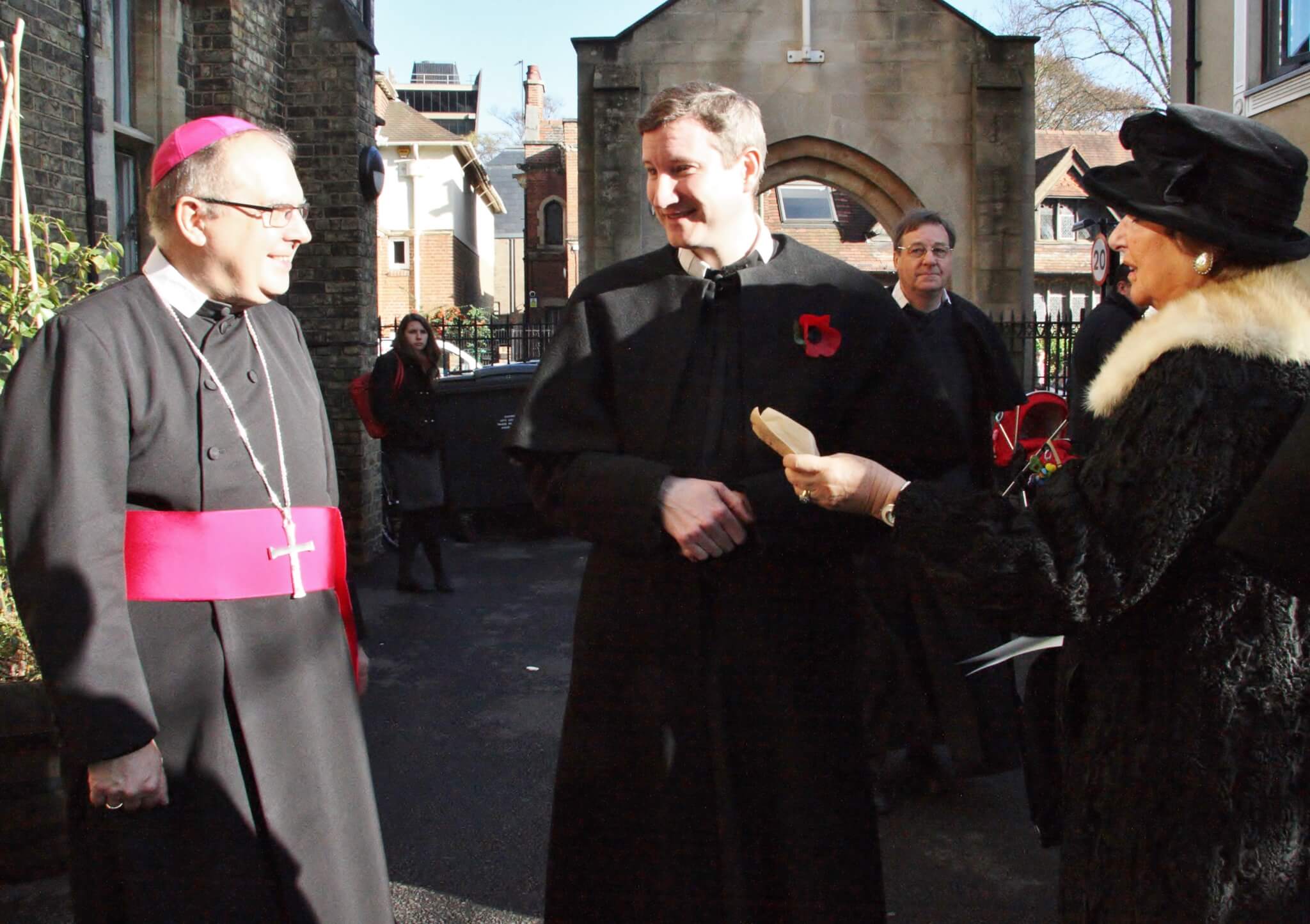
After attending the Act of Remembrance and the Two Minutes Silence at the War Memorial on St Giles in Oxford I went on to attend the Solemn Pontifical Requiem Mass for the souls of those who have fallen in war. celebrated at the Oxford Oratory at 11.15 by the Right Rev. Bishop Robert Byrne, the former Provost, and now Bishop of Cunacestre.

The Oratory website has a fine selection of photographs, interspersed with the verses of the reccessional hymn, "O Valiant Hearts", which I have copied and added a few extra notes:

"O valiant hearts who to your glory came
Through dust of conflict and through battle flame;
Tranquil you lie, your knightly virtue proved,
Your memory hallowed in the land you loved."

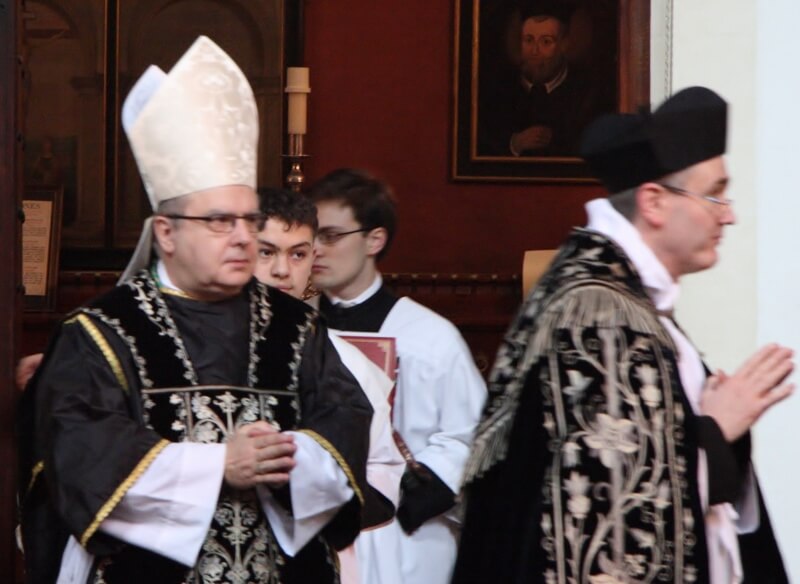
The procession emerges from the sacristy:
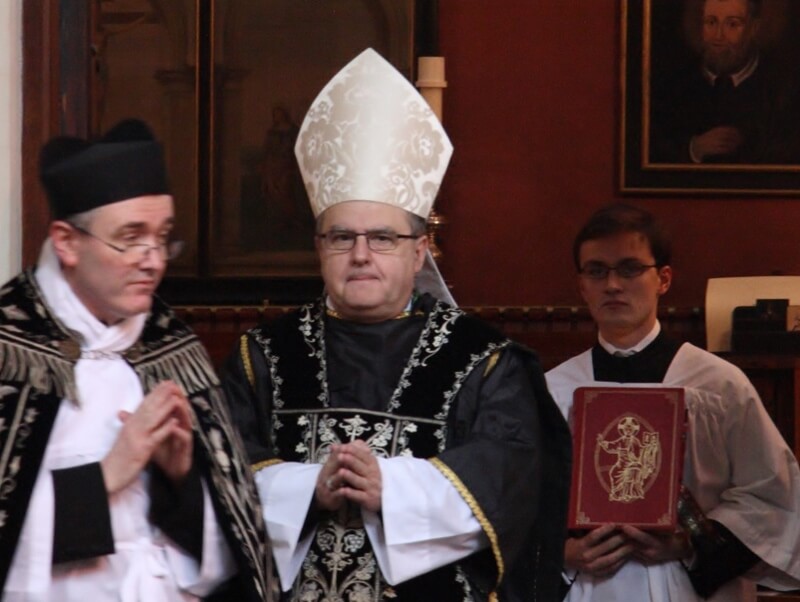
IMG_6969 (800x602)


IMG_6970 (800x584)

"Proudly you gathered, rank on rank, to war
As who had heard God’s message from afar;
All you had hoped for, all you had, you gave,
To save mankind—yourselves you scorned to save."
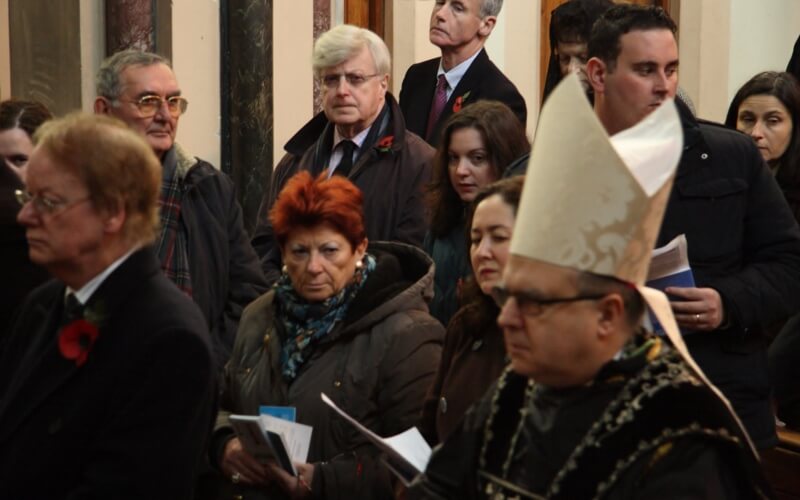
IMG_6973 (800x500)

Splendid you passed, the great surrender made;
Into the light that nevermore shall fade;
Deep your contentment in that blest abode,
Who wait the last clear trumpet call of God.

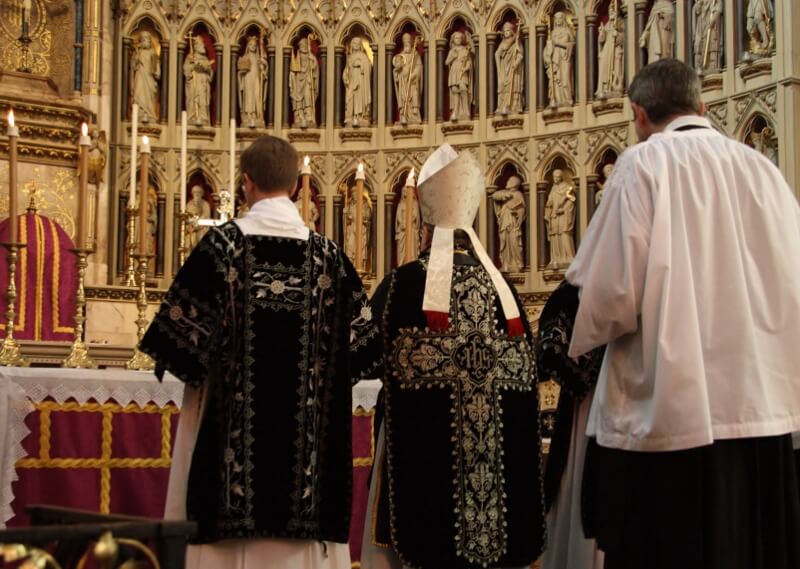
Arriving at the altar:
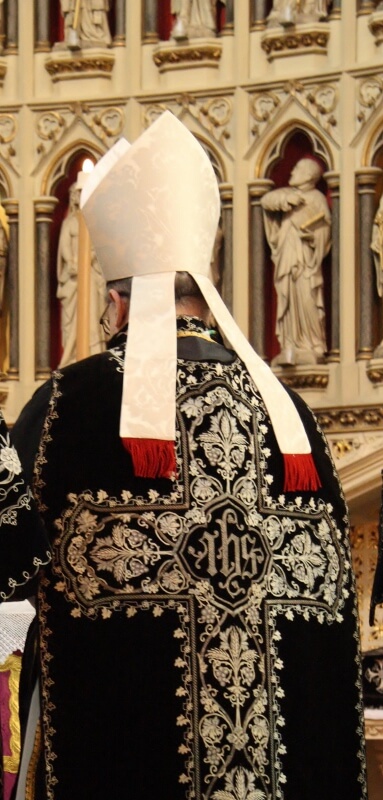
IMG_7015 (383x800)


IMG_7014 (800x569)

"Long years ago, as earth lay dark and still,
Rose a loud cry upon a lonely hill,
While in the frailty of our human clay,
Christ, our Redeemer, passed the self same way."

IMG_6977 (708x800)

"Still stands His Cross from that dread hour to this,
Like some bright star above the dark abyss;
Still, through the veil, the Victor’s pitying eyes
Look down to bless our lesser Calvaries."

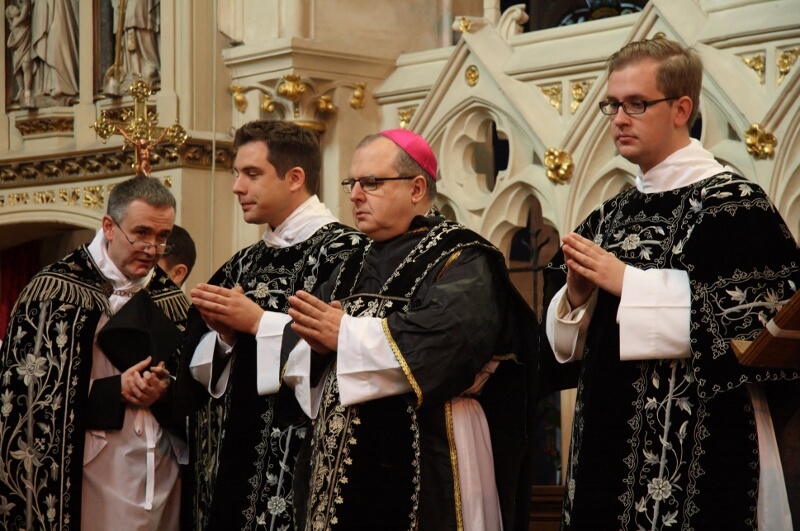
Bishop Robert preacheson the importance of remembrance to individuals and families as well as to wider communities and to nations, and emphasised that thee Requiem placed all this in the context of the greatest act of Remembrance, the Mass.
IMG_6974 (800x531)

Bishop Robert flanked by the Deacon, Fr Nicholas Edmonds-Smith C.O. and Br Gregory Davies O.Praem. Fr Dominic Jacob was the Assistant.

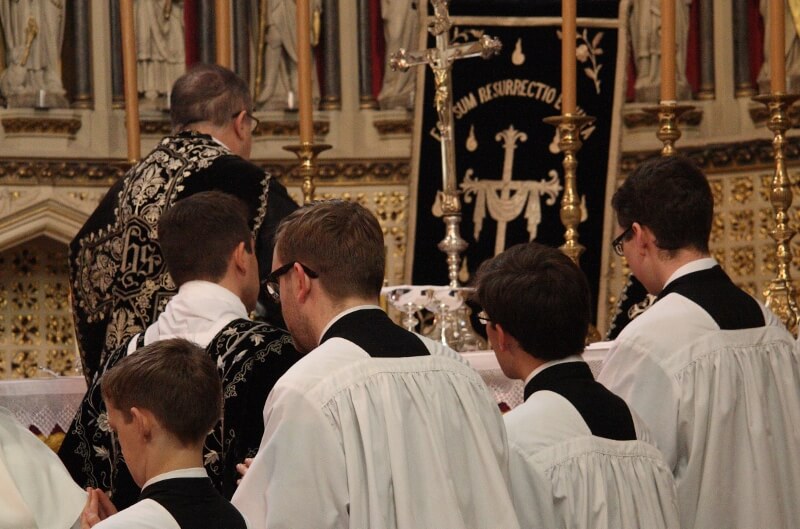
The Offertory:

IMG_6987 (800x517)

The Incensation of the oblations:
IMG_6988 (800x673)

IMG_7001 (800x529)

"These were His servants, in His steps they trod,
Following through death the martyred Son of God:
Victor, He rose; victorious too shall rise
They who have drunk His cup of sacrifice."

The elevation of the chalice:

IMG_6999 (669x800)

"O risen Lord, O Shepherd of our dead,
Whose cross has bought them and Whose staff has led,
In glorious hope their proud and sorrowing land
Commits her children to Thy gracious hand."

IMG_7008 (800x589)

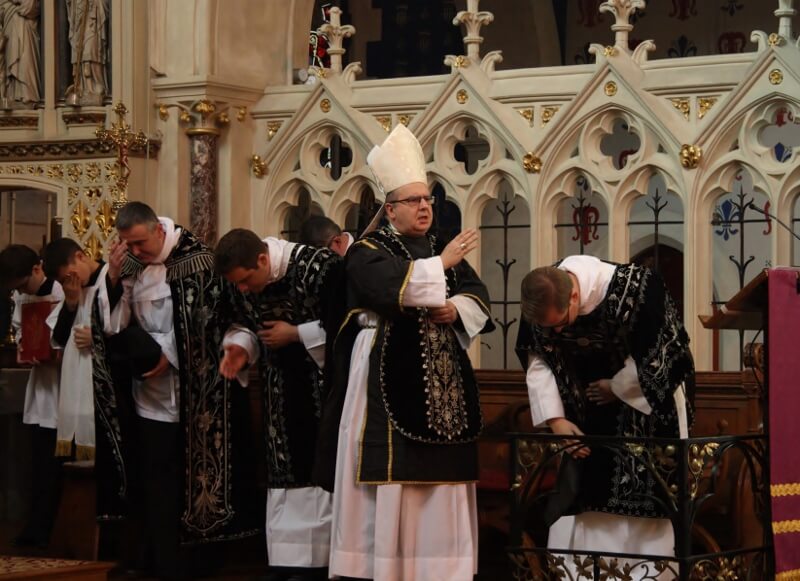
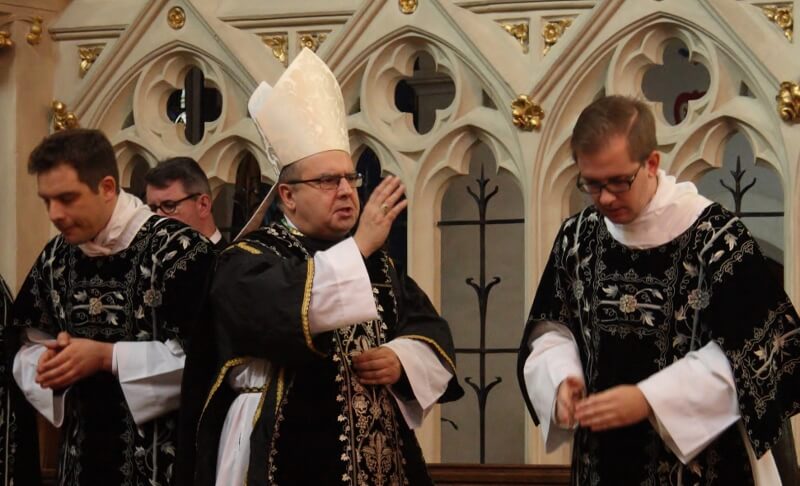
The final blessing, before the National Anthem was sung:

IMG_7012 (800x581)

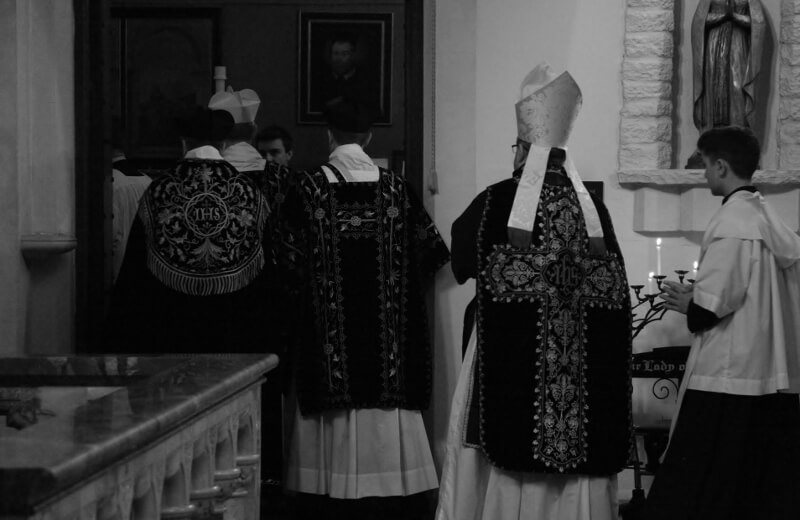
The Bishop returns to the sacristy:
IMG_7019 (478x800)

IMG_7020 (800x520)

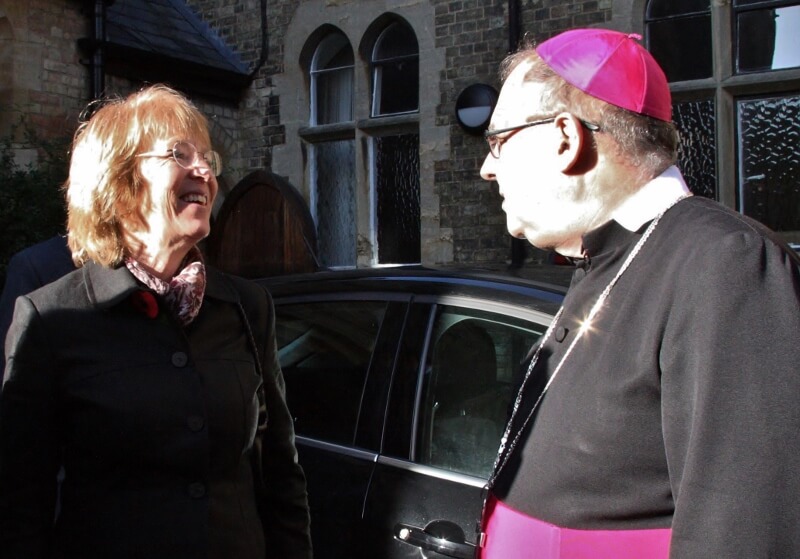
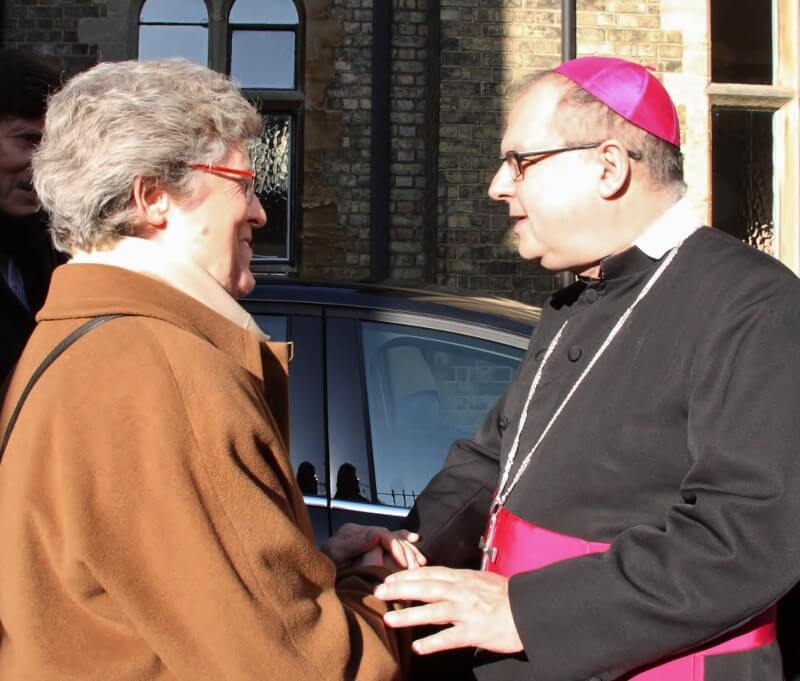
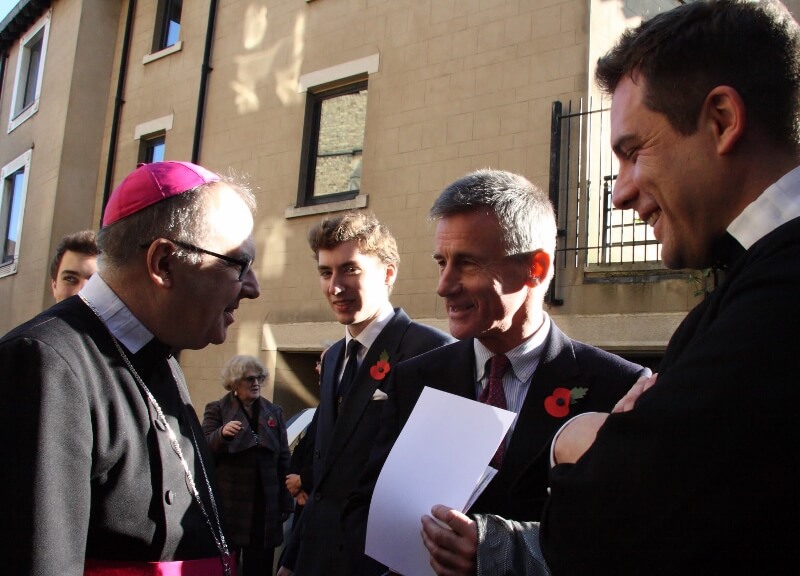
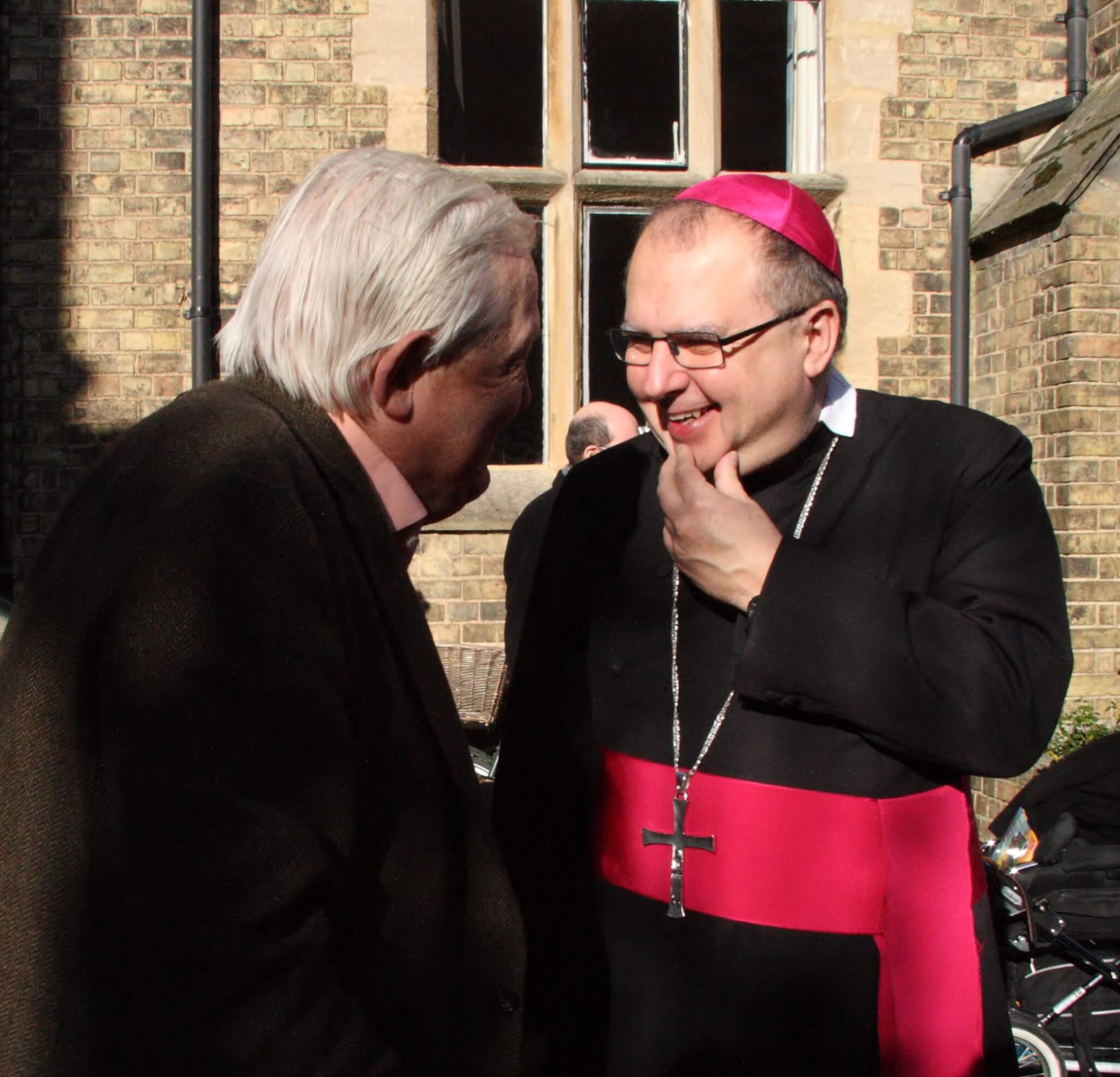
After Mass, Bishop Robert meets parishioners and old friends:


IMG_7033 (800x681)
 
IMG_7037 (800x576)

IMG_7025


Images:Hannah Chegwyn/Oxford Oratory website


Sunday, 14 November 2010

Remembrance

Here are a few thoughts, not necessarily all connected, about Remembrance and reflections on war in the last century.

I am not a pacifist, not by nature, not by conviction, not as a historian, not as someone who knows something of human nature - but I increasingly find it difficult to see the case for war and destruction, and certainly not the waste of human life, usually at its most hopeful stage in early adulthood, for causes that are politically and morally wrong or stupid. I had, and have, no doubts about the appropriateness of the Falklands campaign, or the First Iraq war, but subsequent campaigns have, I am inclined to think, been unwise, fooling or plain wrong.

When it comes to the Great War I think I agree with this post from the American Mad Monarchist , though I might be more optimistic than he is that some of the tensions of 1914 would have been resolved bilaterally and peacefully. Basically he says what I have thought for years. The events of the summer of 1914 were a disaster with few parallels in history, and not, by any means, inevitable.

In the wake of the war many sought, and continue to seek, to blame the pre-war establishments, the monarchies and social hierarchies for what happened. My own feeling is that the old order appeared to be in control, but were the facade behind which other forces manipulated events. When defeat came the old symbolic institutions could be jettisoned, but the modern state ploughed on regardless. The two generation s before 1914 had seen a transformation of state institutions that was concealed from both the monarchs and their subjects. In their different ways they paid the price, but the forces that shaped events usually emerged unscathed. Thus monarchs on both sides could lament that Queen Victoria was not around to solve the quarrels of her grandchildren, not realising that they were themselves prisoners of a system that reduced them to cyphers much of the time. So the problem was not and is not the old order, but its initial subversion from within by popular and institutional forces, forces which have in a huge variety of forms been strengthened by the century of total war. Restoring government to its proper place in the human scale, but also the Divine scale, of things is part of the way of correcting that development.

Fr Jerome Bertam in his sermon yesterday morning at the Oxford Oratory spoke of the 1914-19 war medal that described it as the "Great War for Civilisation", and said that rather we should see the end of European civilisation in 1914, and that it was followed by the Peace to End Peace. All this he ascribed to the sin of Pride, pointing out that it affects all systems of government, monarchies and republics alike, display this, the sin of Satan.

This is true. The post-1918 experience makes it very clear that the liberal vision that without monarchs there would be less conflict was fatally flawed, and indeed a very dangerous delusion indeed. Nor is post-1945 liberal democracy, let alone popularist, collectivist, radical or revolutionary democracies more peaceable and less bellicose - but being the voice of the people, or rather the Voice of The People - i.e.what they can be conned into believing - are less constrained by human reason and piety.

The Mad Monarchist follows his post with one about the one temporal ruler amongst the combatants of 1914-18 who tried to stop the war - the Emperor Charles I of Austria, to whom I have, as regular readers will be aware, a devotion.

This was already the month of prayer for the dead before it became the season of Remembrance. I prayed for two, not especially close relatives who died in the Second World War, for friends of my parents and for all the war dead. That is something we can do for them. For ourselves and our contemporaries, and for our successors we should take care not to waste human lives as carelessly as the twentieth century became so used to doing - and that requires thought for the individual, thought for the nation, and thought about ourselves and our fallen nature.

Fr Blake from Brighton has some not dissimilar reflections here, which I would also commend to your thoughts.