Once I was a clever boy learning the arts of Oxford... is a quotation from the verses written by Bishop Richard Fleming (c.1385-1431) for his tomb in Lincoln Cathedral. Fleming, the founder of Lincoln College in Oxford, is the subject of my research for a D. Phil., and, like me, a son of the West Riding. I have remarked in the past that I have a deeply meaningful on-going relationship with a dead fifteenth century bishop... it was Fleming who, in effect, enabled me to come to Oxford and to learn its arts, and for that I am immensely grateful.


Friday, 15 October 2021

Spanish Art in Bishop Auckland


The Art Newspaper reported yesterday that in Bishop Auckland near Durham the new Spanish Gallery will open today. Dedicated to showing Spanish masterpieces in this picturesque and historic market town this looks to be a wonderful addition to the cultural resources of the area. To coin a phrase, this does look like ‘levelling up’ in good measure.

A few miles away is the largest collection outside London of works by Spanish great masters at the marvellous Bowes Museum Barnard Castle - now that is somewhere to drive to, and not just to test ones eyesight.

The origin however of this new scheme lies in the rescue of the paintings inside and then of  the very fabric of Bishop Auckland Castle, which opens off the Market Place. This, the historic residence of the Bishops of Durham, was disgracefully sold off some years ago by the miserably money-minded, penny-pinching Woke cultural vandals officially known as the Church Commissioners. The saviour of the Castle and its paintings by Francisco de Zurbarán has now helped bring about this and another museum on the history of mining in the area.


County Durham might not have been ones first thought as a destination in this country to view the incomparable riches - technical, visual and spiritual - of Spanish art, but it has now clearly become the first stop outside London.


Hastings 955


Yesterday was the 955th anniversary of the battle of Hastings in 1066.

I saw online the beginning of an article in the Daily Telegraph  - which used to be a respectable newspaper, one that one could read in public places - by Robert Tombs, who for all that he is a Professor Emeritus of French History specialising in the nineteenth century, is a fanatical Brexiteer. In it he appeared to be stressing by contrast the significance of the 937 battle of Brunanburh and then was apparently recycling the old idea of Anglo-Saxon “freedom” - an idea that went out of fashion at least fifty years ago for us mere medievalists.  Now it is, of course, true that in the Danelaw and in Kent there were strong traditions of personal freedom which survived and fed into the political and social life of medieval and later centuries. How unique that is in the wider world of the time is not clear, and it does not make the people of those counties proto-modern voters. There were, to be slightly topical, by the way, still slaves in Anglo-Saxon England, a thing which largely disappeared under Norman rule. Moreover, Brexiteers please note, like all the Anglo-Saxons and Anglo-Scandinavians the freemen were, let’s face it, illegal immigrants from, dare I say it, Europe ….  

From other articles of his in the paper it appears that Prof Tombs seems to be very keen on the Enlightenment - now that is one pesky European thing we mercifully only had doses of in this country unlike the unfortunate French.

Peering a little further over the pay-wall of the 
Daily Telegraph website ( I refuse to pay for what should be free, and is with other papers ) I found a 2016 Hastings 950 anniversary article by the then un-ennobled Daniel Hannan - in which the then MEP wrote that he apparently thinks we should celebrate Naseby instead of Hastings…. Now not only does he profess to be a Conservative but the man is from Oriel for Heaven’s sake! He read Modern History there - he must have been slumbering in Dr Beddard and Dr Catto’s tutorials….

Brunanburgh is undoubtedly, probably crucially, important in shaping English identity. Naseby hastened the, mercifully temporary, victory of fanaticism and military dictatorship and eventually of regicide, but its long-term consequences are difficult to assess. 

However, as those great Oriel historians Sellar and Yeatman knew, there is one date that unquestionably sticks in the English historical folk consciousness as being memorable - and that is 1066. Because unlike those other two battles everything, everything in the life of the realm was to change or to be transformed as a consequence - far more than King Harold II and King William I could have ever possibly imagined that day on Senlac Hill 955 years ago.
 
It is sad indeed to see the outdated and outmoded ‘Whig History’ so elegantly satirised by Sellar and Yeatman almost a hundred years ago being regurgitated as political propaganda by men intelligent enough to know better.


Michael Nazi-Ali joins the Ordinariate


I was most interested to read the press release from the Ordinariate yesterday about the reception into the Catholic Church of the former Bishop of Rochester, Michael Nazir-Ali, and that he will be ordained as a priest of the Ordinariate of Our Lady of Walsingham.

Wikipedia has an informative biographical study of his life and ideas which sets out his eventful career, achievements and ideas, as well as something of what might be termed his spiritual pilgrimage. It can be read at Michael Nazir-Ali

Although I am very wary of the modern of the cult of the famous convert I do think Dr Nazir-Ali’s reception is a very clear sign of his appreciation of what the Ordinariate offers to Catholic-minded Anglicans and that may be a spur to further growth and influence for it.

May St John Fisher pray for him.


Thursday, 14 October 2021

Dispelling Myths about the Middle Ages


I came upon a useful bit of historical explanation recently which I thought worthy of sharing. It is by Hannah Skoda from St John’s College here in Oxford and appeared on the  on History Extra website.

It aims to dispel a number of popular misconceptions about daily life in the medieval period such as life expectancy, height and cleanliness. It can be seen at Medieval misconceptions: 12 myths about life in the Middle Ages – busted

What it says has, of course been well known to anyone with an interest in the era for a very long time indeed, but the struggle to overcome the often widespread ignorance of others, deriving from the nineteenth century belief in unrelenting progress ( “Progress” ) and fuelled far too often these days by film and television, is an ongoing one. One can but hope that this and similar features will help to chip away at the accumulated prejudice!


The Tabernacle in the Sun


Yesterday, October 13th was the 104th anniversary of the Miracle of the Sun at Fatima.   The ever worthy Fr Hunwicke marked the day with a quintessentially informed and insightful post about how the Church has traditionally interpreted the significance of the imagery of the Tabernacle in the Sun in Ps.18 (19). He skilfully draws upon his knowledge and understanding of theology, history, linguistics and liturgy to make his case … which can be read at Psalm 18 (RSV19) and the Miracle of the Sun.


Wednesday, 13 October 2021

Dr John Dee and his Magic Mirror


Recently there has been publicity about the identification of the Magic Mirror of the Elizabethan Magus Dr John Dee (1527-1608/9) as being Aztec. It has been shown to be from an identical source as other similar scrying discs that come from Mexico.


The Mirror is in the British Museum, having been acquired by it in the 1950s Alongside it are other artefacts related to Dee which are listed in the Wikipedia entry linked to below.

Apart from London museums and libraries Oxford is the other  notable centre for studies of Dr Dee. His portrait is in the Ashmolean, the Bodleian holds some of his manuscripts and in the neighbouring Museum of the History of Science is a seventeenth century copy in marble of Dr Dee’s table for communication in Enochian with Angels.
 
A painting of Dee with a beard and skullcap

Dr John Dee at the age of 67
A painting in the Ashmolean Museum

Image: Wikipedia 

The Wikipedia biography of the obviously highly intelligent and highly educated Doctor can be seen at John_DeeThis is not only detailed and wide ranging, seeking to dispel long-held misunderstandings about him and to explain his seemingly diverse interests as a quest for universal knowledge within an overall Christian tradition, but also has a good bibliography for those who are tempted into the complex and esoteric thought world of the Dee and his contemporaries.

Amongst these is a book I read a while ago, Benjamin Woolley’s biography The Queen’s Conjuror: The Life and Magic of Dr Dee,which I would recommend both as an insight into the world of later sixteenth century magic and occultism at the courts of Queen Elizabeth I,  Emperor Rudolph II and King Stephen Báthory of Poland and is an entertaining account of an eventful, not to say colourful, life in which Dee mixed with the weird and the wonderful, with an impressive mixture of the great and the good, the courtier and the charlatan. This was an exotic mix in an age of religious and confessional dispute ( Dee himself seems to navigated that with remarkable ease ) and of the occult and the discoveries from the New World - with a bit of wife-swapping involving his ‘medium’ Edward Kelley thrown in for good measure.


Sunday, 10 October 2021

Reviving Transhumance in Spain


I came across an interesting article that links past present and future, history and ecology on the BBC Future Planet site.

It is about the continuity and, more significantly, revival of the centuries old Spanish tradition of transhumance - that is walking flocks of sheep north and then south across the uplands of Castile to fresh pastures. It certainly goes back to the Middle Ages, and may well be much more ancient. It is related to the pastoralist tradition described in Emmanuel de la Roy Ladurie’s Montaillou which is set in the Pyrenees in the years soon after 1300.

Anyone who has studied the history of later medieval and early-modern Spain knows of the importance not just of transhumance but of the wool that was cropped and the economic significance of those who ran the business. The history of this organisation, the Mesta, which survived until 1836, is set out in a lengthy article on Wikipedia at Mesta

The advance of modernity in Spain in the mid- to later twentieth century led to the decline in the practice, alongside the rapid abandonment of life in the countryside for the allure of the burgeoning cities from the 1960s. A centuries old way of life was disappearing at an alarming rate.

However as the article shows the traditional pattern, and using the designated and protected drove roads has survived and is beginning to revive once more. 

It should come as no surprise, yet doubtless will to some, that there is a strong case that this pattern of husbandry is ecologically good and helps to conserve and maintain the routes and the landscape. This point is made in the article, and there seems to be a significant revival in the practice of transhumance.


I have also read an account by the BBC’s Italy correspondent of how in the 1950s one could still see on occasion flocks being led early in the day through the streets of central Rome by their shepherds in a similar tradition of husbandry.


The Tower of London moat


Plans for next year’s Platinum Jubilee are advancing. One potential idea that has been publicised is a Commonwealth themed garden in the now dry and grassy moat of the Tower of London. This proposal is from Historic Royal Palaces, who now manage the Tower and who, in the wake of the lockdown closure, are seeking to boost their visitor numbers.
Presumably this scheme if carried out would be just for the year of the Jubilee.

The ideas was set out on the  Mail Online website at Tower of London bosses plan for jubilee garden in the moat and on that of The Times at Garden will send tourists to the Tower of London

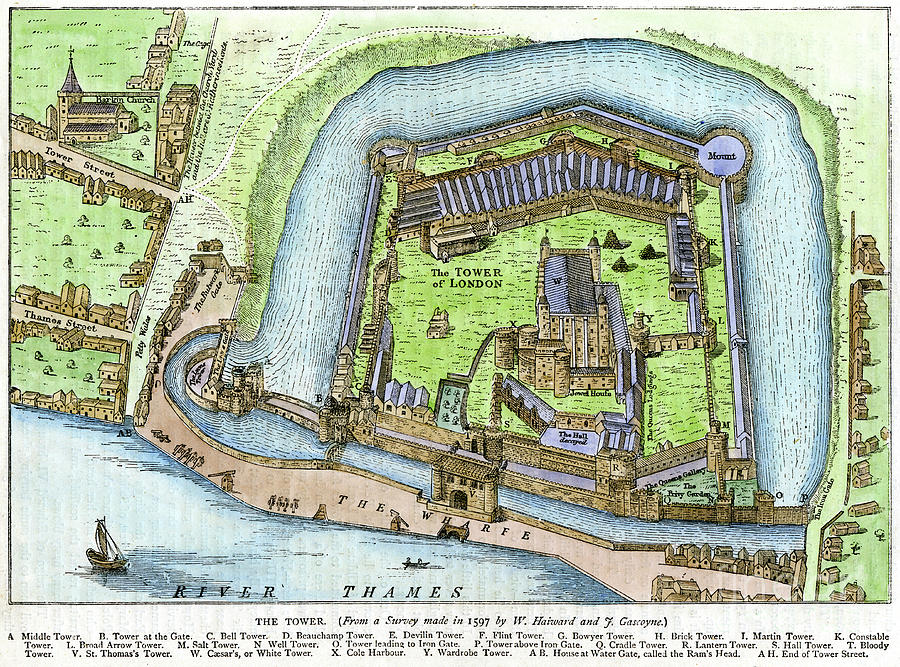
As a special commemorative event it would have a number of attractions but in the long term I would argue for refilling the most with water to return the Tower to something closer to its appearance for most of its history.

I found online an article about the possibility of this idea from 2015 when the idea of restoring a wet moat was, if you will pardon the pun, being floated. It can be read at Here's why we can't actually fill the Tower of London's moat with water again

The possible arguments against such a scheme which it cites do not convince me. They appear defeatist, and not untypical of arguments one sees against positive or dynamic restoration schemes.

The one about the health of those living in the Tower is the most critical but the Thames is much, much cleaner than it was in the 1840s. The river flows through the middle of our capital city without being a health hazard, so diverting part of it around the Tower should not be a problem. There are many other places similarly situated where running river water is in proximity to living accommodation - Cambridge and York doing immediately to mind.

The argument that someone is bound to fall in may well be true in that accidents happen but, as with the matter of public health there is a lot more of the Thames running right through London to receive the unwary and incautious It is hardly an increased risk.

The cost appears high but it would be a one-off investment. How much would the one year Jubilee garden cost government or private sponsors. Furthermore this would be a genuine piece of restoration work.

The loss of revenue to HRP through letting out the grassy area of the moat for events might be a consideration. However there are other possibilities inside the Tower. I have -attended one such myself for the Oriel History Appeal. Furthermore with suitable boats there would be the possibility of hosting events on the waters of the moat.

Have the Platinum Jubilee Garden by all means, but then return the moat to being water-filled as a permanent commemoration and restoration.

Scenic Drawing - The Tower, London, 19th Century by Print Collector
 
The Tower of London from a 1597 Survey showing the water filled moat 

Image: Pixels.com