Once I was a clever boy learning the arts of Oxford... is a quotation from the verses written by Bishop Richard Fleming (c.1385-1431) for his tomb in Lincoln Cathedral. Fleming, the founder of Lincoln College in Oxford, is the subject of my research for a D. Phil., and, like me, a son of the West Riding. I have remarked in the past that I have a deeply meaningful on-going relationship with a dead fifteenth century bishop... it was Fleming who, in effect, enabled me to come to Oxford and to learn its arts, and for that I am immensely grateful.


Saturday, 5 December 2020

Decision at Derby


275 years ago in 1745 the Jacobite army Council of War at Derby voted to return north to Scotland. This was, of course, against the policy and wishes of its leader Prince Charles Edward. The decision was a turning point in Jacobite fortunes, and the consequences immense.

Lost Portrait of Charles Edward Stuart.jpg

Prince Charles Edward 
Portrait by Allan Ramsay, painted at Holyrood Palace in Edinburgh, late autumn 1745; found in the collection of the Earl of Wemyss, Gosford House, now in the Scottish National Portrait Gallery

Image Wikipedia

In the Museum and Art Gallery in Derby is the panelling from Exeter House, demolished in 1854, which is where the Prince stayed and where the Council of War met. There are articles about the building and its surviving remains at Exeter House and at Lost Houses – Exeter House, Derby

The Special Correspondent drew my attention to the fact that in what was then All Saints church and is now the cathedral - then a new building rebuilt in 1723-5  - is a plaque commemorating the fact that for a couple of days in December 1745 the services of the Book of Common Prayer there had intercessions for King James III, Charles Prince of Wales and Regent and Henry Duke of York.

The 1745 Association marked the day with an online talk by its Chairman, Michael Nevin, introducing his new book Reminiscences of a Jacobite. This uses newly discovered sources and offers reinterpretations of the Jacobite cause, arguing that it still had real vitality after Culloden, and only lost that dynamic after the failure of the Elibank Plot in 1752. He stressed the commitment of the Prince to secure funding from France and to return, and after the 1748 that he continued hisIt is a book I look forward to reading.

The Association recently circulated the link to a recent lecture for Gresham’s College by the distinguished historian of Jacobitism, Professor Murray Pittock of Glasgow University. This is very well worth watching and  sharing, and outlines both the general picture and illuminating insights. As with other recent historians and commentators on the Rising of 1745 it introduces important questions as to the strength of Jacobitism before and after 1745-6,  and as to its wider implications in terms of British, British Imperial and European history. It also touches on a key point explored by Michael Nevin in his book, as by Christopher Duffy in his detailed history of the Rising, which is the sense that Prince Charles Edward has not been appreciated for his real abilities. He showed himself to be far more than a roi faineant in waiting in the years before and after the Rising as well as during it.

Prof. Pittock’s lecture can be viewed at https://www.youtube.com/watch? Lm v=0YhbjxGA7N4 


Friday, 4 December 2020

Lace Albs of the Famous


Having finished my previous post, and, I suspect, with my recent piece Lace in a Penitential Season still partly fresh in my mind I recalled a draft I had from last year which I began to prepare but never published before I resumed blogging this year. It follows on quite suitably from the last one as it concerns two historic albs, traditionally assigned to famous men.

The post came to mind when in advance of moving just over a year ago I found myself washing my lace-trimmed cotta - a suitably splendid piece I might add - and the liturgical use of lace as decoration worked its ways through the recesses of my memory.

Now I have met people of a very Traditionalist cast of mind who look somewhat ascance at lace albs and decry them as Baroque extravagances, and even as effeminate. However one can point out - and I did - that lace albs were known in the thirteenth century. What are claimed or believed to be those of St Francis of Assisi (d.1226) and Pope Boniface VIII (d.1303) survive. Such ownership may be impossible to establish with absolute certainty but their preservation and traditional attribution carry considerable weight as evidence.

Pope Boniface VIII in a lace alb does not surprise one. St Francis does if you follow too much the popular presentation of “Il poverello”. What it does indicate I suggest is that St Francis was so much more than the cement figure holding up a bird bath in a modern garden - a point once made by Franciscan in a lecture here in Oxford. Such was the intensity of his love for the Divine that I can imagine St Francis, presented with such a garment, would wear it as a Deacon to the honour and glory of God. Personal austerity does not conflict with offering the very best in worship and its accessories. People used to know that, but after a period when it was forgotten it is taking time as a concept to be recovered, but happily it is.

Both of these albs are discussed, with photographs of them both in another of Shawn Tribe’s articles on the Liturgical Arts Journal which can be viewed at Medieval Lace Albs of St. Francis and Pope Boniface VIII


Fifteenth century Blue Vestments given by a future Pope


The Liturgical Arts Journal website often features historic vestments and in a recent post Shawn Tribe has a really splendid set of vestments to display. They were given in the years 1475-99 by Cardinal Giuliano della Rovere, who reigned as Pope Julius II from 1503 to 1513. The post unfortunately does not say where the vestments are but they are a wonderful survival. It would also be interesting to know if their shape is as they were originally or if they have been cut down and restyled in the Tridentine era.

In his article Shawn summarised something of the discussion about the liturgical use of blue vestments in the Middle Ages, and this set definitely accords with being used in penitential seasons. In England at that time blue or violet was interchangeable as a liturgical colour and I remember from an Alcuin Society volume that parishes followed the usage of their cathedral church. This, if I remember aright, Exeter used violet and Bath and Wells blue at this time.


https://blogger.googleusercontent.com/img/b/R29vZ2xl/AVvXsEiepGtvIjXNH26YNmdyRxxzaBMUeHMZC_Kmovsdz7EWHOqfQYg3Sk0o4dDUbXnVNrnWa8qrgqzaMStS2CHDkrLONz_UHdHah-kGVg27Dwl8EGIF8a9aIVNzV7gwT_UHL6lN4gOYAEjHAaQ/s1600/julius2_as_gregory9.jpg

Pope Julius II

The Pope, vested here in white and gold, is depicted as Pope Gregory IX issuing the Decretals.
He is wearing the camauro under the Papal tiara.

Image: The Mad Monarchist


Commemorating St Barbara


Today is the Feast of St Barbara. 

As a saint accorded liturgical honours she was a casualty of the 1969 revision of the Roman Calendar, although she survives in the EF, and in the devotions of artillery men. Her sidelining in 1969 led to her making a guest appearance in Robertson Davies’ short story “Refuge for Insulted Saints” which is included in his High Spirits - an entertaining collection of numerous ghost stories in the tradition of M.R.James, which I do recommend as suitable seasonal reading.

My interest in St Barbara stems partly from regretting her modern demotion, from having a relative with the name and from the fact that when I was writing my history of the church of St Thomas the Martyr here in Oxford I found that the earliest known bell there had been dedicated to St Barbara.

The Wikipedia article about her and her cult appears to have been extensively revised and extended and it repays reading. It can be found at Saint Barbara

File:Wilhelm Kalteysen - Saint Barbara Altarpiece - Google Art Project.jpg

The St Barbara Altarpiece
Now in the National Museum in Warsaw it was painted circa 1447 for St Barbara’s Church in Breslau by Wilhelm Kalteysen ( c.1420-96 ). The wings of what was once a polyptych were lost in the Second World War.
Image: Wikipedia 

I also found the answer to a little query in my mind as to medieval dedications to her in
England. There is a twentieth century parish church of St Barbara at Earlsdon near Coventry and Royal Artillery chapels, but there is at least one medieval church under her joint patronage. That is at Haceby in Lincolnshire

A stone church seen from the southeast, showing the chancel, beyond which is the nave with a clerestory, a south aisle and a porch, beyond which is a tower with a plain parapet

Haceby Church
Image: Wikipedia 

The church of St Barbara and St Margaret - St Margaret was also a casualty of the 1969 calendrists - is now vested in the Churches Conservation Trust having been declared redundant in 1973. There is an account of this Kesteven church at St Barbara's Church, Haceby

The Wikipedia article shows how widespread has been the extent of devotion to St Barbara in both Catholic and Orthodox communions, in the old world and the new. Of her various churches listed I would particularly draw attention to the extraordinary late medieval church, finally completed in the late nineteenth cerntury, in the historic Bohemian silver mining centre at St. Barbara's Church, Kutná Hora

Sedlec Ossuary: Skeletons, Monks and a Church

Church of St Barbara Kutna Hora
Image: Prague-now.com

St Barbara Pray for us 


Thursday, 3 December 2020

Medieval Cookery Column


My previous post was about fish and fishing and by coincidence I came across a collection of posts about medieval cookery from Medieval Histories which may appeal to readers. Drawn from across Europe there are several about great feasts, and about Christmas fare - including several ways to cook your own goose (sic) - not to mention mulled wine, Irish ‘bog butter’, and boiled Sturgeon. I will reassure Scottish readers this is not an intended assault on the person of the First Minister.

The posts, with recipes, can be found at Medieval Food Archives — Medieval Histories

I will add that during ‘lockdown’ I have discovered the pleasures of watching various YouTube programmes about medieval, as well as ancient and more recent recipes. I will post about those in coming days.


Wednesday, 2 December 2020

Fishing in the Middle Ages


Fishing, the fishing industry, and the regulation and management thereof is in the news as a remaining unresolved topic in the Brexit negotiations. The importance of fishing as a food source and as a means of employment and income generation is long-standing. 

By chance I came across a post from the Medievalists.net site which looks at fishing in the medieval centuries, and the variety of ways in which it was carried out. It brings out both its importance to daily life and also the way in which it attracted government regulation from at least the thirteenth century. 

This interesting and informative article can be read at Sustainable and Innovative: The Medieval Art of Fishing


Tuesday, 1 December 2020

Introducing John of Sacrobosco and his world view


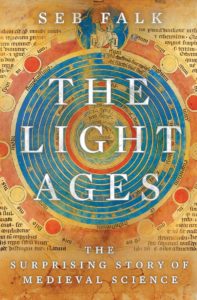
I came across this on the Literary Hub website and thought it worth sharing with readers. It is an extract from Seb Falk’s The Light Ages: The Surprising Story of Medieval Science ( W.W. Norton and Co., 2020 ) and discusses the work of the thirteenth century English academic John of Sacrobosco. In the sixteenth century Leland assigned his birthplace to Halifax, although Falk is doubtful as to that.

Sacrobosco is cited as a lucid expositor - along with the ancients and other medieval writers - of the truth that the world is a sphere, in contradistinction to the modern idea that people thought the world was flat until the Renaissance or later. This piece provides ample evidence to show the falsity of such assertions.


The Light Ages: The Surprising Story of Medieval Science by Seb Falk

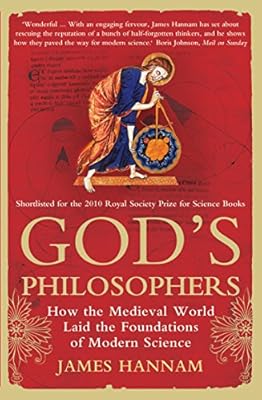
I have not so far seen Falk’s book but it appears, along with God’s Philosophers: How the Medieval World laid the Foundations of Modern Science by James Hannam ( Icon Books,2010 ) to be part of a trend to make available to the modern era the remarkable understanding of the the natural world and universe attained in the Middle Ages. Both would be excellent Christmas gifts I would imagine.


Monday, 30 November 2020

St Andrew and Scotland


Today is the Feast of St Andrew the Apostle.

There is a useful introduction to the scriptural material about him, the early legends and the diffusion of his cult in the Wikipedia article Andrew the Apostle. This has useful sections about his patronage and the growth of devotion to him in Scotland.

Customs linked to today as his feast are outlined in St. Andrew's Day


James III was reportedly murdered by a rebellious subject disguised as a priest

St Andrew crowns King James III of Scots (1460-88). The future King James IV kneels behind his father.
From the Trinity Panels by Hugo van der Goes (d. 1482)

Image: Royal Collection/National Galley of Scotland/History Answers

The Wikipedia article suggests the cult of St Andrew in Scotland began in the mid-eighth century when relics arrived there from northern England, and linked to St Wilfrid, who was, of course, noted for his links and visits to Rome. A century or so later it appears St Andrew was seen as their patron by the Scots from the battle of Athelstaneford. At the end of the thirteenth century the figure of the crucified St Andrew was used as the design for the seal of the Guardians of Scotland during the interregnum of 1290-94 and the Declaration of Arbroath of 1320 refers to him as patron. His relics gave prestige to the church which enshrined them and to its primatial bishop, and from 1472, Archbishop, of St Andrew’s, together with its attendant University.

The Most Noble and Most Ancient Order of the Thistle is under the patronage of St Andrew. The claims to its antiquity before 1687 are at times clearly pious fictions, but it may be that Scottish monarchs from the time of King James III did attempt to establish a chivalric Order to match those of their contemporaries. The inventory of the possessions of King James IiI made after his death in 1488 does record a collar and badge much like that of the present Order, and it, or a similar one, is shown encircling the Royal Arms in the image of King James IV from his Book of Hous and being worn by King James V in paintings.

Click on the link below:

394px-Hours_of_James_IV_of_Scotland_-_ÖNB_Ms.1897_f.24v-_James_Portrait_in_prayer.jpg


King James IV (1488-1513) with St James the Great from his Book of Hours. After 1503.

Image: Oesterreiches National Staatsbibliotek

The green mantle of St Andrew in the Trinity Panel and the hangings of the entrance to the chapel in the Book of Hours may both be seen as a reference to the mantle of the Order of the Thistle.

 It may be that the frequent royal minorities of the Stewart monarchy prevented earlier forms of the Order achieving stability like that of the Garter. There is a history and description of the Order which records and evaluates this early evidence at Order of the Thistle

St Andrew Pray for us