Sunday, 5 April 2026

Christ is Risen Alleluia!


Christ is Risen, Alleluia!
He is Risen indeed, Alleluia!

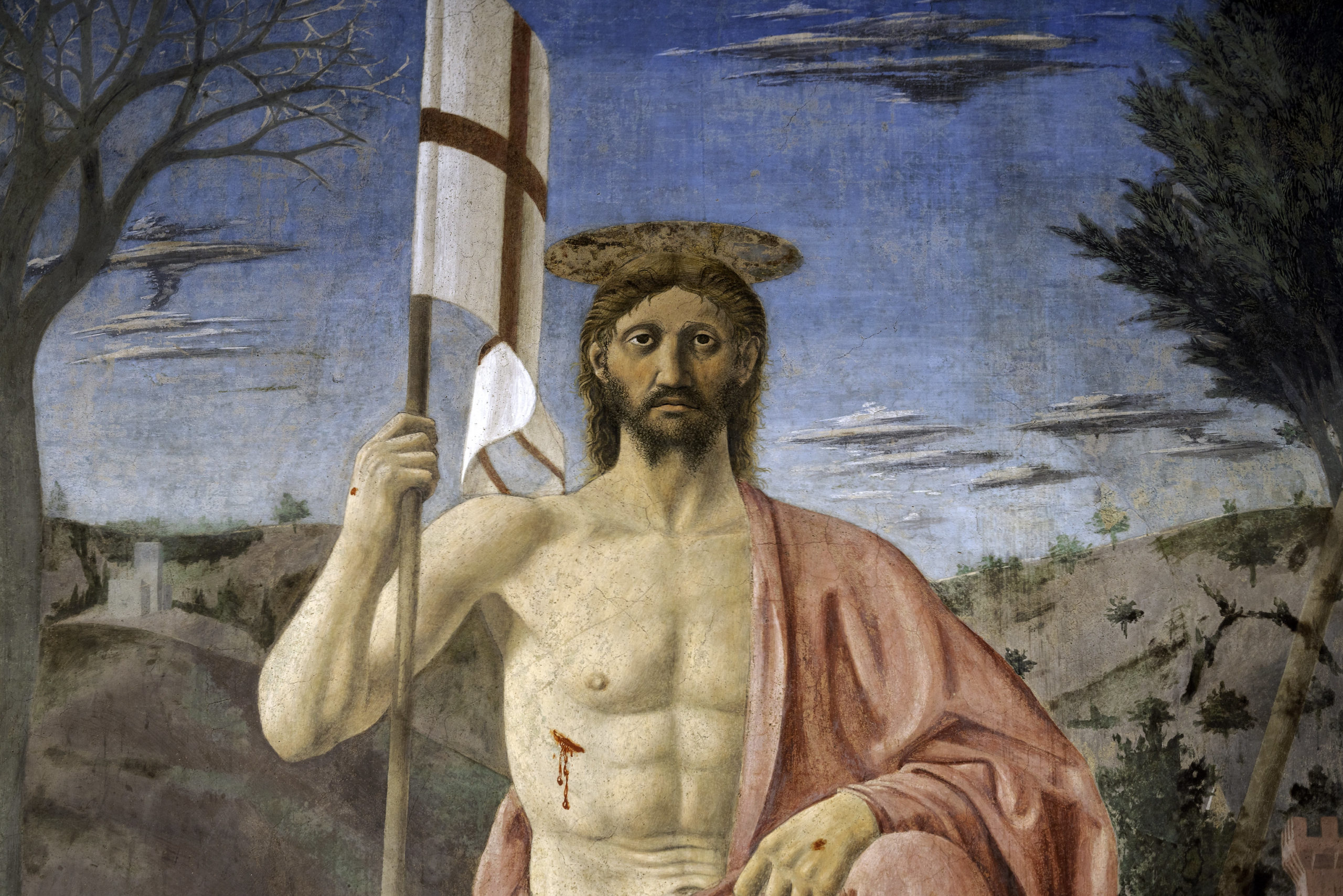
Piero della Francesca, Resurrection, detail 

Detail from The Resurrection 
Piero della Francesca
1463-65

Image: Finestre sull’ Arte

Looking back to my post for Easter Day last year and also to the fact that it was well received, I have done as I did last year and reproduced Pietro della Francesca’s depiction of The Resurrection, and an giving a link to last year’s article, which I definitely recommend because of its Patristic content, and which can be accessed at Christ is Risen Alleluia!

To supplement that and to provide some reflective and art historical reading about the painting and its survival as readers digest their Easter lunch, chocolate eggs, or relax on Easter Monday, here are three articles about it.

The first is a discussion of the work in its historical context and can be accessed at Piero della Francesca | The Resurrection, Museo Civico, Sansepolcro | Art in Tuscany

The second can be viewed at Travel Notebooks - Finestre sull'Arte

The third concentrates on the near miraculous survival of the fresco in 1944 and can be viewed at HOW ONE MAN SAVED THE "GREATEST PICTURE IN THE WORLD"


 I wish a holy, blessed, joyful and happy Easter to all my readers 

Alleluia!

Saturday, 4 April 2026

Traditional Good Friday Chasubles


Yesterday the Liturgical Arts Journal had an article to mark Good Friday about traditional black vestments, as per the usage before Pope Pius XII’s changes in the 1950s. It has some splendid examples of the vestment maker and embroiderers arts in its illustrations. Some are antique, others from the later nineteenth and earlier twentieth centuries. It also includes a folded chasuble, which would only have been used on Good Friday.

The aricle can be seen at Historical Chasubles for Good Friday   


Thursday, 2 April 2026

The medieval view of Judas


The always useful website Medievalists.net has an interesting article about how Judas and his fate, as well as an involved biography to shoe just how unsavoury he was, were presented by medieval writers.

Illustrated with illuminations from medieval books it can be accessed at Judas in the Middle Ages: The Making of an Anti-Hero 


Gethsemene by Giotto


Detail of the Kiss of Judas by Giotto, 
1304-6, in the Scrovegni Chapel, Padua

Image: Formae Divinae Wordpress

I think the fresco of the Kiss of Judas is the finest, or most powerful, of these early fourteenth century masterpieces in the Scrovegni Chapel, and one which commands attention and invites reflection and meditation.  

The way in which the lumpen figure of Judas envelops Jesus is striking, signifying the loss of personal autonomy of the Redeemer in the Passion - He is now in His enemies’ power. yet the serenity of expression points to the Divine self-surrender central to the Triduum. 

The website from where I found this image has a meditation on the painting and this central feature which can be read at “The Kiss of Judas” by Giotto